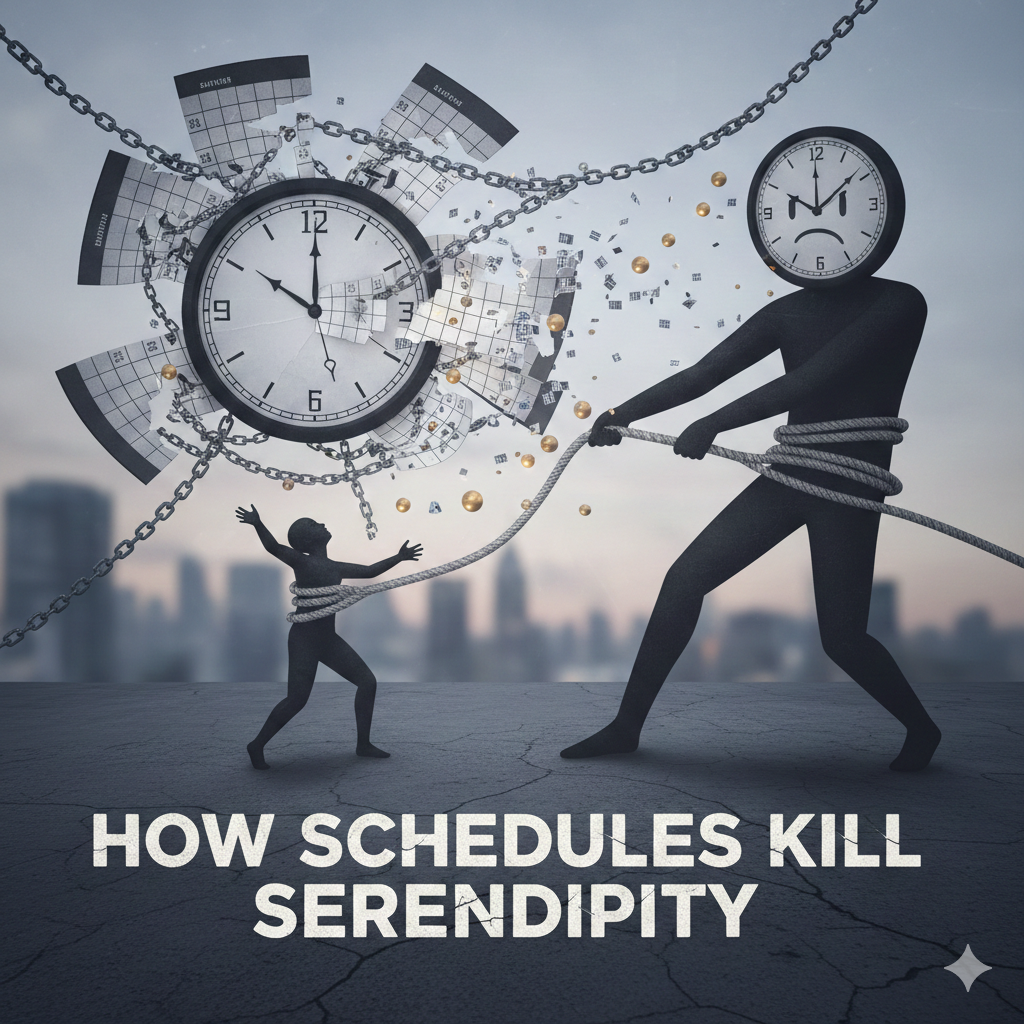
We’ve all been there. Someone mentions an incredible opportunity, a chance encounter that could change everything, an invitation that makes your heart leap. And then you check your calendar and see the afternoon blocked out in blue rectangles. The opportunity passes.
Many of us who work full-time deal with over-scheduling. Our calendars have become intricate games of Tetris, every hour accounted for, every commitment color-coded and synced across devices. We pride ourselves on being organized, on having our lives under control. But somewhere in our quest to master time, we’ve lost something essential: the ability to say yes to the unexpected.
Schedules are supposed to help us make the most of our time, yet they often prevent us from encountering the serendipity that makes life meaningful. The best things that have ever happened to most people weren’t scheduled at 2:30pm on a Thursday. They were accidents, coincidences, spontaneous decisions made when someone decided to skip the plan and follow an impulse.
Think about how many great relationships began because someone was running late and ended up sitting next to a stranger at a coffee shop. Consider how many careers took unexpected turns because someone accepted a last-minute invitation to a party they almost didn’t attend. The job you weren’t looking for, the mentor you never expected to meet, the idea that struck during an unplanned conversation—these moments don’t follow a schedule.
The problem isn’t being organized. It’s the illusion of control that comes with a packed calendar. When every hour has a purpose, we start to believe we’re maximizing our potential. In reality, we’re often just filling time We confuse activity with progress, and sometimes there’s no room for anything we haven’t already anticipated.
Opportunity is disruptive. It arrives unannounced and demands immediate attention. It asks you to abandon your carefully laid plans and take risks. But when you’re locked into a schedule, you can’t react.
The greatest innovators and creators have always understood this. They build slack into their lives. They understand that breakthroughs don’t happen during scheduled brainstorming sessions. They happen during walks, during aimless conversations, during the moments when the mind is free to wander and make unexpected connections.
When you’re always thinking about the next commitment, you’re never fully where you are. You move through life as a series of transitions rather than as a series of experiences. This isn’t to say we should abandon all structure and live in chaos. Some commitments matter. Some deadlines are real.
The solution isn’t complicated, though it requires courage. It means learning to say no to good things so you have room to say yes to great things. It means leaving gaps in your calendar, not because you couldn’t fill them, but because empty space is where possibility lives. It means occasionally canceling plans when something genuinely important emerges, even if it disappoints someone or makes you seem unreliable by conventional measures.
Your schedule is a tool. It should serve your life, rather than define it. And if your calendar is so full that you can’t respond when opportunity knocks, then you’re not in control of your time. Your time is controlling you.
The next time something unexpected comes along, something that makes you feel alive but doesn’t fit the plan, consider what you’re really giving up by sticking to your schedule. Usually it’s something that won’t matter much in the long run. What you’re gaining, however, might change everything.