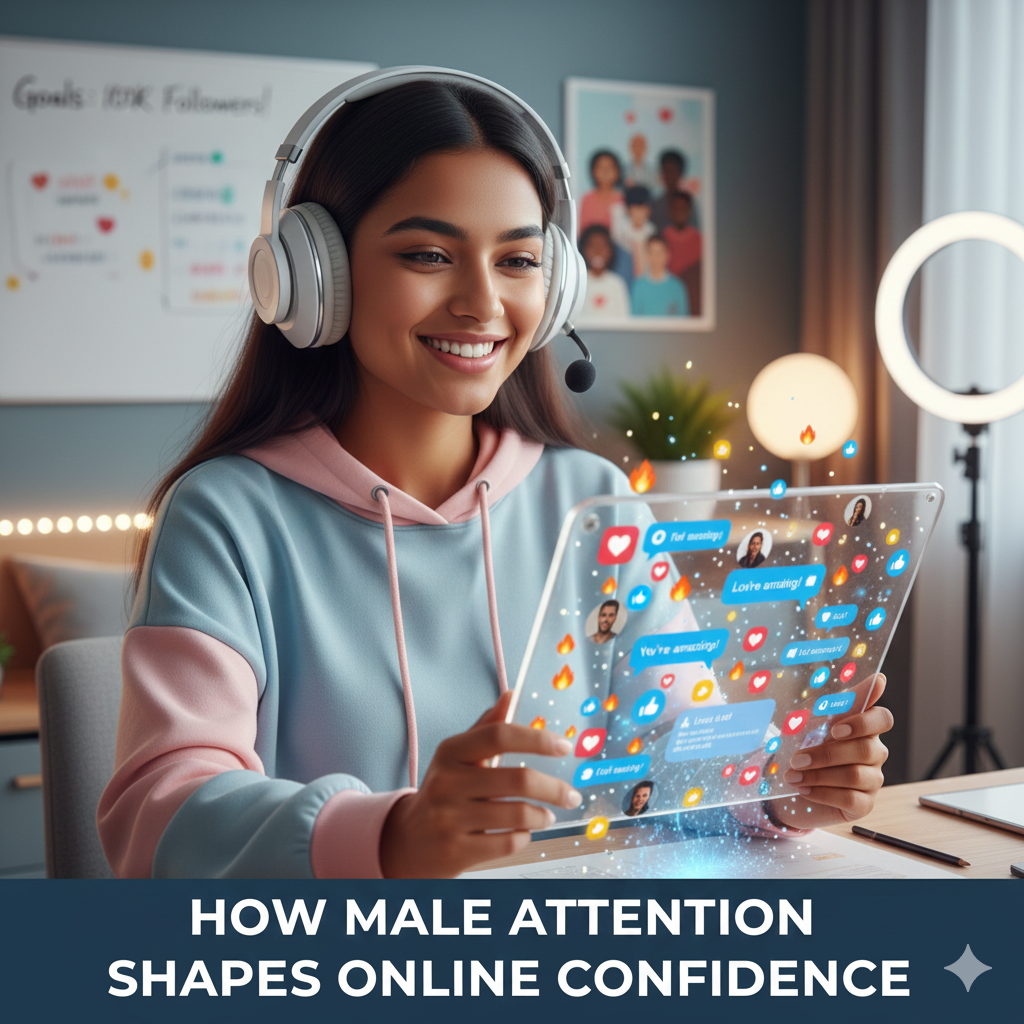
There’s a quiet revolution in how we see ourselves, and it’s happening in the glow of our smartphone screens. Scroll through any social media platform, and you’ll encounter a powerful, pervasive sense of confidence. Countless women post selfies, videos, and stories with a radiant assurance that they are, undeniably, gorgeous. While this is often celebrated as a triumph of self-love—and for many it genuinely is—there’s a complex, less-discussed current running beneath the surface. The reason the average woman on social media often feels beautiful is intricately tied to a simple, ancient economy: the economy of attention, and specifically, the nature of the attention provided.
To understand this, we must look at the feedback loop these platforms create. When a woman posts a photo, the response is typically immediate and quantifiable. Likes pour in. Complimentary comments stack up. Direct messages fill an inbox. This validation is a potent currency. But who, broadly speaking, is minting this currency? The architecture of most social platforms and the general patterns of online interaction mean a significant portion of this affirming engagement comes from men. And this engagement is frequently, though not exclusively, fueled by a basic human driver: lust.
This isn’t to reduce male interaction to a single dimension, but to acknowledge a powerful social truth. Male attention on these platforms is often profuse, instantaneous, and visceral. It is an attention that tends to prioritize physical appearance above other qualities. When this form of attention becomes a consistent, measurable background noise—a steady drumbeat of likes, fire emojis, and “you’re stunning” comments—it begins to shape perception. It creates a mirrored room where one’s image is reflected back a thousand times, each reflection saying, “You are seen. You are desired.”The average woman internalizes this feedback. It’s human nature. If you are consistently told you are beautiful through a system of tangible metrics, you begin to believe it. Your confidence solidifies. You feel gorgeous because a significant portion of your online audience is actively, and lustfully, affirming that you are. This dynamic can be incredibly empowering. It allows women to claim space, to set their own terms of beauty outside traditional gatekeepers, and to feel desired on their own platforms.
However, this confidence can exist on a foundation that is, ironically, outside of the self. It is a confidence built on external validation of a very specific type. The “gorgeous” feeling is often linked directly to being found gorgeous by someone else, and often in a context that prioritizes physical appeal above intellect, humor, or character. This can create a subtle pressure to continue performing within that narrow lane—to post the kinds of images that guarantee that same lustful, affirming response, which in turn reinforces the feeling of being gorgeous.The danger lies not in feeling beautiful, but in confusing this market-driven feedback with unshakeable self-worth. When the feeling of being gorgeous is tied to an algorithm and the predictable patterns of human lust, it can become a commodity. It can fluctuate with engagement rates. It can create anxiety when the likes slow down, whispering a terrifying question: “Am I still gorgeous?”
The true challenge, then, is to navigate this space with clear eyes. The confidence born on social media is real in its feeling, but it’s crucial to understand its source. It is a confidence amplified by an ancient and powerful force—the force of desire and the human hunger to be desired. There is power in harnessing that, in owning one’s image and reveling in the affirmation. But there is a deeper, more resilient form of gorgeous that exists offline, in silence, without a notification in sight. It’s the kind that isn’t reflected in a thousand lustful glances, but built in the quiet knowledge of one’s own worth, far beyond the frame of a camera.
So yes, the average woman on social media feels gorgeous. And she is. But perhaps it’s worth asking: is she feeling her own light, or is she feeling the warmth of a million candles held by others? Understanding the difference is the key to ensuring the confidence we project online doesn’t just come from the gaze of others, but can ultimately withstand its absence.