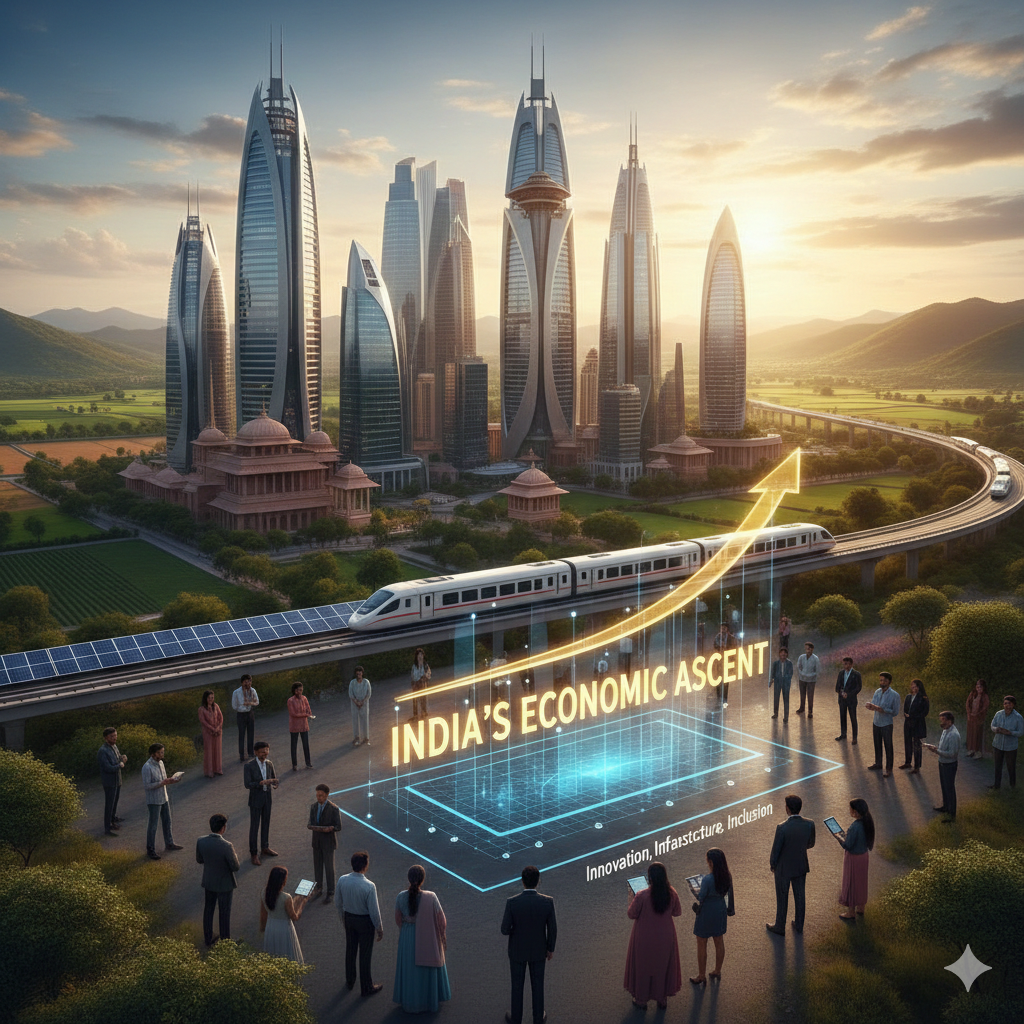
For decades, the story of global economic power followed a familiar script, centered on established hubs in North America, Europe, and East Asia. Today, however, a new and compelling narrative is being written, and its setting is the Indian subcontinent. The growth of the Indian economy is not merely a statistical blip; it is a broad-based, complex transformation that is reshaping its own society and its place in the world. To understand this ascent is to look beyond simple percentages and observe the confluence of foundational shifts, demographic energy, and strategic ambition.
The journey began in earnest with a pivotal turn in the early 1990s. Confronted with a severe balance of payments crisis, India embarked on a series of reforms that quietly but decisively unshackled its potential. The government moved away from a closed, license-raj system, opening the doors to foreign investment, reducing trade barriers, and allowing the private sector room to breathe. This was not an overnight revolution, but a steady process of integration with the global economy. It set in motion a shift from an agrarian base to one powered by services and, increasingly, manufacturing. This foundational reform created the platform upon which everything else is being built.
Perhaps India’s most powerful and unique asset is its people. With a median age under 30, India possesses a demographic profile that is the envy of aging nations. This is more than just a large number of young people; it is a growing pool of aspirational, English-speaking talent entering the workforce each year. This demographic dividend fuels consumption, the core engine of India’s growth. A burgeoning middle class, projected to expand significantly in the coming years, is driving demand for everything from smartphones and automobiles to financial services and quality healthcare. This vast domestic market provides a formidable cushion against global economic headwinds and an irresistible attraction for international businesses.
Technology has acted as a powerful accelerant in this story. India did not just adopt technology; it leveraged it to enact a profound structural change. The digital public infrastructure, most notably the Aadhaar biometric identity system and the Unified Payments Interface (UPI), has been a silent revolution. It has brought formal financial services to hundreds of millions, streamlined welfare delivery, and fostered an unprecedented culture of digital transactions. This tech-first approach has spawned a world-class startup ecosystem, with thousands of new ventures solving local and global problems, attracting significant venture capital, and creating a culture of innovation that extends from fintech and edtech to space and clean energy.
The government has played a central role in shaping this trajectory through a focus on long-term physical and social infrastructure. Massive investments are being channeled into building modern highways, railways, ports, and airports, aiming to finally overcome the historical deficits that hampered logistics and connectivity. Concurrently, a push to formalize the economy through measures like the Goods and Services Tax (GST), while challenging in implementation, seeks to create a more transparent, unified national market. Initiatives in renewable energy, particularly solar power, position India not just as a consumer but as a future leader in the global green transition.
Yet, the path is not without its significant challenges. The benefits of growth must be distributed more evenly across states and between urban and rural areas. Job creation, especially high-quality formal employment, must keep pace with the millions entering the labor force. Skills development, education reform, and navigating the complexities of global geopolitics remain critical tasks. The economy must grow not just in size but in resilience and inclusivity.
The growth of the Indian economy, therefore, is a multi-layered phenomenon. It is the story of policy reforms maturing, of a young population’s aspirations turning into economic activity, and of technology being harnessed for leapfrogging development stages. It is marked by an undeniable momentum and a confidence that is increasingly palpable. While hurdles remain, the direction is clear. India is steadily moving from being a large, promising economy to becoming a central, dynamic pillar of the global economic order, its growth engine firing on multiple cylinders and rewriting the rules of what is possible for a nation of its scale and diversity.
