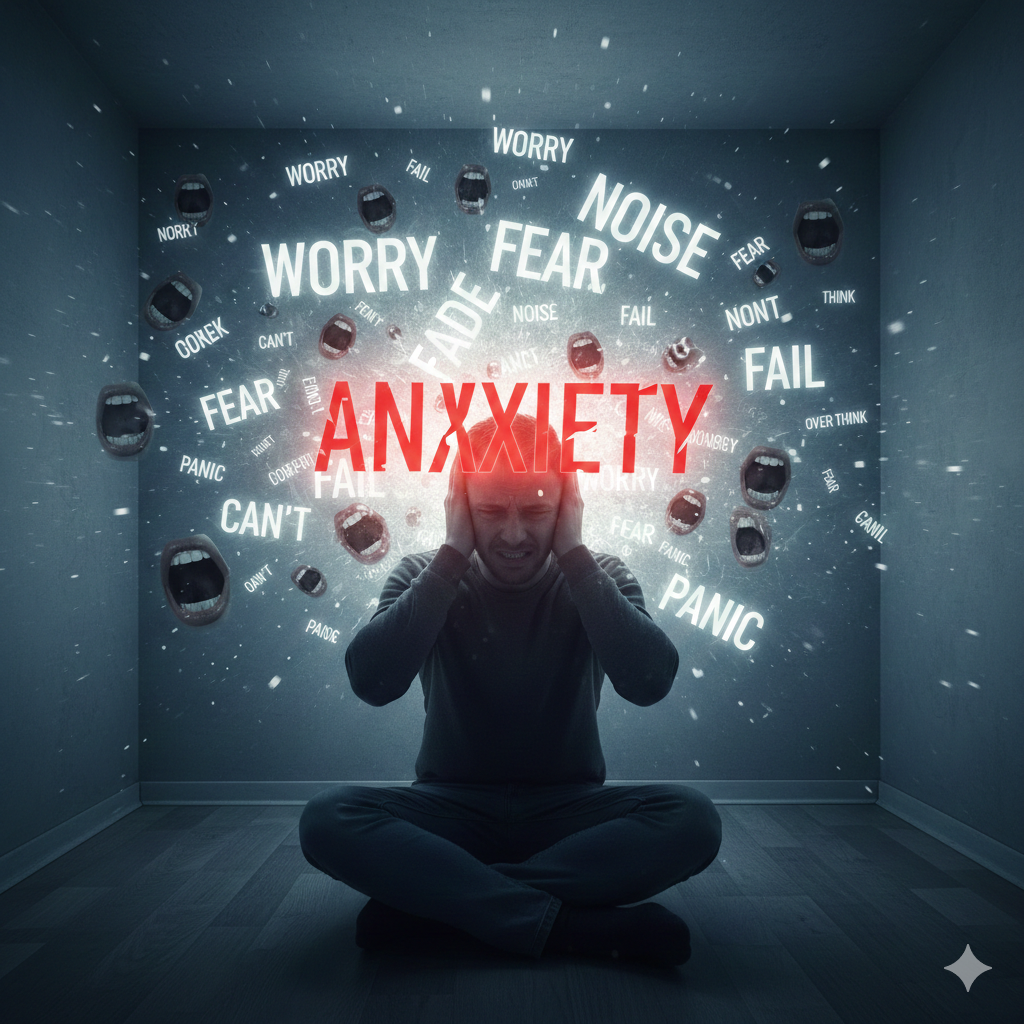
Social anxiety doesn’t just make social situations uncomfortable. It fundamentally warps them, transforming what should be normal human connection into an exhausting performance where you’re simultaneously the actor, the critic, and the anxious audience member watching yourself fail.
The destruction begins before you even arrive. That dinner invitation or party text triggers an immediate cascade of catastrophic predictions. Your mind conjures elaborate scenarios of humiliation: you’ll say something stupid, people will notice you’re nervous, you’ll stand awkwardly alone while everyone else effortlessly mingles. These aren’t just passing worries. They become vivid certainties that feel more real than the actual event you haven’t even attended yet.
When you finally force yourself to go, you’re already depleted before you walk through the door. The anticipatory anxiety has burned through your energy reserves, leaving you running on fumes before the first hello. You enter the room hyper-aware of your body, convinced that everyone can see your hands shaking, hear the tremor in your voice, notice the flush creeping up your neck. Your focus narrows to a suffocating spotlight on yourself, monitoring every micro-expression, every word choice, every gesture for signs of failure.
This self-surveillance makes genuine connection impossible. You can’t listen to what someone is actually saying because you’re too busy rehearsing your next line, analyzing whether your last comment landed well, or spiraling into panic about an awkward pause from three minutes ago. Conversations become chess games where you’re calculating moves instead of connecting with another human being. The other person might be sharing something meaningful about their life, but you’re stuck in your head, wondering if you’re maintaining appropriate eye contact or if you seem interested enough or too interested or weird.
The cruelest trick social anxiety plays is making you interpret neutral or positive signals as negative ones. Someone glances at their phone and you’re certain they’re bored by you. A brief lull in conversation becomes evidence that you’re terrible company. Someone doesn’t laugh at your joke and suddenly you’ve confirmed your deepest fear that you’re fundamentally unlikeable. Your anxiety hijacks the data, filtering every interaction through a lens of assumed rejection.This hypervigilance is exhausting. While others are relaxing, enjoying themselves, letting conversations flow naturally, you’re expending enormous mental energy monitoring threats that largely don’t exist. You’re simultaneously trying to appear normal while convinced that everyone can see through the performance. The irony is that this effort to hide your anxiety often creates the awkwardness you’re trying to avoid. Your responses become stilted, your laughter forced, your body language stiff.
Social anxiety also steals the memories you should be making. Even when an event goes well by any objective measure, you can’t enjoy that reality because you’re dissecting every moment for mistakes. That evening when you finally relaxed enough to share a story? You’ll replay it obsessively later, cringing at how your voice sounded, convinced you talked too much or revealed too much. The positive feedback you received dissolves under scrutiny, while minor awkward moments get magnified and preserved in painful detail.
Over time, this pattern creates a devastating feedback loop. You avoid social situations to escape the anxiety, but avoidance confirms your fears and makes the next interaction even harder. Your social skills atrophy from lack of practice. You miss opportunities to deepen friendships, start relationships, or build professional connections. The very experiences that could disprove your anxious beliefs become increasingly rare, leaving you isolated with only your catastrophic thoughts for company.
Perhaps most painfully, social anxiety robs you of spontaneity and joy. You can’t accept last-minute invitations because you need time to mentally prepare and work up courage. You can’t relax into the flow of a good conversation because you’re too busy monitoring yourself. You can’t be vulnerable or authentic because vulnerability feels like handing people ammunition to confirm that you’re as inadequate as you fear.
The tragedy is that while you’re busy being terrified of judgment, most people aren’t thinking about you nearly as much as you imagine. They’re too caught up in their own insecurities and experiences to scrutinize yours with the intensity you fear. But social anxiety makes this reality impossible to believe in the moment. It insists that you’re the center of attention in the worst possible way, that every misstep is noticed and catalogued, that people are just waiting for you to confirm their suspicions that you don’t belong.
What makes this particularly insidious is that social anxiety often strikes hardest in situations where connection matters most. Job interviews, first dates, important networking events—precisely when you need to show up as your best self, anxiety floods your system and sabotages your performance. You leave these experiences convinced you’ve failed, sometimes unaware that your anxiety distorted your perception of how things actually went.
The accumulation of these ruined experiences creates a heavy grief. You mourn the friendships you didn’t develop, the romantic possibilities you were too anxious to pursue, the career opportunities you let slip away. You watch others navigate social situations with apparent ease and feel fundamentally broken, as if everyone else received an instruction manual for being human that somehow skipped you.
Social anxiety doesn’t just make social experiences unpleasant. It fundamentally prevents them from serving their purpose: connecting you with others, building relationships, creating memories, and developing the sense of belonging that all humans need. Instead of coming away from gatherings feeling energized or connected, you leave exhausted, ashamed, and more convinced than ever that you should just stay home next time.