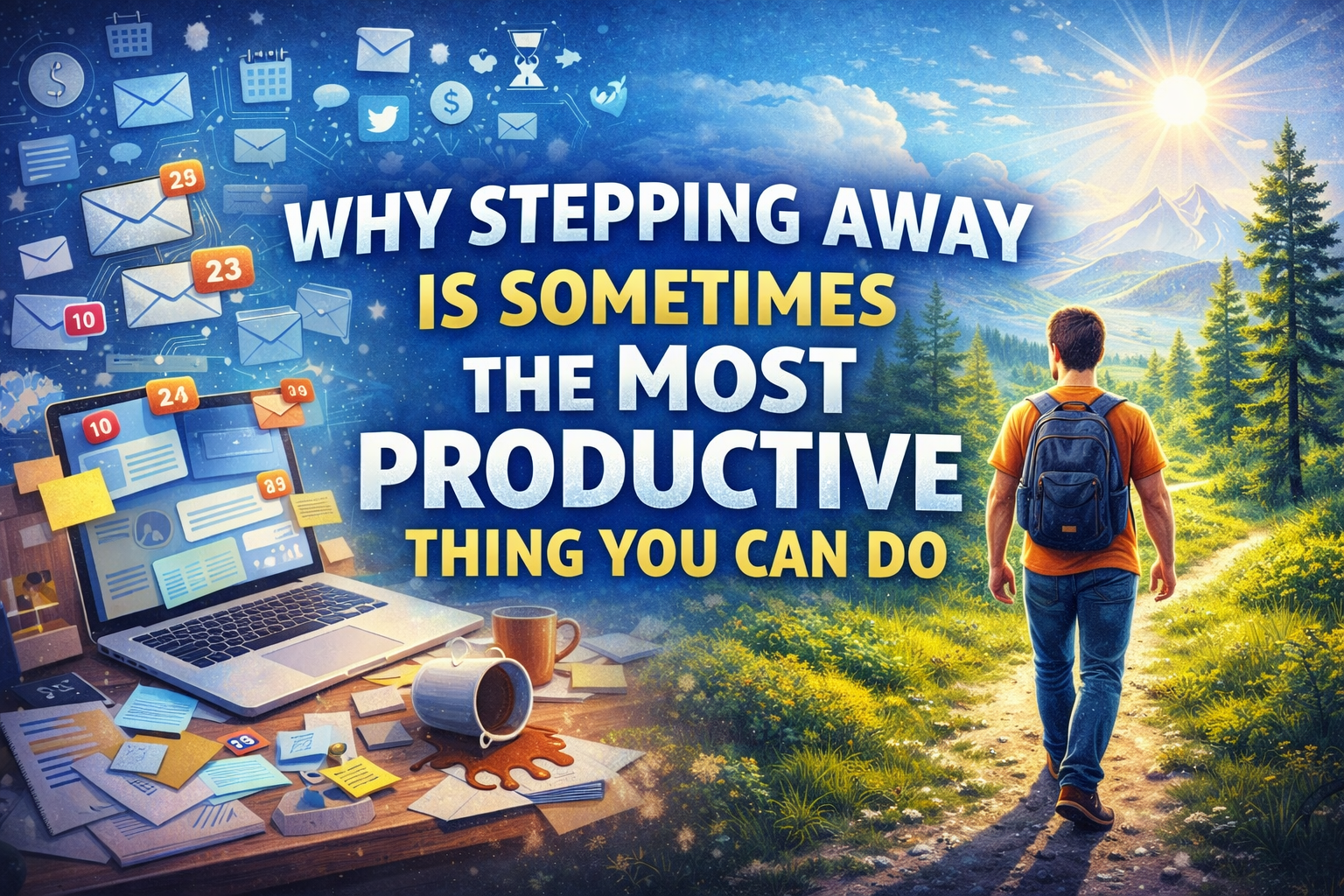
There is a natural instinct to keep pushing when something refuses to work. Whether it is a technical problem, a stubborn piece of writing, or a task that simply will not cooperate, many people believe the correct response is to double down and keep forcing the issue. Persistence is valuable, but there is a point where continued effort stops being productive and starts becoming counterproductive. At that moment, the smartest move is often to briefly shift your attention to something else.
When a task breaks down, especially when technology or equipment is involved, there is always the possibility that the problem is temporary. Software freezes, connections fail, files refuse to load, and systems behave unpredictably. In many cases, these issues resolve themselves after a few minutes. Servers reconnect, programs restart, and systems stabilize without any further intervention. Instead of wasting time staring at a screen and repeatedly trying the same action, it can be far more efficient to move on to another task and return later.
Even when the problem does not fix itself, stepping away still provides a powerful advantage. Frustration has a way of narrowing your thinking. When you spend too long trying to solve a problem that is not responding, your mind can become locked into the same set of assumptions. You keep trying the same approaches in slightly different ways, hoping that persistence alone will force a breakthrough.
A short break interrupts that pattern. By shifting your attention elsewhere, your brain resets. The tension surrounding the original problem fades, and when you return to it, you are more likely to see details you missed before. What felt like an impossible obstacle can suddenly appear simple once your perspective changes.
This principle shows up across many fields of work. Programmers often leave a bug unsolved for hours, only to notice the mistake immediately when they revisit the code later. Writers struggle with a paragraph until they step away and return with a clearer idea of what they were trying to say. Entrepreneurs wrestle with business decisions until distance gives them the clarity needed to choose the right direction.
The key insight is that productivity is not always about pushing harder in the moment. Sometimes the fastest path forward comes from temporarily letting go of the problem. Progress does not require constant direct pressure. It often requires rhythm: periods of effort followed by moments of distance.
When something refuses to work, stepping away is not a sign of defeat. It is a strategic pause. If the issue is caused by equipment or systems, time may solve it on its own. If it is caused by your own thinking, distance gives you the fresh perspective needed to solve it.
Either way, the result is the same. A brief shift in attention often saves far more time than stubbornly forcing a solution that is not ready to appear.