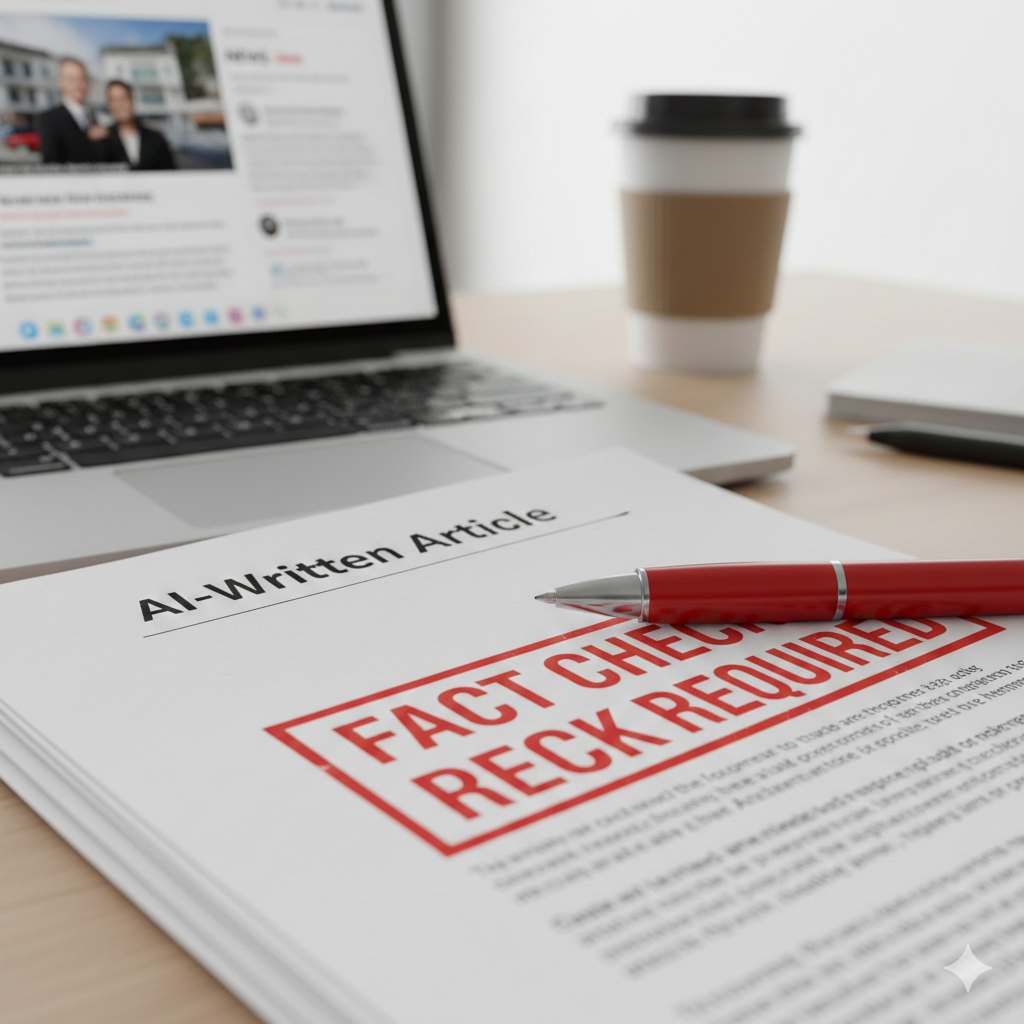
We’ve all embraced the incredible efficiency of AI writing tools. In minutes, they can produce a draft that sounds coherent, confident, and surprisingly human. The common advice is to run these articles through a “humanization” pass, adding a personal anecdote, varying sentence structure, and smoothing out any robotic cadence. This is crucial for engagement, but it addresses only half the problem. Lurking beneath that polished prose can be a more insidious issue: inaccuracy.
AI is not an intelligence that understands truth; it’s a pattern-matching engine that predicts the next most likely word. It excels at weaving information together in a way that sounds correct, often pulling from a vast dataset that includes outdated sources, biased perspectives, and, occasionally, pure fabrication. This phenomenon, often called “hallucination,” isn’t a bug but a fundamental feature of how large language models operate. They aim to be convincing, not correct.
Consider this: an AI might generate a biography of a historical figure with a perfectly plausible-sounding but entirely invented event. It might cite statistics that seem legitimate but are from a study that doesn’t exist. It could explain a complex technical process with a slight, almost undetectable error in sequence that would confuse any knowledgeable reader. The text will flow seamlessly, making the inaccuracy all the more dangerous because it is cloaked in authority.
This is where the second, non-negotiable layer of editing comes in: the fact-check. Humanization makes an article palatable, but verification makes it credible. Your reputation is on the line. Publishing a well-written but factually flawed article erodes reader trust far faster than a clunky sentence ever could. In an era of rampant misinformation, being a source of reliable content is your greatest asset.
The process requires a different mindset. Don’t just read for flow; read with skepticism. Question every claim, every date, every proper noun. Cross-reference names, titles, and events. Verify URLs and data points against authoritative sources. Pay special attention to nuanced topics where the AI may have glossed over complexity for the sake of a clean narrative. This is not simply proofreading; it is an act of journalistic or editorial diligence.
Ultimately, using AI for writing is a partnership. The tool provides a first draft. Your role is to breathe integirty to that scaffolding. You are the curator of truth, the final filter between the vast, unpredictable sea of training data and your audience’s trust. So, after you’ve smoothed out the edges and added your voice, take a step back. Put on your fact-checker’s hat and interrogate the text. Your readers and your credibility will thank you for the extra mile.