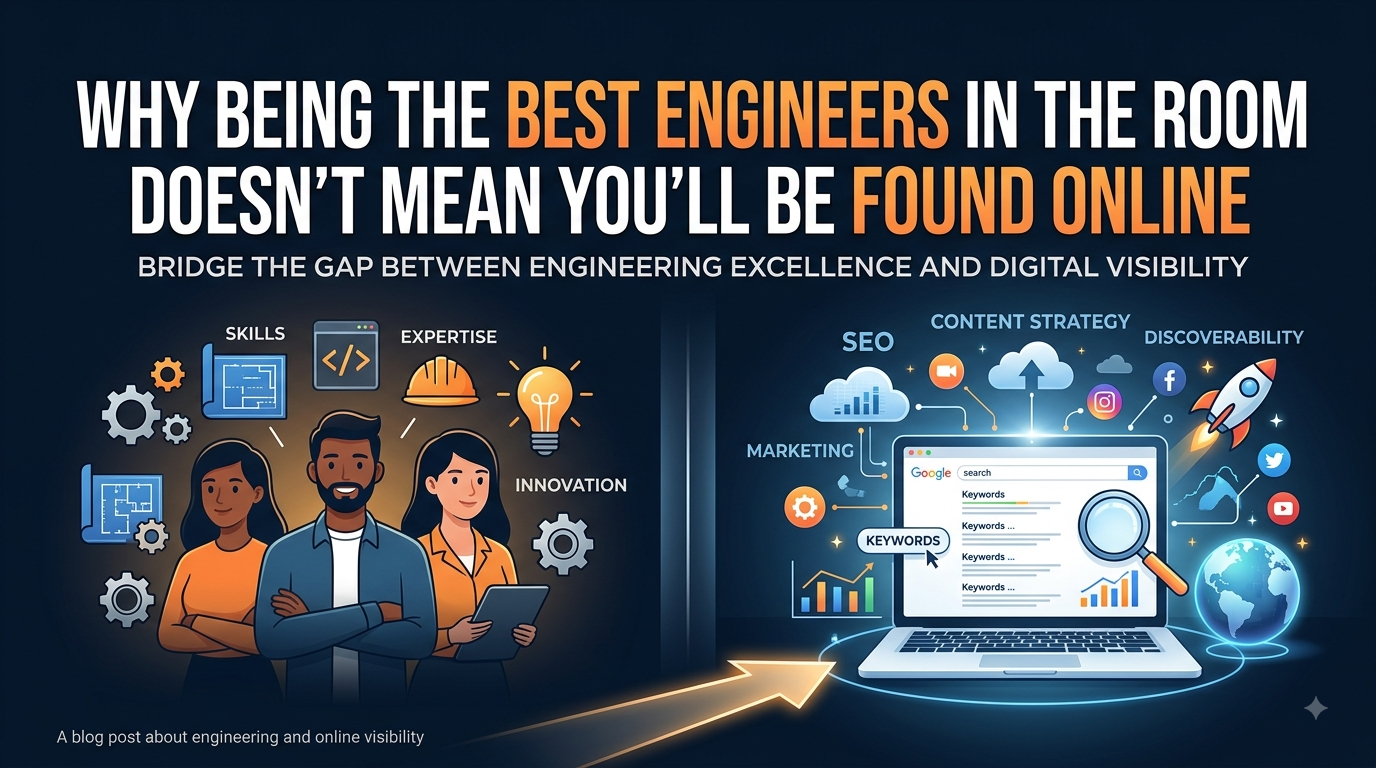
Talk to almost any cooling or power infrastructure company about what makes them different from competitors, and you’ll hear about engineering. The thermal efficiency of their liquid cooling systems, the redundancy built into their UPS design, the switchgear reliability under load conditions most providers never test for. This is a genuinely technical industry, and the companies that survive in it tend to survive because they’re good at solving hard physical problems. It’s a reasonable assumption, then, that being the best at the actual engineering should be enough to win business. If your systems perform better under the conditions that matter, word should get around.
The problem is that word getting around and being findable are two different mechanisms, and the industry’s history has quietly conflated them. For a long time, this was a relationship-driven business. Engineers talked to other engineers, integrators had preferred vendor lists, and a reputation built over years of reliable installations traveled through a fairly small, well-connected professional network. In that environment, being the best engineering team in the room really was close to sufficient, because the room was small and everyone in it eventually heard about everyone else’s work. That dynamic hasn’t disappeared, but the room has gotten much bigger, and it’s gotten bigger specifically because of the current surge in AI-driven data center construction, which has pulled in new buyers, new integrators, and new procurement teams who don’t have a decade of relationships in this space to draw on.
A buyer without an existing network doesn’t rely on word of mouth, because there isn’t any word to hear yet. They search. An engineer trying to solve a rack density problem, a procurement lead building a vendor shortlist, a data center operator evaluating cooling options for a new facility, all of them are increasingly starting that process with a search query rather than a phone call to someone they already know. If a company’s excellence lives entirely in its installed base and its engineering documentation, and never gets translated into content that shows up when someone searches for the specific problem that company solves, that excellence is invisible to exactly the buyers who have no other way to find it. The work is real. The visibility isn’t.
This creates a strange outcome that a lot of technically excellent companies don’t see coming: a competitor with meaningfully weaker engineering can win the deal simply by being the company that showed up first in the buyer’s research. This isn’t a failure of the market to recognize quality. It’s a mismatch between where quality lives and where the buying decision actually starts. A buyer can’t evaluate engineering they never encounter. If the first few results a prospective buyer sees are from competitors who’ve invested in explaining their approach to thermal management or their experience with a specific power density threshold, those competitors get the benefit of the doubt before anyone has verified whether their engineering is actually comparable. The company with the better product is competing from behind before the buyer even knows they exist.
None of this means the old relationship-driven channels stop mattering. Referrals, integrator relationships, and reputation within the professional community remain real assets, and nothing about building an online presence replaces them. What it means is that those channels alone no longer cover the growing share of buyers who have entered this market recently, don’t have an established network to draw on, and are forming their first impression of every vendor through a search result instead of a conversation. A company can be the best engineers in the room and still lose deals to someone who was simply easier to find, and in a market expanding as fast as this one is right now, that gap is only going to widen for companies who haven’t closed it yet.