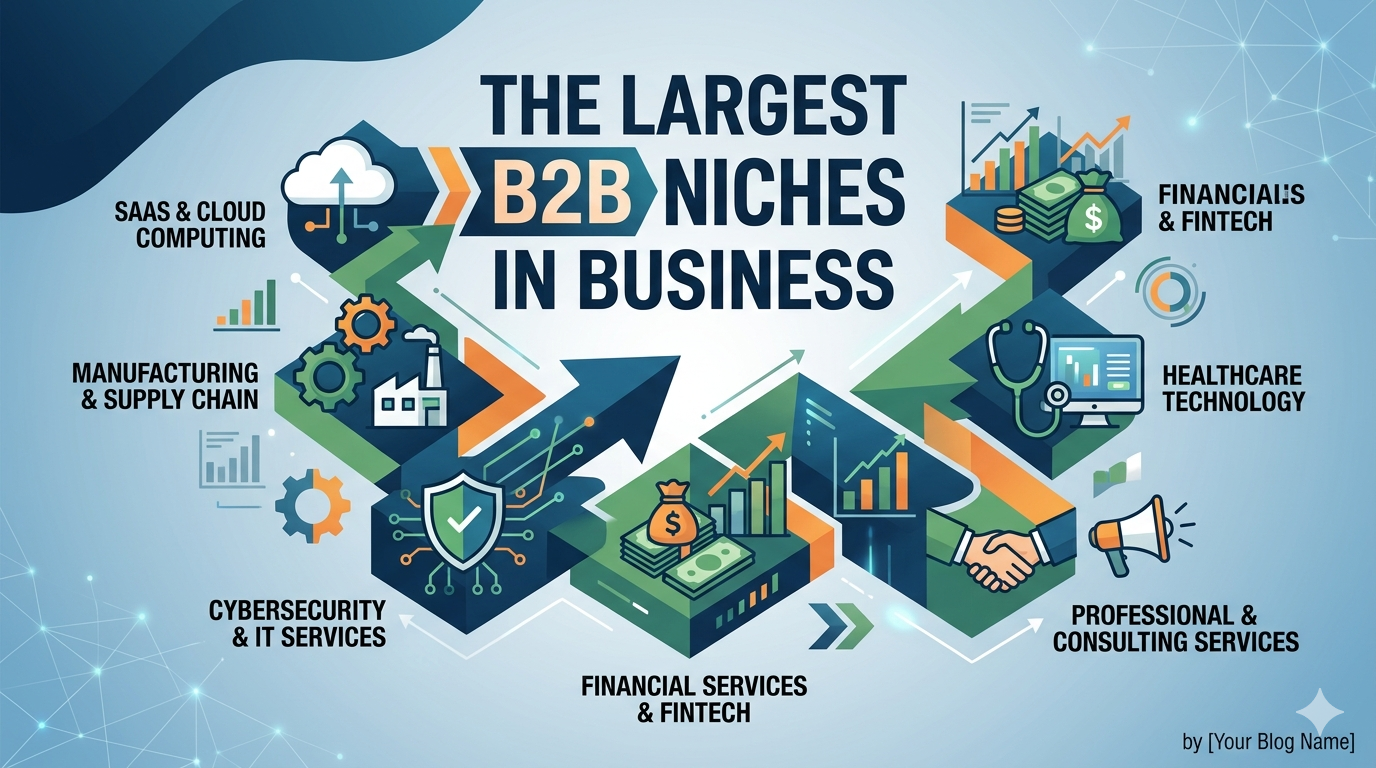
The business-to-business landscape is vast, but a handful of sectors consistently generate the highest revenues and attract the most sustained attention from vendors, investors, and entrepreneurs alike. Understanding where the money flows in B2B requires looking past surface-level trends and examining the structural needs that virtually every company on earth must address.
At the foundation of the commercial world sits enterprise software and information technology services. This is not merely a niche but an ecosystem unto itself, encompassing everything from customer relationship management platforms that help sales teams track leads to complex enterprise resource planning systems that coordinate supply chains across continents. The reason this space commands such enormous spending is simple: as businesses grow, their operational complexity increases exponentially, and manual processes become untenable. A mid-sized company might survive with spreadsheets for a time, but scaling to hundreds of employees across multiple locations demands automated workflows, data integration, and cybersecurity infrastructure. The transition to cloud computing over the past two decades has only accelerated this trend, transforming what were once massive capital expenditures into recurring subscription models that create predictable revenue streams for vendors and ongoing relationships with clients.
Closely intertwined with technology is the financial services sector that caters exclusively to businesses. Commercial banking, corporate lending, payment processing, and treasury management form the circulatory system of the global economy. Every transaction, every payroll run, every international shipment requires financial infrastructure. The B2B fintech revolution has intensified competition in this space, with specialized players offering faster cross-border payments, automated invoice factoring, and sophisticated expense management tools that traditional banks struggled to provide. What makes this niche particularly resilient is that economic downturns often increase demand for certain financial products; when cash flow tightens, businesses need credit lines, when fraud rises, they need better risk management tools.
The marketing and advertising technology sector represents another massive B2B domain, though its contours have shifted dramatically with the digital transformation. Where once a handful of media buyers controlled television and print advertising, today’s landscape includes programmatic advertising platforms, search engine optimization tools, content management systems, and customer data platforms that promise to unify fragmented consumer information. The underlying driver here is the eternal business need to acquire customers efficiently. As consumer attention fragments across devices and platforms, companies desperately need sophisticated tools to target, measure, and optimize their marketing spend. The data generated by these interactions has become a form of currency in itself, creating secondary markets for analytics and business intelligence services that help organizations make sense of their own operations and customer behaviors.Human capital management and professional services constitute another pillar of the B2B economy. This includes not only the obvious payroll and benefits administration platforms but also executive recruiting firms, specialized legal counsel, management consultancies, and corporate training providers. The logic here is straightforward: businesses are made of people, and managing people at scale requires external expertise and systems. The war for talent in competitive industries has driven companies to invest heavily in applicant tracking systems, employee engagement platforms, and compensation benchmarking tools. Meanwhile, regulatory complexity across different jurisdictions means that even large corporations with substantial internal legal and HR departments frequently turn to specialized outside counsel for employment law, immigration issues, and compliance matters.
Manufacturing and industrial supply chains represent a less glamorous but equally massive B2B niche. The procurement of raw materials, components, and industrial equipment involves transactions that dwarf consumer retail in dollar volume. Specialized marketplaces for chemicals, steel, electronic components, and agricultural products facilitate trade between producers and industrial buyers. Beyond the physical goods themselves, the logistics and transportation management sector enables the movement of these materials across global networks. The just-in-time manufacturing philosophies that dominated recent decades created dependencies on precise delivery coordination, spawning entire industries around freight forwarding, customs brokerage, and warehouse management systems. The recent supply chain disruptions have only heightened awareness of how critical and vulnerable these B2B networks truly are.
Healthcare services and medical devices sold to hospitals, clinics, and pharmaceutical companies form another substantial B2B market. Unlike consumer healthcare, which involves individual patients making personal decisions, the B2B healthcare sector involves institutional purchasing of everything from surgical instruments and diagnostic imaging equipment to enterprise software managing electronic health records. The regulatory environment here creates high barriers to entry, which protects incumbent players but also means that successful entrants can capture significant value. The aging populations in developed economies suggest sustained demand growth for medical infrastructure and the B2B services that support it.
Cybersecurity has emerged from a subcategory of IT into a standalone massive B2B niche as the frequency and sophistication of digital threats have increased. The potential cost of a data breach or ransomware attack now runs into the millions of dollars for large organizations, creating a risk management imperative that boards of directors and C-suite executives cannot ignore. This has shifted cybersecurity from a technical concern managed by IT departments to a strategic priority with dedicated budgets and vendor relationships. The sector spans endpoint protection, network security, identity management, and increasingly, cyber insurance products that transfer some of this risk to third parties.Real estate and facility management for commercial purposes represents another significant B2B domain. This includes not only the leasing and sale of office buildings, warehouses, and retail spaces but also the property technology that manages these assets. Smart building systems, energy management platforms, and space utilization analytics have become particularly relevant as hybrid work models force companies to reconsider their physical footprints. The industrial real estate segment, driven by e-commerce fulfillment needs, has seen particularly intense B2B activity as retailers and logistics providers compete for strategically located warehouse space.
Finally, the energy and sustainability sector has evolved from a traditional utilities model into a complex B2B marketplace. Beyond simply purchasing electricity and natural gas, large corporations now engage in power purchase agreements for renewable energy, invest in carbon offsetting services, and procure consulting to navigate increasingly stringent environmental regulations. The pressure from investors, consumers, and regulators to demonstrate environmental responsibility has created entirely new B2B categories around emissions tracking, sustainable supply chain auditing, and circular economy consulting.
What unites these massive B2B niches is that they all address problems that compound as organizations scale. A solo entrepreneur has little need for enterprise resource planning software or a corporate law firm, but a multinational corporation cannot function without them. This creates natural expansion revenue for B2B providers and high switching costs for customers once integrated. The most successful B2B businesses typically embed themselves so deeply into their clients’ operations that they become difficult to displace, creating the stable, long-term relationships that characterize the most profitable corners of the business-to-business world.