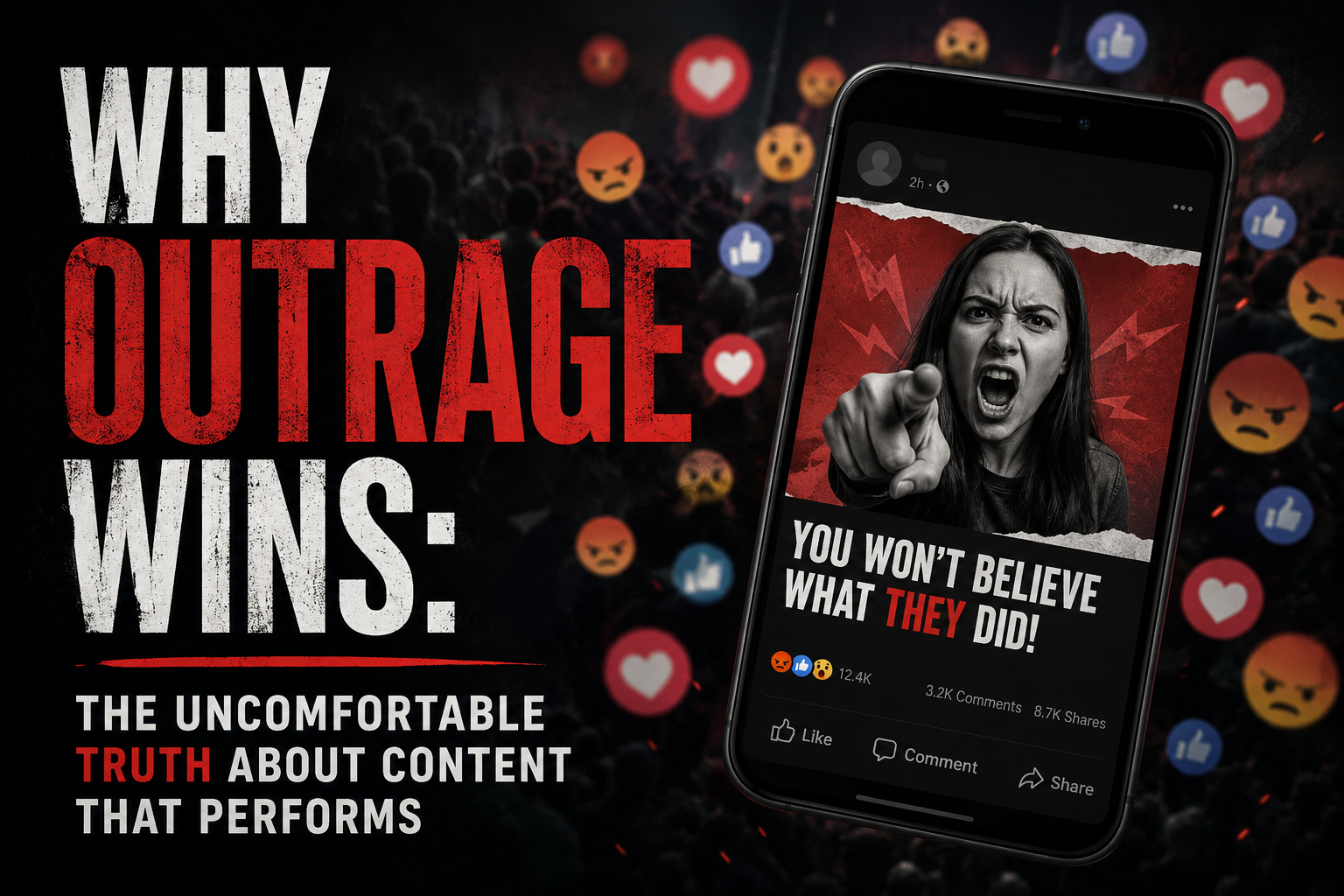
Spend enough time scrolling through blogs, newsletters, or social feeds and a pattern becomes impossible to ignore. The measured, balanced take on a topic quietly disappears into the void, while the scathing hot take, the doom-laden prediction, or the furious rant racks up shares, comments, and clicks. This isn’t a coincidence or a failure of quality content to find its audience. It’s a structural feature of how attention, psychology, and platform design intersect, and understanding it explains a lot about the state of online discourse today.
The Psychology Behind the Click
Humans are wired to notice threats before they notice comfort. This negativity bias served us well when the danger was a predator in the grass, but it now gets hijacked by headlines and hooks. A title that warns of collapse, betrayal, or outrage triggers an almost involuntary spike of attention that a balanced, “it’s complicated” framing simply cannot match. Extreme content doesn’t just inform, it activates. It produces a physiological response, whether that’s anger, fear, or vindication, and that response is what drives people to stop scrolling, click through, and often comment to vent their own reaction. Nuance, by contrast, asks for patience. It invites reflection rather than reaction, and reflection is slow, while the feed is fast.
Platforms Are Built to Reward This
None of this would matter much if distribution were neutral, but it isn’t. Every major platform optimizes for engagement signals like time spent, comments, shares, and replies, because those signals correlate with ad revenue and continued usage. Extreme content generates disproportionate engagement because it provokes people into responding, often specifically to argue against it. A polarizing claim doesn’t just attract agreement, it attracts disagreement, and disagreement is just as valuable to an algorithm as a compliment. The system has no way of distinguishing a comment that says “this is brilliant” from one that says “this is the dumbest thing I’ve ever read.” Both register as engagement, and both get rewarded with more reach. In effect, the algorithm doesn’t care whether content is true or fair, only whether it moves people, and anger moves people more reliably than agreement.
The Incentive Trap for Creators
This creates a genuinely difficult position for anyone trying to build an audience honestly. A creator who writes a thoughtful, hedged piece acknowledging multiple sides of an issue will often watch it underperform next to a competitor who picks an extreme position and defends it with total confidence. Over time, the data teaches creators a lesson whether they want to learn it or not: certainty sells, and ambiguity doesn’t. This is how entire content ecosystems drift toward polarization. It isn’t usually a deliberate choice to mislead people, it’s a slow erosion where each small optimization toward what performs nudges the work further from balance and further toward provocation.
The Cost Nobody Tracks
What gets lost in this dynamic is harder to measure than clicks, which is exactly why it gets ignored. Audiences trained on extremity become less tolerant of complexity elsewhere. Trust in media and commentary erodes as people start to assume every strong claim is engagement bait rather than genuine conviction. And creators themselves often burn out under the pressure to manufacture outrage they don’t authentically feel, turning what might have been a sustainable creative practice into a treadmill of escalation. The extreme take that worked last month needs an even more extreme follow-up to keep pace, because audiences habituate to provocation just as they habituate to anything else.
Is There a Way Out?
The honest answer is that extremity will likely keep outperforming nuance as long as algorithms reward raw engagement over quality of engagement. But that doesn’t mean every creator has to play the same game. Audiences that are exhausted by outrage are also a real and growing market, and a smaller but more loyal readership built on trust tends to be more durable than a large one built on provocation. The creators who last tend to be the ones who find a voice that’s clear and confident without depending on manufactured anger, because confidence and extremity are not actually the same thing, even though the algorithm often treats them that way. Understanding why extreme content wins isn’t an argument for producing it. It’s the first step toward making a deliberate choice about what kind of attention you actually want to earn.