Posted on Leave a comment

Understanding Percentiles: What They Are and Why They Matter

When reading statistics, test scores, or income reports, you might encounter the term percentile. But what does it actually mean? Let’s break it down.

What Is a Percentile?

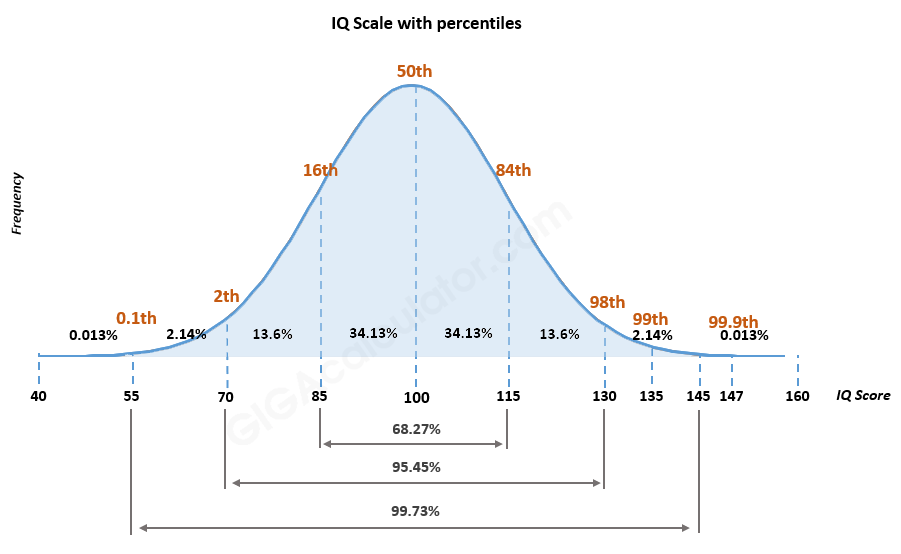
A percentile tells you how a particular value compares to the rest of the data in a set. In simple terms:> “The Xth percentile is the value below which X% of the data falls.”For example, if you score in the 90th percentile on a test, it means you scored better than 90% of all test takers.

How Percentiles Work

Percentiles divide data into 100 equal parts. Think of them like checkpoints along a number line:

25th percentile (Q1): The bottom quarter of the data

50th percentile (median): The middle value — half the data is below, half above

75th percentile (Q3): The top quarter starts here

So if a child is in the 40th percentile for height, it means they are taller than 40% of children and shorter than 60%.

Percentiles vs. Percentages

Percentiles are not the same as percentages. A 90% score on a test doesn’t always mean the 90th percentile. Percentiles are relative — they depend on everyone else’s scores. You could get 90/100 points, but if most people scored higher, your percentile might be lower.

Why Percentiles Are Useful

1. Education: Standardized test scores often use percentiles to show performance compared to peers.

2. Health: Pediatric growth charts use percentiles to track children’s development.

3. Finance & Economics: Income or wealth percentiles help analyze economic inequality.

4. Data Analysis: Percentiles identify outliers and understand distributions.

Quick Example

Imagine 10 students scored on a math test:50, 55, 60, 65, 70, 75, 80, 85, 90, 95The 50th percentile (median) is 70.The 90th percentile is 95. So, a student scoring 95 did better than 90% of the class.

Final Thoughts

Percentiles are a powerful tool for comparing values in context. They help turn raw numbers into meaningful insights, whether you’re tracking grades, growth, or income. Understanding percentiles makes it easier to see not just your score, but where you stand relative to the group.

Posted on Leave a comment

Start Early to Get the Best Results with The Least Effort

If you want to get the best results possible, you’re going to want to start as early as possible. This applies to every aspect of the game of life, and it’s becoming more clear to me as I age. If I had one thing to tell my 18 year old self, it would be to start *right now*. It doesn’t matter whether your dream is to be a construction worker or a rap star. You want to get to work on your dream as young as possible, so that you can take it as far as possible.

I’ve made a lot of progress towards my dream of being a digital nomad because of the fact that I started early. I was learning about making money online from a young age, and starting around the age of 21, I decided that I was going to make it to the top of my field. I put my head down and worked, and now I’ve almost reached the living standard of an average person, globally speaking. This is all fantastic, and I’m quite happy with where I am in life, but I also know the consequences of starting late in life.

I have little to no chance of ever becoming very wealthy by western standards. I haven’t laid the groundwork for it. I don’t have the skills or relationships required to succeed. My country has been growing, and I’ve grown with it. But the United States has gotten extremely wealthy in the 6 years since I’ve left. I don’t think it really matters how hard I work. If I were to move there 5 years from now, I would probably find myself living quite poorly.

If I had done more work, or worked differently, I would have a better shot. I could have stayed on the American scene. I could have gone into tech, gotten a remote job, and been making my way up the career ladder by now. This would have yielded me a higher salary, and different opportunities as a result. But I didn’t do that work, and now I am where I am.

Experiences compound the same way money does

When it comes to money, the “retire early” types seem to understand the concept of compounding very well. But it also applies to life experiences. All of the life experiences you have compound to create you, whoever you are. I’ve experienced living in North America, creating content for money, and living as a normal person in a poor country. As such, I’m well positioned to write about self improvement, content creation, and being a digital nomad. I could learn another skillset such as IT, but I know what I’m doing in the “game” of writing and blogging too. As a result, it makes sense for me to keep writing, up until a certain point. I’ll probably be taking a hard look at IT/Computer programming soon, but I can get very far with just the written word alone.

Get on it

I got on it at the right time. As soon as I turned 21, I was focused. This is because I moved abroad from a wealthier country without much savings, and well before the passport bro phenomenon. I knew I would have to work hard just to have a bit of something in this world, and I started working as soon as I hit the ground as a result.

Make sure you’re also doing this. If you’re in a wealthy country and in your mid-20s, you should have a lot of money saved, or be studying for a great career. This is especially true in the United States. People in your age cohort are already self-made millionaires. You want to have a general direction in mind by your 20s, and be on your way by your mid 20s. For some jobs (like teaching), success is disconnected from income. That’s ok, but you want to be finding success by your 30s or 40s. From watching my parents and others work their way up the ladder, I can say with confidence that success isn’t created overnight, but you start to see the clues by the time someone is in their early 30s. A lot of this stuff is only possible if you start early. Graduating at 16 gave my parents an edge. Having successful family members has given me an edge. You don’t have to apply this to financial and career success only. If you start riding bikes at a young age, you’re more likely to be an amazing cyclist. You can apply this logic to your children too. Overall, life is long and your choices compound. Fight for what you want and choose wisely.