Posted on

The Trap of the Digital Product Dump

There’s a peculiar kind of panic that sets in when you’ve spent months building something digital. A course, an ebook, a template library, a pack of presets—whatever it is, it’s finished, and it feels like a living thing that’s been sitting in a dark room too long. You want to fling open the doors and let everyone see it. All at once. Every product, every variation, every idea you’ve ever had, released in a glorious, chaotic burst of creativity.It feels generous. It feels like abundance. It feels like proof that you’re serious.

It’s usually a mistake.

I’ve watched this pattern repeat itself across every corner of the internet. A blogger wakes up one morning with a catalog of five digital products they’ve been quietly developing. They’ve read the success stories. They’ve seen the screenshots of six-figure launches. They believe, with absolute sincerity, that if they just put everything out there, the market will sort through it and reward their effort. So they announce it all. A bundle here, a standalone there, a limited-time offer everywhere. The first day brings a small spike of sales from friends and early followers. The second day is quieter. By the end of the week, the silence is deafening. The products sit there, perfectly crafted and perfectly ignored, while the creator stares at analytics that look like a flatline.What happened wasn’t a failure of quality. It was a failure of timing and relationship.When you release everything at once, you’re essentially asking the market to do your homework for you. You’re saying, “Here are all my assumptions about what you need. You figure out which ones are right.” But the market doesn’t work that way. The market responds to being seen before it responds to being sold to. It wants to feel like you built something specifically for the conversation you’ve already been having together.

Building a following first isn’t just a marketing strategy. It’s a calibration tool. Every comment, every reply to a newsletter, every question in your DMs is data. Not the cold, spreadsheet kind of data, though that matters too, but the human kind. Someone tells you they’re struggling with the exact problem your product solves, but they describe it using words you never would have put in your sales copy. Someone else asks a follow-up question that reveals your solution is actually two solutions, and one of them is far more urgent than the other. This is the stuff you can’t guess from inside your own head. You have to be in the conversation to hear it.

There’s also the matter of attention economics. Your audience has a limited budget of care, and you don’t get to spend it all at once. When you release a single product into a community that knows you, trusts you, and has been waiting for exactly this thing, you get a different kind of energy. People share it because it feels like a natural extension of the relationship, not a sudden commercial intrusion. They buy it because they’ve already decided you’re someone worth buying from. That decision didn’t happen when they saw your product page. It happened over the weeks and months when you showed up consistently, offered genuine value, and proved you understood their world.Releasing everything at once dilutes that energy across too many surfaces. Instead of one clear signal, you create noise. Your audience doesn’t know what to focus on, so they focus on nothing. Worse, if the initial response is underwhelming, you’ve burned through your entire inventory of first impressions. You can’t go back and unrelease something. You can’t put the genie back in the bottle and say, “Actually, let’s try that again with better timing.” You’ve played your whole hand, and now you’re sitting at the table with nothing left to bet.

The bloggers who build sustainable income from digital products tend to follow a different rhythm. They release one thing. They watch how it lands. They talk to the people who bought it and the people who didn’t. They adjust. Maybe the product needs a simpler entry point, or a more advanced tier, or a completely different framing. They learn something real, something specific, something they couldn’t have known before they put it into the world. Then, and only then, do they build the next thing, armed with actual market intelligence instead of hopeful guesses.

This approach requires patience, which is not a virtue the internet celebrates. The internet celebrates the overnight success, the viral launch, the six-figure day. What it doesn’t show you is how many of those launches were preceded by years of invisible audience-building, or how many of them crashed and burned after the initial spike because there was no foundation underneath. The slow path doesn’t make for a good screenshot, but it makes for a durable business.

There’s a deeper risk to the dump-everything approach, too. When you release all your products at once and they don’t sell, the story you tell yourself isn’t “I released too much at once.” The story becomes “My products aren’t good enough” or “There’s no market for what I make.” You internalize a failure that was actually strategic, not creative. You abandon ideas that might have worked beautifully if they’d been introduced at the right moment, to the right people, with the right context. The creative damage of a poorly timed launch can take years to undo, not because the products were bad, but because your confidence was shattered by a situation that was never really about product quality in the first place.

So if you’re sitting on a catalog of digital products right now, itching to set them free, I understand the urge. The work is done. The potential feels enormous. But potential is not the same as readiness, and your products are not more important than the people you’re hoping will buy them. Start with one thing. Release it to people who know your name. Listen harder than you sell. Let the market teach you what it actually wants, rather than asking it to validate what you hope it wants.

The following you build today isn’t just an audience for tomorrow’s launch. It’s a compass. It tells you where to go next, what to build next, how to talk about what you’ve built so it lands with the force of recognition rather than the thud of interruption. That following is worth more than any single product, because it’s the only thing that makes products matter at all.Your digital products will wait. The market, and your place in it, won’t wait forever—but it will wait long enough for you to do this right. Build the following first. Learn what the market wants. Then release, one careful step at a time, into a conversation you’ve already started.


Posted on

Contextual Advertising: A Potential Revenue Stream for Online Writers

Contextual advertising is one of the most intuitive ways to earn money from a blog, yet many content creators overlook how elegantly simple the concept really is. Instead of relying on who your readers are, contextual advertising focuses entirely on what they are reading right now. The idea is straightforward: the advertisements displayed on your page match the subject matter of the article itself. If you publish a detailed guide about gardening in tropical climates, the surrounding ad space might show promotions for organic fertilizers, seed suppliers, or garden tools. If your post reviews noise-canceling headphones, readers might see offers for audio equipment or music streaming services. The relevance is immediate, obvious, and based entirely on the context of the content.This approach differs fundamentally from behavioral advertising, which tracks users across the web to build profiles of their interests and then follows them with ads wherever they go. Contextual advertising does not need to know your reader’s age, location, purchase history, or browsing habits from last week. It simply reads the page the same way a human would, identifies the core themes and keywords, and serves ads that logically belong in that same conversation. For a blogger, this means you do not need a massive audience or deep data about your visitors to start generating revenue. You need good content that clearly signals its subject matter.

The mechanics behind contextual advertising have grown remarkably sophisticated over the years. Early systems relied heavily on keyword matching, which sometimes produced awkward or irrelevant results. A post mentioning the word “virus” in a medical context might accidentally trigger ads for computer antivirus software. Modern contextual engines now use natural language processing to understand sentiment, topic clusters, and the broader meaning of your writing. They can distinguish between a recipe for apple pie and an article about Apple products. This improved comprehension means the ads feel less intrusive and more like a natural extension of the reading experience.

For bloggers exploring monetization, contextual advertising offers several compelling advantages. The barrier to entry is low. Most major advertising networks that offer contextual targeting allow smaller publishers to join without requiring hundreds of thousands of monthly visitors. Approval processes tend to focus on content quality rather than audience size. Once implemented, the ads require very little ongoing management. You do not need to negotiate directly with brands or manually place individual advertisements. The network handles matching, delivery, and payment automatically.Privacy concerns have also made contextual advertising increasingly attractive. As web browsers phase out third-party cookies and regulations around personal data grow stricter worldwide, behavioral tracking becomes more difficult and legally complex. Contextual advertising sidesteps these issues entirely because it does not depend on personal data. Your blog can earn revenue while respecting reader privacy, which aligns well with the values of many independent publishers and their audiences. Readers are becoming more aware of how their data is collected, and a privacy-respecting monetization strategy can actually strengthen trust in your brand.

Another subtle benefit is the alignment between your editorial voice and the commercial content. When ads relate directly to your topic, they can enhance your authority rather than undermine it. A thoughtful article about sustainable travel accompanied by ads for eco-friendly luggage or carbon offset programs feels coherent. The advertising supports the narrative rather than interrupting it. This harmony tends to produce better engagement rates, which in turn can lead to higher earnings per visitor than generic or poorly targeted alternatives.

Of course, contextual advertising is not without its limitations. It works best when your blog has clear, consistent themes. A personal blog that jumps randomly from cryptocurrency to parenting advice to movie reviews may struggle to establish strong contextual signals for any single category. The algorithm needs enough coherent content to understand what your site is about. Additionally, some niches simply have higher advertising demand than others. Finance, technology, health, and business topics typically attract higher-paying advertisers than more general lifestyle content. The earning potential depends significantly on the commercial value of the keywords naturally present in your writing.

To maximize contextual advertising revenue, focus on creating content that is unmistakably about something specific. Write comprehensive guides, detailed tutorials, and in-depth reviews that leave no ambiguity about the subject. Use clear, descriptive language in your headlines and opening paragraphs, as these are often heavily weighted by contextual algorithms. Structure your content with logical subheadings that reinforce the main topic. The more confidently the system can categorize your page, the more relevant the ads will be, and relevance drives clicks.

Consider also the placement and density of advertisements. Contextual ads perform best when they appear in locations where readers naturally pause, such as between sections of a long article or near a compelling image. However, overwhelming your page with too many ad units degrades the user experience and can drive visitors away. A balanced approach that prioritizes readability will yield better long-term results than aggressive short-term optimization.

For those already running a blog with steady traffic but struggling to convert visitors into revenue, contextual advertising represents a low-friction starting point. It does not require you to create products, manage inventory, or build sales funnels. You continue doing what you already do, which is writing valuable content, and the advertising layer generates passive income from the attention you have earned. Over time, as your archive grows and search engines send more targeted traffic to your specific articles, contextual revenue can compound into a meaningful and reliable income stream.

The broader shift in digital publishing toward privacy and quality content suggests that contextual advertising will only become more important in the coming years. Rather than viewing it as a fallback option for small publishers unable to compete with data-rich platforms, independent bloggers should recognize it as a genuinely effective strategy that plays to their strengths. Your expertise, your niche focus, and your ability to create substantive content around specific topics are exactly what make contextual advertising work. The ads do not need to know who your readers are because your writing already tells them exactly what your readers care about in this moment.

Posted on

The Real Secret to Earning More with AdSense: Stop Writing About What You Love and Start Writing About What Pays

Most people who start a blog or build a website do it backwards. They pick a topic they are personally passionate about, write dozens of articles, wait months for traffic to trickle in, and then wonder why their AdSense dashboard shows earnings that barely cover a cup of coffee. The frustration is real, and it leads many to conclude that AdSense simply does not work anymore. But the truth is that AdSense works exactly as it is designed to work. The problem is not the platform. The problem is the topic.

Google AdSense operates on an auction system. Advertisers bid against each other for the right to place their ads on your website. When a user clicks an ad, you get a share of what the advertiser paid. That share is your revenue per mille, or RPM, which represents how much you earn per thousand page views. The critical detail that most content creators miss is that advertisers do not bid the same amount for every topic. A website about knitting patterns will attract advertisers who sell yarn and craft supplies. A website about personal injury law will attract advertisers who stand to earn tens of thousands of dollars from a single new client. The bids are not even in the same universe. The knitting site might earn an RPM of two dollars. The legal site could earn an RPM of fifty dollars or more. Both sites might get the same amount of traffic, but one earns twenty-five times what the other earns. That is not luck. That is economics.

High value topics are the ones where a single customer is worth a lot of money to the advertiser. Think about what people spend heavily on or what businesses charge heavily for. Financial services, including investing, insurance, mortgages, and credit cards, are classic examples. A bank that acquires a new credit card customer can expect to earn hundreds of dollars over the life of that account. They are willing to pay significantly more for an ad click because the return on investment is so strong. The same logic applies to software as a service, especially business-to-business tools where a single subscription might cost thousands of dollars per year. Medical and legal topics are also in this category because the services are high stakes and high cost. A law firm handling corporate mergers or medical malpractice cases operates on margins that allow for substantial advertising budgets. Even within broader niches, the specific angle matters. A website about general fitness will earn less than a website about testosterone replacement therapy or weight loss surgery because the latter topics connect to industries with much higher customer lifetime values.

The mistake many creators make is assuming that traffic volume is the only variable that matters. They believe that if they can just get enough visitors, the earnings will follow. This is mathematically true in a vacuum, but practically false. Getting a million visitors to a low value topic is often harder than getting a hundred thousand visitors to a high value topic because the competition for low value traffic is saturated with hobby blogs and content mills. Meanwhile, high value topics have a barrier to entry in the form of expertise and authority, which keeps the competition lower and the rewards higher. A well researched article on commercial real estate financing will naturally attract fewer competitors than a listicle about celebrity gossip, and the advertisers who show up on that real estate article will pay substantially more per impression.

Choosing a high value topic does not mean you have to be a professional in that field, but it does mean you need to be willing to learn deeply and write with accuracy. Google wants to send traffic to pages that satisfy user intent, especially for topics where bad information could have serious consequences. This is why your money your life topics, which include finance and health, are held to higher quality standards. The upside is that if you meet those standards, Google rewards you with better rankings and more visibility. The advertisers reward you with higher bids. Your audience rewards you with trust. Everyone wins except your competitors who are still writing about their favorite television shows.

The path to a high AdSense RPM is not about gaming the algorithm with keyword stuffing or buying cheap traffic. It is about aligning your content with the economic realities of the advertising market. Advertisers are rational actors. They spend where the returns are highest. Your job is to create content in the spaces where their returns are highest, so that your share of their spend is also highest. This requires a shift in mindset from what do I want to write about to what are businesses willing to pay a premium to advertise on. That shift is uncomfortable because it forces you to treat your website as a business rather than a diary. But it is the only shift that actually moves the needle on your earnings.

If you are currently running a website that is underperforming, ask yourself honestly what the average advertiser on your pages is trying to sell. If the answer is a five dollar ebook or a novelty t-shirt, your RPM will reflect that. If the answer is a fifty thousand dollar service contract or a recurring software subscription, your RPM will reflect that instead. The difference between those two outcomes is not more hustle or better search engine optimization tricks. It is the fundamental decision about what topic you chose to build around in the first place. That decision compounds over time. Every article you publish reinforces your site’s topical authority. Every backlink you earn signals to Google what your site is about. Every visitor who arrives through search is there because of the topic you committed to. Make that commitment to a high value topic, and the high RPMs follow as a natural consequence. Make that commitment to a low value topic, and no amount of traffic will ever make the math work in your favor.

The creators who earn consistently from AdSense are not smarter than everyone else. They are not luckier. They simply understood earlier that their content is inventory, and inventory is only as valuable as the market for it. They looked at the auction dynamics, identified where the money was flowing, and positioned themselves to capture it. You can do the same. The only question is whether you are willing to let go of the idea that your website should be about whatever interests you personally, and instead embrace the reality that it should be about what creates value for advertisers, readers, and ultimately for you. The highest RPMs go to those who respect that reality and build accordingly.

Posted on

The Art of the Cold Email: How to Earn a Reply Without Earning an Eye Roll

There is a particular kind of silence that follows a badly written cold email. It is not the silence of consideration, nor the silence of a busy inbox. It is the silence of dismissal, swift and absolute. The recipient has already moved on, and your message has joined the thousands of others that vanish into the digital ether without so much as a glance back. Writing a cold email that actually earns a response is less about clever tricks and more about a fundamental shift in how you think about the person on the other side of the screen.

The most common mistake people make is treating a cold email like a billboard. They load it with every accomplishment, every feature, every reason why their product or service is revolutionary. They lead with themselves because they are anxious to establish credibility. But credibility in a cold email is not announced, it is earned. The recipient does not know you, and more importantly, they do not yet care about you. They care about their own problems, their own goals, their own overflowing schedule. Your first task is not to impress them. Your first task is to show them that you understand something about their world.This means the opening line is everything. If you begin with your name and title, you have already lost precious seconds of attention. If you begin with a generic compliment or a hollow reference to their company’s mission, you sound like a template. The strongest cold emails open with a specific observation about the recipient’s business, their recent work, or a challenge their industry is facing. It should feel like the beginning of a conversation that could only happen between two people who have both been paying attention. When you demonstrate that you have done your homework, you signal respect. Respect is the rarest currency in a crowded inbox, and it buys you the next sentence.

Once you have established that you see them clearly, you must resist the urge to pivot immediately to your pitch. The transition should be gentle and logical. You are not switching topics from them to you. You are connecting their situation to an insight or a possibility that you happen to be positioned to discuss. The framing matters enormously here. Instead of saying that you can solve their problem, you might share a brief observation about how others in their position have approached a similar challenge. Instead of claiming expertise, you might ask a thoughtful question that reveals the depth of your thinking. The goal is to create a small gap of curiosity, a moment where the recipient thinks, “That is an interesting point,” or “I had not considered it that way.”The body of the email should be as lean as possible. Long paragraphs signal that you value your own words more than the recipient’s time. Every sentence must justify its presence. If a phrase does not advance the reader’s understanding or deepen their interest, it should be cut. This discipline is not about being abrupt; it is about being considerate. A dense block of text is a wall. A few crisp sentences are an open door.The call to action at the end is where many cold emails collapse under the weight of their own ambition. Asking for a thirty-minute call is a significant request from a stranger. It requires them to clear time, prepare mentally, and commit to a conversation they did not seek out. A far more effective approach is to ask for something small and specific. A brief reply to a question. Feedback on a single idea. Permission to send a short piece of research that relates directly to their work. Lowering the barrier to response does not show a lack of confidence. It shows social intelligence. You are acknowledging the reality of their inbox and making it easy for them to say yes.Tone is the invisible architecture of a cold email. It should sound like you. Not the corporate version of you, not the sales version of you, but the version of you that would speak naturally if you met this person at a conference and had exactly two minutes to make a genuine connection. Warmth and professionalism are not opposites. The best cold emails manage to be both direct and human. They do not use excessive exclamation points or forced enthusiasm, but they also avoid the cold stiffness of a legal document. Read your email aloud before sending it. If it sounds like something you would never actually say in conversation, rewrite it.

Timing and follow-up deserve mention as well, though they are often misunderstood. Following up is not about wearing someone down. It is about acknowledging that emails get buried, that people travel, that life intervenes. A good follow-up is shorter than the original message. It references the first email gently, adds a small piece of new value or context, and restates the simple ask. It assumes the best of the recipient rather than guilt-tripping them. If you would not want to receive your own follow-up, it is not ready to be sent.

Ultimately, the framing of a cold email comes down to one question: are you writing to take something, or are you writing to start something? Recipients can smell the difference instantly. An email that seeks to extract a meeting, a sale, or a favor feels transactional and disposable. An email that seeks to begin a genuine exchange of value feels like an opportunity. The phrasing you choose, the observations you include, the restraint you show, and the respect you demonstrate all serve this larger purpose. You are not trying to close a deal in one message. You are trying to earn the right to a second one.In a world where inboxes are battlegrounds and attention is the scarcest resource, the person who writes with empathy and precision stands out not because they are louder, but because they are better company. And in the end, that is what a cold email must offer. Not a product, not a service, not a resume. Just good company, briefly offered, easy to accept, and worth replying to.

Posted on

The Language of the Web: What Every Entrepreneur Should Know About HTML and CSS

If you have ever looked at a website and thought about building one yourself, or if you have hired developers and wished you could speak their language, you need to understand two things: HTML and CSS. They are not programming languages in the traditional sense, and they are not as intimidating as they sound. Together they form the foundation of every webpage on the internet, and learning even a little about them will change how you think about building anything online.

HTML stands for HyperText Markup Language. Think of it as the skeleton of a webpage. It is a markup language, which means its job is to structure content and tell the browser what things are. When you write HTML, you are wrapping pieces of content in tags that describe them. A tag might say this is a heading, this is a paragraph, this is an image, or this is a link to another page. The browser reads those tags and assembles the content into a document. Without HTML, a browser would have no idea how to display the words and images you see on a screen. It would just be a raw stream of text. HTML gives everything its place and its meaning. It is the reason a headline looks like a headline and a button behaves like a button.CSS stands for Cascading Style Sheets. If HTML is the skeleton, CSS is the skin, the hair, the clothes, and the posture. CSS takes the structured content that HTML provides and decides how it should look. It controls colors, fonts, spacing, layout, and responsiveness. It is what makes a website look professional instead of looking like a plain document from 1994. The word cascading is important because it describes how styles flow down through a document. You can set a rule at the top level, and it will apply broadly, but you can also override it for specific elements when you need something to look different. This separation of structure and style is one of the most elegant ideas in web development. HTML handles what the content is. CSS handles how it appears. They are designed to work together, and they are both essential.

The relationship between them is simple in concept but powerful in practice. You write your content in HTML, marking up each piece so the browser knows what it is. Then you write CSS rules that target those marked-up pieces and define their visual properties. A single CSS file can control the appearance of an entire website with hundreds of pages. Change the font in one place, and it updates everywhere. This is why modern web development relies so heavily on CSS frameworks and design systems. They allow teams to maintain consistency across large projects without rewriting styles for every single page.For entrepreneurs, the value of understanding HTML and CSS goes far beyond the technical. It is about communication and independence. When you know how a webpage is built, you can have more productive conversations with developers and designers. You can make small edits yourself without waiting for someone else. You can evaluate whether a freelancer’s quote is reasonable because you understand the scope of the work. You can prototype an idea quickly without hiring a team. You become a better client, a better product thinker, and a better judge of what is technically possible.

Learning these skills has never been more accessible. Mozilla Developer Network offers comprehensive documentation and tutorials that are widely regarded as the gold standard for web fundamentals. It is free, thorough, and maintained by the same organization behind the Firefox browser. FreeCodeCamp provides a structured curriculum where you build real projects as you learn, and it is entirely free with a supportive community. Codecademy offers interactive lessons that guide you through HTML and CSS with immediate feedback, which is ideal if you prefer a more guided experience. For entrepreneurs who want to understand the business side of web development alongside the technical basics, Harvard’s CS50 course includes web programming modules that explain how the internet works from the ground up. YouTube also contains thousands of tutorials from individual creators who walk through building real websites step by step, which can be invaluable when you want to see someone else’s thought process in real time.

The internet is built on HTML and CSS. Every business with a website depends on them, either directly or through the platforms and tools that generate them behind the scenes. You do not need to become a professional developer to benefit from understanding how they work. You just need enough knowledge to see the structure beneath the surface, to ask better questions, and to build with confidence when the moment calls for it.

Posted on

Where the Money Lives: What are the World’s Biggest Economic Sectors?

If you want to build a business that sells to other businesses, you need to know where the money is actually flowing. Not where the headlines are loudest, but where trillions of dollars change hands every year between companies. The global economy in 2026 is worth roughly 126 trillion in nominal terms and over 219 trillion when adjusted for purchasing power parity, and that capital is not distributed evenly across industries. Understanding the concentration of economic activity is the difference between fishing in a pond and fishing in an ocean.

Services dominate everything. Across virtually every major economy, from the United States to the United Kingdom to India, the services sector accounts for the largest share of GDP. This is not a single industry but an umbrella that covers finance, insurance, real estate, technology, healthcare, logistics, professional services, and education. In the United States, which remains the world’s largest economy at over 32 trillion, services form the backbone of output, with finance and technology standing out as particularly dense concentrations of B2B spending. The City of London and Wall Street are not just symbols of wealth; they are marketplaces where businesses buy risk management, capital allocation, compliance tools, data infrastructure, and software from other businesses. For an entrepreneur, this means the addressable market for B2B services is not a niche. It is the main event. Companies selling workflow automation, regulatory technology, financial analytics, or enterprise software are operating in the deepest pool of commercial demand on the planet.

Manufacturing remains the second pillar of global economic mass, though its character has shifted dramatically. China, with a GDP approaching 20 trillion, is still the world’s factory, producing the majority of electronics, machinery, textiles, solar panels, and electric vehicles. Germany and Japan maintain manufacturing sectors that are disproportionately large relative to their overall economies, with Germany’s Mittelstand of mid-sized industrial firms forming a dense ecosystem of suppliers, engineering services, and specialized equipment providers. What this means for B2B entrepreneurs is that manufacturing is no longer just about selling raw materials or heavy machinery. The money is in the layers above production: supply chain optimization software, quality control systems, industrial automation, predictive maintenance platforms, and the digital infrastructure that connects factories to global markets. As Chinese firms expand into overseas markets and Western manufacturers reshore or nearshore production, the demand for B2B services that make manufacturing smarter, faster, and more resilient is expanding in every direction.

Technology has become so deeply embedded in services and manufacturing that it is increasingly difficult to treat it as a separate sector, yet it deserves its own frame because of how it amplifies every other industry. The United States has experienced an AI-driven investment boom that has reshaped capital spending patterns, with businesses pouring money into software, intellectual property, and equipment tied to artificial intelligence. This is not a consumer trend. It is a B2B arms race. Companies are buying AI infrastructure, data processing capabilities, cybersecurity, and cloud services from other companies at a scale that is driving overall economic growth. The implication for entrepreneurs is that selling technology to businesses is no longer confined to Silicon Valley or Shenzhen. Every company in every sector is becoming a technology buyer, and the vendors who can embed AI, automation, or data analytics into industry-specific workflows are capturing budgets that were previously spent on labor or traditional services.

Healthcare and pharmaceuticals represent another massive concentration of economic activity, particularly in the United States, which has the highest healthcare spending in the world. But the B2B opportunity here extends far beyond selling medical devices or drugs. Hospitals, insurers, pharmaceutical companies, and research institutions are buyers of laboratory information systems, clinical trial management software, supply chain solutions for cold-chain logistics, regulatory compliance tools, and data analytics platforms. As populations age in Japan, Europe, and China, and as healthcare systems everywhere face cost pressures, the demand for B2B solutions that improve efficiency, reduce waste, and accelerate research is structural, not cyclical.

Energy and natural resources form the final major pillar, though their economic weight is distributed unevenly across geographies. Russia, Saudi Arabia, Canada, Australia, and Brazil all derive significant portions of their economic output from oil, gas, minerals, and agriculture. The energy transition is reshaping this landscape, with massive investment flowing into clean energy infrastructure, battery technology, hydrogen, and grid modernization. For B2B entrepreneurs, the energy sector offers opportunities in industrial software for asset management, logistics platforms for critical minerals, and the specialized services that connect traditional energy companies to new technologies. The Middle East in particular is undergoing a rapid diversification, with state-led giga-projects creating demand for construction technology, logistics infrastructure, and industrial services at an unprecedented scale.

The regional distribution of economic power matters as much as the sectoral breakdown. Asia now represents the largest share of global output when measured by purchasing power parity, driven by manufacturing depth, rapid technology adoption, and a growing middle class. North America remains the capital and demand anchor, with deep financial markets and massive consumer purchasing power that drives B2B demand upstream. Europe is structurally constrained by slower population growth and regulatory complexity, but it attracts high-value investment in clean technology, life sciences, and advanced manufacturing. Latin America and the Middle East are resource and infrastructure plays, while Africa represents a long-term frontier where population growth and digital adoption are creating early-stage opportunities in logistics, energy access, and financial services.

For the B2B entrepreneur, the practical takeaway is that the largest sectors of the global economy are not abstract categories. They are living marketplaces where companies spend trillions of dollars every year solving problems, managing risk, and pursuing efficiency. The services sector offers the deepest and most diversified demand. Manufacturing offers the scale and the imperative of modernization. Technology offers the multiplier effect that makes every other sector more valuable. Healthcare offers structural growth driven by demographics. Energy offers transformation driven by policy and necessity. The entrepreneurs who succeed are those who stop thinking about sectors as labels and start thinking about them as collections of buyers with specific, expensive problems that need solving. The money is not hidden. It is concentrated in plain sight, moving between businesses that are desperate for better tools, better data, and better partners. Your job is to build something they cannot afford to ignore.

Posted on

The Illusion of Transparency in Affiliate Marketing

There is a peculiar ritual that plays out across social media platforms and marketing forums every single day. A newcomer arrives, eager to learn, and asks the question that feels entirely reasonable: what niche are you in? The seasoned affiliate looks at this question and sees something the newcomer does not. They see a request for the single most valuable piece of intellectual property they possess.

The smartest affiliates have learned to treat their niche selection the way a chef guards a signature recipe or a songwriter protects an unfinished melody. It is not about being secretive for the sake of mystery. It is about understanding the fundamental economics of attention in a market where specificity is the entire competitive advantage.

When you reveal your niche, you are not simply naming a category. You are drawing a map to a working goldmine. You are identifying which keywords convert, which products actually sell, which audiences have money and intent, which content angles bypass the noise, and which traffic sources have not yet been saturated by competitors who outspend you. You are handing over months or years of testing, failure, adjustment, and refinement in a single sentence. That sentence costs you nothing to speak, but it cost you everything to earn.

The argument in favor of transparency usually sounds noble. Share the wealth. Rise together. Community over competition. These sentiments appeal to our better natures, and they are not entirely false in every context. But they ignore the reality that affiliate marketing is not a cooperative board game. It is a zero-sum scramble for limited consumer attention in finite search results and finite ad inventory. When a competitor enters your niche armed with your map, they do not create additional demand. They slice your share of existing demand into smaller pieces. Your conversion rate drops. Your cost per acquisition rises. Your edge dulls.This is why the most successful affiliates become masters of strategic vagueness. They will discuss frameworks, principles, and mental models at length. They will explain how they think about market selection, how they evaluate competition, how they structure offers, and how they optimize funnels. They will give away the fishing rod and the technique and even the bait. But they will not point to the exact stretch of river where the fish are biting today. That location is earned through effort, and effort deserves protection.

There is also a deeper psychological reason to guard your niche. When you speak it aloud, when you make it part of your public identity, you begin to perform for an audience rather than optimize for results. You start creating content that impresses other affiliates instead of content that converts actual buyers. You attract imitators who dilute your messaging. You invite scrutiny that forces you to play defense rather than offense. Your niche becomes a costume you wear, and costumes are uncomfortable to change. The affiliate who keeps their niche private remains agile. They can pivot when algorithms shift, when consumer behavior evolves, or when a better opportunity emerges. They are not trapped by the expectations of followers who expect them to stay in the lane they publicly claimed.

The counterargument will always exist. Some affiliates build entire personal brands around transparency, openly sharing their sites and their earnings. This can work, but it is a different business model entirely. They are not primarily affiliates. They are educators selling courses or community access, using affiliate success as marketing proof. Their actual affiliate income often becomes secondary to their information product income. There is nothing wrong with this model, but it is crucial to recognize it for what it is. The affiliate who wants to maximize affiliate revenue, not course sales, has no incentive to replicate this approach.The smartest affiliates understand that their real asset is not any single website or campaign. It is their ability to identify undervalued attention before the market prices it correctly. This ability is developed through pattern recognition across many tests, many failures, and many quiet observations. It is an instinct, and instincts cannot be transferred through disclosure. They can only be developed through experience.

So when someone asks what niche you are in, consider what they are really asking. They are asking you to compress your experience into a label they can replicate. They are asking for the output without the input. The generous response is not to hand over your niche on a silver platter. The generous response is to explain how you found it, what signals you looked for, what mistakes you made along the way, and what criteria you use to evaluate whether a niche is worth entering. Teach the process. Protect the product.

In a world where everyone is looking for the shortcut, the affiliate who resists the pressure to perform transparency gains an advantage that compounds over time. They operate in markets where competitors are guessing while they are optimizing. They speak to audiences who have not yet been bombarded by dozens of copycat marketers using identical angles. They build assets that derive value from scarcity rather than from the fleeting attention of an impressed crowd.

The niche is not just a category of products. It is a convergence of timing, insight, execution, and protection. Give away the philosophy if you wish. Share the journey in abstract terms. But guard the coordinates of where you are actually digging. That ground is yours because you had the patience to find it and the discipline to keep it.

Posted on

The Hidden Marketing Channel in Your Social Media Comments

Every day, millions of businesses pour energy into crafting the perfect social media posts, designing eye-catching graphics, and scheduling content calendars with military precision. Yet many overlook one of the most dynamic and underutilized spaces for digital marketing that already exists on their profiles: the comment section. These threaded conversations beneath your posts are not merely feedback channels or customer service touchpoints. They are active marketing real estate where brands can build relationships, demonstrate expertise, shape perception, and even drive conversions without spending an additional dollar on advertising.

The comment section functions as a public stage where your responsiveness and personality become visible to everyone who encounters your content. When a potential customer leaves a question about your product in the comments and receives a thoughtful, helpful response within minutes, that interaction does more than satisfy one individual. It broadcasts to every other viewer that your business is attentive, knowledgeable, and invested in its audience. This visible engagement creates a halo effect, making your brand appear more approachable and trustworthy than competitors who leave questions hanging unanswered for days.

Strategic commenting extends far beyond your own profiles. One of the most powerful yet underappreciated tactics in digital marketing is the art of leaving valuable comments on posts published by others in your industry or niche. When you contribute genuine insights to a popular post from an industry publication, an influencer, or a complementary business, you place your brand in front of an audience that has already self-selected as interested in your topic. A well-crafted comment that adds depth to the conversation, asks a thought-provoking question, or shares a relevant experience can attract profile visits, followers, and eventually customers. The key distinction here is value. Comments that merely promote your own products or spam generic praise are ignored at best and damaging at worst. Comments that educate, entertain, or genuinely advance the discussion position you as a contributor rather than a leech.

Social media algorithms also reward comment activity in ways that directly impact your marketing reach. Platforms like Instagram, Facebook, LinkedIn, and TikTok interpret comments as signals of content quality and relevance. A post that generates substantial conversation is more likely to be pushed to additional users through algorithmic distribution. By actively encouraging and participating in comments, you are not just engaging your current audience; you are feeding the algorithmic machinery that determines how many new eyes see your content. Some marketers have built entire growth strategies around designing posts specifically to spark debate or invite opinions in the comments, knowing that the resulting conversation will amplify their organic reach far beyond what the original post could achieve on its own.

Comments also serve as an invaluable source of market intelligence for refining your digital marketing strategy. Unlike focus groups or surveys, which operate in artificial environments, comments capture your audience’s unfiltered reactions to your messaging, products, and brand positioning in real time. A pattern of similar questions in your comments might reveal a gap in your website’s product descriptions that needs addressing. Expressions of enthusiasm for a particular feature can guide your content creation toward topics that resonate. Complaints or criticisms, while uncomfortable, provide direct feedback on where your customer experience falls short. Smart marketers treat the comment section as a living focus group, regularly mining these conversations for insights that inform everything from product development to advertising copy.

The conversational nature of comments makes them ideal for soft selling and lead nurturing. A user who comments on your post is signaling interest, even if they are not ready to make a purchase. Responding with additional resources, inviting them to direct message for more details, or simply continuing the conversation builds familiarity and trust over time. This approach respects the social context of the platform. People do not visit social media to be sold to aggressively, but they do appreciate brands that meet them where they are and provide value within the flow of conversation. A comment thread can become a nurturing sequence that moves a prospect from casual awareness to genuine consideration without ever feeling like a sales pitch.

User-generated content in comments represents another marketing opportunity that costs nothing to produce. When satisfied customers leave testimonials, share photos of your product in use, or recount positive experiences in your comment sections, they are creating social proof that is often more persuasive than anything your marketing team could craft. Highlighting these comments in future posts, featuring them in stories, or simply thanking the commenter publicly reinforces that behavior and encourages others to share their experiences. This creates a self-reinforcing cycle where your community does much of the marketing work for you.

Crisis management and reputation protection also unfold in comment sections. When a customer voices dissatisfaction publicly, the way you respond in the comments can either escalate the situation or transform it into a demonstration of your commitment to service. A prompt, empathetic, and solution-oriented response to a negative comment shows other viewers that you handle problems professionally. In contrast, deleting critical comments or responding defensively can amplify the damage and create screenshots that circulate far beyond your page. Many marketing professionals now view comment-based reputation management as a core competency, training teams to recognize the difference between constructive criticism that deserves a response and trolling that should be ignored or moderated.

The psychological principle of reciprocity plays out powerfully in comment interactions. When a brand takes the time to respond personally to a follower, that follower feels seen and valued. This emotional connection translates into loyalty, word-of-mouth recommendations, and a higher lifetime customer value. People remember how you made them feel, and a genuine comment exchange creates a micro-moment of connection that static content cannot replicate. Over time, these accumulated interactions build a community around your brand, transforming passive followers into active advocates who comment not because they expect a reward but because they feel genuinely connected to your mission.

To leverage comments effectively as a marketing tool requires shifting your mindset from broadcasting to conversing. It means allocating real time and human attention to monitoring and responding rather than treating social media as a one-way distribution channel. It means training your team to recognize the marketing potential in every interaction and empowering them to respond with authenticity rather than rigid corporate scripts. It means accepting that some comments will be critical, some will be off-topic, and some will require patience, but that the aggregate effect of genuine engagement is a stronger, more resilient brand presence.

The comment section is not an afterthought or a maintenance burden. It is where the human side of digital marketing lives. In an era where consumers are increasingly skeptical of polished advertising and hungry for authenticity, the unscripted, real-time conversations happening in your comments may be the most honest and effective marketing you have. The brands that recognize this and invest in cultivating those conversations will find that their most loyal customers, their best ideas, and their most compelling marketing narratives emerge not from the content they publish but from the communities they build one comment at a time.

Posted on

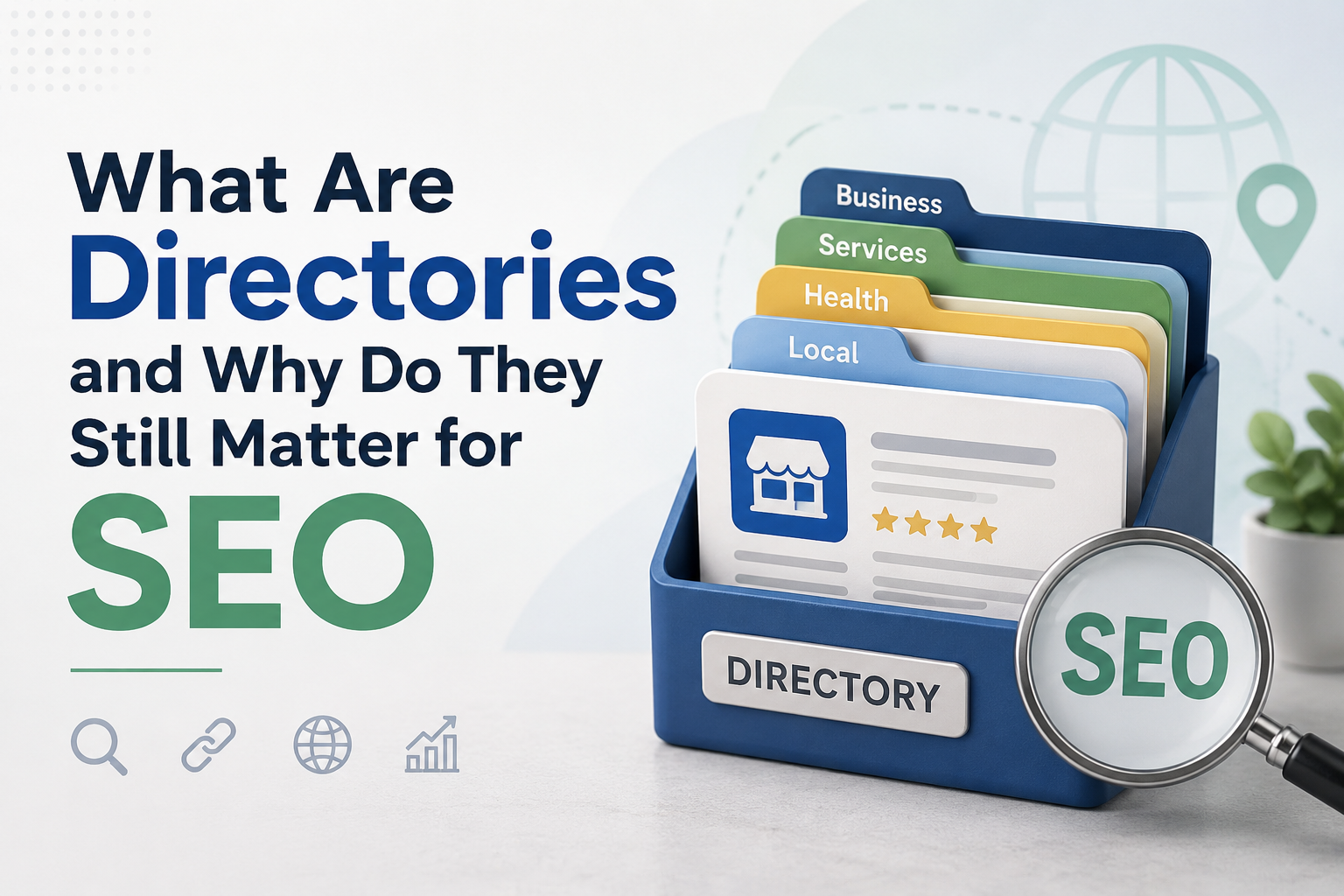
What Are Directories and Why Do They Still Matter for SEO

In the early days of the internet, before search engines became the dominant way people found websites, directories served as the primary roadmaps to the web. Think of a directory as a curated catalog where websites are organized by category and subcategory, much like a phone book or a library index. Instead of algorithms crawling billions of pages, human editors would review submissions, verify that a site met certain quality standards, and place it in the appropriate section where visitors could browse and discover relevant resources.

The concept is straightforward. A business owner or webmaster submits their site to a directory, often selecting a category that best describes their industry or niche. An editor evaluates the submission, checking that the site is functional, legitimate, and appropriately described. Once approved, the site receives a listing that typically includes the business name, a brief description, and a link back to the website. This link serves as a digital citation, a signal to both users and search engines that the site exists and has been vetted by a third party.While the internet has evolved dramatically since the 1990s, directories have not disappeared. They have transformed. General directories that accepted every submission under the sun have largely faded into irrelevance, but specialized, industry-specific, and local directories have remained valuable. These modern directories focus on quality over quantity, maintaining strict editorial standards and catering to specific audiences rather than attempting to catalog the entire web.The SEO value of directories stems from several interconnected factors. First and foremost is the backlink. When a reputable directory links to your website, it passes what search engines call link equity or authority. This is essentially a vote of confidence. Search engines interpret these links as signals that your site is trustworthy and relevant to a particular topic or geographic area. Not all links carry equal weight, of course. A link from a well-established directory with high domain authority, such as a chamber of commerce or a respected industry association, carries significantly more SEO weight than a link from a spammy, automated directory that exists solely to sell links.

Local SEO represents one of the most powerful applications of directory listings today. Search engines like Google place enormous emphasis on local search results, and they rely heavily on citations, which are mentions of your business name, address, and phone number across the web. Consistent citations in local directories signal to search engines that your business is legitimate and established in a specific geographic location. When your business appears in trusted local directories with matching information, it reinforces your presence in that area and can directly improve your rankings in local map packs and localized organic results. This is why claiming and optimizing your Google Business Profile, along with maintaining accurate listings in directories like Yelp, Yellow Pages, and industry-specific local guides, remains a fundamental local SEO strategy.

Beyond the direct ranking signals, directories contribute to your online visibility in ways that indirectly benefit SEO. A well-placed directory listing puts your brand in front of an audience that is actively searching within your niche. This targeted exposure can drive referral traffic, visitors who arrive at your site because they found you in a directory they trust. When these visitors engage with your content, spend time on your site, and potentially convert into customers, these behavioral signals can reinforce to search engines that your site satisfies user intent. While referral traffic does not directly factor into ranking algorithms in the same way backlinks do, the overall engagement and brand awareness generated can create a virtuous cycle that supports your broader SEO efforts.

Directory listings also play a role in brand building and reputation management. When potential customers see your business listed in respected directories, it lends credibility. It suggests that your business has been around long enough to be recognized and that it meets the standards of the directory’s editorial process. This trust factor can influence click-through rates from search engine results pages, as users who recognize your brand from multiple directory listings may be more likely to choose your link over a competitor’s. Higher click-through rates can, over time, send positive signals back to search engines about the relevance and appeal of your site.The key to extracting SEO value from directories lies in selectivity and consistency. Submitting your site to hundreds of low-quality directories in the hope of accumulating links is not only ineffective but can be actively harmful. Search engines have become sophisticated at identifying link schemes and manipulative practices. A sudden influx of links from questionable directories can trigger penalties that damage your rankings. Instead, the focus should be on identifying directories that are genuinely relevant to your industry, your location, or your target audience. These might include professional associations, trade organizations, local business chambers, university alumni networks, or niche communities that maintain carefully curated resource lists.

Consistency in your business information across all directory listings is equally critical. Variations in your business name, address, or phone number can confuse search engines and dilute the citation value. If one directory lists your address as “Suite 100” and another as “Ste. 100,” search engines may not recognize these as the same location, fragmenting your local SEO signals. Maintaining a standardized format for your business details and regularly auditing your listings to ensure accuracy is an ongoing but essential task.

In conclusion, directories are far from obsolete. They have evolved from general web catalogs into specialized, trusted resources that serve specific communities and industries. Their SEO value comes not from volume but from the quality and relevance of the links and citations they provide. A strategic presence in the right directories can strengthen your backlink profile, enhance your local search visibility, drive targeted referral traffic, and build the kind of brand credibility that supports long-term organic growth. The approach that works today is not about being everywhere, but about being in the right places where your audience and the search engines expect to find you.

Posted on

Exploring the Benefits of Blockchain Outside of Money

When most people hear the word blockchain, their minds immediately jump to Bitcoin, Ethereum, or the volatile world of cryptocurrency trading. Yet this narrow association obscures a far more profound truth: blockchain technology is fundamentally a new architecture for trust, and its applications extend well beyond the creation of digital money. The underlying mechanics of distributed ledgers, cryptographic hashing, and consensus mechanisms solve problems that have plagued record-keeping, supply chains, identity verification, and data integrity for decades. Understanding these non-currency benefits requires looking past the speculative headlines and examining what the technology actually enables at a structural level.

At its core, blockchain creates an environment where multiple parties can maintain a shared record of truth without needing to trust one another or rely on a central authority. This is not merely a convenience; it is a paradigm shift. Traditional databases are controlled by a single entity, which means every participant in a system must trust that entity not to alter records, suffer a security breach, or simply fail. Blockchain distributes the database across a network, where every significant change is cryptographically linked to the one before it, creating an unbroken chain of history. Once information is recorded, altering it retroactively becomes computationally and economically prohibitive. This immutability does not just prevent fraud; it changes the psychology of participation. When parties know that records cannot be quietly modified, they engage with greater confidence and transparency.

One of the most immediately practical applications lies in supply chain management. Global supply chains are notoriously opaque. A product may pass through dozens of hands, cross multiple borders, and undergo various transformations before reaching a consumer. Currently, each participant in this chain often maintains their own separate records, leading to discrepancies, delays, and a near-total inability to verify claims about origin, authenticity, or ethical sourcing. Blockchain offers a shared ledger where each handoff, certification, and transformation is recorded in real time. A consumer purchasing coffee could trace the beans back to the specific cooperative that harvested them, verifying not just origin but whether fair wages were paid. A pharmaceutical company could track medications from manufacture to pharmacy, instantly identifying counterfeit products or temperature breaches that might compromise safety. The value here is not in tokens or coins, but in the radical transparency and accountability that a shared, tamper-evident record provides.

Digital identity represents another domain where blockchain introduces genuinely new possibilities. Today, our identities are fragmented across hundreds of corporate databases, each a tempting target for hackers and each requiring us to surrender excessive personal information to prove who we are. The result is a world of data breaches, identity theft, and tedious password management. Blockchain-based identity systems allow individuals to own and control their credentials, sharing only the specific proofs required for a given interaction rather than their entire identity profile. A person could cryptographically prove they are over eighteen without revealing their birth date, or verify their academic credentials without a university needing to respond to every individual inquiry. This shift from institutional control to individual sovereignty over identity data addresses fundamental concerns about privacy and security that have grown increasingly urgent in the digital age.

The technology also offers significant advantages in the realm of intellectual property and creative rights. Artists, musicians, writers, and inventors have long struggled with establishing clear provenance and receiving fair compensation in a digital world where copying is effortless. Blockchain can timestamp the creation of a work, establishing an immutable record of authorship. Smart contracts, which are self-executing agreements written in code, can automatically distribute royalties whenever a song is streamed or an image is licensed, eliminating the need for intermediaries and reducing the lag between use and payment. The blockchain does not eliminate the challenges of digital rights management entirely, but it provides tools for attribution and automated compensation that were previously impossible at scale.

In governance and voting, blockchain presents a mechanism for enhancing the integrity of democratic processes. Concerns about election security, voter fraud, and the transparency of vote counting have eroded public confidence in many electoral systems. A blockchain-based voting system could allow citizens to verify that their vote was recorded correctly without revealing how they voted, while the public ledger would enable anyone to audit the total count without compromising individual privacy. The immutable record would make large-scale tampering evident, while the distributed nature of the network would eliminate single points of failure or corruption. While implementation requires careful attention to accessibility and security, the underlying technology offers a path toward elections that are simultaneously more transparent and more private.

Healthcare stands to benefit enormously from improved data management through blockchain. Medical records are currently siloed across countless providers, insurers, and systems, often incompatible with one another and vulnerable to breaches. Patients lack control over their own health histories, and providers struggle to assemble complete pictures of the individuals they treat. A blockchain-based health record system could give patients ownership of their data, allowing them to grant and revoke access to specific providers as needed. Every access and modification would be logged transparently, creating accountability while maintaining privacy through encryption. In a medical emergency, authorized providers could access critical information instantly rather than waiting for records to be faxed between institutions. The improvement in care coordination and patient autonomy would be substantial.

The legal industry and contract management also find natural applications for blockchain technology. Contracts today exist as paper documents or editable digital files, requiring expensive intermediaries to enforce and verify compliance. Smart contracts on a blockchain execute automatically when predefined conditions are met, reducing the need for litigation and manual oversight. Escrow arrangements, insurance payouts, and property transfers can all be encoded to trigger automatically based on verifiable events. This does not eliminate the need for legal expertise in drafting agreements, but it dramatically reduces the cost and friction of execution and enforcement, particularly for routine transactions.

Even in the fight against misinformation and the verification of digital content, blockchain offers promising tools. In an era of deepfakes and manipulated media, establishing the provenance of a photograph, video, or document is increasingly difficult. By recording the creation and any subsequent modifications of digital content on a blockchain, creators can provide verifiable proof of authenticity. News organizations could verify that footage has not been altered since it was captured, and individuals could prove the originality of their digital creations. This application addresses a fundamental challenge of the information age without involving any currency whatsoever.

It is worth acknowledging that blockchain technology is not a panacea. It introduces its own challenges, including energy consumption concerns, scalability limitations, and the complexity of implementation. Not every problem requires a distributed ledger, and the hype surrounding the technology has sometimes led to solutions in search of problems. However, dismissing blockchain solely because of its association with cryptocurrency speculation means ignoring a genuinely novel tool for coordination, verification, and trust in a world that desperately needs better mechanisms for all three.

The enduring value of blockchain lies not in replacing national currencies, but in providing infrastructure for trust in environments where it is currently expensive, fragile, or impossible to establish. Whether tracking the journey of goods across oceans, returning control of personal data to individuals, automating the execution of agreements, or securing the integrity of democratic processes, the technology addresses fundamental coordination problems that have limited human cooperation for centuries. The conversation around blockchain deserves to move beyond price charts and trading volumes to engage with these deeper structural possibilities. The technology’s most significant impact may ultimately be measured not in market capitalization, but in the transparency, efficiency, and fairness it brings to the systems that govern our daily lives.