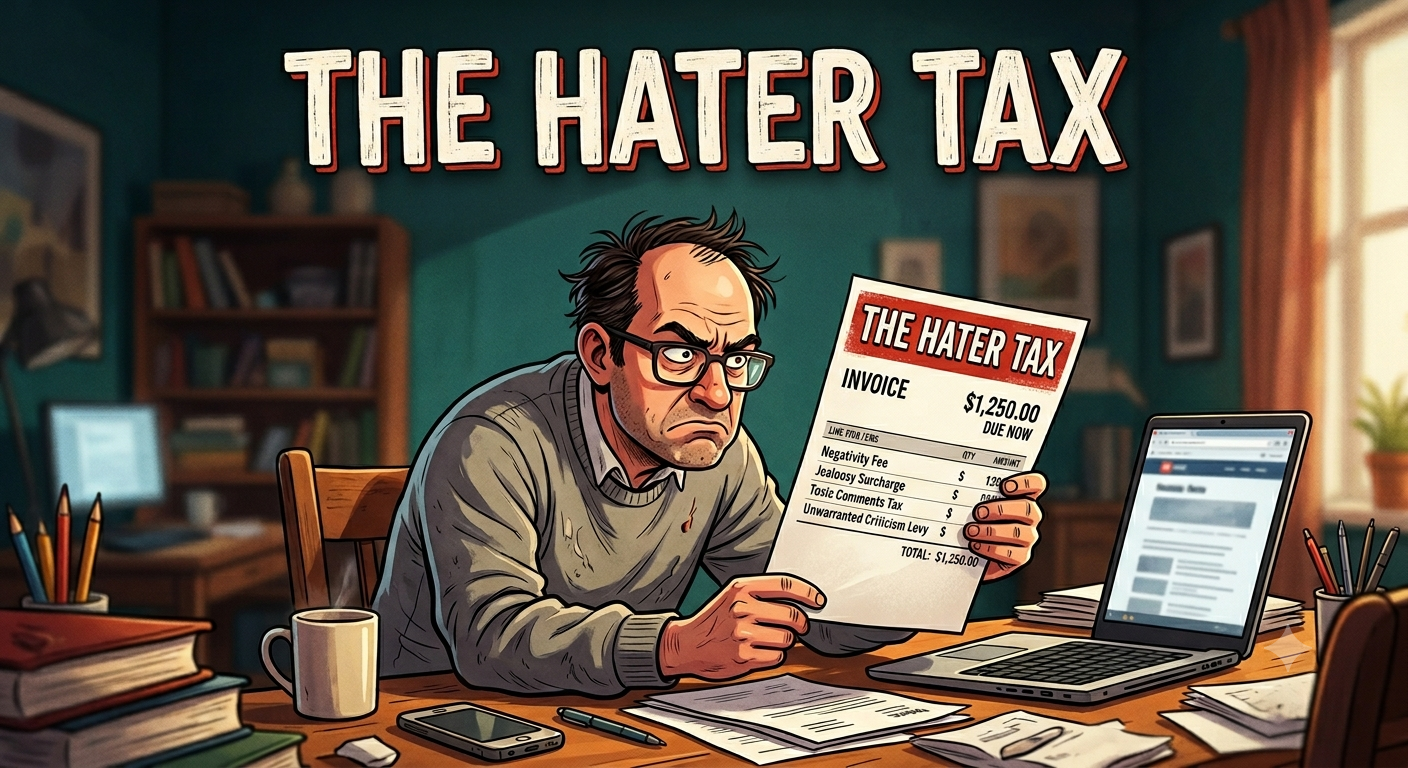
There is a quiet cost to being yourself in business, and it is measured in everything you never built because someone decided you were not worth the trouble.Most founders learn this the hard way. They start with conviction, certain that authenticity is the ultimate competitive advantage. They speak their minds, enforce their standards, and refuse to perform warmth they do not feel. They are not wrong to value honesty. They are simply miscalculating the physics of commerce, which runs not on merit but on momentum, and momentum is a fragile thing.
Every business exists in an ecosystem of relationships that it does not fully control. Vendors remember slights. Employees gossip. Customers review. Investors talk. Regulators notice tone. Competitors watch for weakness and will amplify any signal that you are difficult, arrogant, or simply unpleasant to deal with. None of these people need to destroy you. They only need to hesitate. A delayed introduction. A passed-over referral. A contract awarded to the person who smiled more convincingly at the dinner. These are not dramatic betrayals. They are the accumulated friction of a reputation that does not lubricate itself.
The mathematics are cruel but clear. A single enthusiastic advocate might bring you one opportunity. A single determined detractor can cost you ten. This is because human attention skews negative. We are wired to remember the one person who insulted us more vividly than the nine who were merely competent. In a networked economy, where trust is transferred through personal recommendation, a small population of haters compounds faster than a large population of fans. Your real constraint is not capital or product-market fit. It is the ceiling imposed by how many people quietly decide you are not worth the risk.
This is why the most durable operators often practice a kind of strategic agreeableness that looks like warmth but functions like armor. They return calls quickly. They apologize even when they are not sorry. They listen longer than they want to. They remember names and children and anniversaries not because they are emotionally moved but because they understand that every interaction is a deposit in a social account that will be drawn upon later, often without warning. They do not confuse this with friendship. They know exactly what it is: a tax paid in advance to avoid a much larger tax later.
The objection is always the same. This sounds exhausting. It sounds inauthentic. It sounds like the kind of corporate theater that hollows people out. And for some, it is. But the alternative is not freedom. The alternative is a different exhaustion, the kind that comes from fighting battles you could have prevented, from rebuilding bridges you burned because you mistook candor for courage, from watching less talented competitors win contracts you deserved because they understood that business is not a meritocracy of ideas but a negotiation of feelings.
There is a difference between integrity and transparency. Integrity means you do what you say you will do. Transparency means you say everything you think. The first builds trust. The second builds enemies. You can be ruthlessly honest about your standards while being diplomatic about your opinions. You can refuse to compromise on quality while making the refusal feel like a favor. The skill is not in becoming someone else. It is in becoming fluent in a second language, one that translates your intentions into a dialect that does not trigger defensiveness in others.
The founders who survive are not necessarily the smartest or the most funded. They are the ones who understood early that business is a multiplayer game with infinite rounds, and that the optimal strategy in an infinite game is not to maximize any single score but to ensure you are never removed from the board. Haters are a removal mechanism. They do not need to be right. They only need to be loud enough, or connected enough, or patient enough to wait for your mistake and then ensure the right people hear about it.
So the performance of agreeableness is not weakness. It is a structural choice, like waterproofing a foundation. You are not doing it because you are nice. You are doing it because the cost of water damage exceeds the cost of the sealant. The people who matter will eventually learn who you really are through your consistency, your follow-through, the quality of what you build. But they will never get the chance if someone they trust warns them away before the first meeting.The market does not reward the truest self. It rewards the self that can endure.