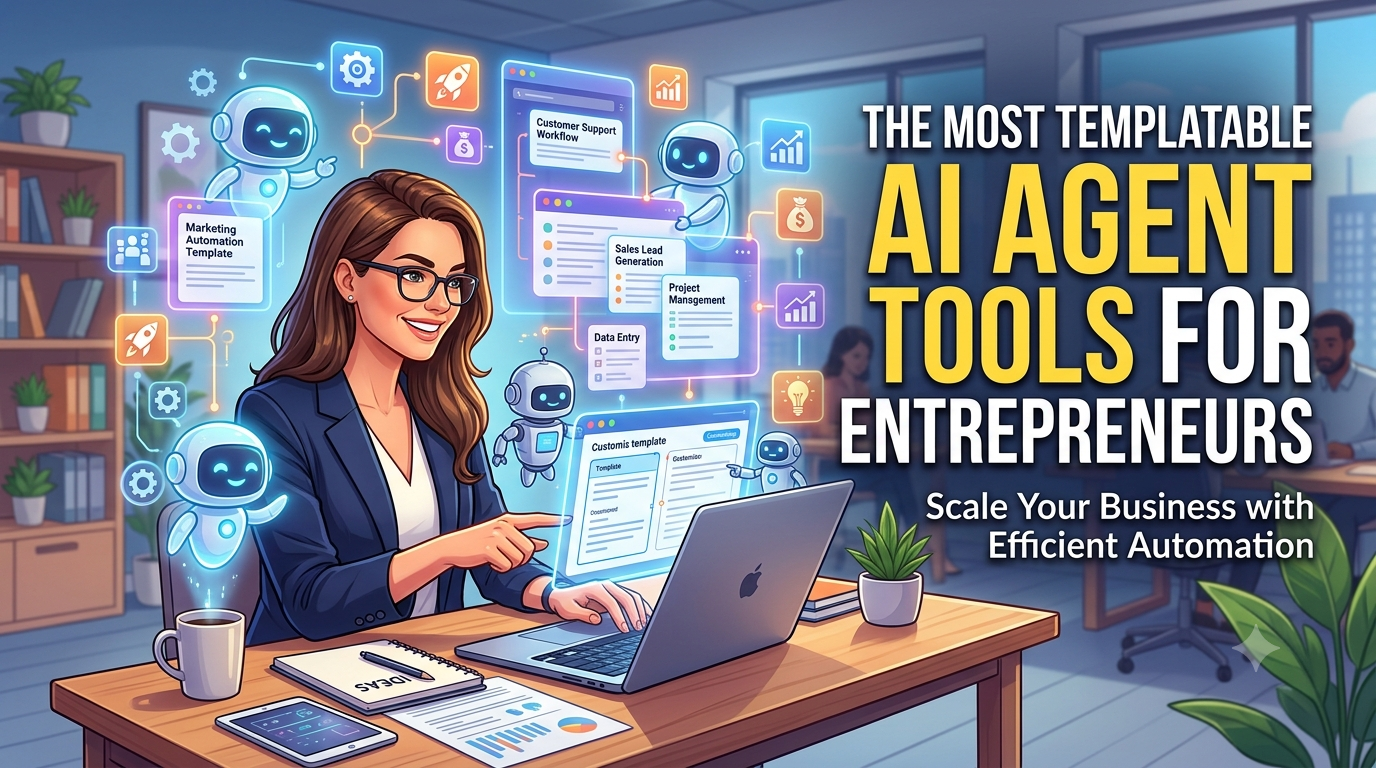
Artificial intelligence has changed the way entrepreneurs build businesses. Tasks that once required hours of manual work can now be completed in minutes with the help of AI agents and automation platforms. While many entrepreneurs focus on building entirely new software applications, another opportunity is quietly growing in popularity: creating and selling AI agent templates.
Templates save customers from building complex systems themselves. Instead of starting with a blank canvas, they receive a working solution that can be customized to fit their business. This approach reduces setup time, lowers technical barriers, and allows entrepreneurs to package their expertise into products that can be sold repeatedly.
One of the strongest candidates for templating is customer support automation. Many businesses answer the same questions every day about pricing, shipping, refunds, appointments, or product features. AI agents can be configured to handle these conversations automatically while escalating more complex requests to human staff. Once a reliable workflow has been designed, it can often be adapted for businesses in many different industries with only minor changes.
Lead qualification is another excellent use case. Many companies receive inquiries from people who are not ready to buy or who are looking for services outside the company’s area of expertise. AI agents can ask qualifying questions, gather contact information, determine customer needs, and route promising leads to the appropriate sales representative. Entrepreneurs can package these workflows into templates that businesses can quickly customize for their own products and services.
Content creation workflows are also highly adaptable. AI agents can transform a single piece of content into blog posts, newsletters, social media updates, email campaigns, and video scripts. Rather than performing each task manually, businesses can use a template that automates much of the publishing process while still allowing room for human review and editing.
Research agents have become increasingly valuable as businesses face an overwhelming amount of information. Templates that collect industry news, summarize competitors, monitor market trends, or organize research into structured reports can save entrepreneurs countless hours. Since many industries rely on similar research processes, these templates often require only modest adjustments before they can be used by different customers.
Sales follow-up automation is another area where templates perform well. AI agents can draft personalized emails, remind sales teams about pending conversations, summarize customer interactions, and maintain communication over time. Businesses benefit from greater consistency, while entrepreneurs benefit from creating products that solve a common challenge across many industries.
Internal knowledge assistants also lend themselves well to templating. Companies frequently struggle to organize policies, procedures, documentation, and training materials. AI agents that search internal documents and answer employee questions can reduce onboarding time and improve productivity. A carefully designed template allows businesses to connect their own documents without building the system from the ground up.
Meeting assistants represent another practical opportunity. AI agents can summarize meetings, identify action items, assign responsibilities, and prepare follow-up communications. Since nearly every organization holds meetings, entrepreneurs can create templates that integrate with common productivity tools while remaining flexible enough for different business environments.
Marketing automation continues to be one of the largest opportunities for AI templates. Entrepreneurs can develop workflows that generate campaign ideas, analyze marketing performance, schedule content, monitor engagement, and recommend improvements. Businesses appreciate solutions that reduce repetitive work while helping them maintain a consistent online presence.
Financial reporting agents can also be packaged effectively. Rather than replacing accountants, these systems organize financial information, generate summaries, monitor key performance indicators, and highlight unusual patterns. Entrepreneurs who understand business finance can transform their expertise into templates that simplify routine reporting for small companies.
Project management automation is another area where templates provide significant value. AI agents can organize tasks, prioritize work, remind team members of deadlines, summarize project progress, and identify potential bottlenecks. Many organizations follow similar project management principles, making these workflows adaptable across industries.
Perhaps the greatest advantage of AI agent templates is that they combine technical capability with business knowledge. The software itself is important, but the real value comes from understanding how businesses operate and translating that understanding into practical automation. Customers are not simply purchasing prompts or workflows. They are buying proven systems that help them work more efficiently.
Entrepreneurs who build these templates also benefit from a scalable business model. Once an effective workflow has been created and thoroughly tested, it can be sold repeatedly with only occasional updates as AI models and software platforms evolve. This allows creators to focus more on improving their products and less on repeating the same work for every customer.
As AI technology becomes more accessible, businesses will increasingly look for solutions that are ready to use rather than tools that require weeks of configuration. Entrepreneurs who specialize in creating high-quality templates can fill this growing demand by providing products that reduce complexity while delivering immediate value.
The future of AI entrepreneurship may belong not only to those who build entirely new software platforms, but also to those who package effective systems into reusable templates. Businesses want reliable solutions that save time, improve productivity, and reduce repetitive work. Entrepreneurs who understand both business problems and AI automation are well positioned to create templates that accomplish exactly that, turning practical knowledge into digital products that can be sold again and again.