Posted on

Telegram: The Modern Replacement for Your Email List

For years, email lists have been the backbone of online business, content distribution, and marketing. They’ve been sold as the ultimate tool for building an audience, nurturing leads, and generating revenue. But in 2026, the landscape has shifted. Enter Telegram—a messaging platform that isn’t just for casual chats, but a serious contender as a replacement for email lists.

Telegram offers something email can’t: immediacy. Emails sit in inboxes, often buried among promotions and spam, waiting to be opened. Telegram messages arrive directly in your audience’s feed, visible instantly, often read within minutes. This direct connection creates a level of engagement that traditional email struggles to match. Your subscribers are no longer just names on a list—they are active participants in a space they already check multiple times a day.

Another advantage is simplicity. Setting up a Telegram channel or group is almost effortless. There’s no need for complex automation software, no deliverability issues, no spam filters cutting off your reach. You post your content, and it lands in real-time in front of the people who opted in. The barrier between you and your audience disappears, and your communication becomes more personal and immediate.

Engagement on Telegram also surpasses email. People respond, react, and interact in ways they rarely do with newsletters. Polls, replies, and shared media make your community feel alive. Instead of passively opening emails, your audience becomes part of a conversation. This creates loyalty, trust, and a sense of belonging that emails often fail to cultivate.

For those monetizing their audience, Telegram offers unique opportunities. Paid channels, exclusive content, and seamless integration with other services allow creators to earn directly from their community without the friction of email-based sales funnels. Unlike email, where opening rates fluctuate and click-through rates are often low, Telegram ensures your messages are seen, giving your offers a higher chance of conversion.

Of course, this doesn’t mean email is dead. Email still has its place for formal communication, detailed newsletters, and transactions. But if your goal is building an active, engaged, and responsive audience, Telegram provides a level of immediacy and interaction that email can no longer match. For modern creators, entrepreneurs, and community builders, Telegram isn’t just an alternative—it’s the smarter choice.

Switching to Telegram transforms your audience from passive readers into an active, living network. In the fast-paced digital world, that kind of connection is worth far more than another unopened email in someone’s inbox.—If you want, I can also write a shorter, punchier version designed for viral sharing that would convince more creators to move their lists to Telegram. It would be more “clickable” for your blog. Do you want me to do that?


Posted on

The Invisible Ceiling: How a Scarcity Mindset Shrinks Your Ambition

There is a quiet force that limits more lives than lack of talent, education, or opportunity ever could. It does not show up on a resume, and it rarely gets called out directly. Yet it shapes decisions, caps ambition, and quietly determines outcomes long before results appear. That force is a scarcity mindset.

A scarcity mindset convinces you that there is never enough. Not enough money, not enough opportunities, not enough time, not enough room for you to win without someone else losing. It narrows your thinking until every decision becomes defensive rather than expansive. Instead of asking what is possible, you start asking what is safe. Instead of building, you focus on preserving. And over time, that shift quietly locks you out of anything truly big.

When you operate from scarcity, your goals shrink without you even noticing. You aim for what feels attainable rather than what is actually meaningful. You avoid risks not because they are irrational, but because the idea of losing feels unbearable. Every move is calculated to avoid failure instead of create success. The result is a life that may look stable on the surface, but is fundamentally limited in scale.This mindset also distorts how you see other people. Success starts to feel like a zero-sum game. If someone else is winning, it must mean there is less left for you. That belief breeds hesitation and comparison instead of collaboration and growth. It becomes harder to celebrate others, harder to learn from them, and harder to imagine yourself reaching similar heights. You end up competing in a small arena, even when the world is much larger.

Scarcity thinking also shows up in how you invest your time and energy. You hesitate to spend money on tools, education, or opportunities that could multiply your output. You delay starting projects because you are trying to minimize risk. You overanalyze small decisions while missing larger ones that actually move your life forward. In trying to conserve what you have, you sacrifice what you could become.The most dangerous part is that scarcity often feels rational. If you have experienced instability, financial pressure, or limited resources, thinking this way can feel like survival. In the short term, it can even protect you. But over the long term, it becomes a ceiling that is far more restrictive than the circumstances that created it.

Big things require a different lens. They require the belief that opportunities can be created, that value can be expanded, and that growth is not a fixed pie. An abundance mindset does not mean ignoring risk or pretending resources are infinite. It means understanding that your capacity to generate value is far greater than your current situation suggests.

When you shift away from scarcity, your decisions start to change. You begin to think in terms of leverage instead of limitation. You invest in skills, relationships, and systems that can grow over time. You take calculated risks because you recognize that upside matters more than comfort. You stop trying to protect a small position and start trying to build something larger.

This shift does not happen overnight. It requires challenging assumptions that may have been reinforced for years. It requires stepping into uncertainty and accepting that growth often comes with discomfort. But the alternative is staying confined within invisible boundaries that were never as real as they felt.

Your thinking sets the scale of your life long before your actions do. If your mindset is built around scarcity, everything you do will reflect that constraint. But if you allow yourself to think bigger, to see opportunity where you once saw limitation, you begin to operate on an entirely different level.The ceiling was never the world. It was the way you were taught to see it.

Posted on

Why More Views Lead to Higher Conversion Rates

At first glance, conversion rate seems like a fixed measure. You get a certain number of visitors, a certain number of them take action, and the percentage stays more or less stable. It feels mathematical, almost rigid. But in reality, conversion rate is far more fluid than most people think, and one of the biggest forces shaping it is volume itself.When your content only gets a small number of views, you are operating in a low-feedback environment. A handful of conversions or a lack of them can swing your rate dramatically, but none of it tells you much. You might assume your offer is weak, your writing is off, or your audience isn’t interested. In truth, you simply don’t have enough data or exposure for patterns to emerge.

As your views increase, something important begins to happen. Your content starts reaching beyond your immediate circle and into broader, more relevant audiences. Early traffic is often random or loosely aligned, but higher traffic tends to include a larger share of people who are actually interested in what you offer. The algorithm, whether it’s Google or TikTok, begins to understand who engages with your content and shows it to more of the same type of person. This naturally improves conversion rates because the audience becomes more targeted over time.

There is also a psychological effect at play. Content with higher view counts carries an implicit signal of credibility. People are more likely to trust something that others have already engaged with. A blog post with ten views feels uncertain, but one with ten thousand views feels validated. That perception alone can push more visitors to take action, even if the content itself hasn’t changed.

Momentum compounds this effect. As more people engage, you get more comments, shares, and feedback. This allows you to refine your message, tighten your offer, and remove friction points. Small improvements that might go unnoticed at low traffic levels become powerful when applied across thousands of visitors. Your conversion rate rises not just because of who is seeing your content, but because your content itself is improving through constant iteration.

There’s also a filtering mechanism that only appears at scale. When your reach is small, you are dependent on whoever happens to come across your work. When your reach expands, you begin to attract people who are actively searching for what you provide. Intent increases with visibility, and higher intent leads directly to higher conversion rates.

This is why chasing perfection before scale is often a mistake. Many creators obsess over optimizing their conversion rate while their traffic is still low, trying to squeeze results out of a tiny sample size. But conversion rate is not something you fully unlock in isolation. It evolves alongside your reach.

In practice, this means that growth and conversion are not separate goals. They feed into each other. More views bring better audiences, stronger trust, and faster learning. All of that pushes your conversion rate higher, sometimes without any deliberate optimization at all.The counterintuitive truth is that if you want better conversions, one of the most effective things you can do is simply get more eyes on your content.

Posted on

Dollar-Cost Averaging: The Smart Way to Invest Without Stress

Investing can feel intimidating, especially when markets are volatile and headlines swing between fear and greed. One strategy that helps investors navigate this uncertainty is called dollar-cost averaging. At its core, dollar-cost averaging is a simple idea: instead of investing a large sum of money all at once, you divide it into smaller, regular investments over time. This approach removes the pressure of trying to time the market perfectly, which even the most experienced investors struggle to do.

When you invest the same amount regularly, you automatically buy more shares when prices are low and fewer shares when prices are high. Over time, this can lower the average cost of your investments and reduce the emotional stress that comes with market swings. Rather than making a single, potentially risky decision, you are steadily building your position, smoothing out the effects of volatility.

Dollar-cost averaging also encourages discipline. By committing to regular investments, you make investing a habit rather than a sporadic, emotional activity. This habit can be particularly powerful over the long term, as it allows compounding to work its magic. Even small, consistent investments can grow significantly when left in the market for years.

While dollar-cost averaging does not guarantee profits or protect against losses in declining markets, it offers a structured, low-stress approach to investing. It allows investors to participate in the markets without worrying about catching the exact bottom or top, turning what often feels like a gamble into a more predictable, manageable strategy.

Ultimately, dollar-cost averaging is less about chasing the perfect moment and more about steady progress. By investing consistently over time, you can build wealth, reduce stress, and stay committed to your financial goals, no matter how unpredictable the market may seem.

Posted on

Why Blogging Is Riskier Than TikTok: The Unpredictable Game of Internet Attention

Blogging has long been celebrated as a way to build authority, share ideas, and even generate a steady income. Yet for anyone who has tried to grow a blog, there’s a harsh truth lurking beneath the surface: blogging is inherently more hit or miss than platforms like TikTok. The reason isn’t the quality of content or the effort put in—it’s the system itself. On a blog, your success is heavily dependent on how Google chooses to treat your articles. You can spend hours crafting a perfect post, optimizing every headline and paragraph, and still see nothing if search algorithms decide your content doesn’t meet their mysterious criteria. The whims of search rankings mean that even great work can remain invisible for weeks, months, or sometimes indefinitely.

TikTok, by contrast, delivers feedback almost immediately. A video can go viral within hours, giving the creator instant insight into what resonates with the audience. Metrics like views, likes, and shares show clearly whether content is connecting, and this speed allows for rapid iteration. Bloggers rarely get that kind of immediate signal. Even if an article eventually gains traction, the delay between publishing and measurable results makes it difficult to know whether your strategy is working. A post could languish unnoticed for months before suddenly being rewarded by the algorithm, leaving creators in a frustrating limbo of uncertainty.

This disparity also impacts risk management. On TikTok, the low barrier to experimentation encourages creators to try new ideas frequently, adjusting on the fly. On a blog, the effort involved in producing quality content is higher, and the uncertainty about whether it will succeed amplifies the stakes. Writers must invest time, energy, and often money, without the immediate reassurance that comes from a quick, visible reaction. It’s a slower, more uncertain game where patience is essential and even the best content can feel like a gamble.

Ultimately, blogging is not a broken system—it’s simply a different one. Its slower feedback loop and reliance on search engines make it less predictable than social media platforms built for instant engagement. Those who succeed are often those who combine persistence with adaptability, understanding that the path to visibility may be long, unpredictable, and unlike anything they experience on TikTok. For creators who thrive on rapid feedback and instant validation, blogging requires a patience and resilience that social media doesn’t demand.

Posted on

The Moat That Protects Success: How Private School Builds a Safe Launchpad for Your Child

When it comes to your child’s future, the environment they grow up in matters as much as the lessons they are taught. Private schools offer more than just academics; they provide a carefully structured setting that acts like a moat around your child’s potential. In this space, distractions, negative influences, and unnecessary pressures are minimized, allowing children to focus fully on learning, personal growth, and building the habits that lead to long-term success.

This “moat” is not about shielding children from the world entirely. It is about creating a buffer against the everyday noise that can derail development. In a well-run private school, the teachers, administrators, and community work together to maintain high standards, enforce discipline, and cultivate an atmosphere where curiosity and ambition are encouraged rather than stifled. Your child can explore complex subjects, develop social skills, and engage in extracurricular pursuits without being pulled off course by environments that may not prioritize their growth.

Beyond academics, this protective structure shapes character. In a setting where expectations are clear and supportive networks are present, children learn resilience, accountability, and the confidence to take calculated risks. They encounter challenges in a controlled environment, where failures become opportunities to learn rather than moments that discourage. The moat ensures that while they are protected, they are not coddled—preparing them for real-world challenges later with both skill and poise.

Ultimately, private schooling is an investment in creating a space where potential can flourish uninterrupted. By surrounding children with resources, mentorship, and a community aligned with success, parents can give them the freedom to focus on what matters most: mastering their craft, discovering their strengths, and stepping into the world prepared to thrive. It’s a controlled environment, yes, but one designed not to constrain, but to launch.

Posted on

Why Influencer Marketing Struggles to Scale

Influencer marketing has become one of the most talked-about strategies in the digital age. Brands are eager to tap into audiences that trust a content creator’s recommendations, hoping that a single post or story will convert followers into buyers. On the surface, it seems simple: find someone with a large following, showcase your product, and watch sales roll in. The reality, however, is far more complicated, and scaling influencer marketing is not nearly as easy as it appears.

The core challenge lies in trust. People follow influencers because they relate to them, enjoy their content, or value their opinions. When an influencer endorses a product, the audience must believe that the recommendation is genuine. Without this trust, conversions drop sharply. Large audiences do not automatically equal high sales. Even a creator with hundreds of thousands of followers may see minimal results if their followers do not feel a personal connection or sense authenticity in the promotion.

Another factor is the uniqueness of each audience. Each influencer’s following has its own preferences, behaviors, and skepticism. What works for one creator might fail with another. Brands cannot simply replicate campaigns across multiple influencers expecting the same conversion rates. The subtle nuances of tone, context, and timing have a disproportionate impact on outcomes, making it difficult to create predictable, scalable results.

Furthermore, influencer marketing is often highly individualized and labor-intensive. Negotiating contracts, planning creative content, monitoring engagement, and managing relationships with multiple creators requires significant effort. Unlike digital ads, which can be duplicated and automated at scale, influencer campaigns depend on personal dynamics that cannot be mass-produced.

This reality makes scaling influencer marketing a delicate balance. Success requires not just reaching large audiences, but cultivating deep trust with each one. It is a strategy built on relationships, credibility, and alignment between the influencer and the brand—qualities that resist mass replication. Brands seeking predictable growth often find that influencer marketing works best as a complement to other scalable channels rather than as a sole driver of revenue.

In short, influencer marketing can be highly effective, but its power is tied to the rarity of genuine trust. Few people can influence a large audience enough to drive meaningful conversions, and this limitation makes scaling inherently difficult. Those who understand this are more likely to use influencer partnerships strategically, focusing on quality over quantity, and recognizing that the value lies not in reach, but in the credibility that drives real action.

Posted on

Africa Is Underrated By Digital Nomads

When people think about digital nomad destinations, Africa rarely comes to mind. Instead, their mental map is often filled with Southeast Asia, Europe, or Latin America—places that have been heavily marketed as nomad-friendly hubs. Yet Africa, with its diverse landscapes, vibrant cultures, and rapidly growing cities, is a continent that more aspiring digital nomads should seriously consider.

Part of the reason Africa gets overlooked is perception. Many assume it is unsafe, lacks modern infrastructure, or cannot support remote work. While these concerns may have some basis in certain regions, they ignore the many pockets of stability, connectivity, and opportunity that exist across the continent. Cities like Accra, Nairobi, and Cape Town are modern metropolises with reliable internet, coworking spaces, and a rising community of remote workers. Even smaller towns and coastal areas are increasingly equipped to meet the needs of people who work online.

Another factor is awareness. Travel blogs, social media influencers, and online guides rarely feature African destinations as nomad hotspots. This has created a feedback loop: fewer digital nomads visit Africa, which means fewer stories are shared, and so the continent remains underrepresented in the nomad narrative. Yet for those willing to explore, Africa offers a unique combination of affordability and quality of life. Rent, food, and local services are often cheaper than in the more “popular” nomad cities, allowing remote workers to live comfortably while investing in experiences, learning local languages, or supporting local communities.

Cultural richness is another overlooked draw. Africa’s diversity means that no two countries—or even regions—offer the same experience. From the vibrant music and art scenes in West Africa to the breathtaking landscapes of East Africa and the beaches of Southern Africa, nomads who venture here find inspiration around every corner. Beyond aesthetics, connecting with local communities can provide a deeper understanding of the world, far beyond what traditional travel or social media portrayals can offer.

Finally, Africa represents opportunity. Its cities are growing rapidly, digital infrastructure is improving, and entrepreneurial ecosystems are developing in ways that are perfect for remote workers looking to build networks, launch ventures, or collaborate internationally. By ignoring the continent, aspiring digital nomads miss not just affordability and adventure, but a chance to be part of something emerging and dynamic.

In short, Africa challenges the assumptions many digital nomads carry. It may not yet have the polished “nomad city” image of Chiang Mai or Lisbon, but for those willing to look beyond conventional maps, it offers affordability, diversity, connectivity, and inspiration. Aspiring remote workers who overlook Africa risk missing out on experiences that could shape both their personal and professional lives in ways no other region can.

Posted on

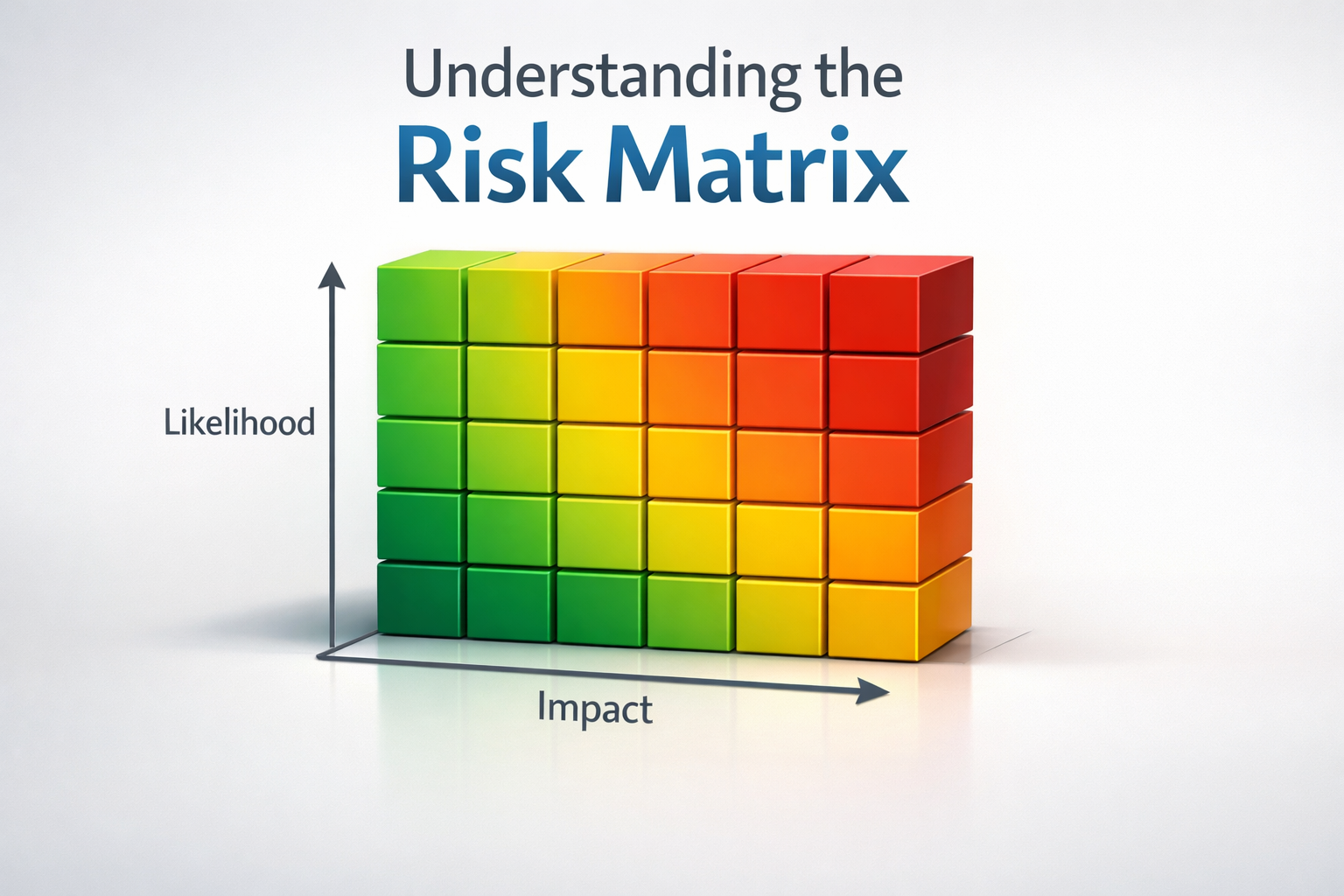
Understanding the Risk Matrix: A Simple Tool to Make Better Decisions

In business, engineering, and project management, decisions often come with uncertainty. Not every choice is straightforward, and potential threats can range from minor inconveniences to catastrophic failures. That’s where a risk matrix comes in. A risk matrix is a tool designed to help individuals and organizations evaluate and prioritize risks so they can act strategically rather than reactively.

At its core, a risk matrix organizes risks based on two key dimensions: the likelihood of an event occurring and the severity of its impact. By examining these two factors together, decision-makers can visualize which risks demand immediate attention and which can be monitored or accepted. A rare event with a minimal impact might be noted but not prioritized, whereas a highly probable event with severe consequences would demand urgent action.

The practical beauty of a risk matrix lies in its simplicity. Even complex projects can be broken down into a series of risks that are easier to manage when placed within this framework. It encourages teams to think critically about the consequences of each potential risk and fosters a culture of proactive planning rather than waiting for problems to arise.

Beyond planning, a risk matrix also supports communication. When everyone in a team or organization can see how risks are assessed and prioritized, it creates a shared understanding of potential threats. This transparency makes it easier to justify decisions, allocate resources effectively, and ensure that everyone is aligned on what matters most.

Using a risk matrix doesn’t eliminate uncertainty, but it does bring clarity. It helps transform abstract fears into actionable insights, guiding organizations toward choices that minimize negative outcomes while maximizing opportunity. In a world where risks are inevitable, understanding and applying a risk matrix can mean the difference between chaos and control.

By taking the time to evaluate risks systematically, leaders, managers, and project teams can navigate uncertainty with confidence, knowing that their decisions are informed, deliberate, and strategically sound.

Posted on

The Limits of Influencer Marketing

Influencer marketing has become one of the most talked-about strategies in modern advertising, and for good reason. When executed well, it can generate massive returns in a short period of time. A single post from the right influencer can bring in thousands of followers, drive significant traffic, and even spike sales overnight. It taps directly into trust, authenticity, and attention—things that traditional ads struggle to achieve. In essence, influencer marketing works because people listen to those they already admire.

Yet, despite its allure, influencer marketing comes with a fundamental limitation: it does not scale easily. Unlike paid advertising, where you can increase your budget and reach more people almost proportionally, influencer marketing requires a more personal, resource-intensive approach. Each collaboration is unique. It demands negotiation, content alignment, and careful audience targeting. If you want to double your results, you often need to double the number of influencers you work with, each with their own fees, schedules, and creative requirements.

Moreover, the return on investment can be unpredictable. The success of a campaign depends heavily on the influencer’s engagement rate, credibility, and the ever-changing interests of their audience. One post can perform spectacularly, while another—seemingly identical—may underdeliver. Scaling influencer marketing across multiple campaigns or markets introduces complexity quickly. Managing dozens of partnerships, ensuring consistent messaging, and tracking ROI becomes increasingly difficult, which makes it far less straightforward than simply increasing ad spend on a digital platform.

This doesn’t mean influencer marketing isn’t valuable. On the contrary, it can be one of the most profitable channels for niche products, high-conversion offers, or brands seeking credibility in a crowded market. But it does mean that businesses looking for rapid, large-scale growth may need to combine influencer campaigns with other strategies that scale more predictably, such as paid ads, automated email funnels, or SEO-driven content.

The key takeaway is that influencer marketing shines when you want to amplify trust and create highly engaging moments. It’s not a silver bullet for exponential growth, but when integrated strategically, it can be an essential part of a balanced, high-performing marketing approach. Success lies in knowing when to leverage influence and when to rely on more scalable, repeatable channels to build a sustainable growth engine.