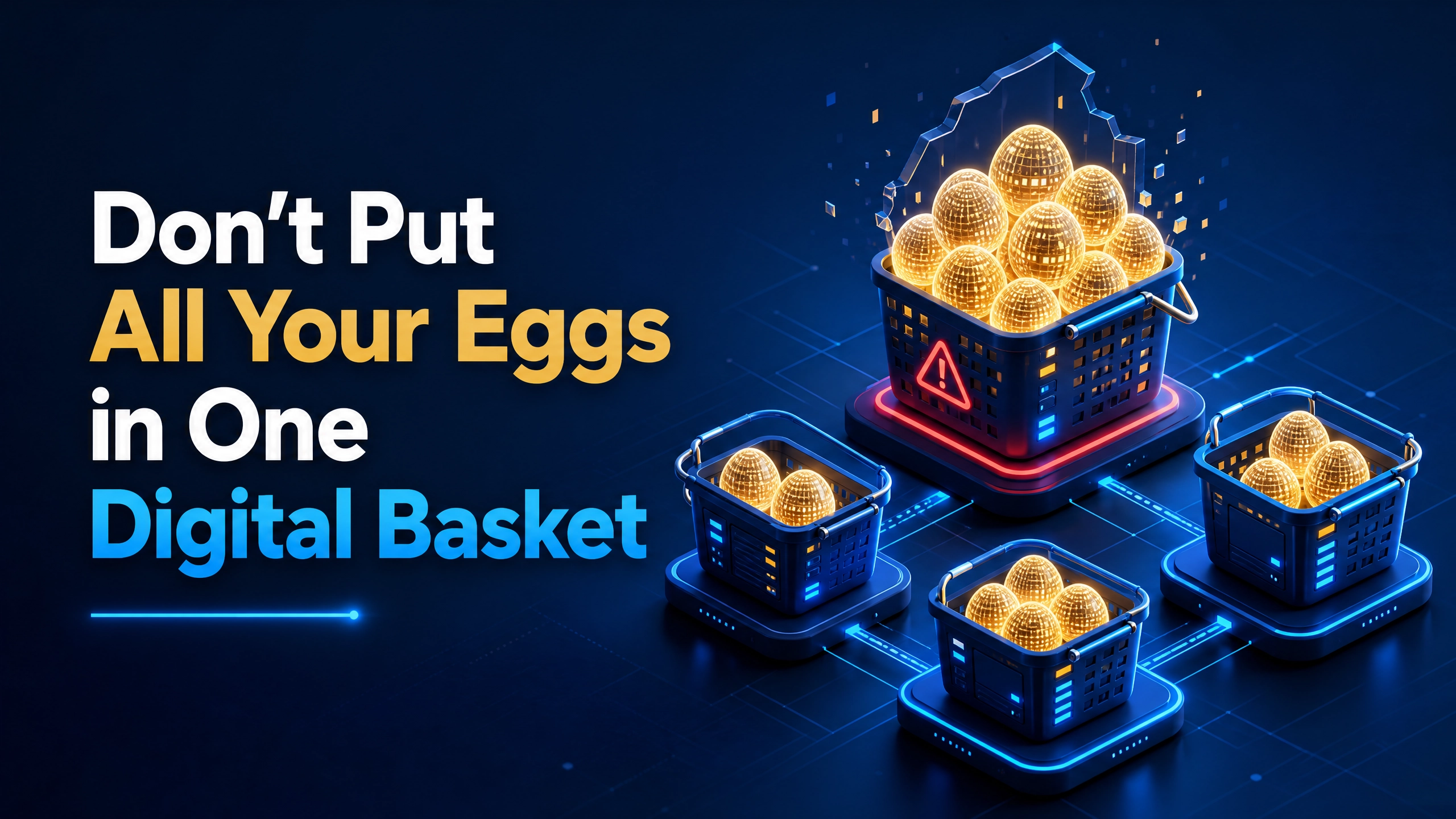
There’s a particular kind of dread that every online worker eventually encounters. It arrives without warning — an email, a policy update, a sudden algorithm shift — and in an instant, the income stream you’ve spent months or years building goes quiet. For those who built their entire livelihood around a single source of online income, that moment isn’t just stressful. It can be catastrophic.This is the reality that too few people talk about when they celebrate the freedom of working online. The internet has genuinely democratized the ability to earn money from anywhere, but it has also created a false sense of security around sources of income that are, at their core, remarkably fragile. A freelancing platform can change its fee structure overnight. A content algorithm can be updated and bury your videos or articles without explanation. A single client can vanish. An affiliate program can be discontinued. When your financial wellbeing rests entirely on one of these pillars, you’re not really free — you’re just one bad day away from starting over.The solution isn’t complicated, but it does require intention: build multiple streams of income, and build them deliberately.The False Comfort of “Enough”One of the most common reasons people stick with a single income source is that it’s working. When a freelance writing business is pulling in a comfortable monthly sum, or when a YouTube channel is generating reliable ad revenue, there’s a natural human tendency to stop there. It feels like enough, and building something new feels risky when the current thing is humming along.But “working right now” is not the same as “reliable.” The comfort of a single steady stream can mask just how exposed you actually are. Every online income source exists within an ecosystem controlled by someone else — a platform, a company, an algorithm, a market trend. You are always, to some degree, a tenant rather than an owner. The moment that ecosystem changes, so does your livelihood.Diversifying doesn’t mean abandoning what’s working. It means acknowledging that what’s working today may not work tomorrow, and building accordingly while you still have the runway to do it.What Diversification Actually Looks LikeMultiple income streams don’t need to be entirely separate careers. In fact, the most sustainable approach is to build income sources that grow organically from the same skills, audience, or expertise you’ve already developed.A graphic designer who does client work might also sell design templates on a marketplace, teach a course on typography, or write a newsletter with a paid subscription tier. A developer who builds software for businesses might also generate income from a small SaaS tool, from consulting, or from writing technical content. A content creator on one platform might license their work, speak at events, or create a product their audience wants to buy.The key is that each stream ideally draws from the same well of knowledge and reputation, so maintaining it doesn’t require starting from scratch. You’re not building five separate businesses — you’re building one professional identity that earns in multiple ways.
The Income Spectrum: Active vs. Passive
When thinking about diversification, it helps to think about where each income source falls on the spectrum between active and passive. Active income requires your direct time and effort to generate — client projects, consulting calls, freelance work. Passive income, or more accurately semi-passive income, generates money without requiring your constant involvement — digital products, royalties, membership sites, affiliate content.A well-diversified online income doesn’t have to be all of one or the other. In practice, most successful online earners maintain a mix: active income provides reliable cash flow in the short term, while passive streams compound over time and begin to reduce the pressure on your time. The goal isn’t to stop working — it’s to ensure that your income doesn’t stop the moment you do.
The Psychological Case for Diversification
Beyond the financial logic, there’s a quieter and equally important argument for multiple income streams: peace of mind.
When your entire income depends on a single source, every fluctuation in that source becomes a crisis. A slow month feels existential. A platform change feels like a personal attack. The anxiety of protecting the one thing standing between you and financial instability can narrow your thinking, make you risk-averse in ways that limit your growth, and turn work that once felt exciting into something you cling to out of fear.
When income comes from multiple places, the emotional relationship with each source changes. A slow month on one platform doesn’t spiral into catastrophe when three others are performing normally. You can afford to take risks — to experiment with a new format, drop a client who isn’t right, or take time away — because the entire structure doesn’t collapse if one beam shifts.
Starting Without Overwhelming Yourself
The goal of multiple income streams can feel paralyzing if you try to build everything at once. It doesn’t have to work that way. The most practical approach is to treat diversification as a long game rather than an immediate project.Start by getting genuinely good at the thing you’re already doing. Build the credibility, the audience, the skills, and the reputation that make other opportunities possible. Then, when something adjacent presents itself — a chance to package your knowledge into a product, an invitation to consult, a platform where your content could live — take it. Add one stream, let it stabilize, then look for the next.
Over time, the picture changes. What once felt like a single thread becomes a web, and webs are far harder to destroy than threads.
Working online is one of the great economic opportunities of our time. But freedom that depends on a single source isn’t really freedom — it’s a more comfortable kind of precarity. The people who build lasting, resilient online careers are rarely the ones who found one thing that worked and held on tight. They’re the ones who kept building, kept adding, and never let a single platform, client, or income source become the whole story.
The internet rewards those who treat it as an ecosystem to participate in broadly, not a single machine to feed. Build wide, build thoughtfully, and never let your livelihood rest on just one thing.