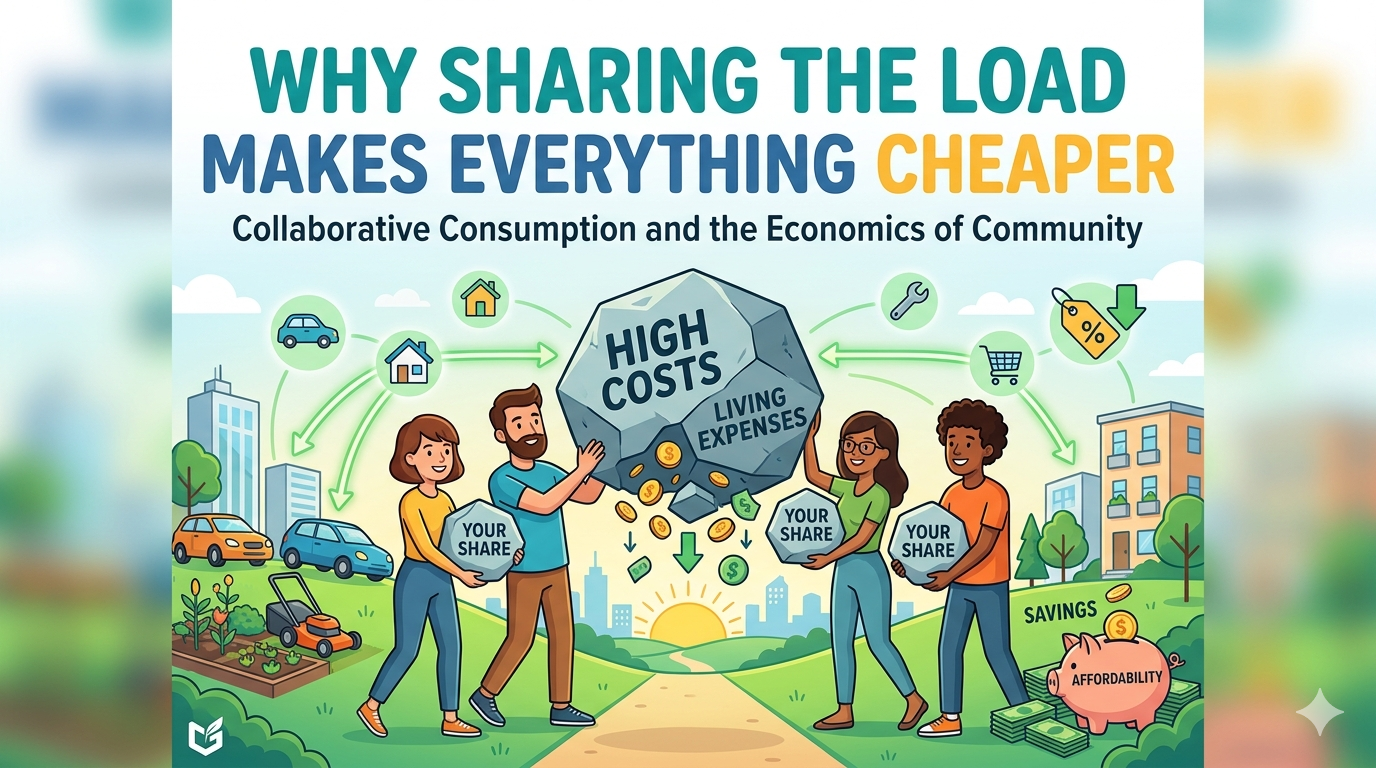
There’s a quiet principle running underneath almost every affordable thing in modern life, and it has nothing to do with cutting corners or finding a discount code. It’s the simple math of pooling: when many people or many transactions share the same fixed cost, the cost per person shrinks. This single idea explains why a city can run a subway system that no individual could ever build alone, and it explains why a solo entrepreneur today can rent software, audiences, and infrastructure that would have cost a fortune to build from scratch a generation ago.
At the macro level, pooling shows up as economies of scale. A power plant, a shipping network, or a cloud data center has enormous upfront costs, but once it exists, serving one more customer is nearly free. Spread that fixed cost across millions of users instead of thousands, and the price for each person falls dramatically. This is the same logic behind insurance, where a large pool of policyholders absorbs the bad luck of the few, and the same logic behind public infrastructure like roads or water systems, which would be unaffordable if every household had to build its own. Governments, utilities, and large corporations have understood this for centuries: the bigger the pool, the smaller the burden on any single participant.
The same force operates at the micro level, just at a smaller and more personal scale. A neighborhood buying club that orders produce in bulk gets grocery-store prices without the grocery store. A group of freelancers sharing a coworking space splits rent that none of them could justify alone. Families pooling money for a vacation home, friends splitting a streaming subscription, or coworkers carpooling to save on gas are all running the exact same calculation that power companies run, just with smaller numbers and friendlier spreadsheets. The mechanism is identical whether it’s a nation building a highway or three roommates buying a couch: shared cost, shared benefit, lower price for everyone involved.
This matters enormously for digital entrepreneurs, because the internet has turned pooling into the default business model rather than an occasional convenience. Cloud computing is the clearest example. A single founder can rent server capacity from a provider that built data centers serving thousands of other companies simultaneously, which means the founder pays a sliver of the true infrastructure cost rather than the entire thing. The same applies to software tools. A subscription to an email platform, a payment processor, or a design tool is affordable specifically because the company behind it spread its engineering costs across a huge customer base, letting each entrepreneur access enterprise-grade technology for the price of a few coffees a month.
Pooling also reshapes how digital entrepreneurs find customers and capital. Marketplaces like Etsy or Amazon pool buyer traffic so that an individual seller doesn’t need to build an audience from zero, trading a slice of revenue for access to a shared customer base that would be expensive to acquire alone. Crowdfunding pools small contributions from many backers into the capital a founder would otherwise need a bank or investor for. Mastermind groups and paid communities pool knowledge and mentorship, letting members split the cost of expertise that would be unaffordable as a one-on-one consulting engagement. Even something as ordinary as a shared ad campaign or a newsletter swap between two creators is pooling in disguise, each party borrowing scale they didn’t have on their own.
The deeper lesson for anyone building a digital business is that affordability rarely comes from working harder or spending less in isolation. It comes from finding the pool that already exists and plugging into it, or building a new one that others want to join. The entrepreneur who treats every cost as something to be split, shared, or aggregated will almost always out-compete the one trying to bear every expense alone. Scale isn’t just for governments and corporations anymore. With the right tools, a single person can tap into pools of computing power, audience, capital, and knowledge that were once reserved for institutions, and that access is precisely what makes the digital economy so much more forgiving to start in than the industrial one ever was.