Posted on

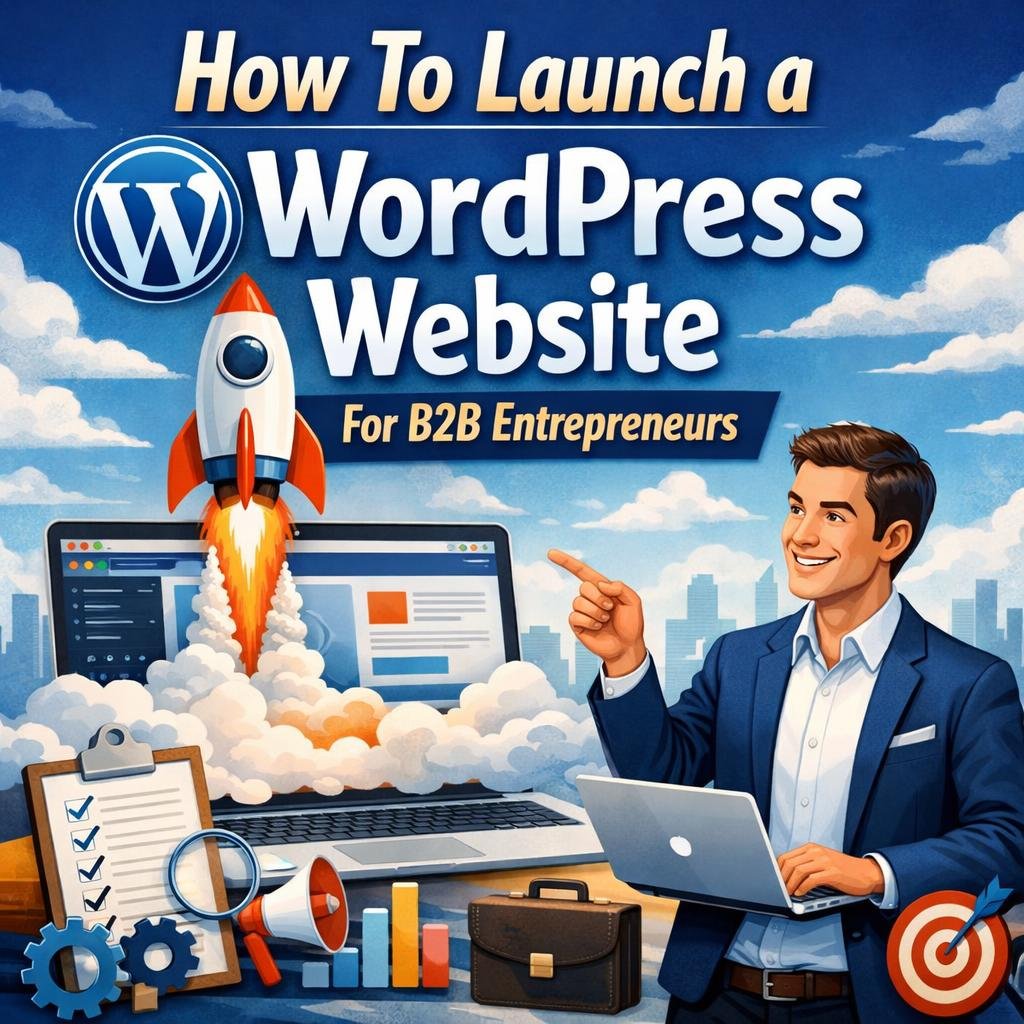
How To Launch a WordPress Website, For B2B Entrepreneurs

Launching a professional website is one of the most consequential early decisions a B2B entrepreneur makes. It is not merely a digital brochure but the central hub where credibility is established, expertise is demonstrated, and relationships with potential clients begin. WordPress remains the most versatile platform for this purpose, offering the depth and scalability that serious business builders require without demanding that they become professional developers overnight.

The first consideration is hosting. A B2B website must load quickly and remain available without interruption, because a prospect who encounters a slow or broken site will not assume technical difficulties. They will assume unprofessionalism. Managed WordPress hosting is worth the investment for entrepreneurs who would rather focus on their business than on server maintenance. These services handle security updates, backups, and performance optimization automatically, which means the site remains fast and secure without constant attention. The small premium over basic shared hosting pays for itself in reliability and peace of mind.

Once hosting is secured, the foundation of the site is the theme. For B2B purposes, the visual design should communicate competence and clarity rather than creativity for its own sake. A clean, modern theme with generous white space, readable typography, and a logical structure will outperform a flashy, cluttered alternative every time. The goal is to guide visitors toward understanding what the business does and why it matters to them. Many premium themes designed specifically for corporate or service-based businesses include pre-built layouts for home pages, about sections, and service descriptions that can be adapted without starting from scratch. The best themes are also responsive, ensuring that the experience remains polished whether a prospect is browsing on a desktop in their office or a phone between meetings.

Content is where the B2B website truly earns its keep. Every page should answer a question that a potential client is likely asking. The homepage must immediately clarify what the business offers and who it serves. The about page should build trust by conveying the founder’s expertise and the company’s mission in human terms. Service or product pages need to speak directly to the outcomes that clients care about, not just the features being sold. Case studies are particularly powerful in B2B contexts because they transform abstract claims into concrete proof. A well-written case study describes the client’s situation before engaging with the business, the specific actions taken, and the measurable results achieved. This narrative structure allows prospects to imagine themselves in the success story.Search engine optimization should be woven into the site from the beginning rather than added as an afterthought. WordPress makes this manageable through plugins that handle technical fundamentals like sitemap generation, meta description editing, and schema markup. But the real work of SEO is in the content strategy. B2B buyers search with specific intent. They look for solutions to operational problems, comparisons between approaches, and insights that help them make informed decisions. Creating content that aligns with these search behaviors, whether through detailed service pages or a regularly maintained blog, draws qualified traffic that is already interested in what the business offers.

Lead generation is the ultimate purpose of most B2B websites, and WordPress supports this through forms, pop-ups, and integration with customer relationship management systems. The key is to offer something of genuine value in exchange for contact information. A white paper, an industry benchmark report, or a consultation booking can all serve this function. The exchange must feel fair to the prospect. If the content or offer behind the form is thin or generic, trust is damaged and the lead is unlikely to convert into a client. Every form field should be justified by the value being offered, and the follow-up process must be prompt and professional.

Security deserves explicit attention because B2B websites often handle sensitive information. An SSL certificate is non-negotiable, not only for encryption but because browsers now flag unencrypted sites as unsafe, which destroys credibility instantly. Regular updates to WordPress core, themes, and plugins close vulnerabilities before they can be exploited. Strong passwords and two-factor authentication for administrative access are simple measures that prevent the vast majority of unauthorized intrusions. For businesses in regulated industries, additional compliance measures may be necessary, and WordPress can accommodate these through appropriate plugins and hosting configurations.

As the business grows, the website must grow with it. WordPress excels here because its ecosystem of plugins and integrations allows the site to evolve without rebuilding from the ground up. A company that begins with simple contact forms may later need a client portal, a membership area, or e-commerce functionality for digital products. These capabilities can be added incrementally, preserving the investment in the existing site structure and content. This scalability means that the website launched in the early days of the business can still serve it well years later, even as operations become more sophisticated.

The process of building a WordPress site for B2B entrepreneurship is ultimately an exercise in strategic communication. Every choice, from hosting to theme to content, should reflect an understanding of who the ideal client is and what they need to see in order to take the next step. WordPress provides the tools, but the entrepreneur must supply the clarity of purpose. When both are present, the result is a website that works continuously to attract, educate, and convert the right kind of prospects, becoming one of the most valuable assets the business owns.
Posted on

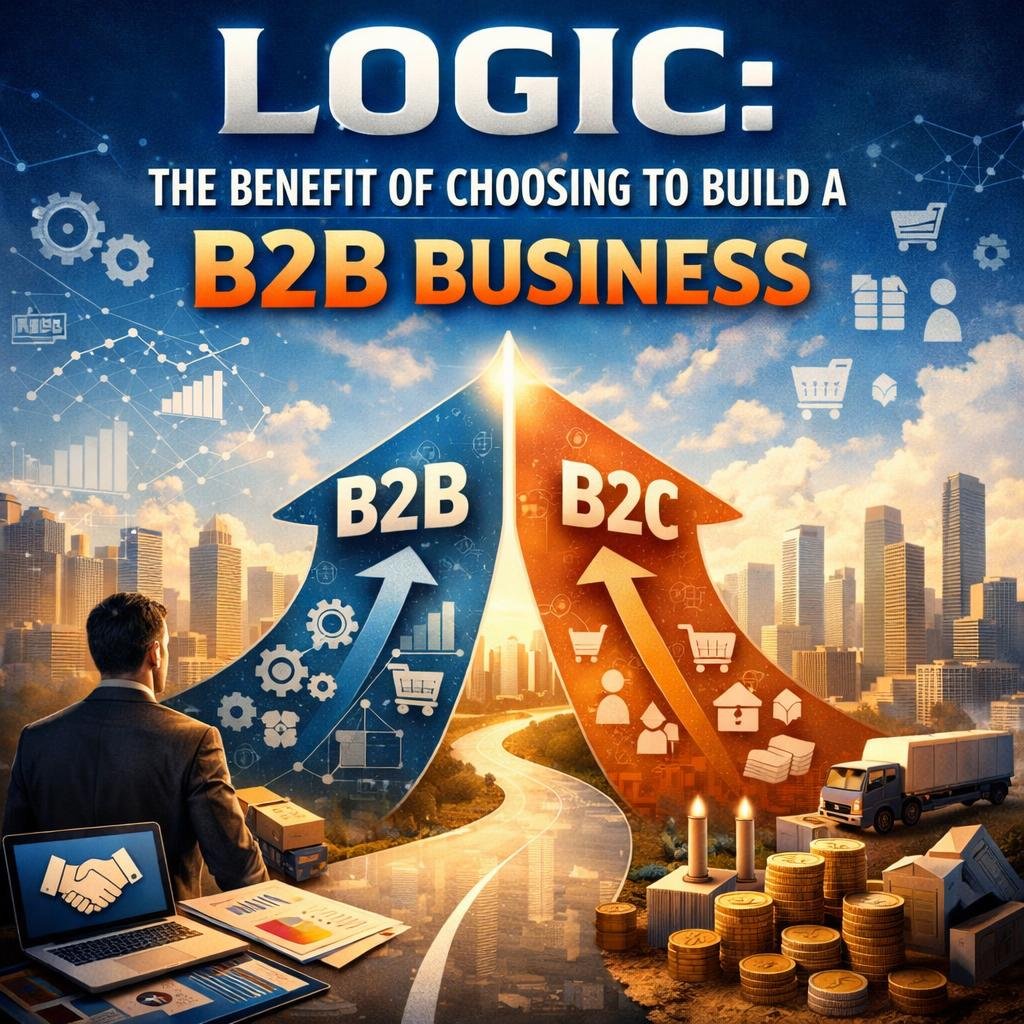
Logic: The Benefit of Choosing to Build a B2B Business

In the world of business-to-business selling, there exists a fundamental advantage that many overlook: the logical accessibility of customer pain points. Unlike consumer markets where desires are often emotional, subconscious, and difficult to articulate, B2B problems tend to sit right on the surface, waiting to be observed and solved. This transparency is not a minor detail. It is the structural reason why selling to businesses can feel more predictable, more rational, and ultimately more efficient than selling to individuals.

Consider how a business operates. Every company is a system of inputs and outputs, of costs and revenues, of processes that either function or fail. When something is wrong, it produces measurable consequences. A manufacturing line slows down and output drops. A customer service team becomes overwhelmed and response times climb. A software integration breaks and data stops flowing between departments. These are not mysteries. They are visible disruptions with traceable causes and quantifiable impacts. A salesperson does not need to probe deeply into the psyche of a procurement manager to discover that late deliveries are costing the company money. The pain is already documented in reports, discussed in meetings, and felt in the quarterly numbers. The job of the seller is not to create awareness of the problem but to present a credible solution to a problem that is already acknowledged.

This logical structure extends to how businesses evaluate potential purchases. A consumer might buy a new jacket because it feels right, because it matches an identity they are trying to project, or because the color caught their eye in a moment of impulse. These motivations are real but elusive. In contrast, a business buyer is typically evaluating a purchase against explicit criteria. Will this reduce our operating costs by the projected percentage? Will it integrate with our existing infrastructure without requiring a full migration? Will it scale as our headcount grows? The decision-making process may involve multiple stakeholders and take months, but the variables are knowable. A skilled B2B seller can map the logic of the sale in advance, anticipating objections about implementation timelines or return on investment and preparing responses that speak directly to those concerns.

The deductive nature of B2B pain points also means that market research is unusually powerful in this space. If you sell inventory management software, you do not need to guess whether your target customers struggle with stockouts or excess carrying costs. Industry benchmarks, trade publications, and even public financial filings will tell you. You can deduce that a mid-sized retailer with twenty locations likely faces coordination challenges that a centralized system could solve. You can infer that a logistics company operating on thin margins is probably sensitive to fuel price volatility and route inefficiencies. These deductions allow you to enter a conversation with relevance and credibility already established, rather than starting from zero and hoping to stumble upon a need.

There is also a compounding effect at work. Because business problems are logical and interconnected, solving one often exposes or alleviates another. When you help a company automate its invoice processing, you do not just reduce manual labor. You also accelerate cash flow, reduce error rates, improve vendor relationships, and free up staff for higher-value work. The seller who understands this chain of logic can articulate a value proposition that grows more compelling the deeper the conversation goes. The pain points are not isolated symptoms but nodes in a network of cause and effect, and a well-designed B2B solution can demonstrate impact across that entire network.

None of this is to say that B2B selling is easy. The sales cycles are long, the stakeholder maps are complex, and the risk of failure is high when a wrong decision can affect hundreds of employees. But the difficulty is different in kind from the challenge of consumer selling. In B2B, you are not trying to manufacture desire. You are trying to align your solution with a need that is already present, already rational, and often already urgent. The pain points are not hidden in the shadows of personal aspiration or social signaling. They are right there in the open, written into the logic of how the business runs. For those who learn to read that logic, B2B offers a clarity that makes the path from first contact to closed deal far more navigable than it first appears.

Posted on

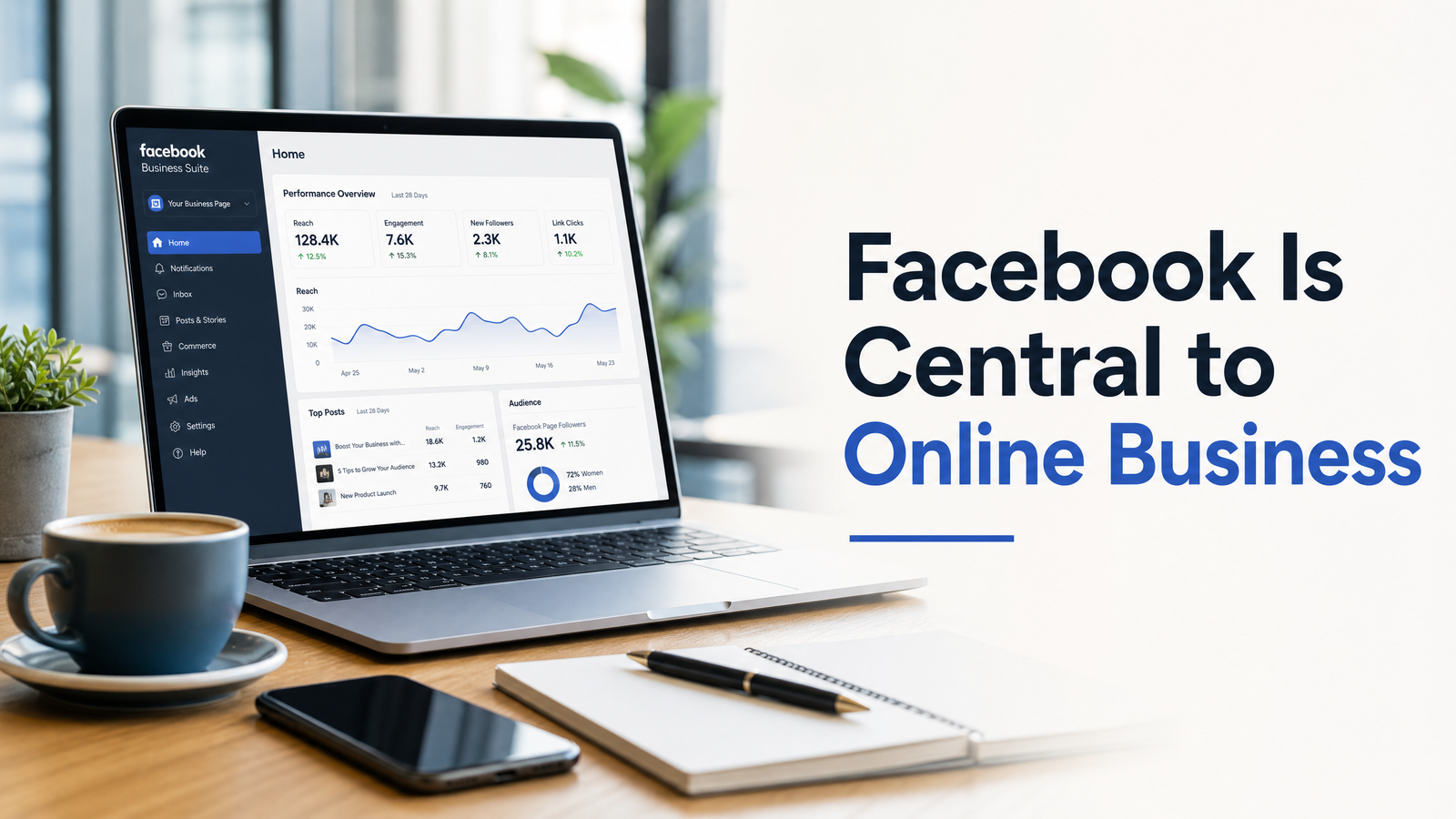
Facebook Is Central to Online Business

Every web master who isn’t posting to Facebook is leaving traffic, trust, and revenue on the table. It is not because Facebook is the newest platform or the most exciting one. It is because Facebook remains one of the largest collections of human attention ever assembled, and ignoring it means ignoring the very people you built your website to serve.When you publish content and never syndicate it to Facebook, you are assuming that your audience will find you on their own. That assumption is costly. Search engines are competitive, and organic discovery takes months or years to build. Meanwhile, billions of people open Facebook every day not because they are looking for your website, but because they are looking for something interesting. Your content could be that interesting thing. A single share from the right person can introduce your work to an audience you would never reach through search alone. Without a Facebook presence, that share never happens.

The missed opportunity is not just about reach. It is about repetition. People rarely buy, subscribe, or trust a website on their first visit. They need to encounter your brand multiple times before they remember it. Facebook gives you a way to stay visible without requiring someone to return to your site directly. Each post is another touchpoint, another reminder that you exist and that you have something worth reading. Web masters who skip this channel are forcing their audience to do all the work of remembering them. Most audiences will not do that work.

There is also a credibility cost. When someone discovers your website and considers whether to trust it, one of the first things they do is look for social proof. A Facebook page with regular posts, comments, and engagement signals that you are active, responsive, and real. An empty page or no page at all signals the opposite. It suggests abandonment, obscurity, or even suspicion. You may have the best content on the internet, but if your only digital footprint is a static website, you are asking visitors to take a leap of faith. A maintained Facebook presence bridges that gap.

Some web masters avoid Facebook because they believe their audience is not there. This is almost always wrong. Facebook’s user base spans every age group, profession, and interest category. Even highly technical or niche audiences use Facebook for groups, events, and community discussion. The question is not whether your audience uses Facebook. The question is whether you are showing up where they already spend their time. If you are not, someone else is.Another common excuse is that Facebook’s algorithm suppresses organic reach, making it pointless to post without paying for ads. It is true that organic reach has declined. It is not true that it is zero. A post that earns genuine engagement still travels. More importantly, even modest reach is better than none. A Facebook post that reaches two hundred people is two hundred people who might not have seen your latest article otherwise. Over time, those numbers compound. The web masters who benefit from Facebook are not the ones who went viral once. They are the ones who showed up consistently, built a small following, and turned casual scrollers into regular readers.

The biggest loss, however, is data and feedback. When you post to Facebook, you learn what resonates. You see which headlines get clicks, which topics spark comments, and which formats people share. That feedback loop is invaluable for improving your website itself. Without it, you are creating in a vacuum, guessing at what your audience wants based on analytics alone. Facebook turns your content into a conversation, and conversations teach you more than page views ever will.

Ultimately, every web master wants the same thing: for their work to matter to someone. Facebook is not a distraction from that goal. It is a direct path to it. The platform is not perfect, and it is not the only place you should be. But it is a place where attention already lives, where trust can be built, and where your next reader is probably scrolling right now. Choosing not to post there is not a principled stand. It is a quiet decision to make your website harder to find, harder to trust, and harder to grow. That is a choice no serious web master can afford to keep making.

Posted on

Don’t Put All Your Eggs in One Digital Basket

There’s a particular kind of dread that every online worker eventually encounters. It arrives without warning — an email, a policy update, a sudden algorithm shift — and in an instant, the income stream you’ve spent months or years building goes quiet. For those who built their entire livelihood around a single source of online income, that moment isn’t just stressful. It can be catastrophic.This is the reality that too few people talk about when they celebrate the freedom of working online. The internet has genuinely democratized the ability to earn money from anywhere, but it has also created a false sense of security around sources of income that are, at their core, remarkably fragile. A freelancing platform can change its fee structure overnight. A content algorithm can be updated and bury your videos or articles without explanation. A single client can vanish. An affiliate program can be discontinued. When your financial wellbeing rests entirely on one of these pillars, you’re not really free — you’re just one bad day away from starting over.The solution isn’t complicated, but it does require intention: build multiple streams of income, and build them deliberately.The False Comfort of “Enough”One of the most common reasons people stick with a single income source is that it’s working. When a freelance writing business is pulling in a comfortable monthly sum, or when a YouTube channel is generating reliable ad revenue, there’s a natural human tendency to stop there. It feels like enough, and building something new feels risky when the current thing is humming along.But “working right now” is not the same as “reliable.” The comfort of a single steady stream can mask just how exposed you actually are. Every online income source exists within an ecosystem controlled by someone else — a platform, a company, an algorithm, a market trend. You are always, to some degree, a tenant rather than an owner. The moment that ecosystem changes, so does your livelihood.Diversifying doesn’t mean abandoning what’s working. It means acknowledging that what’s working today may not work tomorrow, and building accordingly while you still have the runway to do it.What Diversification Actually Looks LikeMultiple income streams don’t need to be entirely separate careers. In fact, the most sustainable approach is to build income sources that grow organically from the same skills, audience, or expertise you’ve already developed.A graphic designer who does client work might also sell design templates on a marketplace, teach a course on typography, or write a newsletter with a paid subscription tier. A developer who builds software for businesses might also generate income from a small SaaS tool, from consulting, or from writing technical content. A content creator on one platform might license their work, speak at events, or create a product their audience wants to buy.The key is that each stream ideally draws from the same well of knowledge and reputation, so maintaining it doesn’t require starting from scratch. You’re not building five separate businesses — you’re building one professional identity that earns in multiple ways.

The Income Spectrum: Active vs. Passive

When thinking about diversification, it helps to think about where each income source falls on the spectrum between active and passive. Active income requires your direct time and effort to generate — client projects, consulting calls, freelance work. Passive income, or more accurately semi-passive income, generates money without requiring your constant involvement — digital products, royalties, membership sites, affiliate content.A well-diversified online income doesn’t have to be all of one or the other. In practice, most successful online earners maintain a mix: active income provides reliable cash flow in the short term, while passive streams compound over time and begin to reduce the pressure on your time. The goal isn’t to stop working — it’s to ensure that your income doesn’t stop the moment you do.

The Psychological Case for Diversification

Beyond the financial logic, there’s a quieter and equally important argument for multiple income streams: peace of mind.

When your entire income depends on a single source, every fluctuation in that source becomes a crisis. A slow month feels existential. A platform change feels like a personal attack. The anxiety of protecting the one thing standing between you and financial instability can narrow your thinking, make you risk-averse in ways that limit your growth, and turn work that once felt exciting into something you cling to out of fear.

When income comes from multiple places, the emotional relationship with each source changes. A slow month on one platform doesn’t spiral into catastrophe when three others are performing normally. You can afford to take risks — to experiment with a new format, drop a client who isn’t right, or take time away — because the entire structure doesn’t collapse if one beam shifts.

Starting Without Overwhelming Yourself

The goal of multiple income streams can feel paralyzing if you try to build everything at once. It doesn’t have to work that way. The most practical approach is to treat diversification as a long game rather than an immediate project.Start by getting genuinely good at the thing you’re already doing. Build the credibility, the audience, the skills, and the reputation that make other opportunities possible. Then, when something adjacent presents itself — a chance to package your knowledge into a product, an invitation to consult, a platform where your content could live — take it. Add one stream, let it stabilize, then look for the next.

Over time, the picture changes. What once felt like a single thread becomes a web, and webs are far harder to destroy than threads.

Working online is one of the great economic opportunities of our time. But freedom that depends on a single source isn’t really freedom — it’s a more comfortable kind of precarity. The people who build lasting, resilient online careers are rarely the ones who found one thing that worked and held on tight. They’re the ones who kept building, kept adding, and never let a single platform, client, or income source become the whole story.

The internet rewards those who treat it as an ecosystem to participate in broadly, not a single machine to feed. Build wide, build thoughtfully, and never let your livelihood rest on just one thing.

Posted on

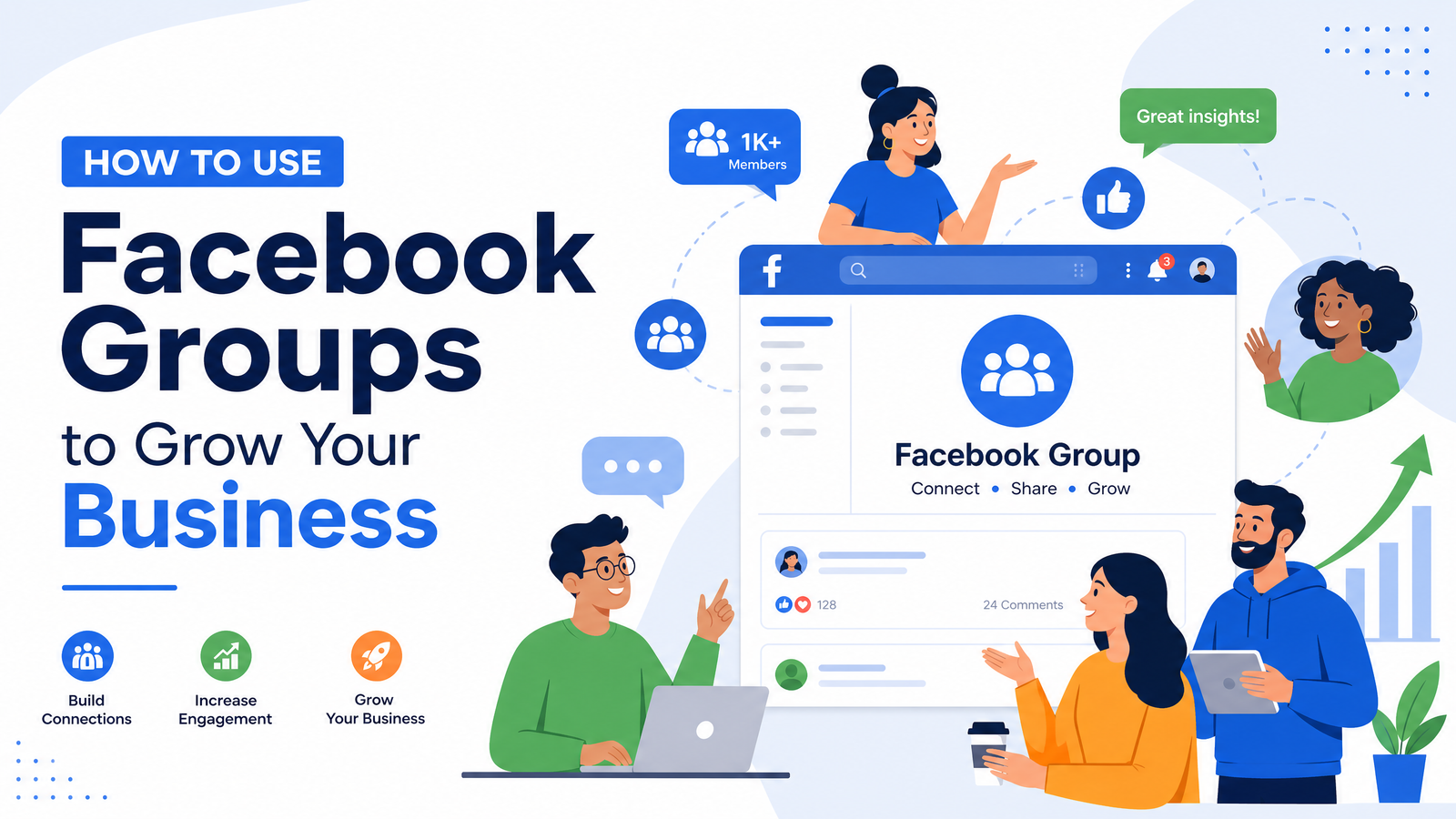
How to Use Facebook Groups to Grow Your Business

What Are Facebook Groups, Anyway?If you’ve spent any time on Facebook, you’ve probably stumbled into a group or two — a neighborhood community page, a fan club for a TV show, or a forum for people who share a very specific hobby. But beyond the casual scroll, Facebook Groups represent something far more powerful for business owners: a concentrated, self-selected audience of people who are already passionate about a topic that may be directly related to what you sell.

Unlike a Facebook Page, which broadcasts your content outward to followers in a one-to-many format, a Group is designed for two-way conversation. Members can post, comment, ask questions, share experiences, and connect with each other. The result is a community that feels more intimate and engaged than a traditional social media following. Facebook Groups can be public (anyone can find and read them), private (anyone can find them but only members see the content), or hidden (invisible to non-members entirely). For business purposes, all three formats have their uses depending on your strategy.

Groups exist for virtually every niche imaginable. There are groups for first-time homebuyers, sourdough bakers, freelance graphic designers, parents of kids with allergies, vintage watch collectors, and everything in between. And wherever there is a community with a shared problem or passion, there is an opportunity for a business with the right solution.

Why Facebook Groups Matter for Marketing

The conventional wisdom about social media marketing focuses heavily on ads, follower counts, and algorithmic reach. Facebook Groups work on a different principle entirely: trust. When someone joins a group, they are opting into a conversation with like-minded people. The content they see in that group carries more social weight than a sponsored post in their feed because it comes from a peer context.

This trust is the secret ingredient that makes group-based marketing so effective. A recommendation inside a Facebook Group feels more like word-of-mouth than advertising. A thoughtful, helpful response to a member’s question positions you as an authority without feeling like a sales pitch. And when your brand name starts showing up repeatedly in a community people already love, recognition builds organically.There is also an algorithmic reason to take Groups seriously. Facebook has prioritized Group content in its feed for several years, meaning posts from Groups often get better organic reach than posts from Pages. For small businesses with limited advertising budgets, this is a meaningful advantage.

Two Ways to Market in Facebook GroupsWhen it comes to actually using Groups for your business, you have two distinct paths to consider, and the best marketers often use both in tandem.The first is joining existing groups where your target customers are already gathering. The second is creating and managing your own branded group. Each approach requires a different mindset and set of tactics.

Joining Existing Groups: The Art of Showing Up WellThe single most important rule for marketing in groups you don’t own is this: lead with value, not with sales. Groups have administrators who are fiercely protective of their communities, and members can spot a promotional post from a mile away. Dropping a link to your product in a group you just joined is a fast path to being removed — or worse, damaging your reputation publicly.

Instead, approach existing groups the way a knowledgeable friend would. Search for groups where your potential customers are active. If you sell skincare products, find groups dedicated to natural beauty routines. If you’re a financial planner, look for groups around personal finance, early retirement, or millennial money management. Once you’re in, spend time listening before you speak.

Read what members are asking about. Notice where the recurring pain points are. When you have something genuinely useful to contribute — a piece of advice, a resource, an answer to a question — offer it freely without any expectation of an immediate return. Over time, as you become a recognized, helpful presence in the group, members will naturally look at your profile, discover your business, and seek you out on their own terms.

When it is appropriate to mention your business, be transparent about it. Group members respond well to honesty. There’s a real difference between saying “I actually run a small business that makes exactly this type of product, happy to share more if it would help” and dropping an unsolicited promotional link. Transparency turns what could be an awkward sales moment into a natural conversation.

Always review a group’s rules before posting anything promotional. Many groups have specific days designated for business promotion, or explicit guidelines about what kinds of links and mentions are allowed. Following these rules isn’t just good etiquette — it demonstrates that you respect the community, which goes a long way with both admins and members.

Creating Your Own Group: Building a Community Around Your Brand

Running your own Facebook Group gives you a level of control and intimacy with your audience that almost no other platform can match. Rather than renting attention on someone else’s platform, you’re building an owned community — a place where your most engaged customers gather, talk, and learn.

The most effective branded groups don’t feel like an extension of a brand’s marketing department. They feel like a community that happens to be connected to a brand. The distinction matters enormously. If you sell project management software and you create a group called “Project Management Professionals,” focused entirely on tips, career development, and workflow strategies, members will join and engage because of the value the community provides. Your product becomes a natural part of the conversation rather than the point of the conversation.

When setting up your group, think carefully about what it will be for. The clearest groups have a specific purpose that members can articulate in one sentence. “A community for freelance writers to share opportunities, get feedback, and navigate the business side of writing” is specific and compelling. “A group for fans of our brand” is not — unless your brand already has a fervent following, people need a reason beyond loyalty to show up.

Content is the engine that keeps a group alive. In the early days, you’ll need to be the one driving discussions, asking questions, sharing resources, and encouraging others to participate. Over time, as the community grows, members will generate much of this themselves. A healthy group has a mix of owner-posted content (educational posts, product updates framed as news, exclusive offers for members), member-generated content (questions, success stories, recommendations), and interactive moments like polls, live videos, or themed discussion threads.

Consistency matters more than volume. A group where the admin disappears for three weeks at a time loses its sense of community quickly. Even a few posts per week, combined with prompt responses to comments and questions, is enough to signal that the group is alive and cared for.

Turning Group Engagement Into Real Business Results

The goal of all this community building is, ultimately, to support your business. But the connection between group activity and revenue is often indirect, and understanding that relationship helps you stay patient with the process.

Group members who feel genuinely connected to your community are significantly more likely to buy from you, recommend you to friends, and remain loyal customers over time. They give you feedback on your products in real time. They tell you what problems they’re still trying to solve. They become case studies, testimonials, and brand advocates without you ever having to ask.

More directly, you can use your group to announce new products, share exclusive discounts that reward members for their participation, host live Q&A sessions that demonstrate your expertise, or run promotions that drive traffic to your website. Because these offers reach an engaged audience rather than cold traffic, conversion rates tend to be higher than with broad advertising.

The key to making all of it work is the same principle that runs through every piece of advice in this post: treat the community as the point, not the pipeline. When people feel respected and valued rather than marketed to, they become the kind of customers who do your marketing for you.

If you haven’t already, spend an hour this week searching Facebook for groups related to your industry or target audience. Join a few. Read the conversations happening inside. You’ll quickly get a sense of where you can add value and where genuine opportunities exist.

The businesses that build the most loyal followings on Facebook Groups aren’t necessarily the biggest or the best-funded. They’re the ones that show up with something useful to say, consistently, over time. That’s a playing field where any business — at any size — can compete.

Posted on

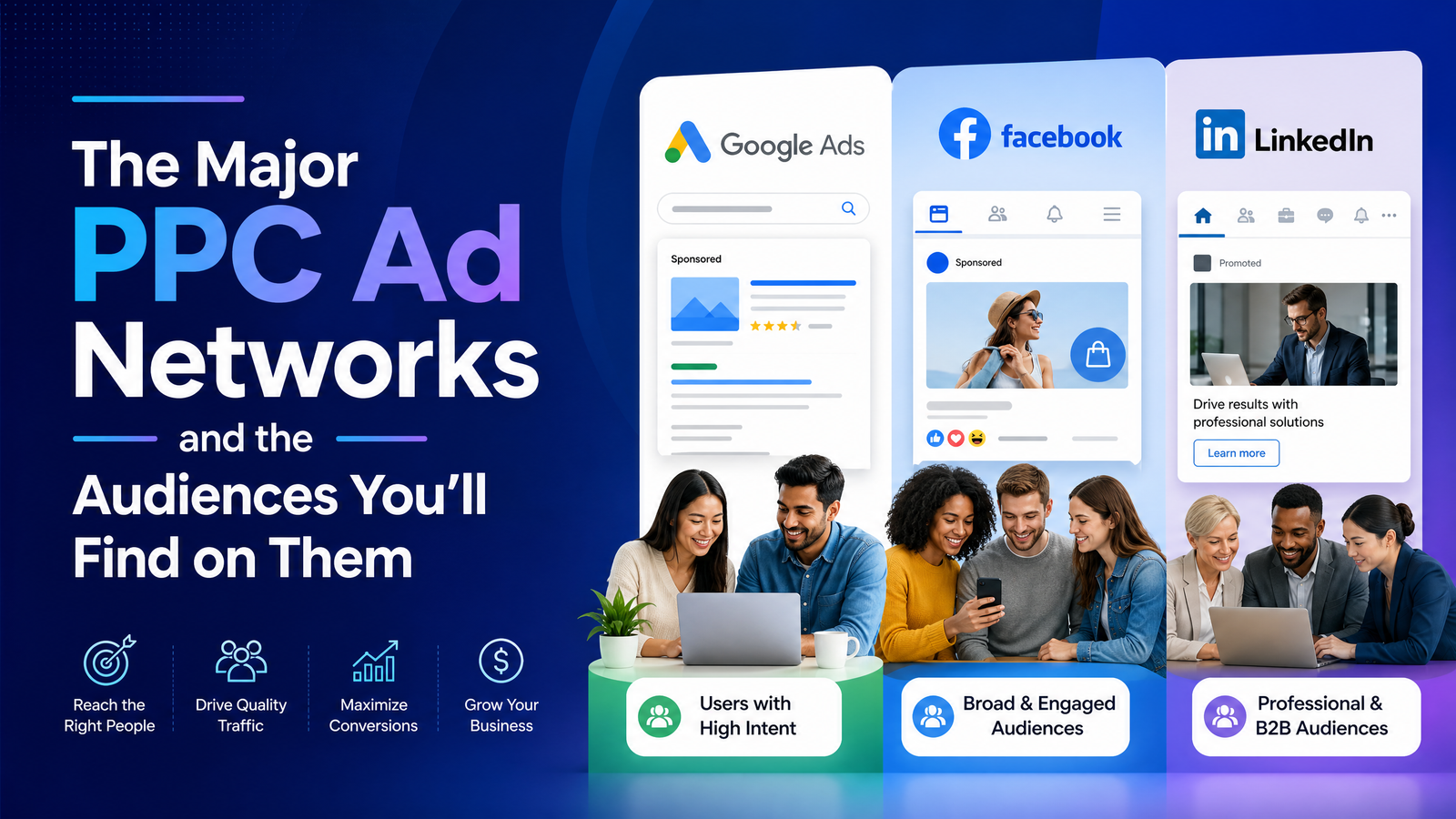
The Major PPC Ad Networks and the Audiences You’ll Find on Them

Pay-per-click advertising is one of the most direct ways to put your product or service in front of people who are ready to act. But not every PPC network reaches the same person at the same moment in their day. Knowing which platform attracts which kind of customer is the difference between a campaign that pays for itself and one that quietly drains your budget. Here’s a tour of the biggest PPC networks in the world and the audiences that live on each of them.

Google Ads: The Search Giant with Unmatched IntentGoogle Ads is the undisputed heavyweight of PPC advertising, capturing roughly 28% of all global digital ad spend. It operates primarily through two channels: Search, where text ads appear alongside Google search results, and Display, where image and text ads appear across Google’s vast network of partner websites.

What makes Google Search Ads uniquely powerful is purchase intent. When someone types “best running shoes for flat feet” or “emergency plumber near me” into Google, they are not passively browsing — they are actively looking for a solution. This makes Google Search the natural home for businesses whose customers already know they have a need. It works exceptionally well for local service businesses like plumbers, dentists, and contractors; for e-commerce stores selling products with clear, searchable names; for software companies targeting buyers who comparison shop online; and for any business whose category has strong search volume.

The Google Display Network extends reach to over two million websites and apps, placing visual ads in front of users as they read articles, check their email, or watch YouTube videos. The Display network trades the laser-focused intent of search for sheer scale and the ability to reach people earlier in the buying journey. It’s where brands build awareness, re-engage past website visitors through remarketing, and stay visible during long B2B sales cycles.

The customers you find through Google tend to skew older than social media audiences — people who grew up using search engines as their primary research tool. They are often in problem-solving mode, which means they respond well to direct, benefit-forward messaging.

Microsoft Advertising (Bing Ads): The Underestimated AlternativeMicrosoft Advertising runs ads across Bing, Yahoo, and DuckDuckGo, and while its market share is a fraction of Google’s, it reaches a genuinely distinct audience. Bing’s user base tends to be older, with a higher median household income, and skews more heavily toward desktop usage. A significant portion of Bing’s traffic comes from corporate environments where Microsoft Edge and Internet Explorer are the default browsers, meaning professionals in regulated industries like finance, healthcare, and legal services are disproportionately represented.

For advertisers, this means less competition and lower cost-per-click on Bing than on Google — often 20 to 35 percent lower — while reaching an audience that frequently has real purchasing power. B2B marketers in particular find strong performance on Microsoft Advertising because their target buyers are often corporate professionals using Windows machines. Luxury goods, financial products, and home improvement services also tend to perform well here.The platform now integrates with LinkedIn data, allowing advertisers to layer in targeting by job title, company, or industry — a capability that doesn’t exist anywhere else in search advertising.

Meta Ads (Facebook and Instagram): Social Intent at Massive ScaleMeta’s advertising platform spans Facebook, Instagram, Messenger, and the Audience Network, giving advertisers access to over three billion monthly active users. Unlike search platforms, Meta Ads operate on interest-based and behavioral targeting rather than keyword intent. Users on Facebook and Instagram are not searching for your product — they are scrolling through content from friends, family, and creators. That difference shapes everything about how Meta campaigns should be structured and what audiences they can reach.

Facebook’s median user is older than many people assume — the platform skews toward adults in their 30s, 40s, and 50s, many of whom are homeowners, parents, and established professionals. This makes Facebook an excellent channel for home goods, parenting products, financial services, insurance, healthcare, and anything else marketed toward financially stable adults. Facebook’s unparalleled targeting depth — interests, life events, income brackets, homeownership status, purchase behavior — allows for highly precise audience construction.

Instagram draws a younger, more visually oriented crowd. Brands in fashion, beauty, food and beverage, travel, fitness, and lifestyle perform exceptionally well here because the format rewards beautiful creative. Instagram is where brands build desire before demand exists. A customer might not be searching for a new skincare brand, but a perfectly crafted Instagram ad can create the want from scratch.Meta also remains the dominant platform for direct-response e-commerce advertising, particularly through dynamic product ads and catalog campaigns, which show users products they have already viewed on a brand’s website.

Amazon Ads: Commerce Intent at the Moment of PurchaseAmazon Advertising has quietly grown into the third-largest digital ad platform in the world, and it holds a structural advantage no other network can match: its users are already shopping. Someone browsing Amazon is not just aware they might want something — they have their credit card on file and their shipping address saved. The friction between ad impression and completed purchase is lower on Amazon than anywhere else in digital advertising.

Amazon’s Sponsored Products, Sponsored Brands, and Sponsored Display formats target customers at the very bottom of the purchase funnel. The audience is broad in one sense — Amazon reaches hundreds of millions of active buyers — but self-selecting in a crucial way: every person who sees your ad is on the world’s largest shopping platform, actively looking at products. This makes Amazon Ads the go-to channel for consumer packaged goods, electronics, supplements, home goods, toys, apparel, and virtually any physical product sold at retail.

Beyond the obvious e-commerce applications, Amazon’s DSP (Demand-Side Platform) allows advertisers to reach Amazon shoppers off the platform, across the web, using Amazon’s own purchase behavior data. A competitor to Google Display, it targets audiences based on what they have actually bought or browsed on Amazon — a signal far more predictive than passive browsing behavior.

LinkedIn Ads: The B2B Premium NetworkLinkedIn is the only major PPC platform built around professional identity. Its 900 million users have filled in their job titles, industries, seniority levels, company sizes, and professional skills — and LinkedIn’s advertising platform puts all of that data to work for B2B marketers. No other network lets you specifically target “Director of IT at a manufacturing company with 500 to 5,000 employees in the Midwest.”

The trade-off is cost. LinkedIn’s CPCs are among the highest of any PPC platform, often ranging from $5 to $15 or more per click. That pricing is justified for high-value B2B products where a single closed deal is worth tens of thousands of dollars, but it makes LinkedIn uneconomical for low-margin or consumer-facing products.

The customers on LinkedIn are business decision-makers, procurement professionals, HR leaders, engineers, developers, marketers, and executives. Enterprise software, professional services, recruiting tools, financial services aimed at businesses, and industry conferences all find strong audiences here. LinkedIn is also the primary channel for thought leadership content marketing — longer-form sponsored content that positions a company as an authority in its field.

TikTok Ads: Youth Attention at Unprecedented Scale

TikTok’s advertising platform has matured rapidly from an experimental channel into a mainstream performance marketing network. TikTok reaches over a billion monthly active users, with particular depth among Gen Z and younger Millennials. Its algorithm is remarkably effective at surfacing content to interested users, which means ads that feel native to the platform — authentic, fast-moving, and entertaining — can achieve exceptional organic reach on top of their paid distribution.

The audiences that perform best on TikTok are consumers in their teens, twenties, and early thirties who are engaged with culture, trends, and entertainment. Beauty brands, fashion labels, gaming companies, music artists, food and beverage brands, fitness products, and apps targeting young adults all find strong traction here. TikTok Shop has also made it increasingly viable for direct-to-consumer e-commerce, with the platform integrating purchase functionality directly into the feed.

TikTok is less about precision targeting and more about creative quality. The platform rewards brands willing to produce content that genuinely entertains or informs, rather than content that simply announces a product. Campaigns built around creators and trending formats routinely outperform polished traditional ads on TikTok.

Choosing the Right Network for Your Business

The most successful advertisers don’t pick a single platform and ignore the rest — they map their customer’s journey across multiple networks. Search advertising on Google or Microsoft captures demand that already exists. Social advertising on Meta or TikTok creates demand that doesn’t yet exist. Amazon closes demand at the moment of purchase. LinkedIn reaches the professional buyer that no other platform can isolate as precisely.

Understanding who lives on each platform — what they’re doing, what they want, and how far along in the buying process they are — is what transforms PPC from an expense into an investment. The network is just the venue. The audience is the point.

Posted on

You Don’t Find Certainty. You Build It

There is a common fantasy about certainty — that it arrives like a weather forecast, handed down from some external authority before you commit to anything. We wait for the right moment, the right sign, the right guarantee that our efforts won’t be wasted. What we rarely acknowledge is that this waiting is itself a kind of answer, and not the one we wanted.Certainty, real certainty, is not a precondition for hard work. It is the product of it.

The Illusion of “Knowing Before You Go”

Most people treat uncertainty as a stop sign. They look at a new project, a career change, a difficult skill, and ask: will this work out? When no one can tell them yes with confidence, they hesitate. They research more, plan longer, and wait for conditions to improve. This feels like wisdom. It is usually procrastination dressed in careful clothes.

The problem is that real information about whether something will work only emerges after you’ve started working on it. You cannot learn to swim from the shore. You cannot discover your capacity for a thing by imagining it from a safe distance. The signal is in the doing, and the doing is precisely what’s being postponed.

What Hard Work Actually Does to Uncertainty

When you work hard at something over time, something measurable happens to the landscape of your uncertainty. It doesn’t disappear — but it changes shape in ways that are profoundly useful.

First, you develop a detailed map of the terrain. Early in any endeavor, your fears are abstract. You don’t know what you don’t know, which makes everything feel equally risky. But as you put in hours, you begin to distinguish real obstacles from imagined ones. You learn which problems are hard but solvable, which require help, and which ones simply dissolve once you stop treating them as threats and start treating them as tasks.

Second, you accumulate evidence about yourself. One of the deepest sources of uncertainty isn’t about the world — it’s about our own competence, resilience, and follow-through. Every time you do the difficult thing and survive it, that evidence stacks. You stop asking can I handle this? because you’ve handled things. Hard work is, in this sense, a running experiment in self-knowledge. The results compound.

Third, you build credibility — with others, yes, but more importantly with yourself. A person who has consistently shown up, ground through hard stretches, and delivered knows something that no amount of reassurance from outside can replicate. They know they will probably figure it out. Not because they are certain of the outcome, but because they are certain of their process.

The Confidence Inversion

There is something that looks like confidence before work begins — the bright-eyed enthusiasm of someone who hasn’t yet encountered resistance. And then there is confidence after sustained effort, which is quieter, less excitable, and far more durable. The first kind is fragile; one setback can shatter it entirely. The second is nearly unshakeable because it was stress-tested to earn its shape.

This is the inversion most people miss. They think you need confidence to start, and then the work will follow. In reality, the work creates the confidence, which creates the willingness to do more work, which creates greater certainty about what’s possible. The arrow points in the opposite direction from what we expect.

Athletes understand this intuitively. A tennis player doesn’t become certain of their serve because someone tells them it’s reliable. They become certain because they’ve served a million times, in practice and pressure, and have a rich internal record of what their body knows how to do. The certainty isn’t faith. It’s data.

Certainty Is Directional, Not AbsoluteIt’s worth being precise about what hard work actually guarantees — because it doesn’t guarantee outcomes. No amount of effort makes life predictable. Projects fail. Markets shift. Talented people get unlucky. Promising things come apart.

What hard work creates is directional certainty: clarity about who you are and what you’re capable of, familiarity with the specific domain you’ve invested in, and the accumulated know-how to navigate obstacles you couldn’t have anticipated. This is not the certainty of a guaranteed destination. It is the certainty of a capable traveler — someone who knows they can handle whatever the road produces.

That distinction matters enormously. People waiting for outcome certainty will wait forever, because it isn’t available. The uncertainty of results is the permanent condition of anyone attempting anything real. But process certainty — the deep-bones knowledge that you know how to work, that you don’t fold when things get hard, that you’ve been here before and come out the other side — that is genuinely available. It just requires actually going through the hard stretches to earn it.

The Compound Interest of Showing Up

Hard work has an underappreciated temporal dimension. Each individual effort often feels small, even futile. One practice session doesn’t make a musician. One good week at the desk doesn’t make a writer. One month of disciplined effort doesn’t make a business. And so the doubts return, whispering that the uncertainty was right, that this might not be going anywhere.

But certainty compounds the same way knowledge does — slowly at first, then suddenly. There is a threshold past which the accumulated weight of your effort begins to speak louder than your fears. You have simply done too much to disbelieve yourself anymore. The uncertainty isn’t gone, but it no longer governs you. You’ve outworked it.This is why the people who seem most confident in difficult fields are usually the ones who have simply been at it longer than everyone else. Their certainty isn’t arrogance. It’s arithmetic.

Start Before You’re Ready

The practical upshot of all this is uncomfortable but clarifying: if you’re waiting to feel certain before you begin, you have the sequence backward. Certainty is waiting for you on the other side of the effort, not in front of it. The only way to close the gap is to start moving, imperfectly and without guarantees, and let the work do what only work can do.

You don’t find certainty. You build it, one hard day at a time.

Posted on

It Takes Money to Make Money

There’s an old saying that gets repeated so often it starts to sound like a cliché: it takes money to make money. But strip away the familiarity and you’ll find one of the most durable truths in personal finance. Understanding why it’s true — and what to do about it — can change the way you think about wealth entirely.

The Mechanics: Why Capital Breeds Capital

At its core, the principle is about opportunity. Money sitting in the right place doesn’t just sit — it works. Every dollar you put into an investment, a business, or an interest-bearing account has the potential to produce more dollars. The more you start with, the more those returns amount to in absolute terms.Consider two people. One invests $1,000 at a 10% annual return. After a year, they have $1,100 — a $100 gain. Another person invests $100,000 at the same rate. They walk away with $110,000 — a $10,000 gain. Same percentage. Wildly different outcomes. The math doesn’t care about fairness; it rewards scale.

This is compounding, and it’s the engine behind almost every significant accumulation of wealth. Albert Einstein allegedly called it the eighth wonder of the world. Whether or not he actually said it, the sentiment holds. Compounding rewards patience and punishes starting late, but above all, it rewards starting big.

The Hidden Costs of Having Nothing

The flip side of capital generating capital is perhaps even more revealing: not having money is expensive.People without financial cushion pay more — not less — for almost everything:

Credit: Those with poor or no credit history pay higher interest rates on loans, mortgages, and credit cards. They’re charged more for the same borrowed money.

Insurance: Lower credit scores often mean higher auto and renters insurance premiums in many states.Housing: Renters who can’t afford a down payment build no equity. They pay month after month and own nothing at the end.

Bulk buying: Buying in bulk is cheaper per unit, but requires upfront capital. Those without it pay retail for smaller quantities, month after month.Emergencies: Without savings, a car repair or medical bill becomes a debt crisis. That debt comes with interest, fees, and stress that compounds over time.

The poverty premium is real. Living without a financial buffer is genuinely more costly than living with one. This isn’t a character flaw — it’s a structural disadvantage baked into how markets work.

Business: Where the Rule Shows Up Most Starkly

For entrepreneurs, the principle is impossible to ignore. Starting or scaling a business almost always requires capital — for inventory, equipment, marketing, payroll, or simply surviving the early months before revenue arrives.

Access to startup capital is one of the strongest predictors of business success. Not because rich entrepreneurs are smarter or more determined, but because they can weather setbacks, invest in quality, and seize opportunities that underfunded competitors have to pass up.A restaurant that can afford good equipment, a prime location, and a marketing budget competes differently than one scraping by with secondhand appliances in a back-alley space. Both owners might be equally talented. Capital decides who gets the shot to prove it.

Venture capital, angel investors, and small business loans exist precisely to bridge this gap — but they themselves require proof of traction, collateral, or connections that are easier to come by if you already have resources.

The Compounding Gap — and What to Do About It

None of this means the game is unwinnable if you’re starting from scratch. It means the rules of the game are worth understanding clearly.A few principles worth internalizing:

Start as early as possible. Time is the great equalizer in compounding. A person who invests $200 a month from age 22 will almost certainly outpace someone who invests $500 a month starting at 40 — even though they contributed less total money.Reduce the cost of not having money. Build an emergency fund before investing. Even $1,000 set aside can prevent a single setback from cascading into high-interest debt.Understand the return on every dollar. Not all uses of money create equal returns. Paying down high-interest debt is often a better “investment” than putting money in a low-yield savings account. Know the math before you move.Invest in income-producing skills. Human capital is capital too. Education, credentials, and skill development raise your earning potential — which is the raw material everything else is built from.

Use time in the market, not timing the market. Trying to pick the perfect moment to invest is a losing game for most people. Consistent, automated contributions remove emotion from the equation.

“It takes money to make money” isn’t a counsel of despair. It’s a description of how the system works — and the first step to working it intelligently.The wealthy know this intuitively, which is why they invest early, protect their capital ferociously, and let compounding do the heavy lifting over decades. The goal for everyone else isn’t to resent the principle — it’s to understand it well enough to put it to work, even in small ways, as soon as possible.Start small if you must. Start now regardless. The best time to plant a tree was twenty years ago. The second best time is today.

Posted on

The Hardest Part of Business Has Nothing to Do With Business

Everyone wants to talk about strategy. The right market, the right pricing model, the right go-to-market motion. And yes, those things matter. But after years of watching businesses succeed and fail, I’ve come to believe that the single most determinative factor has nothing to do with any of them. It’s something far more uncomfortable to talk about, because it lives not in a spreadsheet or a pitch deck, but inside you.The hardest part of building a business is having the self-confidence to keep going when nothing is working yet.There’s a particular kind of loneliness that comes in the early stages of building something. You’ve made a decision — sometimes a dramatic one, sacrificing security, status, or a steady paycheck — and the world has not yet rewarded you for it. The product isn’t quite right. The customers aren’t quite biting. The revenue isn’t quite there. And the people around you, even the ones who love you, are starting to ask the questions you’re already asking yourself in the dark at 2 a.m.

What if I was wrong?

Most people quit here. Not because the idea was bad. Not because the market wasn’t real. But because they couldn’t tolerate the gap — the uncomfortable, humbling, disorienting space between the moment you commit to a vision and the moment the world confirms it. That gap can last months. It can last years. And navigating it requires something that no business school curriculum adequately prepares you for: an unshakeable, somewhat irrational belief in yourself.

I say “irrational” deliberately, because early-stage confidence rarely has the evidence to support it. If you waited for the market to validate you before believing in yourself, you’d never start. The very act of starting is a wager on your own judgment, made before the results are in. That’s not arrogance. That’s the founding psychology of every person who has ever built something meaningful.

Jeff Bezos once described the concept of a “regret minimization framework” — imagining yourself at 80, looking back on your life, and asking which risks you’d wish you had taken. It’s a useful heuristic, but it sidesteps the harder question: what do you do on Tuesday morning, when you’ve already made the leap, and the parachute still hasn’t opened?

The answer, for anyone who makes it through, is that you find a way to trust yourself in the absence of proof.

This is not the same as blind stubbornness. The most resilient founders I know have a peculiar combination of qualities that seems almost contradictory: they are intensely self-critical and perpetually self-confident at the same time. They interrogate their assumptions relentlessly, pivot when the data demands it, take feedback seriously, and stay humble about what they don’t know. And yet, underneath all of that intellectual flexibility is a bedrock certainty that they are the right person, solving a real problem, and that if they keep showing up, something will eventually click.

That bedrock is what separates them from people who are merely talented.Talent is common. Execution under uncertainty is rare. And execution under uncertainty, sustained over time, is almost entirely a function of whether you can keep believing in yourself when the evidence hasn’t arrived yet.

The practical implications of this are significant and underappreciated.When you don’t believe in yourself, you make decisions from fear. You underprice your product because you’re afraid no one will pay full price. You over-explain and over-apologize in sales calls because you’re not quite sure you deserve the deal. You hire people you can dominate rather than people who challenge you, because you need the validation more than you need the talent. You pivot too quickly, chasing whatever signal seems to promise external approval, instead of holding the line long enough to see if your original thesis was right.

Lack of self-confidence doesn’t just feel bad. It compounds. It distorts every decision downstream.Conversely, a founder who genuinely believes in what they’re building walks into a room differently. They price confidently. They hire people smarter than themselves without flinching. They say no to distraction. They hold their positioning even when investors push back, because they’ve done the thinking and they trust the conclusion. That confidence isn’t performative. It’s structural. It changes the actual architecture of the business they build.

None of this means confidence is something you either have or you don’t. It isn’t fixed. It’s built, slowly, through a combination of preparation, self-awareness, and what I’d describe as chosen evidence — the deliberate practice of reminding yourself of the things you’ve already figured out, the obstacles you’ve already cleared, the version of you that has already solved hard problems before.

The times I’ve watched founders crumble, it’s rarely been because the challenge in front of them was actually insurmountable. It’s been because they forgot to look back. They were so focused on the mountain ahead that they lost sight of how far they’d already climbed. Self-confidence, at its most practical, is simply an accurate accounting of your own track record — one that doesn’t discount your wins as flukes or inflate your failures as verdicts.

There’s also something worth saying about the relationship between confidence and community. You cannot do this alone, and the most confident builders I know are not the ones who pretend they need no one. They are the ones who have built a small, trusted circle of people who tell them the truth — and who also remind them, when the fog rolls in, of what they’ve built and why it matters.

The inner voice that says keep going is strengthened by the outer voices that say I see what you’re trying to do, and it’s real. Choose those voices carefully. They become part of the architecture too.The market will test your business. Competition will test your product. Investors will test your model. But none of those forces are as relentless, or as personal, as the test happening inside you — every single day — that asks whether you believe you are someone who can actually do this.

The answer, more often than not, determines the outcome before a single external variable gets the chance to.

So yes, get the strategy right. Build the right team. Find your product-market fit. Do all of it. But first — and always, running underneath everything else — do the harder work of believing that you belong in the room you’re trying to build.That’s not soft advice. That’s the whole game.

Posted on

The Business You Own Still Owns You

There is a moment, familiar to nearly everyone who has ever read a personal finance book or stumbled onto an entrepreneurship podcast, when the idea clicks. A business, unlike a salary, works while you sleep. You build it once; it pays you forever. The model is clean, the math is compelling, and the lifestyle it promises — unhurried mornings, location independence, a bank account that refills itself — has the satisfying logic of a fairy tale. Which should, perhaps, be the first warning sign.

None of this is wrong, exactly. Businesses are assets in the truest sense of the word. A well-run company generates cash, appreciates in value, and can be sold. It creates something durable out of effort and ingenuity. Owning a business remains one of the most reliable paths to genuine wealth, and the difference between someone who builds an asset and someone who only ever trades time for money is often, over the long arc of a career, the difference between financial security and financial anxiety. The asset side of the ledger is real. What gets sold alongside it is the story that the work eventually stops.

What gets sold in books, courses, and the endless scroll of entrepreneurship content is a story about what happens after. That the work eventually stops. That systems take over. That you become a passive recipient of active cash flows. This is where the fairy tale loses its grip on reality, and where a great many people discover, sometimes at significant personal cost, that the gap between what was promised and what is true is wider than they ever anticipated.

Consider what actually has to be true for a business to generate income with minimal owner involvement. It needs reliable processes that function without supervision. It needs staff or contractors who are competent, motivated, and aligned with the business’s interests even when no one is watching. It needs a market that stays stable, customers who remain loyal, and competitors who don’t innovate in ways that make your offering obsolete. Every one of these things degrades over time without attention, and none of them self-repair.

The honest version of passive income is this: income that requires significantly less time than building the business originally required, from a system that took enormous effort to construct in the first place. That is genuinely valuable. But it is not the same as doing nothing. It is, more accurately, doing less — and doing less only after doing a great deal.

This distinction matters because the people who are surprised by it are often the ones who invested money, time, or both into a business expecting an exit from labor rather than a reduction in it. A rental property still needs tenants found, maintenance scheduled, and accounts reconciled. A content business still needs the algorithm understood and the catalogue updated. A franchise still has quarterly reviews, staffing issues, and supplier negotiations. The owner who disappears entirely usually returns to find something either stagnant or broken.