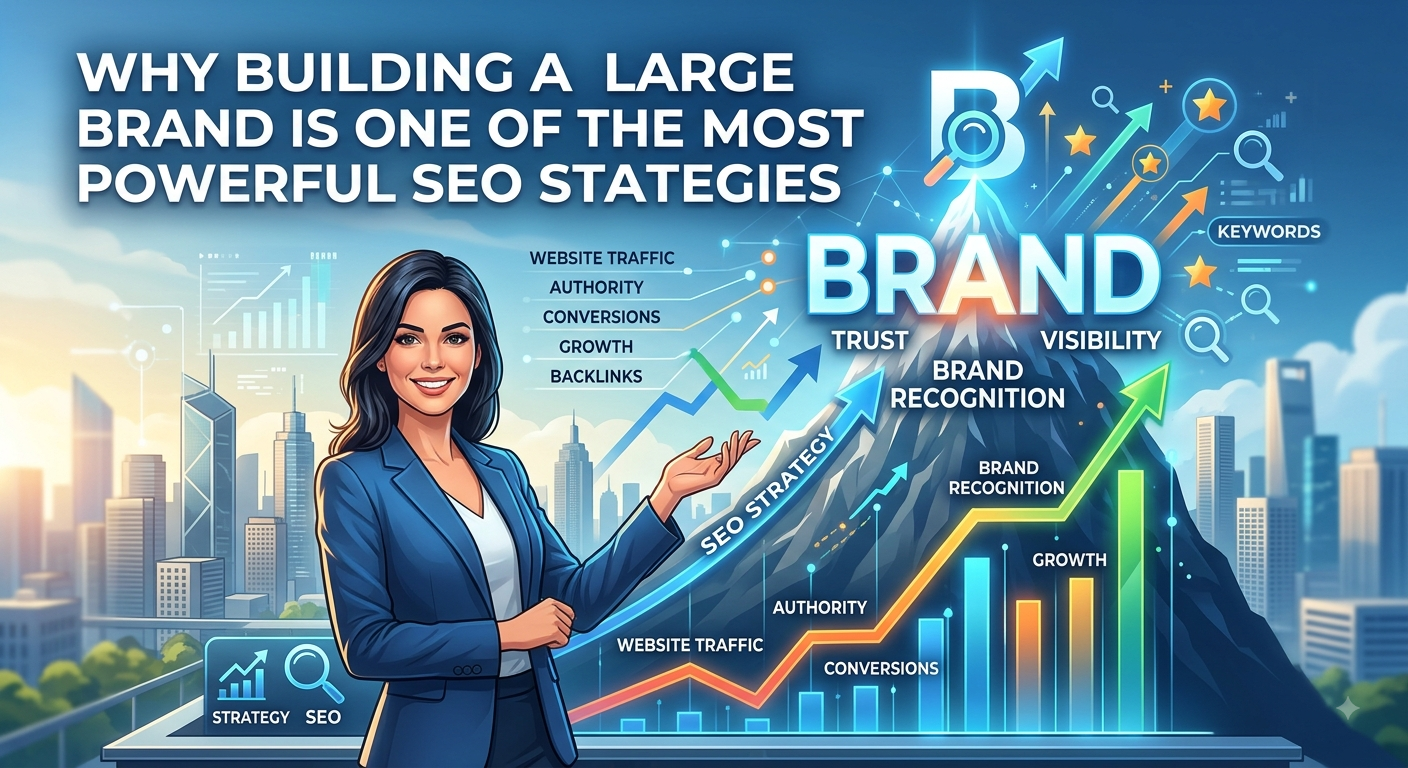
Most conversations about SEO focus on technical fixes and keyword targeting, but one of the most reliable long-term advantages in search has nothing to do with either. It’s brand strength. A large, well-recognized brand doesn’t just attract customers directly, it also reshapes how search engines and searchers alike evaluate a site, often making every other SEO effort more effective in the process.
The clearest way brand strength helps is through search behavior itself. When people already know a brand, they don’t search generically, they search by name. Instead of typing a broad category term, they type the brand alongside it, and branded searches carry an enormous advantage because they signal strong intent and near-certain relevance. Search engines notice this pattern over time. A site that consistently earns clicks tied to its own name builds a kind of trust signal that generic, unbranded traffic simply can’t replicate, and this trust tends to spill over into how the site performs for other, non-branded queries too.
Brand recognition also drives one of the hardest things to manufacture artificially: natural link building. Large brands get mentioned, cited, and linked to constantly, not because anyone is running an outreach campaign, but because journalists, bloggers, and other websites reference well-known companies as a matter of course when discussing an industry. These organic mentions tend to come from higher-authority sources than the links a smaller, unknown site could realistically earn through outreach alone, and search engines weigh authoritative, naturally earned links far more heavily than manufactured ones.
There’s also a compounding effect on click-through rates. When a familiar brand name appears in search results, people are simply more likely to click it over an unfamiliar competitor, even if that competitor ranks in a similar position. Higher click-through rates, sustained over time, are themselves a signal that search engines can use to reinforce rankings, which means a strong brand can end up climbing and holding positions that a lesser-known site would struggle to reach with the same on-page optimization.
Trust and credibility signals extend beyond clicks and links into the way content itself is evaluated. Google’s guidance around content quality repeatedly emphasizes expertise, authority, and trustworthiness, and a large brand typically has an easier time demonstrating all three. A well-known company usually has more resources to produce thorough, well-researched content, more visibility that leads to third-party validation, and a longer track record that search engines can draw on when assessing whether a site is a reliable source of information.
Brand strength also creates resilience against algorithm updates. Search engines periodically adjust how they rank content, and these updates often disproportionately affect thin, low-authority sites while leaving established, trusted brands relatively stable. This isn’t because large brands are exempt from the rules, it’s because they tend to already embody the qualities the updates are designed to reward, like consistent quality, genuine authority, and a real reputation beyond the search results page.
None of this means technical optimization or content quality stop mattering. A large brand with a broken website or thin content will still struggle to rank. But brand building acts as a force multiplier for everything else in an SEO strategy, turning ordinary tactics into more effective ones simply because the underlying entity behind them is trusted, recognized, and sought out by name. In a competitive search landscape, that kind of durable advantage is difficult for any algorithm update or competitor to erode.