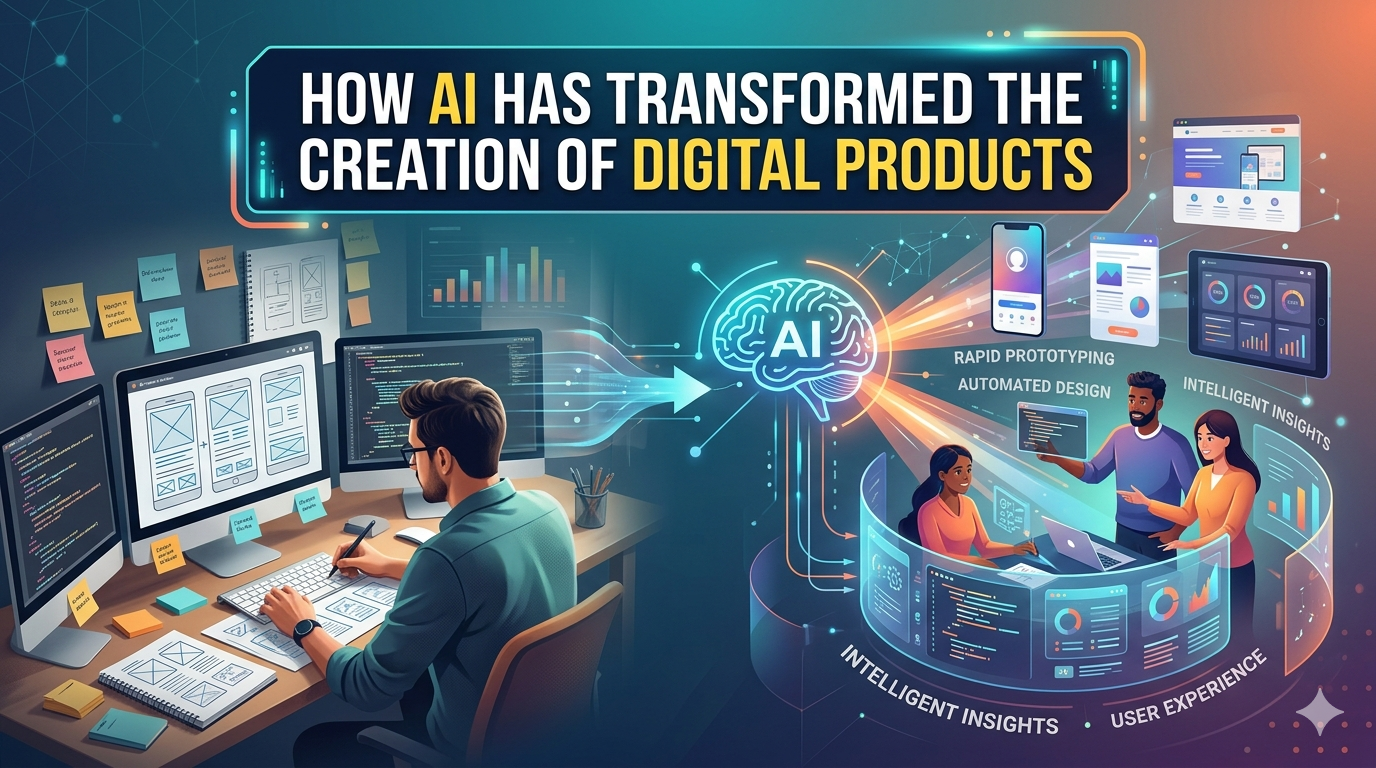
The process of building and selling digital products has undergone a quiet revolution. What once required specialized skills, significant time, and often a team of collaborators can now be accomplished by individuals with far fewer resources. Artificial intelligence has become the great equalizer in this space, removing friction at nearly every stage of product development and enabling creators to bring their ideas to market faster than ever before.
Consider the traditional path of creating a digital product. Whether it was an ebook, an online course, a piece of software, or a set of design templates, the creator needed to handle research, content creation, design, coding, marketing copy, and customer support. Each of these areas demanded its own expertise. A writer might struggle with design software. A developer might find marketing copy agonizing to produce. Hiring specialists for each task was expensive, and doing everything alone meant spending months or even years before seeing any return.
AI has changed this equation dramatically. A solo creator can now generate professional-quality written content in minutes rather than days. Language models can draft entire ebooks, structure online courses, and produce marketing materials that would have previously required a copywriter. The output is not perfect, and it still benefits from human editing and voice, but the starting point is far more advanced than a blank page ever was.Design has become similarly accessible. AI-powered tools can generate logos, social media graphics, website layouts, and even full brand identities based on simple text descriptions. Someone with no background in graphic design can produce visuals that look polished and intentional. For software products, AI coding assistants can write functional code, debug errors, and explain complex programming concepts to non-developers who are trying to build their first application. The barrier to entry for technical creation has lowered significantly.
Perhaps the most profound shift has been in the area of research and ideation. AI can analyze market trends, summarize competitor offerings, and identify gaps in the digital product landscape that a creator might exploit. Instead of guessing what customers want, a creator can ask targeted questions and receive structured insights that inform product decisions. This reduces the risk of building something that nobody wants to buy.
Marketing and sales, traditionally the hardest part of the independent creator journey, have also been transformed. AI can help craft email sequences, generate ad copy, optimize landing pages, and even personalize outreach at scale. Customer support can be partially automated with intelligent chatbots that handle routine inquiries, freeing the creator to focus on product improvement and strategic growth.
The speed of iteration has accelerated as well. In the past, updating a digital product after launch might require coordinating with multiple contractors. Now a creator can modify content, adjust design elements, and redeploy updates in a single afternoon. This agility means products can evolve in response to customer feedback rather than remaining static for months.It is worth acknowledging that this ease of creation comes with its own challenges. Because the barriers are lower, more people are entering the digital product space, which increases competition. Customers are also becoming more discerning, able to spot content that feels generic or hastily produced. The creators who thrive are those who use AI as a tool to amplify their unique perspective, not as a replacement for genuine expertise and care.
What AI has truly enabled is a shift in the role of the creator. Instead of being a specialist in one domain and dependent on others for the rest, the modern creator can operate as a generalist conductor, orchestrating various AI capabilities toward a coherent vision. The creator’s job is increasingly about curation, judgment, and human connection rather than the mechanical execution of every task.
The result is that more voices can participate in the digital economy. Subject matter experts who previously lacked technical skills can now package their knowledge into sellable products. Hobbyists can turn their passions into side incomes. Small teams can punch above their weight class against larger competitors. The tools are no longer the bottleneck; imagination and strategic thinking are.
This transformation is still unfolding. As AI capabilities continue to improve, the gap between idea and finished product will likely narrow even further. For anyone who has ever considered creating a digital product but felt held back by the complexity of the process, the message is clear: the obstacles that once made it difficult have largely dissolved. What remains is the work of having something worth saying and the willingness to share it with the world.