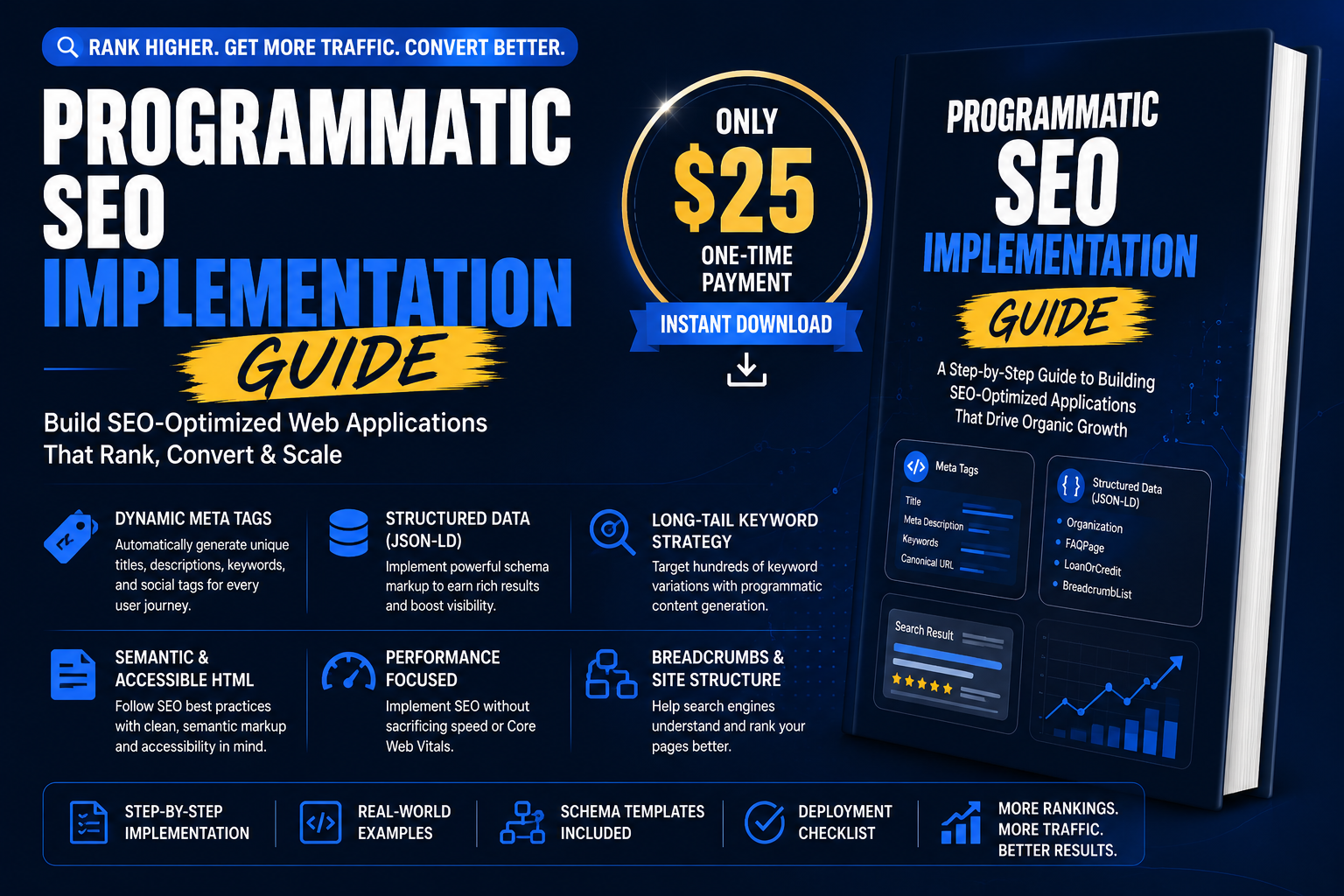
Click here to buy the Rising Current Programmatic SEO Implementation Guide
Most website owners approach SEO the same way. They publish a blog post, optimize a few keywords, wait for traffic, and repeat.
The problem is that this strategy often scales slowly. Publishing hundreds of high-quality articles takes time, money, and ongoing effort. Meanwhile, some of the fastest-growing websites on the internet are using a different approach: Programmatic SEO.Instead of creating pages one at a time, they build systems that generate search visibility across hundreds or even thousands of keyword variations.
Programmatic SEO is the process of using templates, structured data, and dynamic content to target large groups of related search queries. Business directories, SaaS platforms, marketplace websites, job boards, travel platforms, online tools, and calculators frequently use this approach to expand their search presence. Rather than writing a separate page for every keyword manually, these websites create frameworks that automatically generate pages and content around user inputs and structured datasets. This allows a single application to rank for hundreds or thousands of long-tail searches.
The reason programmatic SEO has become so powerful is that long-tail keywords often have lower competition, higher conversion rates, and more specific user intent. Ranking for broad, highly competitive keywords can take years, but ranking for highly specific searches that match a user’s exact needs can be much more achievable. Programmatic SEO makes it possible to target these opportunities at scale.Many discussions about programmatic SEO focus only on generating large numbers of pages. However, creating pages is only part of the process. Search engines also need to understand what each page is about, how pages relate to one another, whether the content is unique, and whether the website provides a positive user experience. This is where technical SEO becomes essential.
Without the right infrastructure, a large programmatic SEO project can suffer from duplicate content issues, poor crawlability, weak metadata, missing structured data, and limited search visibility. Simply creating thousands of pages is not enough. Those pages must be supported by a strong technical foundation.One of the most important elements of that foundation is dynamic metadata. Every page should have unique title tags, meta descriptions, canonical URLs, and social sharing tags. These elements help search engines understand the purpose of a page while reducing the risk of duplicate content problems.
Structured data is another critical component. Schema markup provides additional context that helps search engines interpret content more accurately. Proper implementation can improve visibility and increase eligibility for enhanced search results that stand out in search engine listings.
Page structure also matters. Search engines rely on semantic HTML to understand content hierarchy and page organization. Proper heading structures, accessible forms, descriptive labels, and clean markup improve both user experience and search engine understanding.
Perhaps the most important aspect of programmatic SEO is keyword architecture. Successful implementations are built around patterns rather than individual keywords. Instead of targeting a single search term, they target entire groups of related searches through dynamic content generation. This creates opportunities to rank for hundreds or even thousands of keyword variations from a single system.
Understanding these concepts is valuable, but implementation is where many website owners and developers encounter challenges. Knowing what programmatic SEO is does not automatically explain how to build it correctly.
That is why I created the Programmatic SEO Implementation Guide. This guide focuses on the practical side of building SEO-ready web applications and websites. It explains how to implement dynamic title tags, meta descriptions, structured data, canonical URL generation, Open Graph metadata, FAQ schema, breadcrumb schema, semantic HTML improvements, and other technical SEO best practices that help applications scale their search visibility.
The guide includes real-world examples, implementation walkthroughs, customization strategies, deployment recommendations, and practical frameworks that can be adapted to a wide range of projects. Whether you are building SaaS products, directories, marketplaces, online tools, lead generation websites, or content-driven platforms, these concepts can help you create a stronger SEO foundation.
If you’re serious about building websites and applications that can grow through organic search, the Programmatic SEO Implementation Guide provides a practical roadmap for implementing the systems that make large-scale SEO possible.