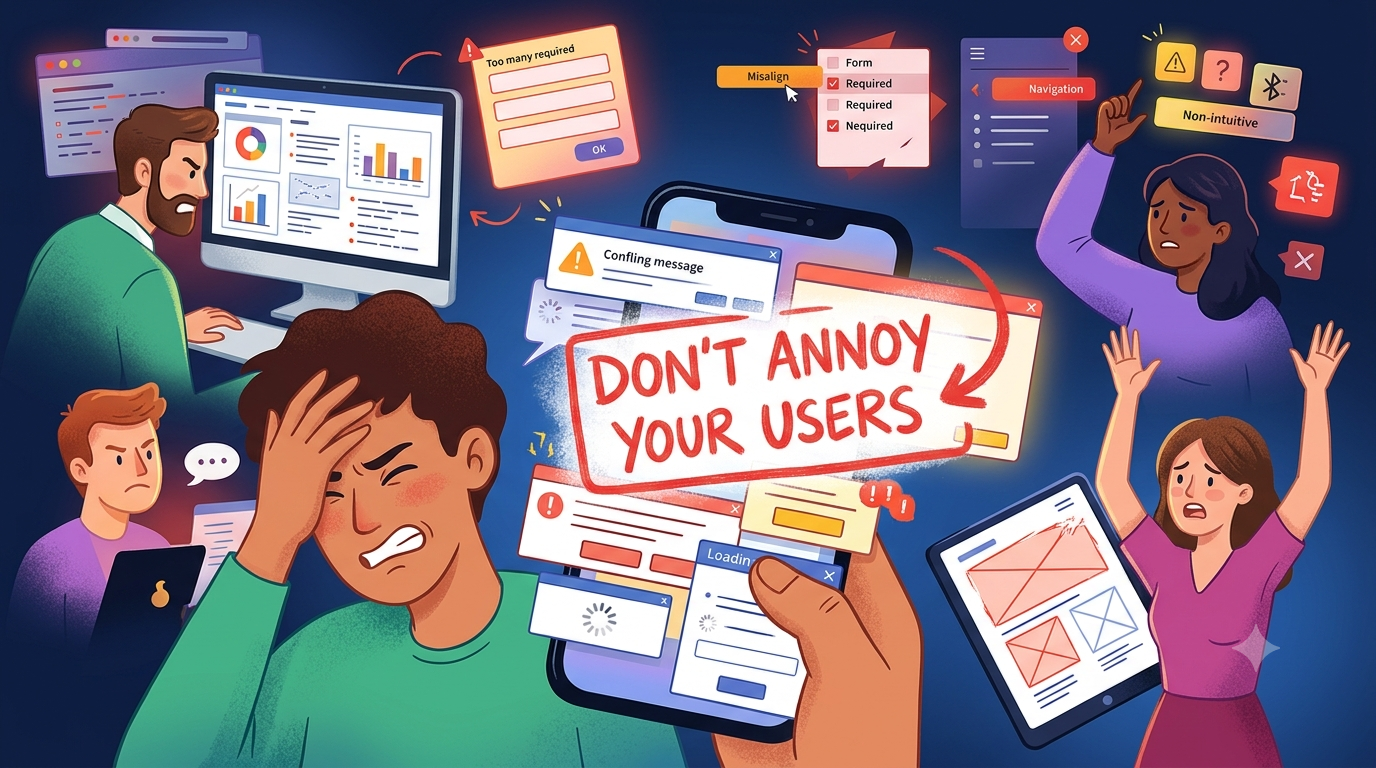
There’s a silent killer in SaaS, and it isn’t churn. It’s annoyance.
Churn is a metric you track. Annoyance is the invisible force that drives it. Users rarely cancel and say, “Your product annoyed me.” They just leave. They stop replying to your emails. They let the trial expire. They quietly migrate to a competitor that respects their time and attention a little more than you do.
If you’re building a SaaS product, here’s a principle to internalize: every interaction with your user is a loan against their goodwill. Make too many withdrawals, and they close the account.
The Attention Economy Is a Debt Economy
Your users are not sitting around waiting to hear from you. They’re in the middle of their own work, fighting their own fires, and your app is—at best—a tool to get something done. Every notification, every upsell modal, every “quick survey,” every onboarding tooltip that blocks the UI is a demand on their limited attention.The math is brutal: the cost of an interruption is never just the time it takes to dismiss it. It’s the context switch. It’s the cognitive residue. A 30-second modal can cost 15 minutes of productive focus. Do that daily, and you’re not “engaging” your user. You’re slowly training them to resent you.The Usual SuspectsHere are the most common ways SaaS products annoy their users, often without realizing it:
1. Onboarding Overload
You have 30 features and you want to show all of them in the first login. The result? A 12-step product tour that users click through blindly just to reach the dashboard. If your onboarding feels like a tutorial for tax software, you’ve already lost.
2. Notification Spam
“John liked your post!” “Your weekly report is ready!” “We just shipped a feature you don’t care about!” Every notification that isn’t actionable and urgent trains users to ignore all your notifications—including the critical ones.
3. Dark Patterns and Forced Interactions
Hiding the “Skip” button. Making the downgrade flow require a support call. Auto-checking the “subscribe to newsletter” box. These tricks might juice a short-term metric, but they erode trust at the exact moment a user is evaluating whether to stay long-term.
4. The “We’re Just Checking In” Email
No user has ever thought, “I’m so glad they sent a generic check-in email three days after I signed up.” If you’re going to email a user, bring value. A tip, a relevant case study, a fix for a problem they actually have. Otherwise, stay out of their inbox.
5. Feature Bloat as “Value”Adding settings, toggles, and options because you can, not because users asked for them. Complexity is the enemy of satisfaction. A product that does one thing flawlessly beats a product that does ten things adequately—especially when those ten things clutter the interface.
The Alternative: Intentional Restraint
The best SaaS products feel like they get out of your way. They don’t demand attention; they reward it.Default to silence. Make your product so intuitive that it needs fewer explanations, not more. If you must send a notification, make it so useful that the user would have been frustrated not to receive it.Measure annoyance, not just engagement. Stop celebrating “DAU” or “notification open rates” if those numbers are propped up by users dismissing things they didn’t want. Track support tickets that mention confusion. Track “time to first value”—and if users are taking too long, simplify, don’t add more guidance.
Respect the exit. Make it easy to downgrade, cancel, or export data. Users who leave with a good taste in their mouth come back. Users who feel trapped write angry reviews.
The Long Game
SaaS is a subscription business, which means it’s a relationship business. Relationships don’t survive one party constantly demanding the other’s attention for trivial reasons.
Your competitors can copy your features. They can undercut your price. They can run flashier marketing campaigns. But they can’t easily replicate the feeling a user gets when they open your app and think, “This just works, and it never wastes my time.”That feeling is your moat. Protect it fiercely.
The bottom line: Build software that respects the people using it. Annoyance is expensive. Restraint is rare—and it’s the quietest, most durable growth hack you have.