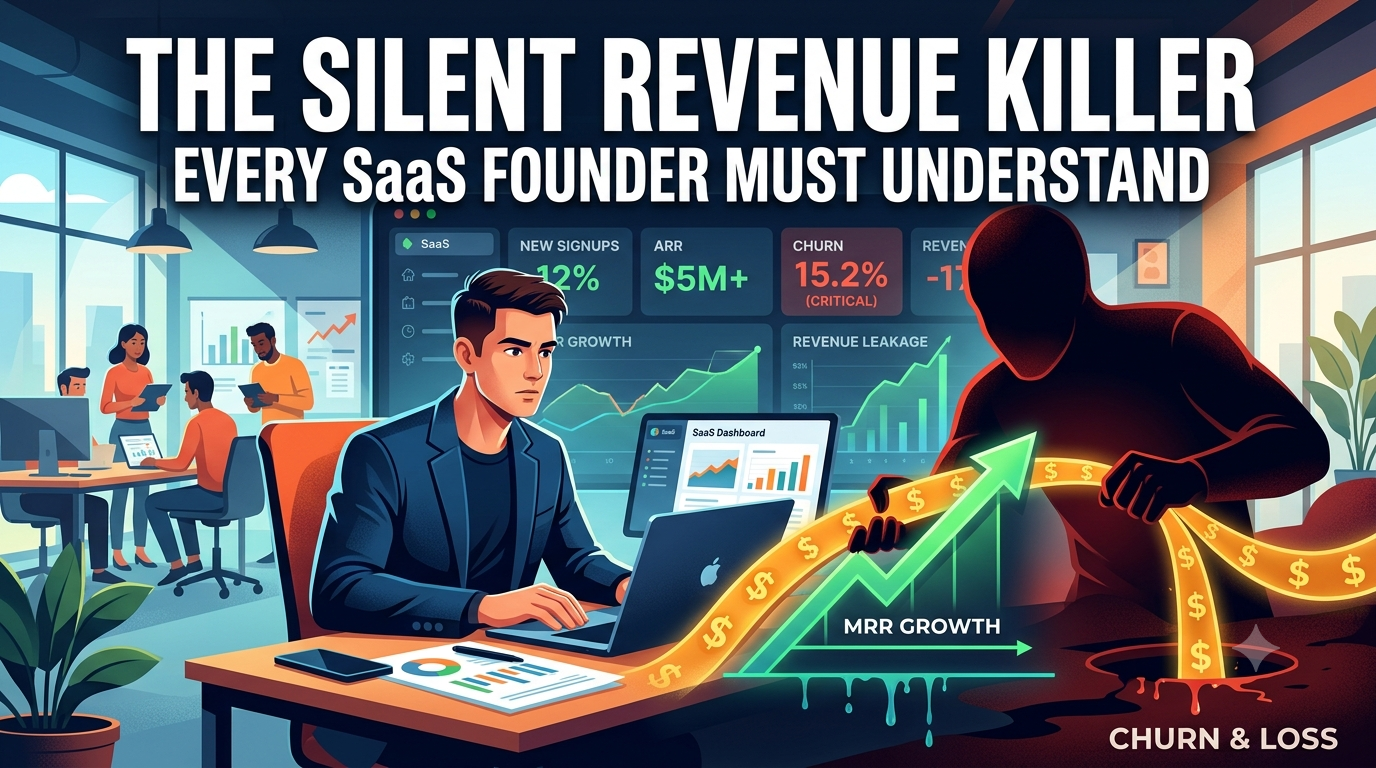
Churn is the percentage of customers who stop paying for your service during a given period. It is the slow leak in your revenue bucket, the quiet force working against every new customer you acquire. While acquisition gets the glory and the headlines, churn determines whether your business lives or dies. A SaaS company with excellent marketing but poor retention is like a boat with a powerful engine and a hole in the hull. You might move fast for a while, but you are going somewhere you do not want to go.
The mathematics of churn are brutally unforgiving. If you have a monthly churn rate of five percent, you are losing over half your customers every year. That means you must replace your entire customer base annually just to stay flat. Growth becomes nearly impossible because every new customer you win is merely offsetting a departure you could have prevented. Conversely, reducing churn by even a single percentage point can have a dramatic impact on lifetime value and overall revenue. The customers you keep cost far less than the customers you must constantly replace.Understanding why customers leave is the first step toward stopping them. Some churn is voluntary, driven by dissatisfaction, a lack of perceived value, or a better offer from a competitor. Some is involuntary, caused by expired credit cards, failed payments, or account confusion. Some customers were never a good fit to begin with and should have been filtered out during the sales process. Each type of churn requires a different response, and treating them all the same is a recipe for wasted effort.
Onboarding is where the battle against churn is truly won or lost. The first few days and weeks of a customer’s experience set the trajectory for the entire relationship. If a new user signs up and cannot figure out how to achieve their first meaningful outcome quickly, they will conclude that your product is not for them and leave before you ever have a chance to prove otherwise. The most effective SaaS companies obsess over time-to-value. They guide new users through a carefully designed sequence that delivers a quick win, establishes habits, and demonstrates why the product is worth the ongoing investment. Every unnecessary friction point in the onboarding flow is an invitation to churn.
Engagement is the strongest predictor of retention. Customers who use your product regularly, who integrate it deeply into their workflows, and who rely on it for critical tasks are far less likely to leave. This means you must actively monitor usage patterns and intervene when engagement drops. A customer who has not logged in for two weeks is not necessarily gone, but they are drifting. Reaching out with a helpful tip, a personalized tutorial, or a simple check-in can rekindle their interest before they make the cancellation decision. Proactive customer success is vastly more effective than reactive support.
Pricing and packaging play a significant role in churn that many founders underestimate. If your pricing is misaligned with the value customers receive, you create a ticking time bomb. A customer who feels they are overpaying relative to the benefit they get will eventually churn. Conversely, a customer who is on a plan that does not match their usage may feel frustrated by limitations or overwhelmed by features they do not need. Regularly reviewing your pricing structure and ensuring that customers can upgrade or downgrade easily reduces the friction that leads to cancellation.
Involuntary churn deserves special attention because it is the most preventable form of revenue loss. Credit cards expire, banks decline transactions for arbitrary reasons, and customers forget to update their billing information. Implementing smart dunning management, sending pre-expiration reminders, and offering multiple payment methods can recover a surprising amount of revenue that would otherwise walk out the door through sheer administrative neglect. These customers did not want to leave. They just needed a nudge to stay.
Customer feedback is the raw material of churn prevention, but only if you act on it. Exit surveys can reveal patterns in why people leave, but by then it is often too late. Regular check-ins, net promoter score surveys, and direct conversations with your most engaged users surface problems while there is still time to fix them. The goal is not to collect feedback for the sake of it but to identify the moments where your product falls short of expectations and close those gaps. A feature that seems minor to you might be the difference between a loyal customer and a departed one.
Finally, building a community around your product creates emotional bonds that transcend transactional relationships. Customers who feel connected to your team, who learn from other users, and who see themselves as part of something larger are remarkably sticky. They churn less not because your product is perfect but because leaving feels like leaving a community, not just canceling a subscription. Investing in customer success, hosting events, and fostering peer connections turns users into advocates who stay longer and bring others with them.Churn is not a metric you optimize once and forget. It is a constant companion that demands ongoing attention, experimentation, and care. The SaaS companies that thrive are not necessarily the ones with the most customers or the flashiest marketing. They are the ones who make staying the obvious choice.