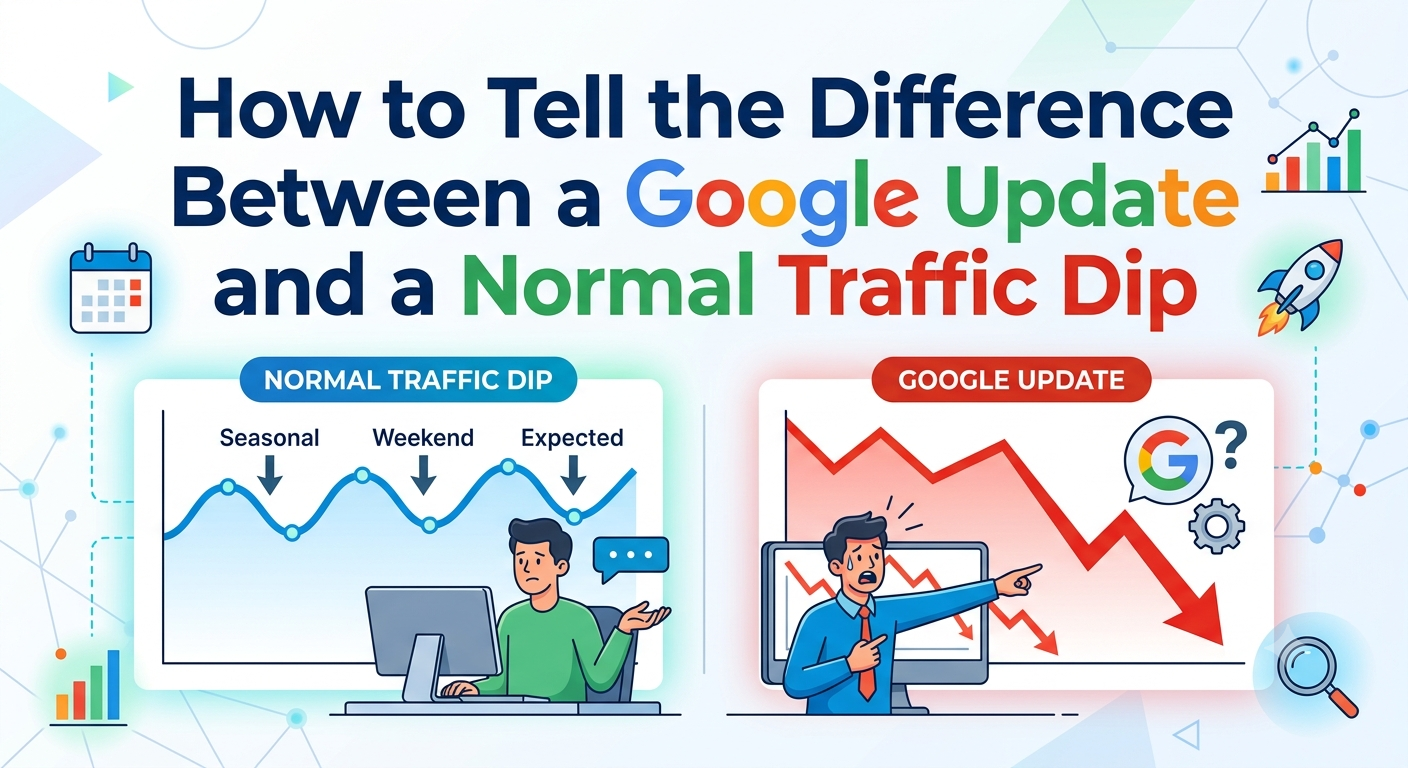
Traffic drops, and the first instinct is almost always the same: something changed with Google’s algorithm, and now you’re paying for it. Sometimes that’s true. Often, it isn’t. A meaningful share of traffic dips have nothing to do with an algorithm update at all, and treating every dip as an update-driven emergency leads to the wrong fix, or worse, panicked changes to pages that were never actually the problem. Here’s how to tell which situation you’re actually in before you act.
Start With the Google Search Status Dashboard
Google publishes confirmed rollout windows for core updates, spam updates, and other major changes on its Search Status Dashboard, and update announcements also go out through Google’s Search Central account. This is the first, fastest check: if your drop happened during a confirmed rollout window, that’s a real signal worth investigating further. If there’s no announced update anywhere near your drop’s timing, an algorithm update becomes a much less likely explanation, and you should look elsewhere first.It’s worth checking this before doing anything else, because it either focuses your investigation immediately or rules out the most dramatic explanation right away, saving you from chasing the wrong cause.
Check Whether the Drop Is Site-Wide or Isolated
Core updates are broad recalibrations that typically affect many pages, often across an entire site or a large section of it, because they reweight how content quality and relevance are evaluated at scale. A normal traffic dip is much more likely to be isolated: one page, one small cluster, or one traffic source, while everything else holds steady.Pull up your analytics and look at the shape of the drop specifically. If dozens of pages across unrelated topics all dropped together on the same day, that pattern looks like an update. If one specific page lost most of its traffic while the rest of your site is flat, that’s a different problem entirely, and it’s worth investigating that page individually rather than assuming a site-wide cause.
Rule Out Seasonality First
A huge share of traffic dips that get blamed on algorithm updates are actually seasonal. Recipe blogs lose traffic in patterns tied to holidays and seasons. Tax content spikes and crashes around filing deadlines. Back-to-school content, travel content, and gift-guide content all follow predictable annual curves that have nothing to do with Google’s algorithm.Before concluding anything else, pull up the same period from a year earlier in your analytics and compare. If last year shows the same dip at the same time of year, seasonality is the far more likely explanation, and the right response is patience, not a content overhaul.
Check for a Technical Problem on Your End
The second most common cause that gets misattributed to algorithm updates is something that changed on your own site, often without anyone noticing. A plugin update that accidentally added a noindex tag. A migration that broke internal links. A redesign that removed content from a page without anyone realizing the SEO impact. A hosting issue that caused intermittent downtime during a crawl window.
Check Search Console’s coverage report for a sudden spike in excluded or error pages around the time of your drop. Check whether the affected pages still load correctly and return the expected content. Check your site’s uptime history for the relevant window. These technical explanations are often the actual cause of a drop that gets blamed on “the algorithm,” and they’re usually far easier to fix once correctly identified.
Check for a Single Lost Asset, Not a Broad Penalty
Sometimes a drop is caused by the loss of one specific thing that was propping up a page’s performance, rather than any broad quality reevaluation. A high-value backlink that got removed when the linking site redesigned or went offline. A featured snippet that got lost to a competitor who reformatted their content more effectively. A single high-traffic page that quietly got deindexed due to a duplicate content issue elsewhere on your site.These losses can look dramatic in your overall traffic numbers, especially for a smaller site where one page carries disproportionate weight, but they’re fundamentally different from an algorithm update: the fix is specific and targeted (rebuild the link, reclaim the snippet, resolve the duplicate) rather than a broad content-quality overhaul.
Compare Your Trajectory Against Competitors and the Broader Niche
If you suspect an update but aren’t fully sure, check whether other sites in your space reported similar volatility around the same time. Search communities, SEO forums, and industry newsletters are usually quick to discuss confirmed core updates, and a genuine update tends to produce widely shared reports of volatility across many unrelated sites, not just yours. If nobody else in your space is reporting anything unusual, that’s a meaningful signal your drop has a more local, site-specific cause.
When It Really Is an Update
If your drop lines up with a confirmed rollout window, affects a broad swath of your site rather than one isolated page, doesn’t match last year’s seasonal pattern, and isn’t explained by any technical issue on your end, you’re likely looking at a genuine update-driven change. At that point, the right response is the one worth repeating from any algorithm-recovery discussion: wait for the rollout to fully complete, then honestly evaluate the pages that dropped against Google’s own quality guidance, rather than making reactive cosmetic changes mid-rollout.A Simple Diagnostic Order Worth FollowingWhen traffic drops and you’re not sure why, work through the possibilities roughly in this order: check the Search Status Dashboard for a confirmed update window, check whether the drop is broad or isolated to specific pages, compare against the same period last year for seasonality, check Search Console and your own site for technical issues, check whether one specific asset like a backlink or featured snippet was lost, and only after ruling out the above, treat it as a likely algorithm-driven change.
Why Getting This Right Matters
Misdiagnosing a normal dip as an algorithm update leads people to rewrite content that was never the problem, chase advice that doesn’t apply to their actual situation, and sometimes make genuinely fine pages worse through unnecessary changes. Misdiagnosing a real update as something else means missing the actual signal Google is sending about what it now values, and continuing to publish content that will keep underperforming. The five-minute diagnostic pass above is almost always worth doing before any content gets touched, because the fix for a seasonal dip, a technical glitch, a lost backlink, and a genuine core update are all different, and applying the wrong one wastes real time without solving the actual problem.