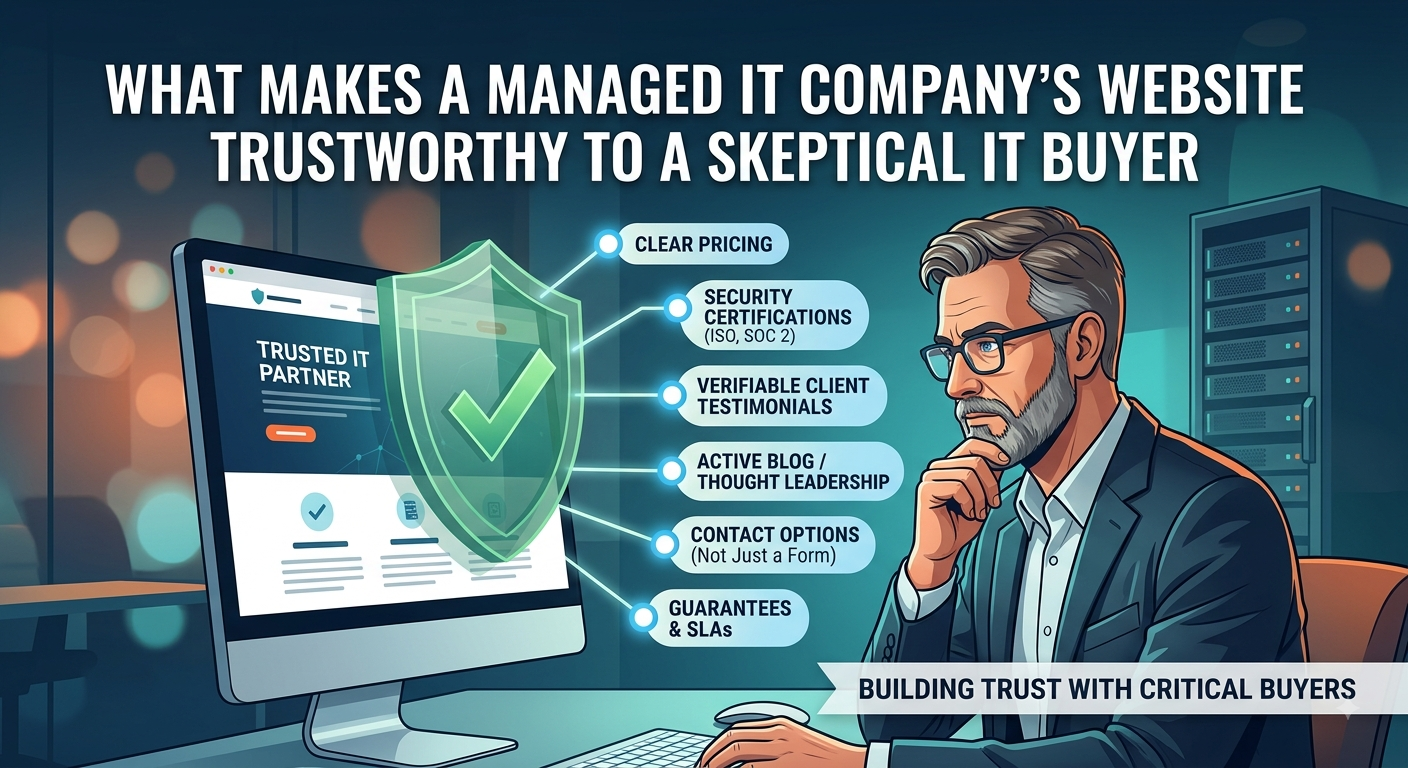
IT buyers are professionally skeptical, and for good reason. The person evaluating a managed IT provider is often the same person who will be blamed if that provider fails during a ransomware incident or a compliance audit. They’ve usually sat through vendor pitches that promised the world and delivered a support ticket queue. By the time they land on your website, they’re not looking to be impressed. They’re looking for reasons to rule you out, and a website that doesn’t survive that scrutiny loses the deal before a sales conversation ever starts.
The instinct for a lot of MSPs is to counter that skepticism with confidence: bold claims about being the best, the most trusted, the most experienced provider in the market. This almost always backfires. Superlatives without evidence read as exactly the kind of vendor talk a skeptical buyer has learned to filter out. Every MSP claims to offer proactive monitoring, rapid response times, and enterprise-grade security. None of that differentiates anyone, because it’s unverifiable and it’s what everyone says. Trust isn’t built by claiming to be trustworthy. It’s built by giving a skeptical reader something they can independently check.
Specificity is the most reliable substitute for a claim nobody can verify. A vague promise of fast response times means nothing. A stated service level agreement with an actual number attached, like a fifteen-minute response for critical issues, is something a buyer can hold you to and compare against other providers. A generic mention of “advanced security” is forgettable. A description of the specific frameworks a company is built around, whether that’s SOC 2, HIPAA, or a named endpoint detection platform, gives a technical buyer real information to evaluate. The pattern holds across every part of the site: wherever a claim can be replaced with a fact, a number, or a named standard, that substitution is doing real trust-building work that a superlative never will.
Transparency about limitations does more for credibility than most MSPs expect. A site that only ever talks about wins, uptime, and satisfied clients starts to feel curated in a way that a careful reader notices. A brief, honest note about how a company handles an outage, what its escalation process looks like when something goes wrong, or what a client can expect if an issue takes longer than usual to resolve signals something a purely positive narrative can’t: that this company has actually been through hard moments and has a real process for them, rather than being untested or unwilling to admit it happens. IT buyers know things go wrong sometimes. What they’re evaluating is whether a provider handles it competently, and a website that pretends nothing ever goes wrong makes that impossible to judge in advance.
Third-party validation carries more weight than anything a company says about itself, and a lot of MSP sites underuse it. Client testimonials help, but a testimonial with a name, a company, and specific detail about what problem was solved carries far more credibility than an anonymous quote about being “great to work with.” Case studies that include real numbers, like reduced downtime, faster resolution times, or measurable cost savings, function as evidence rather than marketing copy. Certifications, partner-tier badges from major vendors, and memberships in recognized industry bodies work the same way: they’re claims a third party has already verified, which means the buyer doesn’t have to take the company’s word for it.
Finally, a lot of trust gets lost or won in small structural details that have nothing to do with the words on the page. A site with an easy-to-find phone number, named leadership instead of an anonymous “our team,” clear and current information about where the company is actually based, and content that reads like it was written by someone with real technical knowledge rather than a generic marketing template, all signal that a real, competent organization is behind it. Skeptical buyers are pattern-matching against every vague, over-promising vendor site they’ve seen before, and a site that avoids those patterns and replaces them with something specific, honest, and verifiable stands out simply by not doing what everyone else does.