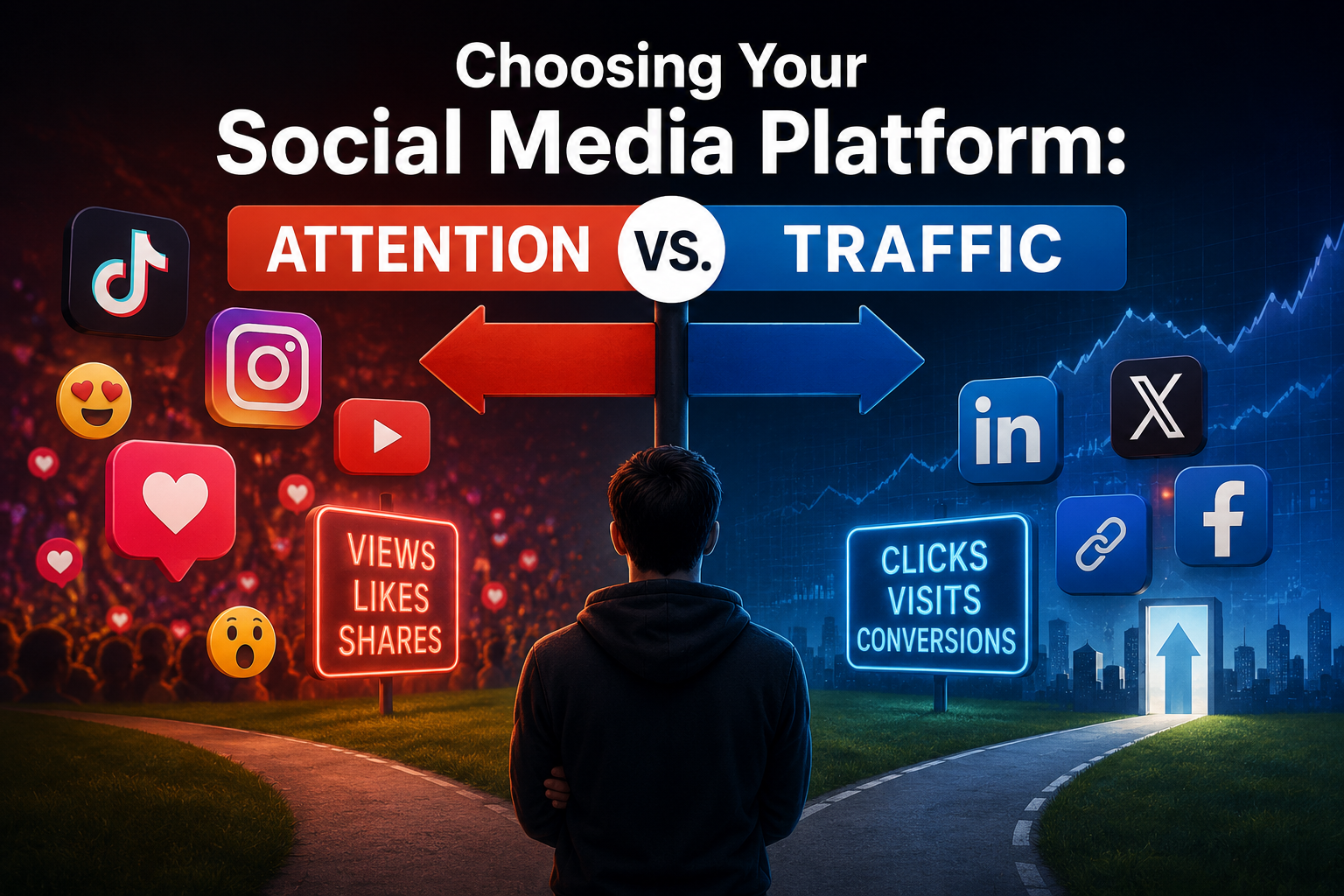
Every creator, founder, and marketer eventually asks the same question: “Which platform should I actually be posting on?” There are dozens of options, only so many hours in a day, and every platform swears it’s the one that matters. The answer isn’t about picking the trendiest app or the one your favorite creator swears by. It comes down to two separate questions that most people accidentally treat as one.
Question One: Where Is the Attention?
This is the obvious part. Some platforms simply have more eyeballs, more active users, and more time-per-session than others. But “where is the attention” isn’t just about total user count — it’s about where your specific audience’s attention already lives.
A B2B software company chasing attention on TikTok is fighting an uphill battle, even though TikTok has enormous total attention. A hobbyist woodworker ignoring YouTube in favor of X is leaving the single best-suited platform for their content type sitting on the table. Attention isn’t a single pool — it’s fragmented by demographic, by content format, and by intent (are people there to be entertained, to learn, to shop, to network?).
So the first filter is simple: go look at where the people you want to reach are already spending time, and what they’re doing while they’re there.
Question Two: How Easily Does That Attention Convert to Traffic?
This is the part people skip, and it’s just as important as the first. Attention is worthless to you personally if the platform makes it structurally difficult to move people off-platform and onto something you own — your website, your email list, your product page.
Every platform has a different relationship with outbound links:
Some platforms actively suppress link-outs. Algorithms on places like Instagram and TikTok have historically deprioritized posts containing external links, because every click away is a click the platform isn’t monetizing.
Some platforms make links a natural, expected part of the experience. Pinterest, for example, is built around the idea of clicking through to a source. X/Twitter and LinkedIn allow links in posts without much friction, even if reach is somewhat throttled.
Some platforms have no real link mechanism at all. A platform might have a bio-link slot and nothing else, meaning your only way to drive traffic is a single, static, easily-missed URL.This is why a platform can have enormous attention and still be a poor traffic source for you, and why a smaller platform can quietly outperform it if it treats outbound clicks as normal user behavior instead of a leak to be plugged.
Why You Need Both
Picture a 2×2 grid:
High attention, high traffic ease — the sweet spot. Rare, and usually temporary, because platforms tend to tighten link restrictions as they mature and lean harder into ad revenue.
High attention, low traffic ease — great for brand awareness and top-of-funnel reach, bad if your goal is direct conversions. You may need a multi-step strategy: build recognition here, then capture the click somewhere else (a bio link, a Stories link, a pinned comment).
Low attention, high traffic ease — often the underrated move. A smaller, more niche platform where links flow freely can outperform a giant platform that buries your URL, simply because the people who do see it actually click.Low attention, low traffic ease — not worth your limited time, no matter how much you personally enjoy the platform.
Putting It Into Practice
Before committing real time to a platform, it helps to ask two blunt questions:Is my actual target audience spending meaningful time here, doing something compatible with my content?
When someone here wants to learn more or buy something, how many taps does it take for them to reach my website — and does the platform’s algorithm punish me for making that path easy?If the answer to the first question is no, no amount of traffic-friendliness will save that platform for you. If the answer to the second is “it’s nearly impossible,” you may still use the platform for visibility, but you’ll need a separate plan for actually converting that attention into traffic — because the platform itself won’t do it for you.
The platforms that look most attractive on the surface (biggest user numbers, flashiest growth stats) aren’t always the ones that will move the needle on your website traffic. The right platform is the one where your audience’s attention and your ability to capture that attention overlap — and that’s worth auditing honestly before you sink another month of content into the wrong app.