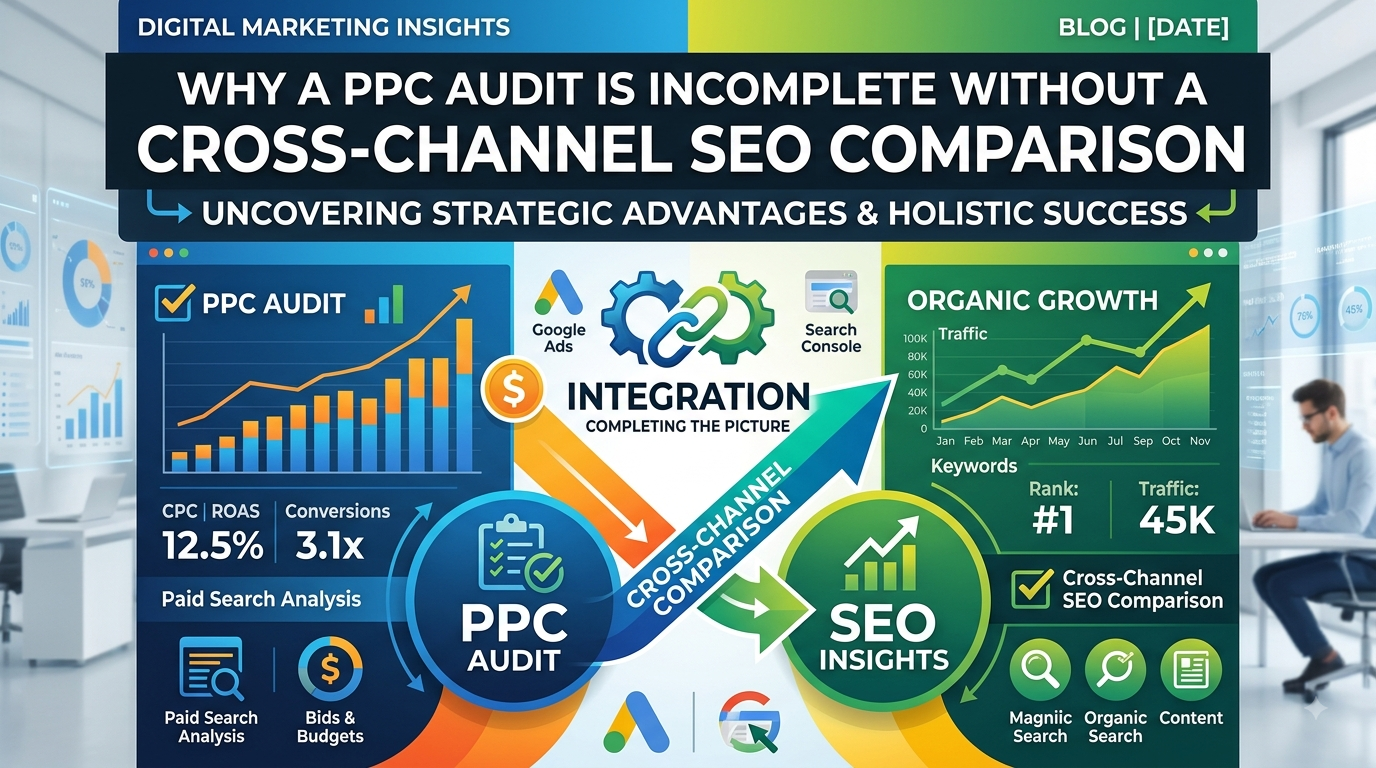
The traditional approach to search engine marketing often treats paid search and organic search as distinct, isolated silos, each with its own budget, team, and performance metrics. This fragmentation leads to a significant strategic blind spot where a pay-per-click audit is conducted in a vacuum, ignoring the profound influence of search engine optimization on the effectiveness of paid campaigns. An enterprise-level digital audit that fails to integrate these two channels is fundamentally incomplete because it cannot accurately measure incrementality, identify budget cannibalization, or leverage the shared intelligence that drives long-term authority in both traditional and generative search environments.
The concept of incrementality is central to determining the true return on investment for any paid search expenditure. Research conducted by Google indicated that even when a brand holds the first organic position for a search query, paid search ads still contribute approximately fifty percent of the total clicks, suggesting that paid search is not merely a replacement for organic results but a powerful amplifier of overall visibility [1]. Without a cross-channel comparison, a pay-per-click audit might report a successful campaign based on high conversion volumes, while failing to recognize that a significant portion of those conversions would have occurred through organic channels at no additional cost. This lack of holistic visibility makes it impossible for marketing leadership to determine whether their paid budget is truly driving new growth or simply taxing their existing organic equity.
Cannibalization represents one of the most common and costly inefficiencies in uncoordinated search strategies, particularly concerning branded search terms. While bidding on one’s own brand name is often necessary to defend against competitors, an integrated audit frequently reveals instances where a brand is paying for high-intent clicks that they already dominate organically without any competitive threat. By comparing paid search query reports with organic ranking data, auditors can identify specific keywords where the paid presence is redundant, allowing for the strategic reallocation of budget toward competitive, non-branded terms that actually require a paid boost to gain traction. This level of granular efficiency is only achievable when the audit framework explicitly bridges the gap between the two channels [2].
Beyond immediate cost savings, the synergy between paid and organic search provides a unique laboratory for testing and validating broader marketing strategies, including emerging Answer Engine Optimization. Paid search query reports offer a real-time, high-fidelity view of how buyers are searching, which serves as a predictive roadmap for the organic content team. A search engine marketing audit that incorporates paid data can validate which conversational or long-tail queries drive the highest quality pipeline before the organization commits to the significant time and resource investment required for long-form organic content development. This data-driven approach ensures that the content roadmap is grounded in proven intent rather than speculative keyword volume [3].
The modern search landscape is increasingly defined by the integration of traditional search results and generative AI overviews, making the need for a unified audit even more urgent. As answer engines begin to synthesize information from across the web, a brand’s authority is no longer just about where they rank, but how they are cited and referenced in a conversational context. A cross-channel audit evaluates how paid search can support the brand’s entity authority while the organic strategy builds the deep, technical content necessary for AI engines to index and cite. This holistic perspective transforms the search audit from a mere performance check into a strategic diagnostic tool that ensures the brand remains visible and authoritative across the entire digital ecosystem [4].
References
[1] Google Research, “Impact of Organic Ranking on Ad Click Incrementality,”
https://www.brightedge.com/blog/leveraging-seo-and-ppc-synergy-for-search-results[2] Digital Marketing Institute, “Paid vs Organic Search – How to Find the Right Balance,”
https://digitalmarketinginstitute.com/blog/paid-vs-organic-search-striking-the-right-balance[3] Search Engine Journal, “How to Use the Synergy Between PPC & SEO to Leverage Search Results,”
https://www.searchenginejournal.com/synergy-ppc-seo-campaigns/320355/[4] Y. Pancheva and M. Marinova, “Application of Organic and Paid Search in Audience Targeting,” https://reference-global.com/article/10.2478/picbe-2025-0083