Every online business eventually confronts the same question: where do customers actually come from? Paid ads can bring instant visitors, social media can spark short bursts of attention, and referrals can trickle in from partners. But when you strip away the noise and look at what sustains most online businesses over the long haul, one channel consistently stands out. Search engine traffic, quietly and persistently, keeps the lights on.
The reason SEO traffic earns the label “lifeblood” comes down to a simple truth about intent. When someone searches for a product, a solution, or an answer to a problem, they are already telling you what they want. Unlike a banner ad interrupting someone’s scroll, organic search traffic arrives with a built-in reason to convert. A person searching “best accounting software for freelancers” is much closer to a purchase decision than someone passively scrolling past a sponsored post. That intent is what makes SEO traffic so valuable compared to almost any other acquisition channel.
There’s also the matter of cost. Paid advertising works, but it works only as long as the money keeps flowing. The moment a business pauses its ad spend, the traffic disappears just as quickly as it arrived. SEO behaves differently. Once a page earns a strong ranking, it can continue generating visitors for months or years without additional spend on every single click. This compounding quality is part of what makes organic search such an efficient long-term investment. The upfront work of creating great content and building authority pays dividends long after the initial effort ends.
Trust plays a role here too. People have learned, consciously or not, to view organic search results as more credible than paid placements. Ranking well in search results signals that a business has earned its position through relevance and authority rather than simply outbidding competitors. That perceived credibility often translates into higher click-through rates and better conversion once visitors land on the site.
Mone of this means SEO is easy or guaranteed. Search algorithms change, competition intensifies, and rankings can shift without warning. Businesses that treat SEO as a one-time project rather than an ongoing discipline often watch their traffic erode over time. The businesses that thrive are the ones that treat search visibility as core infrastructure, something to be maintained and improved continuously, not unlike keeping a physical storefront clean and well-stocked.
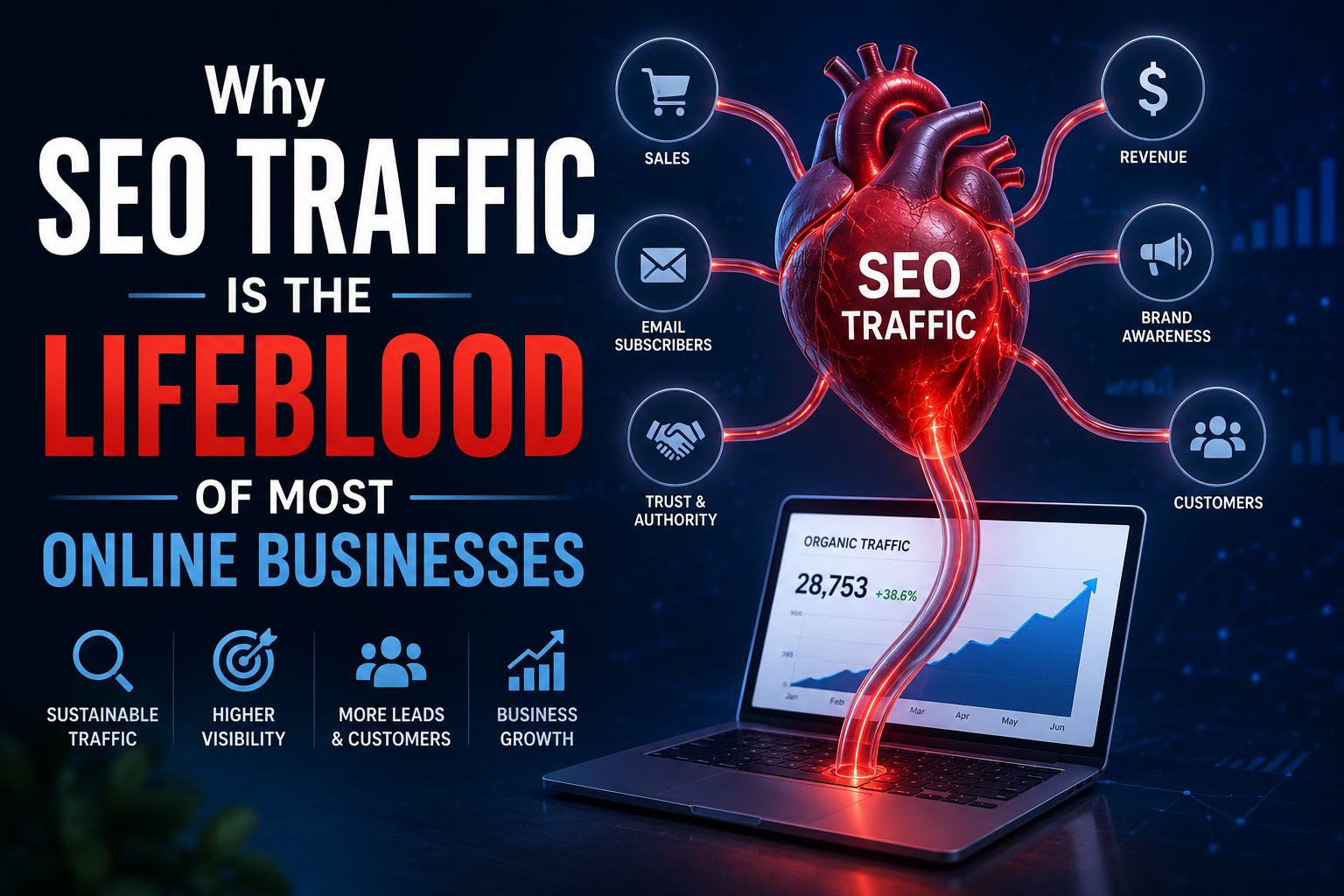
Ultimately, the comparison to lifeblood is apt because SEO traffic touches nearly every part of a business’s health. It feeds brand awareness, fuels lead generation, supports customer acquisition costs, and often determines whether a company can survive downturns in paid advertising budgets or shifts in social media algorithms. Businesses that build a durable presence in search results give themselves a foundation that doesn’t depend on the whims of ad platforms or the unpredictability of viral content. In a digital economy where attention is scarce and expensive, that kind of steady, self-sustaining traffic is not just helpful. For most online businesses, it’s essential to staying alive.