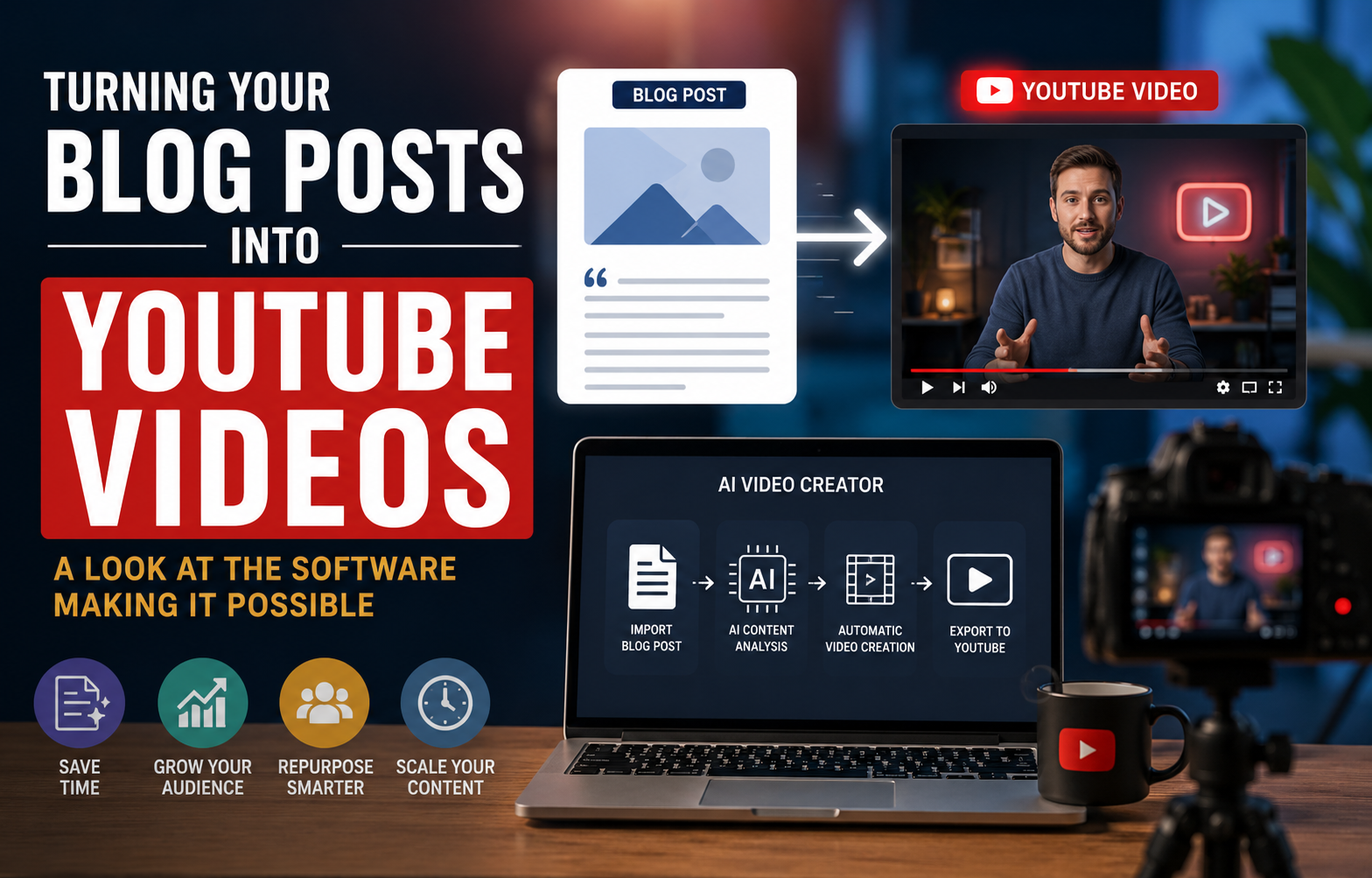
If you have spent years building up a library of blog posts, you already have something most video creators lack: a backlog of research, structure, and proven ideas. What you may not have is the time or equipment to turn that writing into video. Fortunately, a growing category of AI-powered software now exists specifically to bridge that gap, converting a blog post into a narrated, visually edited video ready for YouTube in a fraction of the time traditional production would take.
The basic idea behind these tools is simple. You provide a blog post, either by pasting the URL or the raw text, and the software analyzes the content to extract the core narrative. From there it writes or rewrites the material into a script suited for spoken delivery, generates a voiceover using synthetic speech, and pairs each section with matching visuals pulled from stock footage libraries or AI-generated imagery. The result is a complete video with captions, transitions, and often background music, produced without a camera, microphone, or editing timeline ever touching your hands.
Pictory is one of the more established names in this space. Its URL to Video feature lets you drop in a link to any blog post, after which the AI extracts the content, builds a script, and matches visuals scene by scene before adding captions and narration. It is designed with repurposing in mind, allowing the same source material to be exported for YouTube, LinkedIn, and other platforms with minimal extra effort, and it tends to perform especially well on longer, more detailed posts where its summarization strengths come through.
Descript takes a somewhat different approach, leaning on its AI Script Rewriter to reshape blog text into a video-ready script that you can then adjust for tone, length, and style before moving into production. It suits people who want more hands-on control over the transformation from written word to spoken script, since you can guide the rewriting process conversationally rather than accepting a single automated pass.
InVideo AI is often recommended once you are ready to move beyond simple slideshow-style output. It generates narrated, YouTube-ready videos directly from a blog link, selecting AI-driven footage relevant to the content and adding voiceover, music, and transitions automatically. Many creators treat it as the natural next step after starting with something simpler like Lumen5, which is frequently cited as an easy on-ramp for bloggers due to its shallow learning curve and reliable output quality.
For creators more interested in short-form spin-offs, such as YouTube Shorts, tools like Revid and FluxNote focus on compressing a blog post down into a punchy sixty-second video rather than a full-length piece. These tools tend to emphasize finding the single most surprising or actionable sentence in a post and building a short, fast-paced video around it, which works well for driving traffic back to the original article.
Whichever software you choose, the workflow tends to follow a similar pattern. It helps to start with your best-performing posts, the ones already proven to hold a reader’s attention, since that same material is more likely to hold a viewer’s attention too. It is also worth editing your script before feeding it in, trimming hyperlinks, shortening dense sentences, and writing a fresh opening hook rather than reusing your blog’s introduction verbatim, since spoken and written openings rarely work the same way. Reviewing the AI-selected footage before publishing matters as well, since automated visual matching can occasionally pull clips that are generic or slightly off-topic. Finally, it is worth resisting the urge to reuse your blog title and featured image for YouTube; a video needs its own title, thumbnail, and keyword-rich description to perform well in a completely different search ecosystem.
None of this replaces the value of original video production, but for a blog with an existing archive of content, this software offers a genuinely efficient way to reach audiences who would never have found you through text alone. The research and writing are already done. What these tools solve is the distribution gap that used to require an entirely separate skill set and budget to close.