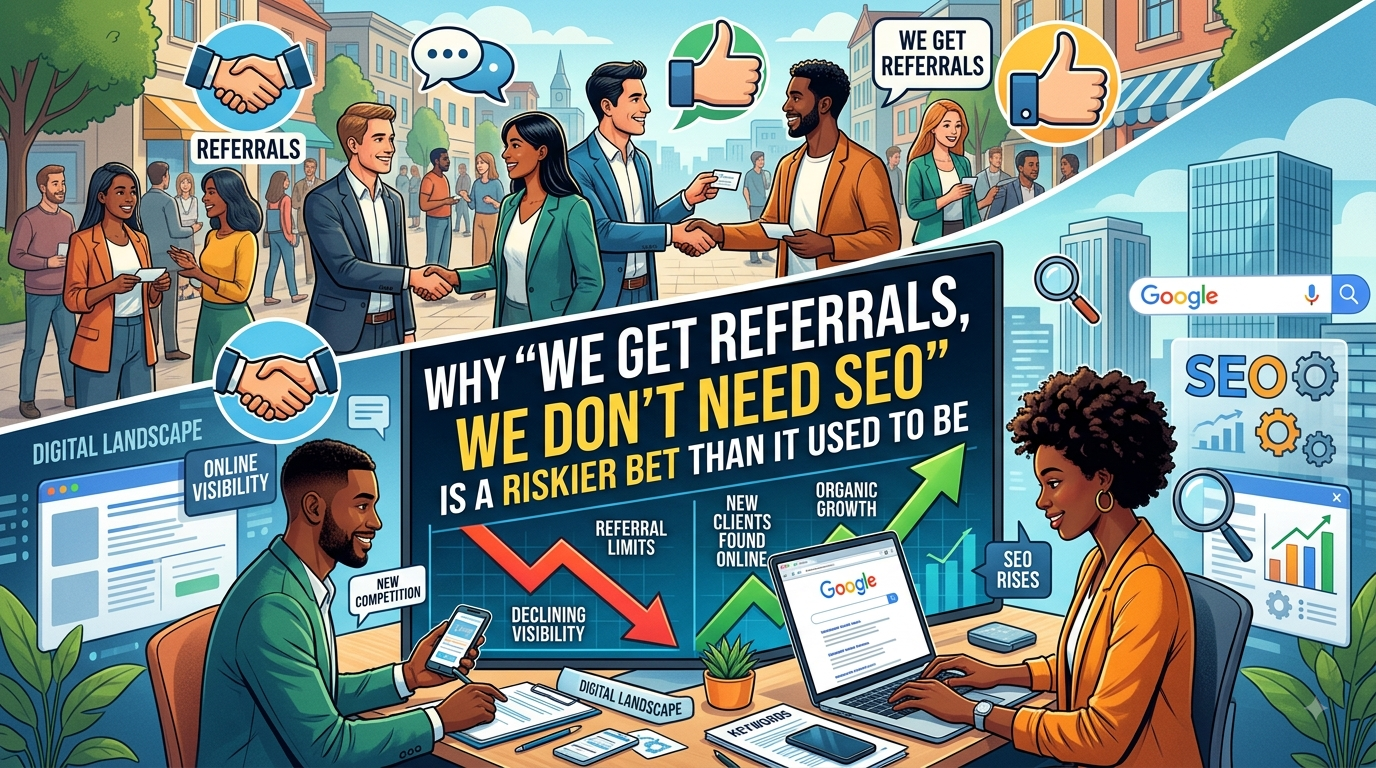
Ask a data center operator why they don’t invest in SEO, and you’ll often hear some version of the same answer: we don’t need it, our deals come from referrals and RFPs. For a long time, that was a reasonable position. Colocation and data center deals are large, technical, and relationship-driven, and the industry built itself on brokers, existing customer networks, and word of mouth among IT directors who all seem to know each other. If that pipeline has worked for a decade, walking away from it to chase organic search traffic can feel like solving a problem you don’t have.
The trouble is that the referral pipeline was never really independent of visibility. It just used to route through people instead of search engines. A referral has always meant someone telling a prospective buyer “talk to this provider,” and the buyer would then go verify that recommendation before picking up the phone. What’s changed is where that verification happens. It used to happen through a follow-up call, a site visit, or another conversation in the buyer’s network. Now it happens on a laptop, before the buyer ever reaches out, through a search for the company name alongside terms like reviews, outages, pricing, or compliance certifications. The referral still gets the company on the shortlist. Search now decides whether it survives the shortlist.
This shift matters more in data centers than in most industries because the stakes of the decision are so high. Nobody signs a colocation contract worth six or seven figures, tied to a multi-year lease, on a friend’s word alone. Even a warm, trusted referral gets quietly researched by someone on the buying committee who has never spoken to anyone at the company. If that research turns up nothing beyond a bare-bones site and outdated case studies, or worse, turns up a competitor with a much stronger, more technical online presence, the referral doesn’t disappear, but it does lose ground before the first call is even scheduled. The company that was recommended can end up losing to a company that simply looked more credible online, despite doing nothing to earn the introduction.
There’s also a structural change happening underneath all of this that makes the referral-only model riskier than it used to be. Procurement processes at large enterprises are increasingly formal, and IT buying committees now often include people outside the technical team, like finance, legal, or compliance stakeholders, who have no personal relationships in the data center world at all. These are exactly the people least likely to have a referral to work from and most likely to start their research with a plain search query. As buying committees widen, the share of the deal that depends on pure relationship history shrinks, and the share that depends on what a stranger finds when they search grows. A company that has built its entire go-to-market around referrals is, without realizing it, betting that this shift won’t reach them.
None of this means referrals stop mattering. They’re still often the reason a company gets a first conversation at all, and nothing about SEO replaces the trust that a personal recommendation carries. What it means is that referrals and search visibility are doing different jobs in the same buying process, and a company that only invests in one is leaving the other job undone. The safest version of the argument isn’t that SEO replaces referrals. It’s that referrals get a buyer to look, and SEO determines what they find when they do.