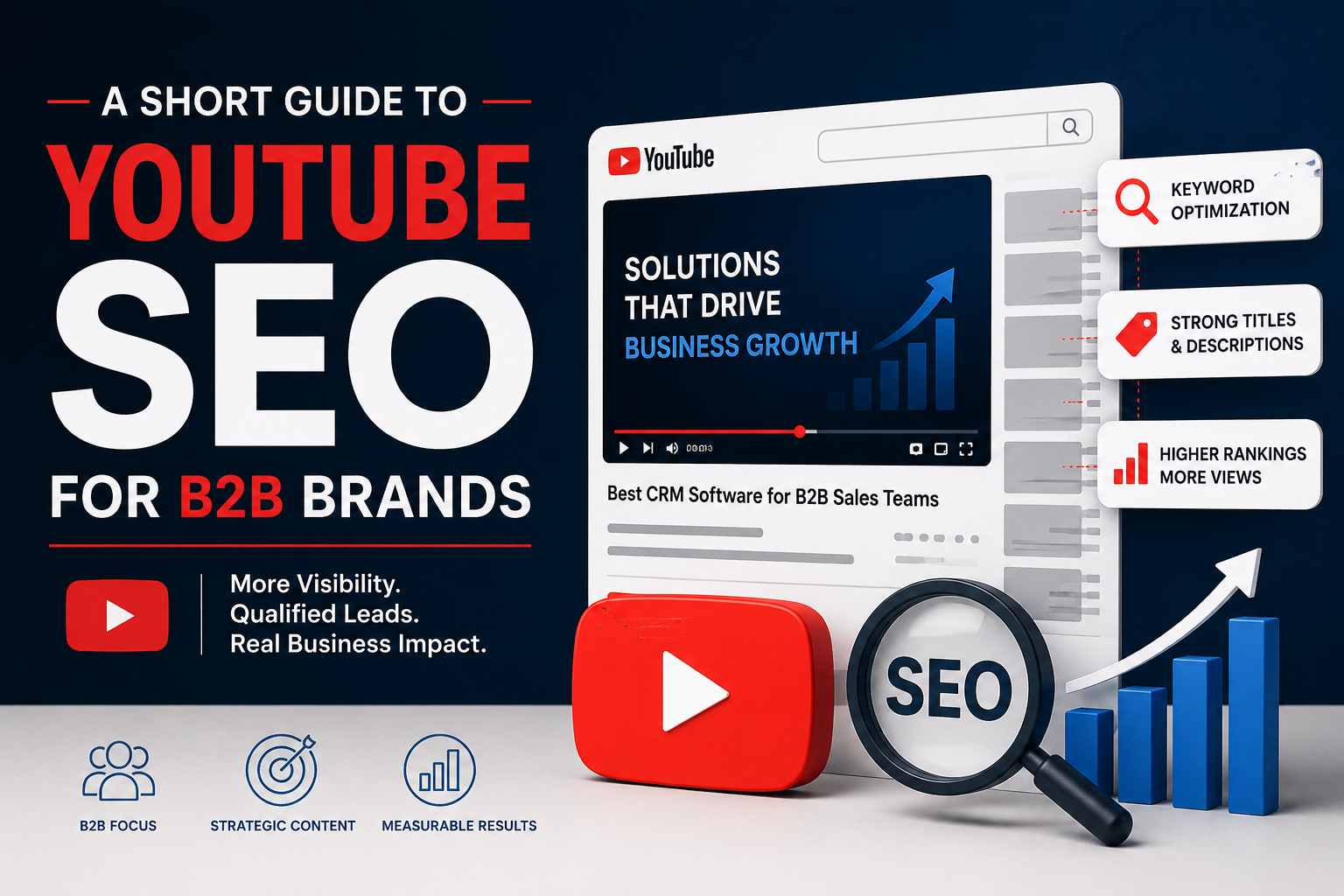
YouTube is the second largest search engine in the world, but most B2B brands treat it like a video hosting service instead of a search platform. That mistake alone explains why so many well-produced B2B videos sit at a few hundred views while a competitor’s rough, unpolished clip pulls in steady organic traffic month after month. YouTube SEO for B2B isn’t about production value. It’s about being findable by the specific, often narrow, set of people searching for the problems your product solves.
The starting point is understanding search intent rather than keyword volume. Consumer SEO tools are built around high-volume terms, but B2B search behavior looks different. A procurement manager searching “how to evaluate vendor risk management software” isn’t searching thousands of times a month, but that handful of searches represents exactly the audience you want. Building your video topics around these specific, intent-rich phrases will outperform chasing broad terms that bring in viewers who will never buy anything from you. Before filming anything, it’s worth typing your product category into YouTube’s own search bar and watching what autocomplete suggests, since that reflects real queries from real searchers rather than a guess at what people might type.
Once you know what someone is searching for, the title and the first sentence of your description need to speak directly to that phrase, in language a buyer would actually use rather than internal company jargon. YouTube’s algorithm relies heavily on matching a video’s declared subject matter to a searcher’s query, and it does this primarily through text: the title, the description, and the closed captions. A title like “Q3 Product Update” tells the algorithm nothing useful. A title like “How to Automate Invoice Approvals in NetSuite” tells it exactly who should see this video. The description deserves the same treatment. The first two or three sentences should restate the core topic in plain language, because that’s the portion YouTube surfaces in search results and the portion most likely to be indexed for related queries.
Closed captions matter more for B2B than almost any other content category, because B2B videos are often dense with product names, technical terms, and acronyms that YouTube’s automatic transcription frequently gets wrong. Uploading a corrected caption file does two things at once: it makes the video accessible to viewers watching without sound, which is common in office environments, and it gives YouTube a clean, accurate transcript to index for search. A mistranscribed product name in the auto-generated captions means your video simply won’t surface for people searching that exact term.
Watch time and audience retention carry more algorithmic weight than almost any other metric on the platform, and this is where a lot of B2B content quietly sabotages itself. A quarterly business update filmed as a static talking head for twenty minutes will bleed viewers within the first ninety seconds, and that steep early drop-off signals to YouTube that the video isn’t worth recommending further, even to people who searched for it directly. Structuring a video so the most valuable information appears early, and breaking longer content into clearly signposted segments, keeps people watching longer and tells the algorithm the video is worth showing to the next searcher.
Playlists function as an underused SEO lever for B2B channels specifically because B2B buying involves research done over multiple sessions, sometimes by multiple people on the same buying committee. A well-organized playlist around a single use case, like implementation walkthroughs or industry-specific case studies, keeps a researching buyer on your channel through several videos in one sitting, which extends session watch time and increases the odds YouTube recommends your channel again later. Playlists also rank in search results in their own right, giving you a second entry point for the same set of keywords.
Finally, external signals still matter. Embedding YouTube videos on your own website, particularly on the exact landing pages that match a video’s topic, sends traffic and engagement back to YouTube in a way the platform’s algorithm notices, while also keeping visitors on your site longer. Linking to relevant blog posts or product pages in the video description gives YouTube additional context about the subject matter and gives viewers who are ready to act a clear next step, which matters more in B2B than almost anywhere else, since a single video rarely closes a deal on its own.
None of this requires a large production budget. It requires treating every video as a page you’re optimizing for a specific search query, written and structured with a buyer’s actual language in mind, rather than a broadcast you’re hoping the right person happens to see.