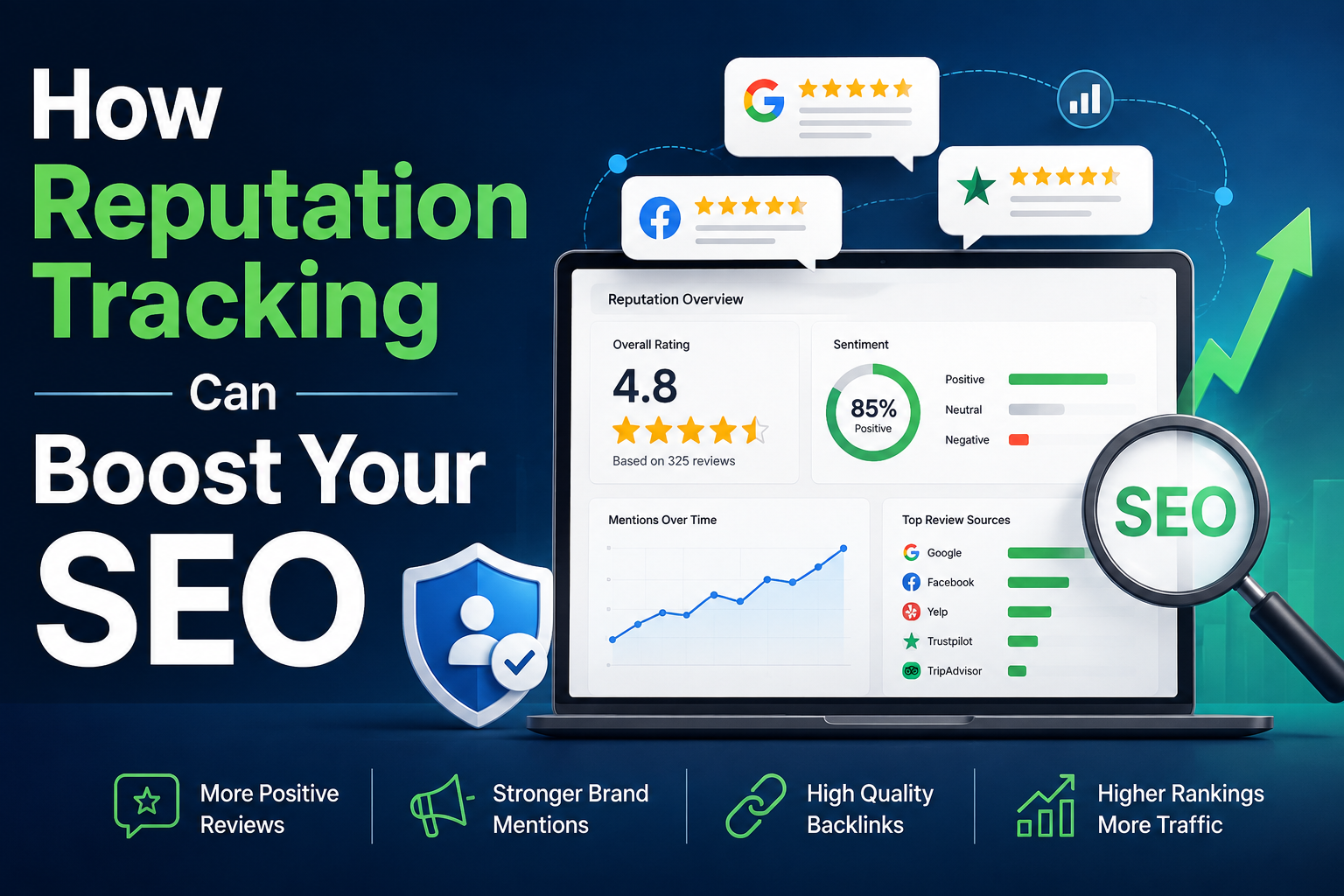
Most SEO strategies focus on the usual suspects: keywords, backlinks, site speed, content quality. But there’s a quieter lever that often gets overlooked: your online reputation. How your brand is perceived across reviews, social mentions, forums, and news coverage doesn’t just shape customer trust. It actively influences how search engines rank you.
Here’s how reputation tracking and SEO connect, and how to use one to strengthen the other.
Google’s own quality guidelines emphasize E-E-A-T — Experience, Expertise, Authoritativeness, and Trustworthiness. Reputation is essentially a real-world signal of trustworthiness and authority. When people talk about your brand positively across the web, it sends signals that you’re a credible, established entity.
Why Reputation Matters to Search Engines
Search engines also increasingly rely on “off-site” signals: mentions of your brand (even without a link), sentiment in reviews, and how consistently your business information appears across the web. Reputation tracking gives you visibility into all of that.
The Direct Connections Between Reputation and SEO
Reviews influence local and organic rankings
For local businesses especially, review quantity, recency, and star ratings are a known ranking factor in Google’s local algorithm. A steady stream of fresh, positive reviews on Google Business Profile, Yelp, and industry-specific platforms tells Google your business is active and trusted.
Brand mentions act like implied backlinks
Even unlinked mentions of your brand name across news sites, blogs, and forums are believed to contribute to authority signals. Reputation monitoring tools help you find these mentions — and when appropriate, reach out to turn them into linked citations.
Click-through rate gets a lift
When someone searches your brand name and sees a page full of positive reviews, trust badges, or favorable news snippets in the results, they’re more likely to click through. Higher CTR is itself a signal that can reinforce your rankings over time.
Negative content can suppress rankings — or get suppressed
A wave of negative reviews or a damaging news story can hurt conversions even if rankings hold. Reputation tracking lets you catch these early, respond, and push positive content up through targeted SEO efforts before the negative content dominates the SERP.5. User-generated content adds fresh, relevant text
Reviews and Q&A sections are a constant source of new, keyword-rich content that search engines crawl. This organic content often includes the exact phrases and questions potential customers are searching for.
Building a Reputation-SEO Workflow
Monitor continuously. Use tools like Google Alerts, Mention, or dedicated reputation platforms (Birdeye, Podium, ReviewTrackers) to track brand mentions and reviews in real time.Respond promptly. Timely, thoughtful responses to reviews — especially negative ones — signal engagement to both customers and search engines.
Encourage reviews systematically. Build review requests into your customer journey rather than leaving them to chance.Audit your SERP regularly. Search your brand name and see what shows up on page one. Identify gaps where negative or outdated content could be pushed down with fresh, optimized content.
Turn mentions into links. When you find unlinked brand mentions, reach out and ask for a citation — an easy, low-friction link-building tactic.The Bottom LineSEO and reputation management used to live in separate departments. Increasingly, they’re the same job. Tracking what people say about your brand — and acting on it — doesn’t just protect your image. It feeds the trust and authority signals that search engines reward with better visibility.