Posted on

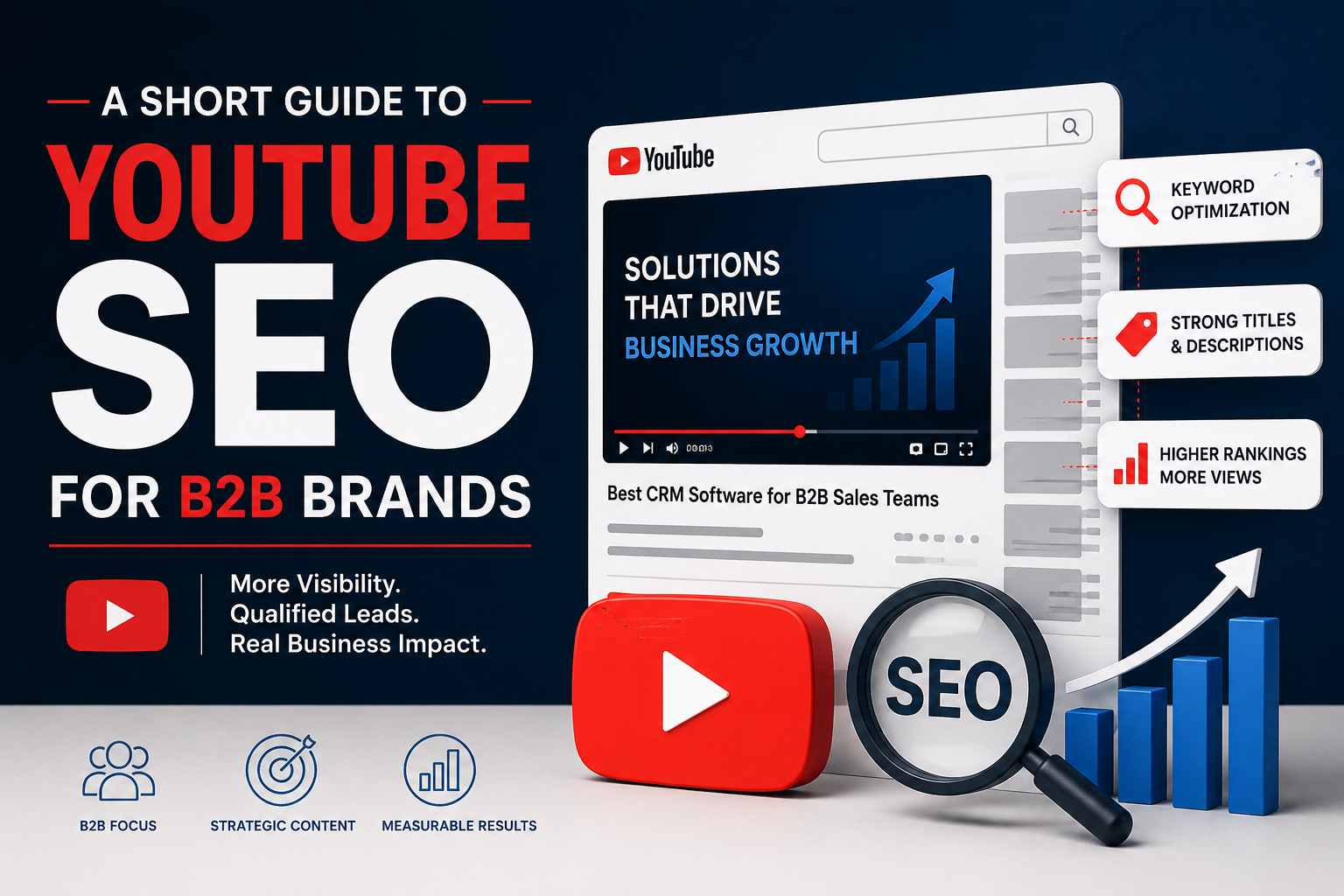
A Short Guide to YouTube SEO for B2B Brands

YouTube is the second largest search engine in the world, but most B2B brands treat it like a video hosting service instead of a search platform. That mistake alone explains why so many well-produced B2B videos sit at a few hundred views while a competitor’s rough, unpolished clip pulls in steady organic traffic month after month. YouTube SEO for B2B isn’t about production value. It’s about being findable by the specific, often narrow, set of people searching for the problems your product solves.

The starting point is understanding search intent rather than keyword volume. Consumer SEO tools are built around high-volume terms, but B2B search behavior looks different. A procurement manager searching “how to evaluate vendor risk management software” isn’t searching thousands of times a month, but that handful of searches represents exactly the audience you want. Building your video topics around these specific, intent-rich phrases will outperform chasing broad terms that bring in viewers who will never buy anything from you. Before filming anything, it’s worth typing your product category into YouTube’s own search bar and watching what autocomplete suggests, since that reflects real queries from real searchers rather than a guess at what people might type.

Once you know what someone is searching for, the title and the first sentence of your description need to speak directly to that phrase, in language a buyer would actually use rather than internal company jargon. YouTube’s algorithm relies heavily on matching a video’s declared subject matter to a searcher’s query, and it does this primarily through text: the title, the description, and the closed captions. A title like “Q3 Product Update” tells the algorithm nothing useful. A title like “How to Automate Invoice Approvals in NetSuite” tells it exactly who should see this video. The description deserves the same treatment. The first two or three sentences should restate the core topic in plain language, because that’s the portion YouTube surfaces in search results and the portion most likely to be indexed for related queries.

Closed captions matter more for B2B than almost any other content category, because B2B videos are often dense with product names, technical terms, and acronyms that YouTube’s automatic transcription frequently gets wrong. Uploading a corrected caption file does two things at once: it makes the video accessible to viewers watching without sound, which is common in office environments, and it gives YouTube a clean, accurate transcript to index for search. A mistranscribed product name in the auto-generated captions means your video simply won’t surface for people searching that exact term.

Watch time and audience retention carry more algorithmic weight than almost any other metric on the platform, and this is where a lot of B2B content quietly sabotages itself. A quarterly business update filmed as a static talking head for twenty minutes will bleed viewers within the first ninety seconds, and that steep early drop-off signals to YouTube that the video isn’t worth recommending further, even to people who searched for it directly. Structuring a video so the most valuable information appears early, and breaking longer content into clearly signposted segments, keeps people watching longer and tells the algorithm the video is worth showing to the next searcher.

Playlists function as an underused SEO lever for B2B channels specifically because B2B buying involves research done over multiple sessions, sometimes by multiple people on the same buying committee. A well-organized playlist around a single use case, like implementation walkthroughs or industry-specific case studies, keeps a researching buyer on your channel through several videos in one sitting, which extends session watch time and increases the odds YouTube recommends your channel again later. Playlists also rank in search results in their own right, giving you a second entry point for the same set of keywords.

Finally, external signals still matter. Embedding YouTube videos on your own website, particularly on the exact landing pages that match a video’s topic, sends traffic and engagement back to YouTube in a way the platform’s algorithm notices, while also keeping visitors on your site longer. Linking to relevant blog posts or product pages in the video description gives YouTube additional context about the subject matter and gives viewers who are ready to act a clear next step, which matters more in B2B than almost anywhere else, since a single video rarely closes a deal on its own.

None of this requires a large production budget. It requires treating every video as a page you’re optimizing for a specific search query, written and structured with a buyer’s actual language in mind, rather than a broadcast you’re hoping the right person happens to see.

Posted on

You Don’t Lose an Account When It Gets Banned. You Lose It When It Stops Working

Ask most creators what their biggest fear is and they’ll say the same thing: getting banned. One algorithm hiccup, one false copyright strike, one overzealous moderation bot, and years of work vanish overnight. It’s a real risk, and it’s worth having a plan for. But it’s not actually the way most social media accounts die.Most accounts don’t die from a ban. They die from irrelevance — quietly, slowly, while the account itself stays perfectly intact.

The Account That’s Still “Alive” but Already Dead

Here’s a scenario that plays out constantly: a creator builds an account to 50,000 followers. The platform never touches it. No strikes, no suspension, nothing. And yet, eighteen months later, that account is sending approximately zero people to their website. The algorithm shifted. The audience aged out. A format the platform used to reward stopped getting pushed. The account is still there, still technically “owned,” and still functionally useless for the one thing it was built to do — move people toward the blog, the newsletter, the product page.That account isn’t banned. But it’s lost, in every way that actually matters.

Redefining What “Losing” an Account Means

If you built a social presence purely for its own sake — to have a big number next to your name — then a ban is the only thing that can take it from you. But if you built it as a channel, a way to route attention toward something you own, then the definition of loss has to change.An account is lost the moment it stops moving the needle. That can happen for reasons that have nothing to do with platform enforcement:

The algorithm changes what it rewards. A platform that once favored links or long captions shifts toward pure entertainment content, and suddenly your traffic-driving posts get a fraction of the reach they used to.Your audience migrates. The demographic you built an audience around ages into a different platform, and the people still active where you post aren’t the people who ever clicked through anyway.

The platform tightens link policies. Nothing about your content changed, but the platform decided outbound clicks are worth suppressing more aggressively than they were a year ago.Fatigue and saturation set in. The same offer, the same call-to-action, repeated for the thousandth time to the same audience, simply stops converting — not because the platform did anything, but because attention has diminishing returns.None of these show up as a ban. Nobody emails you a notice. The follower count doesn’t drop. But the function of the account — sending traffic — has quietly stopped.

Why This Distinction Matters

If you think the only threat to an account is a ban, you’ll spend your energy on the wrong defense: backing up content, appealing strikes, diversifying to avoid a single point of failure. All reasonable things to do. But they don’t protect you from the far more common failure mode, which is an account that’s technically fine and practically dead.The better defense is to treat traffic — not follower count, not likes, not the account’s continued existence — as the actual metric of whether an account is “alive.” That means:Tracking click-throughs, not just engagement. A post with huge engagement and no clicks isn’t doing its job, even if it looks great on the surface.

Noticing decline before it becomes total. A slow drop in referral traffic over a few months is a much clearer signal than any single bad week, and it’s the kind of signal that’s easy to ignore if you’re only watching vanity metrics.Being willing to walk away from a “successful” account. If a platform stops sending traffic, the size of your following there stops being a reason to keep investing in it. A smaller, newer account on a platform that still converts is worth more to you than a large one that doesn’t.

A ban is dramatic and visible, which is exactly why people fear it more than they should. The quieter threat — an account that gradually stops functioning as a traffic source while looking completely normal from the outside — is the one that actually erodes most people’s reach over time.You don’t lose a social media account when a platform takes it away from you. You lose it the day it stops doing the one job you built it for, whether or not anyone ever notices it happen.

Posted on

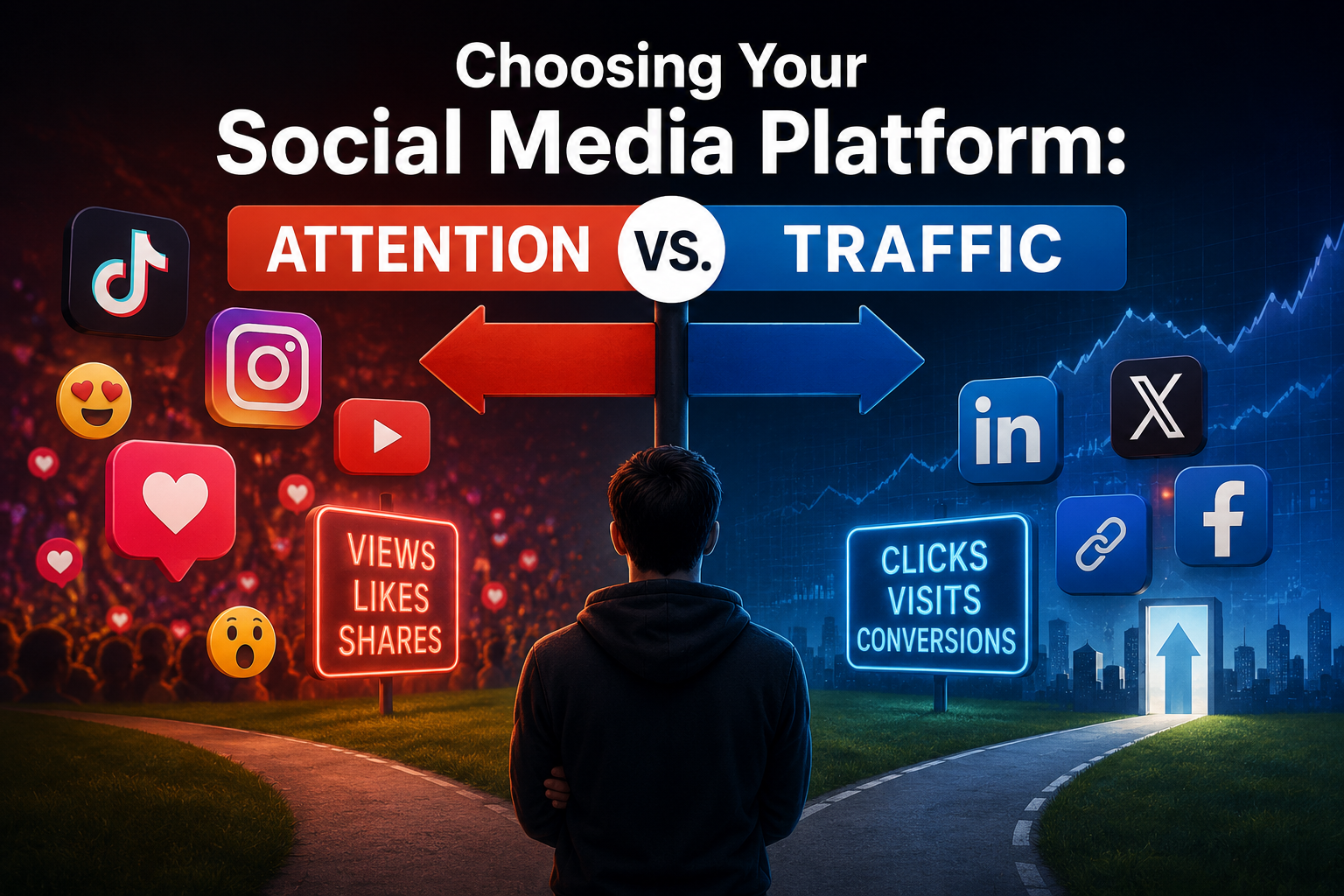
Choosing Your Social Media Platform: Attention vs. Traffic

Every creator, founder, and marketer eventually asks the same question: “Which platform should I actually be posting on?” There are dozens of options, only so many hours in a day, and every platform swears it’s the one that matters. The answer isn’t about picking the trendiest app or the one your favorite creator swears by. It comes down to two separate questions that most people accidentally treat as one.

Question One: Where Is the Attention?

This is the obvious part. Some platforms simply have more eyeballs, more active users, and more time-per-session than others. But “where is the attention” isn’t just about total user count — it’s about where your specific audience’s attention already lives.

A B2B software company chasing attention on TikTok is fighting an uphill battle, even though TikTok has enormous total attention. A hobbyist woodworker ignoring YouTube in favor of X is leaving the single best-suited platform for their content type sitting on the table. Attention isn’t a single pool — it’s fragmented by demographic, by content format, and by intent (are people there to be entertained, to learn, to shop, to network?).

So the first filter is simple: go look at where the people you want to reach are already spending time, and what they’re doing while they’re there.

Question Two: How Easily Does That Attention Convert to Traffic?

This is the part people skip, and it’s just as important as the first. Attention is worthless to you personally if the platform makes it structurally difficult to move people off-platform and onto something you own — your website, your email list, your product page.

Every platform has a different relationship with outbound links:

Some platforms actively suppress link-outs. Algorithms on places like Instagram and TikTok have historically deprioritized posts containing external links, because every click away is a click the platform isn’t monetizing.

Some platforms make links a natural, expected part of the experience. Pinterest, for example, is built around the idea of clicking through to a source. X/Twitter and LinkedIn allow links in posts without much friction, even if reach is somewhat throttled.

Some platforms have no real link mechanism at all. A platform might have a bio-link slot and nothing else, meaning your only way to drive traffic is a single, static, easily-missed URL.This is why a platform can have enormous attention and still be a poor traffic source for you, and why a smaller platform can quietly outperform it if it treats outbound clicks as normal user behavior instead of a leak to be plugged.

Why You Need Both

Picture a 2×2 grid:

High attention, high traffic ease — the sweet spot. Rare, and usually temporary, because platforms tend to tighten link restrictions as they mature and lean harder into ad revenue.

High attention, low traffic ease — great for brand awareness and top-of-funnel reach, bad if your goal is direct conversions. You may need a multi-step strategy: build recognition here, then capture the click somewhere else (a bio link, a Stories link, a pinned comment).

Low attention, high traffic ease — often the underrated move. A smaller, more niche platform where links flow freely can outperform a giant platform that buries your URL, simply because the people who do see it actually click.Low attention, low traffic ease — not worth your limited time, no matter how much you personally enjoy the platform.

Putting It Into Practice

Before committing real time to a platform, it helps to ask two blunt questions:Is my actual target audience spending meaningful time here, doing something compatible with my content?

When someone here wants to learn more or buy something, how many taps does it take for them to reach my website — and does the platform’s algorithm punish me for making that path easy?If the answer to the first question is no, no amount of traffic-friendliness will save that platform for you. If the answer to the second is “it’s nearly impossible,” you may still use the platform for visibility, but you’ll need a separate plan for actually converting that attention into traffic — because the platform itself won’t do it for you.

The platforms that look most attractive on the surface (biggest user numbers, flashiest growth stats) aren’t always the ones that will move the needle on your website traffic. The right platform is the one where your audience’s attention and your ability to capture that attention overlap — and that’s worth auditing honestly before you sink another month of content into the wrong app.

Posted on

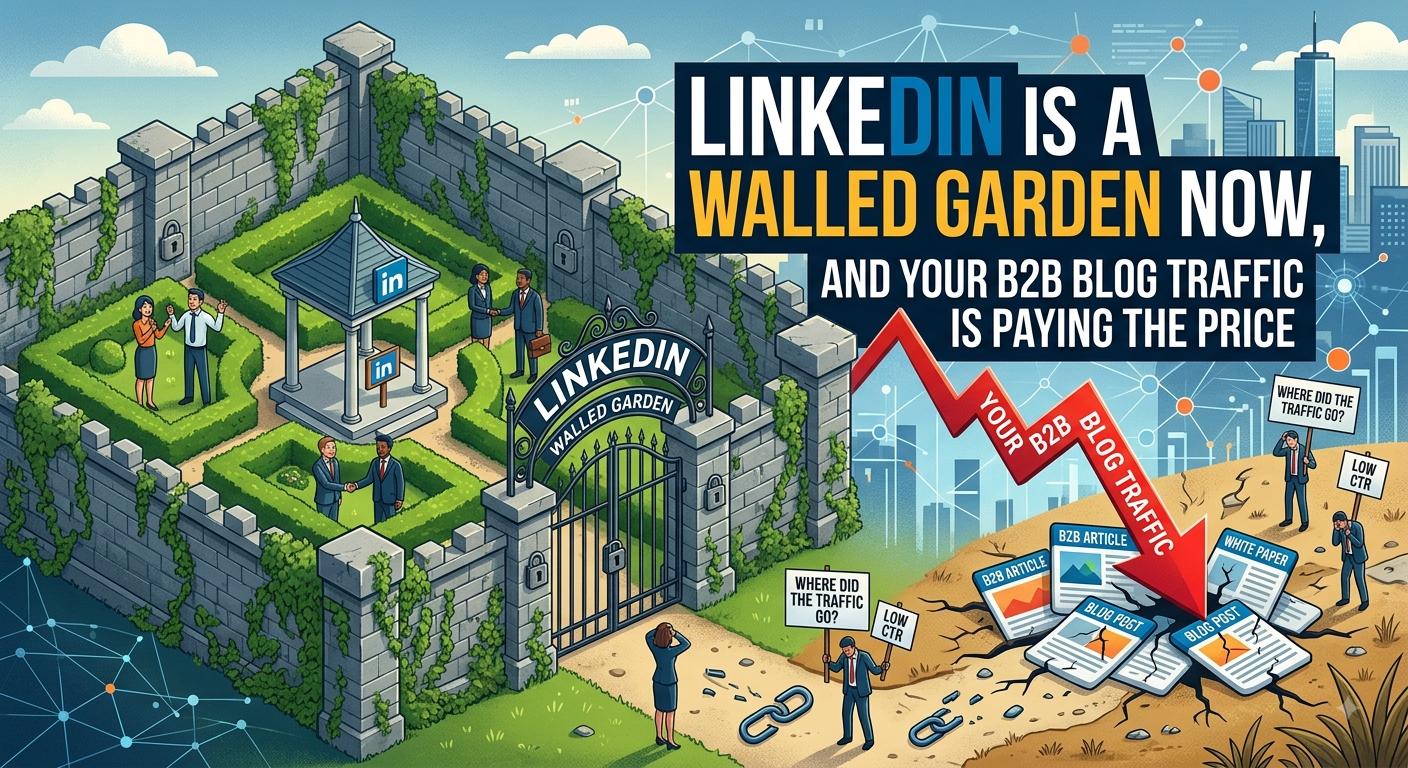
LinkedIn Is a Walled Garden Now, And Your B2B Blog Traffic Is Paying the Price

If you’ve been publishing on LinkedIn hoping it would feed traffic back to your website the way a good blog post does, it’s time for an honest look at what’s actually happening. LinkedIn has quietly become a closed ecosystem. Almost everything of substance on the platform now sits behind a login wall, which means Google and other search engines can’t see it, can’t index it, and can’t send anyone to it. For B2B marketers and bloggers who treated LinkedIn as a distribution channel with SEO upside, that upside has largely evaporated.

What “closed ecosystem” actually means here

A few years ago, you could stumble onto a LinkedIn post or article through a Google search without ever creating an account. That’s no longer the default experience. Try clicking through to most posts today while logged out, and you’ll hit a login or signup prompt before you can read more than the first couple of lines. The feed itself, where the vast majority of day-to-day content lives, is essentially invisible to search engines because it requires authentication to view.

This isn’t an accident or a bug. It’s a deliberate product decision. LinkedIn makes money by keeping people inside the app, engaging, connecting, and eventually paying for premium features or ads. Every person who reads your insightful post without logging in is a person LinkedIn isn’t converting into an active account. Gating content behind a login is a logical business move for LinkedIn. It’s just a bad one for anyone hoping to use the platform as a top-of-funnel SEO play.Why this matters specifically for posts, not everythingIt’s worth being precise here, because LinkedIn isn’t uniformly closed. LinkedIn controls what’s crawlable through its robots file, and it draws a clear line: public profiles, company pages, and published Articles remain crawlable and do show up in Google search results. The regular feed of status updates and posts, on the other hand, sits behind the authentication wall, so search engines see almost none of it.

That distinction explains a lot of confusion in the B2B marketing world right now. Someone will point to their LinkedIn Article ranking on Google as proof the platform still has SEO value, while someone else swears their daily posting habit has done nothing for their website traffic. Both people are right. They’re just talking about two different products wearing the same LinkedIn logo.

The practical effect on B2B bloggers

If your content strategy has leaned on writing something valuable, posting it as a LinkedIn update, and hoping it compounds into search visibility over time, that strategy no longer works the way it used to. A logged-out visitor arriving from Google will not find your post, no matter how good it is or how much engagement it got inside the platform. The post can go semi-viral among your network and still contribute zero long-term SEO equity to your domain, because Google was never able to see it in the first place.

This creates a strange incentive problem. LinkedIn’s own algorithm rewards frequent posting and fast engagement in the first hour after publishing, which pulls marketers toward producing more short-form feed content. But that’s precisely the content type sealed off from search. The platform is nudging creators toward the format that generates the least durable, least discoverable value outside its own walls.

Where the real SEO value still lives on LinkedInNone of this means LinkedIn is useless for a B2B content strategy, only that the value has moved to a narrower set of formats. LinkedIn Articles, unlike regular posts, are indexed by Google and can appear in both LinkedIn’s internal search and external search results, which gives them a genuine second life outside the app. A well-optimized company page or personal profile can also surface in Google results, functioning more like a landing page than a piece of content marketing.

The practical implication is that if search traffic is actually your goal, the feed post is best treated as a promotional signal, not the destination. It can drive engagement, build relationships, and put your name in front of the right people inside LinkedIn’s ecosystem. But the substantive, evergreen thinking that you want strangers to find via Google belongs somewhere search engines can actually reach: your own blog, a published LinkedIn Article, or another crawlable format. Anything you publish only as a status update is, from an SEO standpoint, effectively whispered into a closed room.

LinkedIn hasn’t stopped being valuable. It’s just stopped being an SEO channel for most of what gets posted there. Treat the feed as a relationship and visibility tool for the people already inside the platform, and keep your actual search-driving content on assets that Google can crawl. Confusing the two is how a lot of B2B marketing budgets are quietly being spent on content that nobody outside LinkedIn will ever find.

Posted on

Your B2B YouTube Video Doesn’t Need to Be Complex

If you’ve been putting off making video content because you’re picturing a studio, a script team, and a week of editing — stop. That version of “video” is exactly what’s keeping most B2B companies out of a channel where their buyers are already spending time.The complexity mythSomewhere along the way, B2B marketers decided that video meant cinematic. High production value, motion graphics, a hired crew, maybe a jingle. That standard makes sense for a Super Bowl ad. It makes no sense for a video explaining how your onboarding flow works, or why a prospect should care about your pricing model.

B2B buyers aren’t watching your video for entertainment. They’re watching because they have a question, a problem, or a decision to make. A founder walking through a whiteboard, a product manager screen-sharing a demo, a customer support lead answering the five questions every prospect asks — none of that requires a production budget. It requires clarity.What actually worksSome of the most effective B2B YouTube content looks almost embarrassingly simple:Screen recordings with a voiceover. Someone narrates their way through a tool, a workflow, or a comparison. No editing wizardry, just a clear explanation.

Talking-head answers to real questions. Pull the top questions from your sales calls or support tickets and answer each one in its own short video.Whiteboard or slide walkthroughs. A person explaining a concept with a marker or a few slides often builds more trust than a polished animation, because it feels like a real person teaching you something.

Customer conversations. A candid interview with a happy customer, lightly edited, usually outperforms a scripted case study video.None of these need a studio. Most can be shot on a laptop webcam or a phone, with free or cheap editing software to trim the start and end.Why simple often winsThere’s a practical reason simple works so well in B2B: your audience is evaluating substance, not style. A CFO deciding whether your software is worth the spend cares about accuracy and usefulness, not lighting. Over-producing a video can even work against you — it starts to feel like marketing instead of information, and B2B buyers are quick to tune out anything that feels like a pitch.

Simple videos are also faster to make, which means you can make more of them. A single well-produced video takes weeks. A dozen straightforward, useful ones can be shot and published in the same time — and volume matters on YouTube, where the algorithm rewards a steady stream of content that answers real search queries.Where to startIf you’re stuck, don’t start with “let’s make a video.” Start with “what do people ask us constantly?” Then answer that question on camera, as plainly as you would in a sales call. Publish it. Watch what resonates. Do it again.You can always add production polish later, once you know which topics and formats your audience actually responds to. But the barrier to starting should be a webcam and something useful to say — not a production budget you don’t have yet.

Posted on

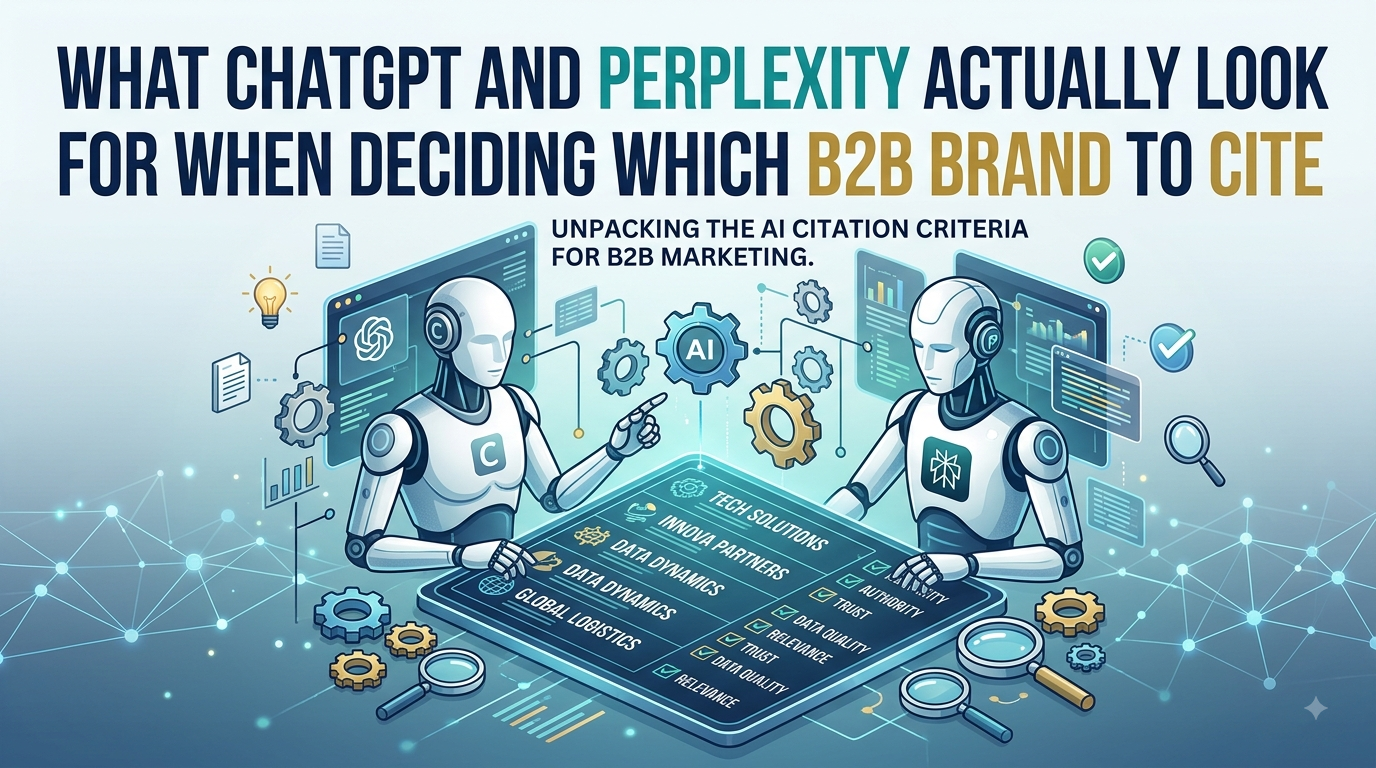
Why AI Tools Cite Some Companies and Ignore Others (It’s Not Random)

Ask enough business owners about their experience with AI search and you’ll hear a version of the same complaint: a direct competitor gets mentioned by name when someone asks ChatGPT or Perplexity a question in their industry, and their own company, despite being just as established, doesn’t come up at all. It can feel arbitrary, almost like a coin flip decided by whatever the model happened to have seen. It isn’t arbitrary. There’s a fairly consistent pattern in what gets cited and what gets skipped, and once you see the pattern, it stops looking like luck and starts looking like a set of choices some companies have made and others haven’t.

The first pattern is that AI systems tend to cite content that answers a specific question clearly and directly, rather than content that talks around a topic in general terms. When a generative model is constructing an answer, it’s pulling from sources that let it state something concrete with confidence. A page that says plainly what a service costs, how a process works, or what a specific technical specification is gives the model something it can restate accurately. A page that speaks only in broad, general language, the kind built more for brand impression than for answering a real question, doesn’t give the model much to work with. It’s not that the vague company is being penalized. It’s that there’s nothing extractable there for the model to use, so it reaches for a competitor whose content actually answered the question being asked.

The second pattern is that structure matters more than most companies expect. Content organized with clear headers, direct statements near the top of a section, and information broken into distinct, well-labeled pieces is easier for a model to parse and pull an accurate citation from than a dense, unstructured wall of text where the useful detail is buried in the middle of a paragraph. This isn’t about writing for robots instead of humans. Well-structured content tends to be more genuinely useful to a human reader too. But companies that haven’t thought about structure at all, and have pages built primarily around narrative or marketing flow rather than clarity, are inadvertently making themselves harder for these systems to cite even when their underlying information is perfectly good.

The third pattern, and probably the least intuitive one, is that AI systems appear to weigh third-party validation heavily, not just what a company says about itself. A claim that only appears on a company’s own website carries less weight in a model’s synthesis than the same claim corroborated by an independent source, a review site, a press mention, an industry publication, or a case study referenced elsewhere. This mirrors how a careful human researcher would behave: trusting a company’s self-description less than an outside source saying the same thing. Businesses that have only ever invested in their own website, without any presence in the broader ecosystem of press, reviews, and industry content that discusses them, are working with a thinner evidence base than a competitor whose claims show up corroborated in multiple places across the web.

The fourth pattern is consistency across sources. When a model encounters the same fact about a company, whether that’s a specific certification, a service area, or a specialty, stated the same way across the company’s own site, its listings, and any third-party mentions, that consistency reinforces confidence in the fact. When the same detail is stated differently in different places, or contradicts itself across a company’s own pages, that inconsistency creates exactly the kind of uncertainty a model is inclined to route around by choosing a source that doesn’t require reconciling conflicting information.

Put together, these patterns describe something closer to a competence and clarity filter than a lottery. Companies getting cited tend to have done a handful of unglamorous things well: answered real questions directly instead of vaguely, organized their content so it’s easy to extract information from, built up genuine third-party presence rather than relying only on their own site, and kept their facts consistent everywhere they appear. None of that is mysterious or reserved for large companies with big budgets. It’s closer to a checklist than a secret, which is good news for any company currently on the wrong side of that gap, because it means the gap is closeable.

Posted on

Why “Just Add More Keywords” Doesn’t Work for AI Optimization

A lot of businesses approaching AI optimization for the first time bring the same mental model they built up over years of doing traditional SEO, and the most common version of that model is some variation of “make sure the important terms show up enough times on the page.” That instinct made sense for a long time, because early search engines really did rely heavily on keyword matching to figure out what a page was about. The assumption transfers naturally to AI search because it feels like the same problem: get your terms in front of the system enough times and it will notice you. The trouble is that generative AI tools aren’t solving the same problem traditional search engines were solving, and a tactic built for pattern matching doesn’t translate well to a system built for understanding and synthesis.

Traditional search engines built their early rankings around counting and matching. A page that repeated a target phrase a certain number of times, in the right places, signaled relevance in a way the algorithm could measure directly. Modern AI systems generating an answer aren’t counting keyword occurrences on a page at all. They’re synthesizing an answer from the underlying meaning of the content across many sources, then generating language that best reflects what those sources actually say. A page stuffed with a repeated phrase but thin on real explanation doesn’t rank higher in that process. If anything, it tends to get skipped entirely, because there’s nothing substantive there for the system to draw on when constructing its answer. The keyword density that used to be a subtle signal has become mostly irrelevant noise to a model that’s reading for meaning, not pattern-matching for occurrence counts.

What actually seems to influence whether an AI tool cites or references a company is much closer to what would convince a genuinely well-informed human reader. Content that clearly and specifically answers a real question, in language that resolves ambiguity rather than dancing around it, gives a generative system something concrete to draw from and paraphrase accurately. Content that’s vague, repetitive, or written primarily to satisfy a keyword target rather than to actually inform someone tends to contain very little the model can confidently extract and restate. Because these systems are trying to produce an accurate, useful answer for the person asking, they gravitate toward sources that make that job easy, and a page optimized around repetition rather than clarity makes that job harder, not easier.

There’s also a structural dimension that keyword-focused strategies tend to ignore entirely. AI systems often favor content that’s cleanly organized, with clear headers, direct answers near the top, and a logical structure that separates distinct ideas instead of blending them into a single dense block optimized to hit a word count and a keyword quota. A page built around repeating a target phrase as many times as felt tolerable often produces exactly the kind of muddy, repetitive writing that’s hardest for a system to cleanly extract a citable statement from. Clarity and structure end up mattering more than frequency, which is close to the opposite of what old-school keyword optimization prioritized.

None of this means keywords are irrelevant. Understanding the language real people use when they’re trying to solve a problem is still valuable, because it tells you what questions to actually answer and what terminology to use naturally while answering them. The mistake isn’t paying attention to language at all. It’s treating that language as something to insert repeatedly rather than something to genuinely address. A business that keeps applying a repetition-based mindset to AI optimization is optimizing for a measurement that generative systems mostly aren’t taking, while missing the actual signals, clarity, structure, and substantive answers, that these systems are built to reward.

Posted on

Why Your Market Reports Should Be Web Pages, Not PDFs

Data center brokerage firms tend to produce genuinely good research. A serious regional market report on power availability, fiber routes, land pricing, and entitlement timelines represents real work, often pulling together utility data, permitting knowledge, and on-the-ground relationships that took years to build. The trouble is where that work usually ends up living. In most firms, it becomes a polished PDF, gated behind a form fill, downloaded a modest number of times, and then effectively disappears from view. The research is excellent. Its distribution strategy quietly guarantees that almost nobody who would benefit from it will ever find it.

The core problem with a PDF is that it’s invisible to the exact process most buyers use to find this kind of content in the first place. A developer or site selector researching a new market types a search, not a request for a downloadable file. They’re looking for answers to questions like what the power capacity situation looks like in a specific county, or how long entitlement typically takes in a particular jurisdiction. A PDF, even an excellent one, generally isn’t structured in a way that search engines can read, index, and match against that kind of specific query. It sits behind a form, disconnected from the individual pieces of information inside it, so a search engine has no way to surface the one paragraph about substation capacity that a buyer is actually trying to find. The report can be the best resource in the market and never once appear in front of the person searching for exactly what it contains.

A web page built from the same research behaves completely differently. Broken into real, indexable content, organized around the specific questions a buyer is likely to search, a market analysis becomes something a search engine can actually match to a query about that region. This isn’t just a technical distinction. It changes who encounters the content and at what point in their process. A gated PDF only reaches people who were already engaged enough to trade an email address for it, which usually means people already fairly far along in evaluating a firm. A public web page can reach someone in the very early stages of researching a market, before they know which firm they’ll eventually work with, which is precisely the stage where a firm’s expertise has the most room to make a first impression.

There’s also a durability difference that compounds over time. A PDF published once tends to sit unchanged, quietly becoming outdated as power availability, pricing, and entitlement conditions shift, while nobody revisits it to update the file and redistribute it. A web page can be updated in place, keeping the same URL and the same accumulated search visibility while the actual content underneath stays current. In a market where power and infrastructure conditions are changing quickly, an out-of-date market report is worse than unhelpful; it risks giving a serious buyer bad information at the exact moment they’re relying on a firm’s judgment. A living page solves both problems at once, staying accurate and staying visible.

None of this means the underlying research needs to change, and it doesn’t mean giving away a firm’s competitive advantage for free. The depth and rigor that made the original report valuable is exactly what should carry over into the public version. What changes is the format and the access point: real content on a real page, addressed to the specific questions a buyer is actually searching, rather than a static file that only reaches people who already found the firm through some other means. A firm sitting on genuinely strong market research is sitting on a meaningful SEO asset. Whether that asset does any work depends entirely on whether it’s built to be found, or filed away where only existing prospects will ever see it.

Posted on

Why Search Engine Journal Deserves a Spot in Every Blogger’s Toolkit

Anyone who has spent time trying to grow a blog or manage a digital marketing campaign knows the landscape shifts constantly. Algorithms update without warning, best practices from last year quietly become outdated, and new tools promise to change everything overnight. Keeping up with all of it is a full-time job in itself, which is exactly why publications like Search Engine Journal have become such a trusted resource for people who write, market, and build audiences online.

Search Engine Journal has built its reputation on covering the topics that matter most to anyone trying to be found on the internet. Search engine optimization, content marketing, pay-per-click advertising, social media strategy, and the ever-evolving world of Google’s ranking factors all get regular, in-depth coverage. For bloggers, this means having access to guidance that goes far beyond generic advice to write good content and hope for the best. The publication breaks down technical SEO concepts in ways that are approachable, even for writers who never intended to become search engine experts but now find themselves needing to understand crawl budgets, canonical tags, and Core Web Vitals just to keep their traffic steady.

What makes the site particularly valuable is its focus on timeliness. When a major Google algorithm update rolls out, Search Engine Journal is typically among the first to report on it, analyze its likely impact, and offer practical steps for adjusting strategy. For a blogger whose livelihood depends on organic search traffic, that kind of early warning system can mean the difference between adapting quickly and watching rankings quietly slide for weeks before understanding why. The same holds true for digital marketers managing client accounts, where staying ahead of changes isn’t just convenient but essential to maintaining trust and delivering results.

Beyond the news and updates, the site offers a steady stream of how-to guides and strategic deep dives that help readers actually apply what they learn. Rather than simply reporting that a trend exists, articles tend to walk through the reasoning behind it and offer concrete steps for putting it into practice. This is especially useful for bloggers who wear every hat in their operation, from writer to editor to marketer to analyst, and simply don’t have time to test fifteen different strategies to find out what works. Having a resource that has already done some of that testing and reporting saves enormous amounts of trial and error.

There is also real value in the community of expertise the publication draws on. Contributors often include practitioners who work directly in agencies, in-house marketing teams, and SEO consultancies, which means the advice tends to be grounded in real campaigns rather than theory alone. Reading through case studies and expert columns gives bloggers and marketers a window into how professionals at a high level are thinking about problems, which can spark ideas for their own strategy even when the specific tactic described doesn’t translate directly to their situation.

For anyone serious about growing an audience or running effective campaigns, treating a resource like Search Engine Journal as background reading rather than an occasional reference can pay dividends over time. Search and content marketing reward people who stay current, experiment thoughtfully, and understand the reasoning behind best practices rather than following them blindly. A well-chosen industry publication, checked regularly, becomes less like homework and more like a standing conversation with the field, one that keeps a blogger or marketer sharper, faster to adapt, and better equipped to make decisions with confidence.

Posted on

How AI-Driven Data Center Demand Is Changing What Site Selectors Search For

For most of the last decade, data center site selection followed a fairly stable formula. Find a market with good fiber connectivity, reasonable proximity to end users for latency, a favorable tax and regulatory environment, and land at a workable price. Power mattered, but it was rarely the binding constraint. That formula has broken down over the past two years, and the shift shows up clearly in what site selectors are actually searching for now versus what they searched for even three years ago.

The clearest evidence of the shift is that power has moved from one factor among several to the dominant one. Recent industry analysis describes the market as entering what one major real estate firm calls a power-constrained supercycle, in which speed to power has become the primary criterion driving site selection, ahead of community support, latency, and proximity to customers. Legal and investment analysis covering the sector this year points to the same conclusion from a different angle, describing power availability rather than capital as the principal driver of investment decisions, with utility relationships, behind-the-meter generation, and control of powered land now dominating how sites get chosen. For a site selection firm or brokerage, this means the buyers coming through the door are no longer asking primarily about fiber routes or tax abatements first. They’re asking whether a parcel has any realistic path to power within a timeframe that matters to them.

That timeframe question has itself become a major driver of search behavior. Grid interconnection queues in many regions now stretch out for years, and some industry coverage puts typical interconnection timelines at up to four years in constrained regions, which has made alternative approaches like bring-your-own-power arrangements increasingly attractive despite their complexity. Buyers researching sites are no longer just asking whether power exists nearby. They’re searching for very specific technical distinctions, like the difference between a utility’s non-binding “will-serve” letter and an actual contracted date for transmission capacity, because that distinction now determines whether a project is viable on a realistic timeline. A site selection firm’s content that doesn’t speak to these specific, newer technical distinctions is answering the questions buyers asked three years ago, not the ones they’re asking now.

The scale of the numbers behind this shift is worth naming directly, because it explains why the change in search behavior isn’t temporary. Forecasts this year point to U.S. data center power demand roughly doubling by the end of the decade, and some analyses tied to Gartner’s research suggest global data center electricity demand could exceed 1,000 terawatt-hours this year alone, more than double the 2023 baseline. Individual AI-focused facilities are now described as requiring anywhere from 100 to 750 megawatts each, a scale that turns what used to be a routine utility conversation into a defining constraint on where a project can even be considered. When the physical resource driving an entire industry becomes this scarce, the questions buyers ask before committing to a site change accordingly, and they tend to get more specific, more technical, and more urgent.

There’s a geographic consequence to all of this that matters directly for how a site selection firm builds out its market-specific content. Because power constraints are pushing developers toward a smaller number of markets with existing capacity and infrastructure rather than untested geographies, some markets are gaining disproportionate share while others, including several legacy hubs, are losing ground as power availability and permitting complexity make them less viable for large-scale projects. A firm that hasn’t updated its market pages to reflect which regions are actually winning this cycle, and why, is publishing content that no longer matches where the real search volume and real deal activity are heading.

The practical implication for anyone doing content or SEO work in this space is that the underlying questions buyers are asking have genuinely changed, not just gotten more numerous. A market analysis or site listing built around the old formula of fiber, latency, and tax incentives, without addressing power delivery timelines, interconnection queue status, and the specific mechanisms available for securing power, is going to read as outdated to exactly the sophisticated, technically fluent buyers currently driving this market. Keeping content current with this shift isn’t a matter of adding a new keyword here and there. It’s a matter of recognizing that the entire hierarchy of what matters in a site selection decision has been reordered, and content built around the old hierarchy is answering a question almost nobody is asking anymore.