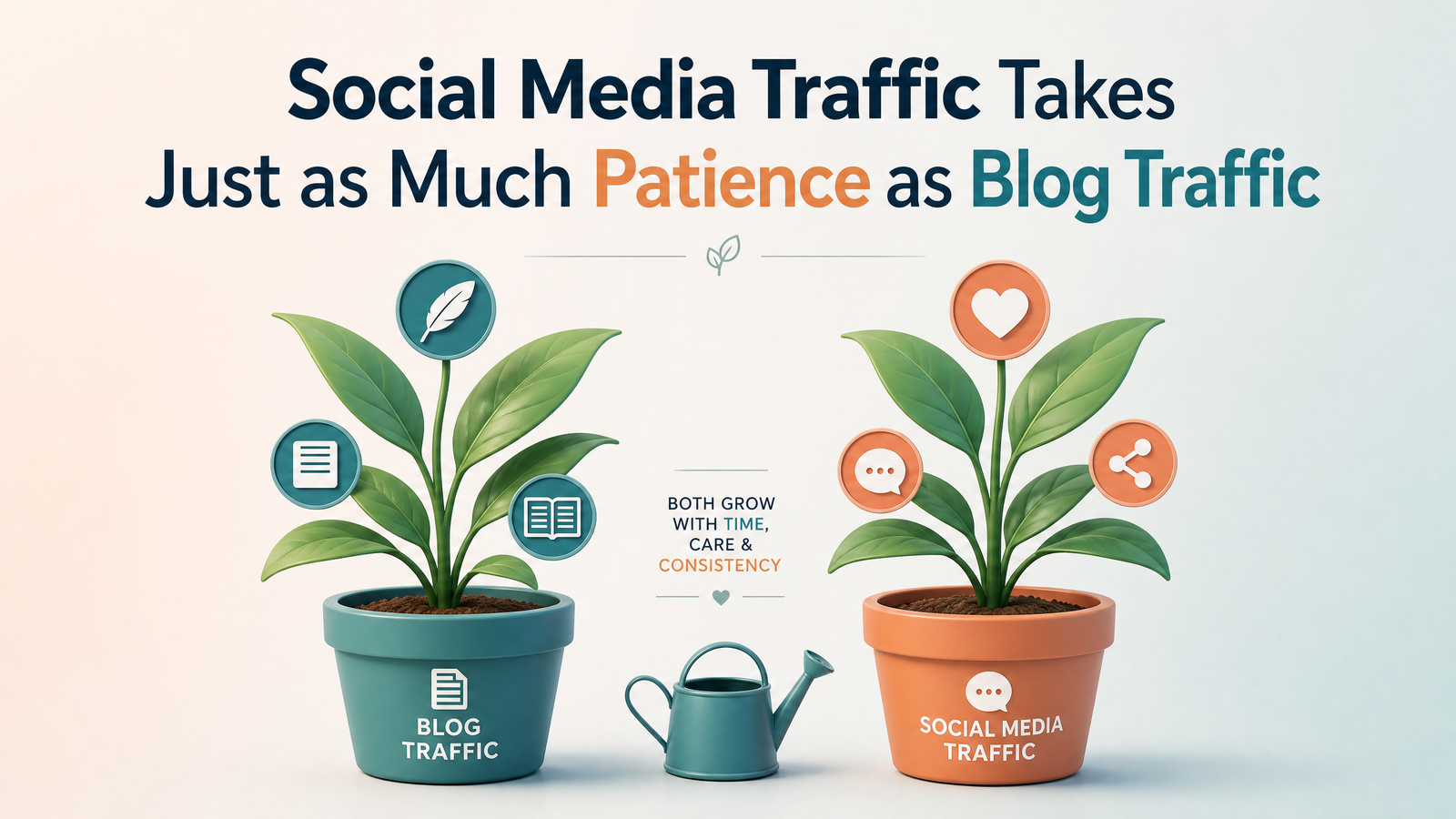
There’s a persistent myth floating around the internet that blogging is the “slow” channel and social media is the “fast” one. Write a blog post, the story goes, and you’ll wait months for Google to notice you. Post on social media, on the other hand, and you can go viral overnight. This idea is comforting, which is probably why it refuses to die. It is also mostly wrong.
Anyone who has actually tried to build a following on a platform like Instagram, TikTok, X, or LinkedIn knows the truth is messier. Yes, a single post can occasionally explode and bring in more views in a day than a blog might see in a year. But that outcome is the exception, not the rule, and it almost never happens to accounts with no history behind them. The overnight viral hit is usually the visible tip of a much longer, much less glamorous process that looks a lot like the slow grind of blogging.
Consider what actually has to happen before an account starts generating meaningful traffic. The platform’s algorithm needs to learn who you are, what you post about, and who tends to engage with it. That learning process isn’t instant. It happens gradually, post after post, as the system gathers signals about watch time, comments, shares, and saves. A brand new account posting brilliant content today is still, in the algorithm’s eyes, an unknown quantity. It has to earn trust the same way a new blog has to earn authority in search engines, one signal at a time.
This is strikingly similar to how search engines treat new websites. A blog doesn’t rank on page one the week it launches, no matter how well written the content is. Search engines want to see consistency, relevance, and engagement signals accumulate over time before they hand over premium placement. Replace “search engine” with “recommendation algorithm” and the story barely changes. Both systems are, at their core, trust-building machines, and trust is not something that can be rushed.
There’s also the audience side of the equation, which is just as slow-moving as the algorithmic side. People don’t follow an account or subscribe to a newsletter after seeing one post. They notice you, forget about you, see you again somewhere else, and only after several of these small encounters do they decide you’re worth following. This is true whether someone is discovering a blog through a friend’s recommendation or scrolling past a creator’s content for the fifth time before finally hitting follow. Familiarity breeds trust, and familiarity requires repetition, and repetition requires time.
What makes social media feel faster is really just a difference in feedback cycles, not a difference in the underlying timeline to real growth. A blog post might take days or weeks to show any sign of traction in analytics. A social post shows its numbers within hours. That immediacy creates an illusion of speed, but immediate feedback is not the same as immediate results. Watching your view count in real time doesn’t shorten the months it takes to build an audience large enough to sustain a business or a career; it just makes the waiting more visible and, often, more agonizing.
There’s a reason so many successful creators, on any platform, describe their first year as mostly invisible. They posted consistently, adjusted based on what worked, and kept going even when the numbers barely moved. That is the same posture required of any blogger who wants to build organic search traffic. Show up regularly.
None of this is meant to discourage anyone from using social media as a growth channel. It works, and for many businesses and creators it works extremely well. But it works on the same terms that blogging does: patient, consistent effort compounding over time, occasionally punctuated by a lucky break that only looks lucky from the outside. Anyone building an audience today, whether through search or through a feed, should plan for a marathon and treat any early sprint as a pleasant surprise rather than the expected outcome.
The best way to make money online long-term is to build digital assets. Learn how here.