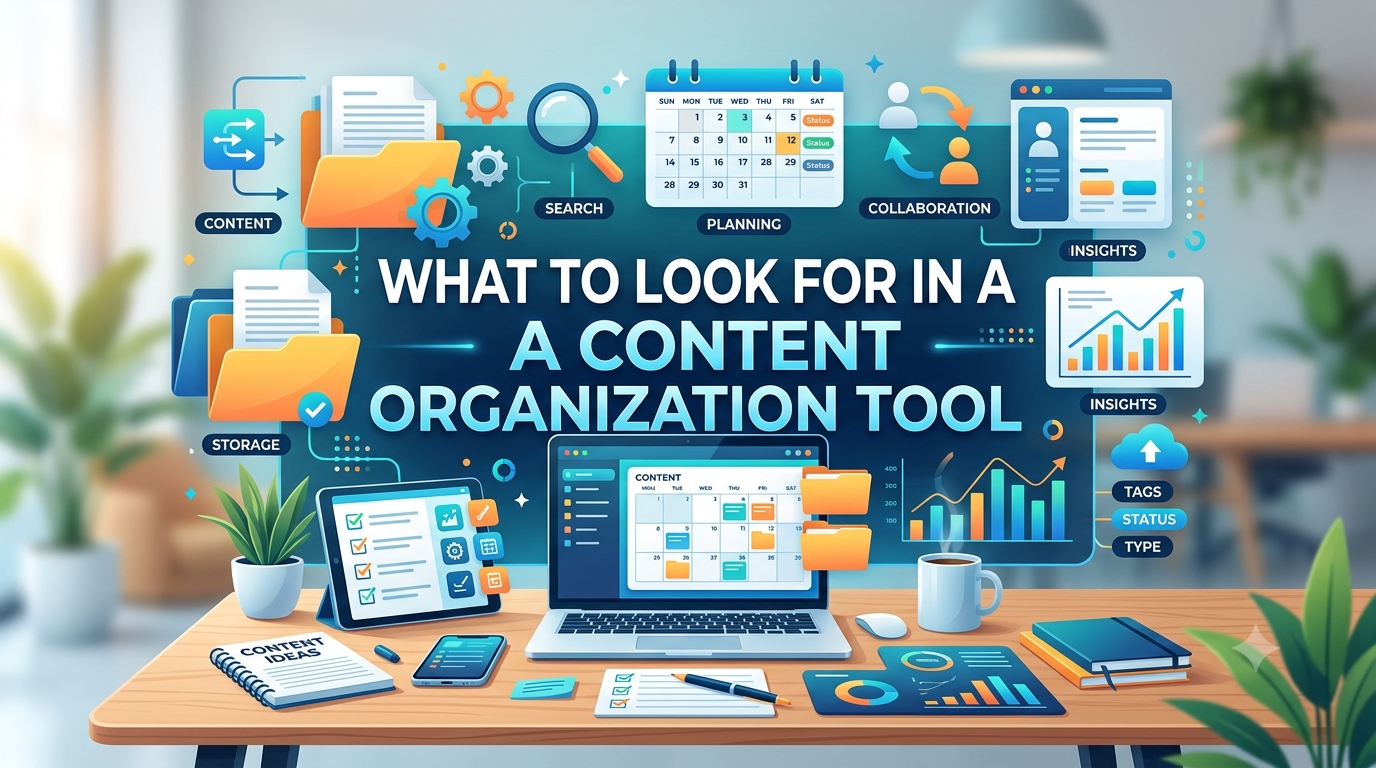
The sheer volume of content we produce and consume daily has turned organization from a nice-to-have into a survival skill. Whether you are managing a personal blog, a marketing department, or a research archive, the tool you choose to structure your work will shape how you think, create, and collaborate. Picking the right one is less about chasing features and more about understanding how you actually work.
Start with the way you capture ideas. The best tools meet you where inspiration strikes, not where you happen to be sitting. A system that forces you to open a specific app, navigate three menus, and tag everything before you can jot down a thought will slowly train you to stop capturing ideas at all. Look for something with low-friction entry points: a quick-add widget, a browser extension, a voice memo that transcribes automatically, or even a simple email-to-inbox feature. The threshold between having an idea and recording it should feel invisible.
Once the ideas are in, they need room to breathe. Rigid folder structures tend to suffocate creativity because they demand that you know exactly what something is before you have fully understood it. A more forgiving approach uses flexible tagging, bidirectional linking, or associative networks that let you connect a piece of content to multiple contexts without duplicating it. This matters because the value of your archive grows not from how neatly it is filed but from the unexpected connections you can draw between seemingly unrelated pieces months or years later.
Searchability is the silent engine of any good system. You will rarely browse for something; you will search for it. If your tool relies on your memory of where you put a file or what you named it, it is already failing you. Full-text search, optical character recognition for images and PDFs, and semantic search that understands synonyms and related concepts are the features that separate a passive storage bin from an active thinking partner. The goal is to find what you need in seconds, not minutes, because every second spent hunting is a second not spent creating.
Collaboration introduces an entirely different set of demands. A tool that works beautifully for one person can become a bottleneck for a team. Shared workspaces, granular permissions, real-time editing, and clear version histories are not luxuries; they are the infrastructure that prevents miscommunication and duplicated effort. Pay attention to how the tool handles conflicting edits, whether it offers comment threads that stay attached to specific content rather than floating in a separate chat, and how gracefully it notifies people without drowning them in noise. The best collaborative tools feel like a shared mind rather than a shared hard drive.
Integration is where a content organization tool either becomes the center of your workflow or an island you constantly have to ferry data to and from. If you live in Google Docs, Slack, Notion, Figma, or a dozen other apps, your organization tool should speak their language. Webhooks, APIs, native integrations, and even simple embed options determine whether your content hub is a source of truth or just another tab competing for attention. The less you have to copy and paste between tools, the more integrity your content retains.
Longevity is an underrated consideration. The tool you choose today is a bet on the future. Startups shut down, acquisition strategies shift, and pricing models change. Open formats, robust export options, and a track record of reliability matter because your content archive is an asset that should outlast any single vendor. If the only way to get your data out is a messy JSON dump or a proprietary file format nobody else reads, you do not truly own your work.
Finally, consider the emotional texture of the tool. This sounds soft, but it is not. You will spend hours looking at this interface. If it feels cluttered, slow, or visually hostile, you will subconsciously avoid it. If it feels calm, responsive, and thoughtfully designed, you will gravitate toward it. The best content organization tools do not just store your work; they invite you back in. They make the act of organizing feel like part of the creative process rather than administrative drudgery.
Choosing a content organization tool is ultimately an act of self-knowledge. It requires honesty about your habits, your team’s dynamics, and the kind of thinking you want to enable. The right tool will not do the thinking for you, but it will clear the path so that your best ideas have space to grow, connect, and endure.