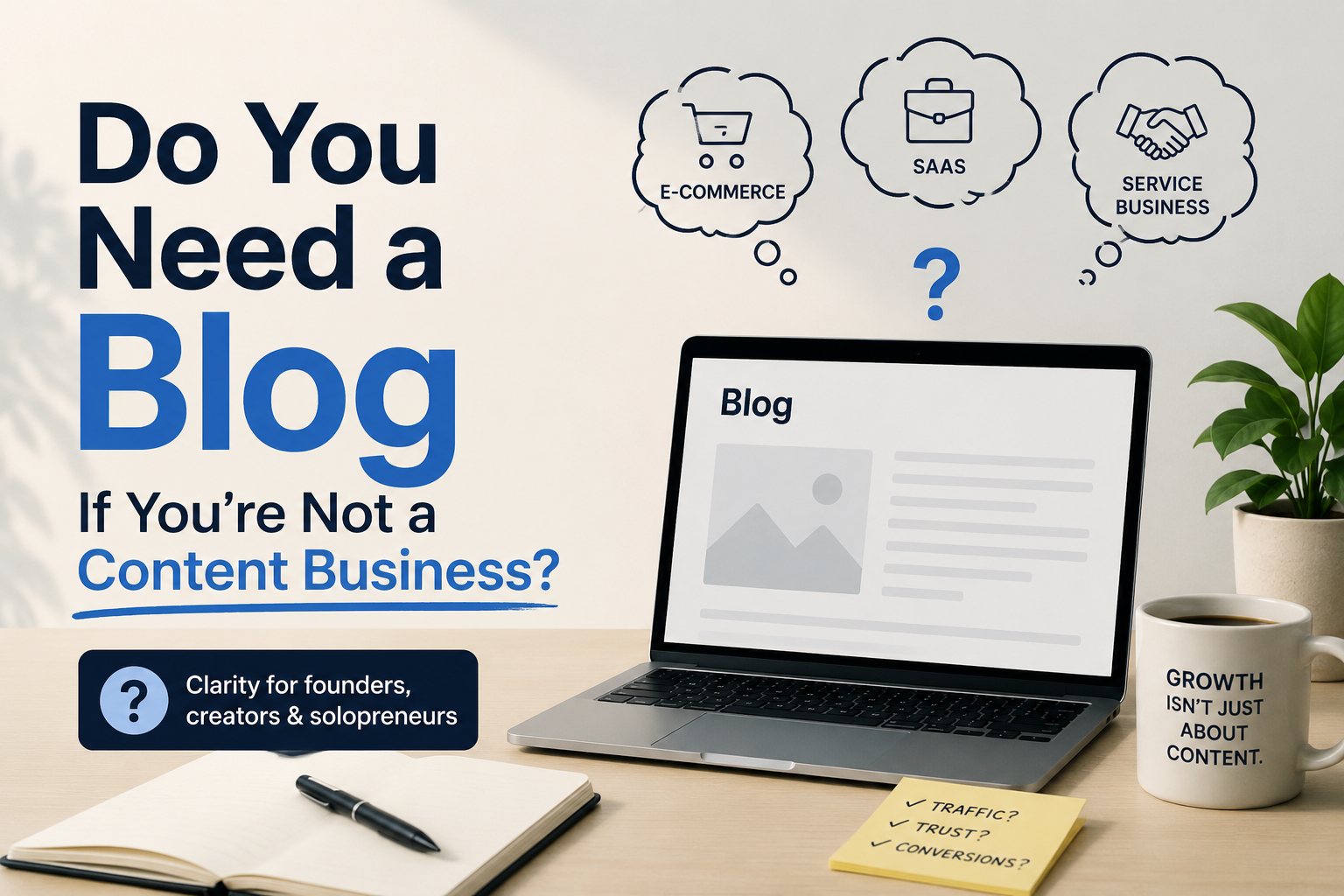
If you run a plumbing company, a dental practice, a boutique law firm, or an online shop selling physical goods, “start a blog” probably sounds like advice for someone else entirely. Bloggers have blogs. Content creators have blogs. You have a business that fixes pipes or sells candles, and becoming a part-time writer on top of everything else can feel like a distraction from the actual work. That instinct is worth questioning, and the honest answer is: it depends on what you want out of it, but for most small businesses, some version of a blog is worth having — even if “blog” isn’t quite the right mental model for what you actually need.
The Real Question Isn’t “Blog or No Blog”
A more useful question is: are there things your potential customers search for online before they’re ready to search for your business by name? If someone searches “how often should I replace my water heater” before deciding to call a plumber, or “how to know if you need a root canal” before choosing a dentist, that search happens whether or not your business shows up in the results. A blog, in this sense, isn’t really about becoming a writer or a content creator — it’s about being present the moment someone forms the question that eventually leads them to hire someone like you.
Businesses that skip this entirely aren’t avoiding content marketing so much as handing that moment over to whichever competitor, forum, or generic article happens to show up instead.
Where a Blog Genuinely Doesn’t Help
It’s worth being honest about when this doesn’t apply. If your business runs almost entirely on foot traffic, local referrals, or word of mouth, and hardly any potential customer ever searches anything related to your service before contacting you, a blog probably isn’t a meaningful use of your time. A hyper-local business with an already-saturated referral network, or one serving a very narrow, well-known clientele, is unlikely to see much practical return from content built to answer a stranger’s search query. In those cases, your time is probably better spent elsewhere.
A blog also won’t help if it’s treated as a box to check — a handful of thin, generic posts published once and never revisited tends to do little for visibility, and can even make a business look neglected to anyone who stumbles across it.Where It Genuinely DoesFor most small businesses with any online presence, though, the case is stronger than the initial instinct suggests, for a few concrete reasons.People research before buying, even for local, in-person services. Someone choosing a dentist, contractor, or lawyer very often looks things up first, even if the final decision comes down to reviews and a phone call. Content answering a real, common question puts your business in front of them earlier in that process, not just at the moment they’re already comparing options.
It builds evidence of expertise that reviews alone can’t provide. Reviews tell a visitor other people liked working with you. A well-written explainer on a topic in your field tells them you actually know what you’re talking about — which matters most in fields where trust and expertise are hard to judge from the outside, like legal, medical, financial, or technical services.
It gives you something to rank for beyond your business name. If the only page of yours that shows up in search results is your homepage, you’re only visible to people who already know to search for you by name. A handful of pages answering real questions in your field gives people who don’t yet know you exist a way to find you.It’s an asset that keeps working after publication. Unlike a social post or an ad, which stops generating anything once you stop paying for it or the algorithm buries it, a genuinely useful page answering a real question can keep bringing in visitors for years with only occasional updates.
What This Should Actually Look Like, If Not a “Blog”
If the word “blog” makes this feel like a mismatch for your business, it helps to reframe it mentally as a resource section instead. The difference is more about mindset than format. Rather than frequent, personality-driven posts, aim for a smaller number of thorough, genuinely useful explainer pages built around the real questions your customers actually ask. Write toward the questions you already get asked in person or over the phone, since that’s usually a faster, more reliable source of topics than guessing at what might rank. Prioritize depth and accuracy over frequency — four excellent pages that truly answer real questions will do more for a small business than forty thin, generic ones. And update the pages that matter most periodically, rather than abandoning them the moment they’re published.
The Time Cost, Honestly
The real objection isn’t whether this works — it’s whether it’s worth the time for a business not built around content. The honest answer is that a small, well-chosen set of pages, written thoroughly and updated occasionally, takes far less ongoing time than the “publish constantly” version of blogging that intimidates most non-content businesses in the first place. There’s no need for a content calendar or a posting schedule — just a handful of pages that genuinely answer the questions your customers already have, built once and maintained lightly, rather than a constant stream of new material.
The Actual Decision to Make
The question worth answering honestly isn’t “should I have a blog.” It’s: do people search for anything related to what I do before they find me, and if so, is anything of mine currently showing up when they do? If the honest answer is no, a handful of well-written, genuinely useful pages is one of the more durable, low-maintenance ways to close that gap — not because every business needs to become a content business, but because the search happens either way, and it’s better to be the answer than to leave that moment to someone else.