Posted on

The Art of Being Vouched For: A Plain-English Guide to Link Building

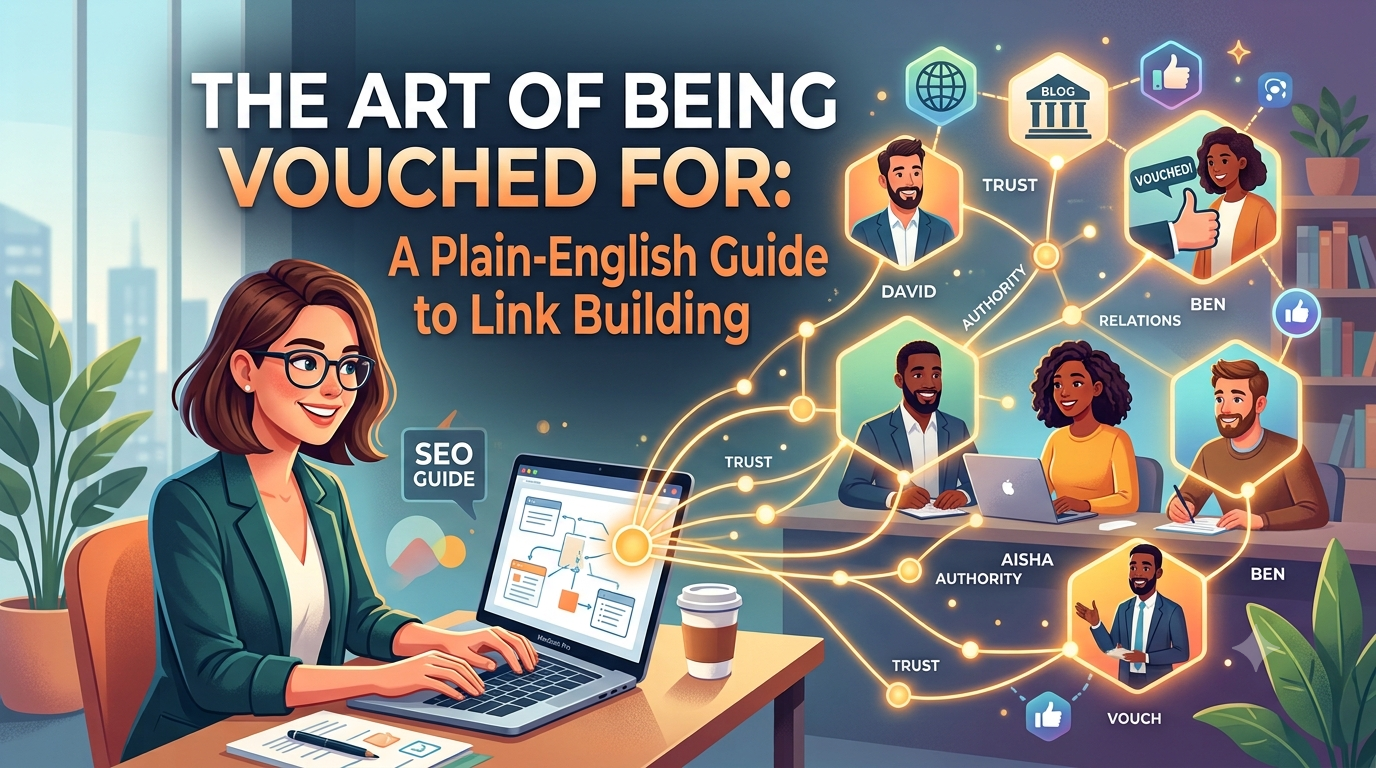
Imagine you’ve just moved to a new city and you’re looking for a good dentist. You could scroll through a directory of every dental practice in town, or you could ask three people you trust for a recommendation. Most of us would choose the recommendation. A trusted person vouching for someone else carries more weight than any self-description ever could. Link building is, at its heart, the digital version of that same process — and understanding it could be one of the most valuable things you do for your business.

What Link Building Actually Is

When another website includes a hyperlink that points to your website, that link is called a backlink. Link building is the practice of earning, cultivating, and sometimes actively pursuing those backlinks from other sites across the internet.

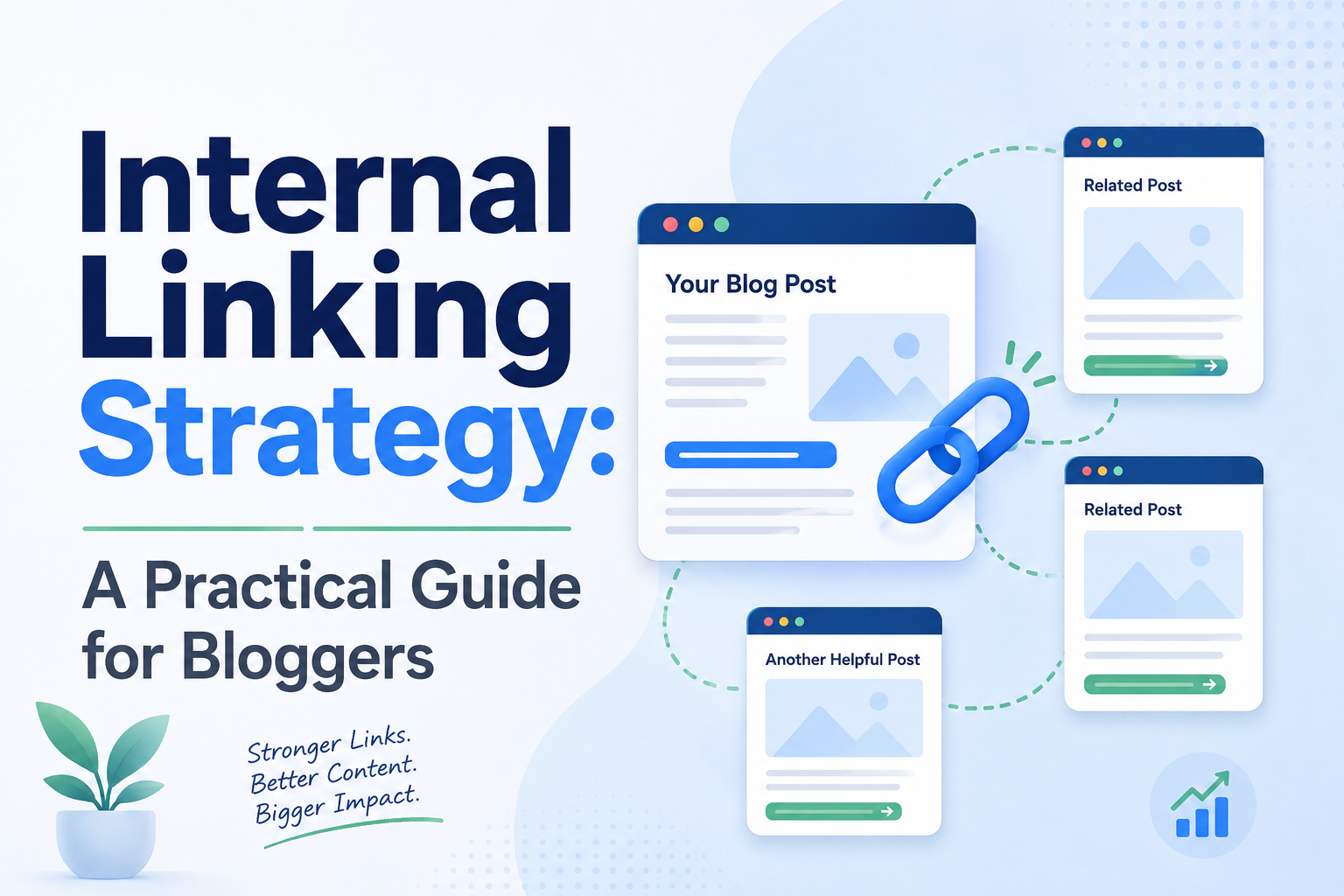
Search engines like Google have, since their earliest days, treated these incoming links as votes of confidence. The reasoning is straightforward: if a reputable, well-regarded website links to your page, it is implicitly telling its own readers — and the search engine — that your content is worth their time. The more of these votes you accumulate, particularly from sources that are themselves trusted and authoritative, the more credible your own site appears in the eyes of the algorithm.

This credibility directly influences where your website appears in search results. A business with many high-quality backlinks will, all else being equal, rank higher for relevant search terms than a business with few or none. And higher rankings mean more people finding you when they’re actively looking for what you sell.

Why It Matters If You’re Selling Something

If you’re promoting a product or a service, visibility is everything. You could have the finest product in your category, priced fairly, presented beautifully — and it means nothing if the people who want it can’t find you. Most people begin their search for a product or service with a search engine, and most of those people click on results from the first page. If you’re not there, you’re functionally invisible to a vast portion of your potential customers.This is why businesses invest in search engine optimisation, and link building is one of the most powerful levers within that discipline. It’s the difference between a shop on a busy high street and the same shop tucked down an alley with no signs. The product might be identical. The foot traffic won’t be.

Beyond raw search rankings, links from respected websites carry their own direct value. When a well-known industry publication, a popular blog, or a trusted review site links to your business, their audience follows. Those readers arrive at your site already primed to take you seriously, because a source they already trust has pointed them your way. That warm introduction is something paid advertising rarely achieves as naturally.

The Difference Between a Good Link and a Bad One

Not all backlinks are created equal, and this is where many businesses go wrong. A link from a major newspaper, a respected trade journal, or a widely-read blog in your industry is worth far more than a hundred links from obscure, low-quality directories that exist purely to host links. Search engines are sophisticated enough to tell the difference, and they reward accordingly.

Worse, certain link-building practices can actively harm your rankings. Buying links in bulk, participating in link schemes, or stuffing your brand into irrelevant comment sections are tactics that search engines have become adept at detecting and penalising. What looks like a shortcut often turns out to be a trap. The businesses that build lasting search presence do so through links they genuinely earned — by producing content worth referencing, by building relationships with people in their industry, and by offering real value that others want to share.

How Businesses Actually Build Links

The most durable link-building strategy is also the most intuitive: create things that deserve to be linked to. This means writing articles that answer questions your customers are genuinely asking. It means publishing research or data that other people in your field will want to cite. It means producing guides, tools, or resources useful enough that bloggers and journalists naturally reach out to them when writing about your topic.

Beyond content, relationships matter enormously. Guest writing for industry publications, being quoted as an expert source in relevant articles, collaborating with complementary businesses on shared projects, and earning coverage through genuine public relations work are all ways that links accumulate organically over time. None of it is fast, and none of it is guaranteed — but all of it compounds. Every quality link you earn makes the next one slightly easier to get, because your site becomes more credible with each one.The Long GameLink building is not a campaign with a start and end date. It’s an ongoing commitment to building your reputation on the internet the same way you’d build it anywhere else — by doing good work, being visible in the right conversations, and earning the trust of people whose trust is worth having.

For anyone serious about promoting a product or service in the long term, this is not optional background noise. It is one of the fundamental pillars of being findable by the people who are already looking for exactly what you offer. The businesses that treat it seriously, and invest in it patiently, tend to find that search becomes one of their most reliable and cost-effective sources of new customers. The ones that ignore it often find themselves perpetually dependent on paid advertising — paying for attention that a well-built reputation would have delivered for free.The internet is not so different from any other community. People follow recommendations. Authority is earned. And the businesses that others point to with confidence are the ones that thrive.

Posted on

The Creative Engine: Why Digital Marketing Lives and Dies by Imagination

There’s a persistent myth in the business world that digital marketing is fundamentally a numbers game. Optimize the click-through rate. Lower the cost per acquisition. A/B test the headline. Run the algorithm. It’s a seductive idea — reduce the messy, unpredictable art of human persuasion to a clean dashboard of metrics — but it misses the point almost entirely. Beneath every impressive number is a creative decision someone made. The data tells you what happened. Creativity is why it happened at all.Think about the last advertisement that made you stop scrolling. It wasn’t the targeting parameters that caught your eye. It wasn’t the media buy or the attribution model. It was a joke that landed perfectly, or an image that felt startlingly honest, or a single sentence that seemed written just for you. Someone imagined that moment before it existed. That act of imagination — conjuring something from nothing that resonates with a complete stranger — is the whole game.

Creativity Is the Strategy

Digital marketers who treat creativity as the decorative layer on top of the “real” strategic work have the relationship exactly backwards. Creativity is not what you apply after you’ve figured out the strategy; it is the strategy made visible. When Spotify wraps up each year with a personalized data story for every listener, that’s not a campaign with a creative execution. The creative idea and the strategic insight are the same thing. The insight — that your listening history is a kind of self-portrait — only becomes meaningful because someone had the imagination to show it to you as a story.

This is what separates brands that consistently break through from those that reliably blend in. The brands that matter don’t find a better channel or a cleverer media mix. They find a more interesting way to be human. They say something unexpected, or they say something ordinary in a way nobody else thought to say it. They treat the audience as a collaborator in a story rather than a target in a funnel. That requires imagination, not just intelligence.

The Digital Canvas Is Richer Than Ever

One reason creativity matters more today, not less, is that the tools available to express it have become extraordinary. A brand can tell a story across a podcast, a short video, an interactive Instagram story, a long-form newsletter, and a physical experience, all in the same week, all speaking to the same emotional truth in different registers. The creative challenge isn’t just coming up with a good idea anymore. It’s composing that idea across formats, letting each medium do what it does best.

A thirty-second video and a two-thousand-word essay are not the same story told at different speeds. They are different experiences. The creative marketer understands this intuitively — that a TikTok asks for spontaneity and intimacy, that email asks for trust and depth, that a billboard asks for a single thought clear enough to survive three seconds at sixty miles an hour. Moving fluidly between these forms, maintaining a consistent voice while honouring the distinct nature of each medium, is a creative skill of the highest order.

When Everything Is Measurable, Imagination Is the Edge

Paradoxically, the rise of performance marketing and real-time analytics has made pure creativity more valuable, not less. When everyone has access to the same targeting tools, the same audience data, the same algorithmic distribution systems, the differentiator can’t be the technology — it has to be the idea. If your competitor can buy the same audience you’re buying, what happens next is entirely down to who said something worth listening to.

Creativity is the one input that can’t be purchased off a shelf or reverse-engineered from a competitor. You can copy someone’s media strategy. You can replicate their channel mix. You can poach their agency. But you can’t copy genuine creative thinking, because genuine creative thinking is always in response to something specific — a particular brand, a particular moment, a particular human truth that nobody has quite articulated yet. It is, by definition, original.

The Human on the Other Side

At the bottom of everything is a person. Not a user, not a consumer, not a demographic segment, but a person who is bored, or worried, or hopeful, or distracted, going about a day that has nothing to do with your brand. Reaching that person — really reaching them, not just appearing in their peripheral vision — requires empathy in the deepest sense. You have to genuinely imagine their inner life. You have to ask what they care about, what makes them laugh, what quietly frightens them, what kind of story they want to be the hero of. And then you have to make something that speaks to that.

That is a creative act. No dashboard tells you how to do it. No algorithm generates genuine empathy. The machine can optimize the delivery of the message once it exists, but the act of imagining the message in the first place belongs entirely to the human who was curious and bold enough to feel something on behalf of a stranger and try to put it into words.

That is digital marketing. Everything else is infrastructure.

Posted on

The Best YouTubers to Watch on Design Principles for Entrepreneurs

Design is one of the most underrated competitive advantages in business. A well-designed brand communicates trust before a single word is read. A thoughtful user experience can be the difference between a customer who converts and one who bounces. Yet for most entrepreneurs, formal design education feels out of reach — too expensive, too time-consuming, or too narrowly focused on craft rather than business outcomes. Fortunately, a generation of educators has built entire schools on YouTube, and the best of them speak directly to the entrepreneurial mind.

The Futur with Chris Do

If you only ever watch one design channel as an entrepreneur, make it The Futur. Chris Do is an Emmy Award-winning designer and the founder of Blind, a brand strategy consultancy whose clients have included Nike, Microsoft, Sony, and Starbucks. But what makes The Futur remarkable isn’t the client roster — it’s the mission: to teach one billion people how to make a living doing what they love.

Chris Do bridges the gap between design craft and business strategy better than almost anyone working today. His content spans branding, pricing philosophy, client psychology, and the deep connection between how something looks and how much people believe it’s worth. For entrepreneurs, his videos on perceived value are particularly powerful — he has a gift for demonstrating that the price someone will pay for your product or service is inseparable from the design signals your brand sends. The channel has built a serious community around the idea that creativity and commerce are not opposites, and his conversations with founders, designers, and business thinkers are some of the most intellectually honest content available for free anywhere online.

Roberto BlakeRoberto Blake started his YouTube channel in 2013 after leaving the corporate world to become a full-time freelance designer and creator, and he has since built a following of over 600,000 subscribers with more than 40 million views. His channel sits at a fascinating intersection: part personal branding tutorial, part creative business coaching, part design education.

What sets Roberto apart for entrepreneurs is his unflinching practicality. He doesn’t just teach you what good design looks like — he teaches you how to turn design fluency into revenue, reputation, and reach. As the founder of Awesome Creator Academy, a coaching platform that has helped hundreds of creators build sustainable businesses, Roberto understands that design decisions don’t happen in a vacuum. They happen inside a business model, a content strategy, and a personal brand. His writing credits in Print Magazine and HOW Design give him deep design credibility, but his entrepreneurial instincts make that knowledge immediately actionable for founders.

Flux Academy (Ran Segall)Ran Segall is a former freelance designer who built Flux Academy into one of the most respected design education platforms on YouTube. His content covers branding, UX design, and the business of running a creative practice — and it does so with a clarity that rewards viewers who are design-curious but not design-trained.For entrepreneurs, Segall’s most valuable content is his work on branding strategy and user experience. He approaches both as problem-solving disciplines rather than aesthetic ones, which makes his lessons immediately transferable to product and business decisions. If you’re building a startup and need to understand why certain design choices build trust while others erode it, Flux Academy is one of the clearest teachers you’ll find. He also regularly covers what it actually takes to run a sustainable design business, making his channel doubly useful if you’re thinking about hiring designers or building a creative team.

Will Paterson

Will Paterson has built an audience of nearly a million subscribers around one deceptively narrow subject: logo and brand design. But within that focus, he covers an enormous amount of ground that matters enormously to entrepreneurs — visual identity, typographic decisions, color psychology, brand style guides, and the strategic thinking behind how great brands communicate who they are before they say a word.What makes Paterson valuable for non-designers is his willingness to deconstruct real client work. He shows the thinking behind the choices, not just the finished result. For entrepreneurs who need to brief a designer, evaluate a logo proposal, or understand why a rebrand isn’t landing the way they hoped, his channel provides a practical vocabulary and a trained eye by proxy. He regularly recommends foundational books on brand identity, including classics like Marty Neumeier’s The Brand Gap, which gives his channel an educational depth that outlasts any single trend.

Fast Company on YouTubeFast Company’s YouTube channel takes a different approach than the channels above — it is journalistic rather than instructional, focused on how design shapes business at scale. The channel features brand evolution case studies for companies like Apple, McDonald’s, and Coca-Cola, alongside interviews with designers and executives about how creative decisions get made inside major organizations.For entrepreneurs, this is essential context. Understanding how design functions inside a larger business strategy — how it responds to market shifts, serves as a competitive moat, or reinvents a brand’s relationship with its audience — is knowledge that most design tutorials never provide. Fast Company’s content asks a different question than most channels: not “how do you make this look good?” but “why did this visual decision succeed or fail in the market?” That question is the one entrepreneurs need to be asking.

A Note on How to WatchThe temptation with educational YouTube is to consume passively — to watch videos the way you’d watch television, absorbing atmosphere without extracting action. The channels above are worth more than that. The most effective approach is to watch with a specific problem in mind. If you’re preparing for a rebrand, spend a week with The Futur and Will Paterson. If you’re trying to understand what your website is communicating about your business, start with Flux Academy. If you want to understand how design creates competitive advantage at scale, Fast Company and Roberto Blake deserve your full attention.

Design is not decoration. It is the language your business speaks before it opens its mouth. These channels will help you learn to speak it fluently — and more importantly, to understand what it’s saying about you.

Posted on

The B2B Niches Projected to Grow the Fastest Between 2026 and 2036

The next decade will not be kind to businesses standing still. Across the global economy, a handful of B2B sectors are on trajectories that would have seemed implausible just five years ago — fueled by AI adoption, climate urgency, post-pandemic infrastructure overhauls, and a fundamental rewiring of how enterprise software is bought and consumed. For founders, investors, and operators deciding where to place their bets, the data points in some very clear directions.

1. Enterprise AI & Large Language Model Platforms

No sector commands more attention right now, and the numbers justify the noise. The global enterprise AI market stood at roughly $114.87 billion in 2026 and is projected to surpass $570 billion by 2035, expanding at a CAGR of around 34% over the forecast period. Within that broader category, the enterprise LLM market is arguably the most explosive sub-niche: valued at $7.57 billion in 2026, it is forecast to reach $91.48 billion by 2036 at a 28.3% CAGR, as businesses move beyond chatbot pilots into production-scale deployments for code generation, customer service automation, and domain-specific analytical workflows.

In the United States, the broader AI market was estimated at approximately $173 billion in 2025 and is forecast to approach $976 billion by 2035 — a near six-fold increase over the decade. North America currently holds around 37% of global enterprise AI revenue, driven by the presence of hyperscalers, a mature venture ecosystem, and enterprise willingness to allocate real budget to AI infrastructure. AI governance and compliance software, a niche within the niche, is growing at 15.8% CAGR from 2026 to 2036, carried forward by the EU AI Act, SEC AI disclosure requirements, and the proliferation of sector-specific mandates demanding auditable AI systems.The structural driver here is a shift from experimentation to obligation. Large enterprises are no longer evaluating AI; they are provisioning GPU clusters, fine-tuning proprietary models, and competing for AI engineering talent. The companies selling the platforms, tooling, and governance infrastructure around that transition are the primary beneficiaries.

2. B2B SaaS

B2B SaaS remains one of the most durable mega-trends in enterprise technology, and estimates for the decade ahead reflect that staying power. Global B2B SaaS revenue was valued at between $311 billion and $650 billion in 2026 depending on the scope of the definition, and is projected to reach anywhere from $1.17 trillion to $4.44 trillion by 2034–2035, with CAGRs cited across major research firms ranging from roughly 16% to 27%. Even at the more conservative end, the trajectory represents one of the most sustained wealth-creation opportunities in B2B history.

The United States continues to dominate as the largest single market, with enterprise adoption of CRM, ERP, and HR platforms accelerating and healthcare SaaS growing fastest within the vertical landscape — forecast at a 26% CAGR through the period. Approximately 62% of large enterprises are now executing SaaS-first IT strategies, and nearly half of all new deployments integrate AI-driven analytics directly into the product. The shift is structural rather than cyclical: IT budgets are being restructured around subscription software rather than on-premise hardware purchases, a transition that shows no sign of reversing.

Supply chain management SaaS, which accounted for roughly $40 billion in 2025, is growing at a 16% CAGR as logistics digitalization and real-time demand forecasting become operational necessities. HR SaaS, valued at approximately $54 billion in 2025, is expanding at around 16% CAGR as hybrid workforce management, compensation planning, and learning platforms scale across distributed enterprise teams. The long-tail of vertical-specific SaaS — platforms designed for regulated industries like financial services, manufacturing, and life sciences — is where a disproportionate share of the premium pricing power lives.

3. Cybersecurity

The economics of cybersecurity are grimly straightforward: as enterprises digitize, the attack surface expands, and spending on protection scales with risk. The global cybersecurity market was valued at approximately $248–340 billion in 2026 across multiple research estimates, and is forecast to reach between $440 billion and $969 billion by 2035, with CAGRs clustering around 12–14%. In the United States alone, the market was estimated at $77 billion in 2025 and is projected to reach approximately $261 billion by 2035 at a CAGR of around 13%.Cloud application security is growing fastest within the category — projected at an 18% CAGR through 2034 — driven by rapid cloud adoption and the shift to remote work creating new exposure vectors. AI-driven threat detection tools are now used by roughly 42% of organizations, up sharply from prior years, and the managed security services segment is expanding faster than product sales as mid-market companies outsource their security operations centers rather than building them in-house.

Crypto security is a notable sub-niche worth watching: valued at approximately $4 billion globally in 2026, it is forecast to reach $28.5 billion by 2036 at a 21.7% CAGR, propelled by institutional digital asset custody requirements and the formalization of crypto compliance under frameworks like MiCA in the European Union. For B2B vendors operating at the intersection of cybersecurity and financial services infrastructure, this is one of the highest-growth addressable markets of the decade.

4. Digital Health & Telehealth Infrastructure

Healthcare technology is undergoing a structural transformation that dwarfs the telemedicine surge of the COVID era. The global digital health market was valued at approximately $397–483 billion in 2026 and is projected to cross $1.17 trillion by 2035, at a CAGR of roughly 11–13%. In the United States, digital health revenue stood at around $98 billion in 2026 and is expected to reach $266 billion by 2035 at an 11.67% CAGR, driven by electronic health record adoption, AI-powered diagnostics, and remote patient monitoring infrastructure.

Telehealth specifically represents the fastest-growing sub-segment within the broader category. Global telehealth revenue was approximately $192–219 billion in 2026 and is projected to reach between $1.27 trillion and $1.4 trillion by 2034–2035, implying a CAGR of around 24–25%. North America contributed approximately $98 billion to global telehealth revenue in 2026 alone, representing roughly 45% of the global market. The United States market is expected to hit $81 billion in 2026 and continue compounding well into the next decade as Medicare reimbursement for virtual care becomes standardized and remote monitoring platforms become core clinical infrastructure rather than supplementary services.

The B2B opportunity within digital health extends well beyond the patient-facing layer. Healthcare providers — hospital networks, integrated delivery systems, and payer organizations — are massive enterprise buyers of clinical workflow software, population health platforms, interoperability tools, and AI diagnostics. Digital transformation in healthcare is estimated to grow at a 12.8% CAGR from 2026 to 2036, making it one of the most consistent long-cycle B2B spending categories available to enterprise software companies.

5. Climate Technology & Green Enterprise Services

The business-to-business climate technology market is now large enough, and moving fast enough, that it belongs in any serious discussion of where B2B growth is concentrated for the next decade. The global climate tech market was valued at approximately $39 billion in 2026 and is projected to reach $209–282 billion by 2034–2035, at CAGRs ranging from 23% to 24.4%. In the United States, the market was estimated at $8.2 billion in 2025 and is forecast to reach $73 billion by 2035 at a 24.44% CAGR — an extraordinary nine-fold expansion driven by the compounding effect of decarbonization mandates, corporate net-zero commitments, and Inflation Reduction Act incentives flowing through enterprise supply chains.

The green technology and sustainability market more broadly — which includes carbon accounting software, ESG reporting platforms, renewable energy procurement services, and smart grid technology — was valued at approximately $25.5 billion in 2025 and is projected to reach $73.9 billion by 2030 at a 23.7% CAGR. The IoT segment within climate tech is expected to represent nearly 29% of market share in 2026, as sensor networks and connected infrastructure enable real-time emissions tracking across manufacturing, logistics, and built environment clients.

More than 130 countries have announced carbon neutrality targets, and the compliance obligations that flow from those commitments are landing squarely on enterprise procurement and operations teams. The B2B companies building the software, services, and measurement infrastructure that helps corporations report, reduce, and offset emissions are selling into a mandatory market — not an optional one. That distinction matters enormously for long-term revenue visibility.

The Common Thread

Across all five of these categories, the structural driver is the same: enterprises are being compelled — by competitive pressure, regulatory obligation, or existential risk — to adopt technologies they previously treated as optional. AI is no longer a pilot program; it is operational infrastructure. Cybersecurity is no longer a cost center discretionary line item; it is a board-level risk obligation. Climate compliance is no longer a PR exercise; it is a procurement and legal requirement. Digital health is no longer a pandemic workaround; it is the primary delivery model for chronic care management.

For B2B operators, the decade ahead rewards those who position themselves inside these structural compulsions rather than selling into discretionary budgets. The revenue forecasts are large, the CAGRs are steep, and the underlying demand is unlikely to reverse.

Market figures sourced from Mordor Intelligence, Precedence Research, Fortune Business Insights, Future Market Insights, Grand View Research, and MarketsandMarkets. Individual research firms use different market definitions and scope parameters, which accounts for variance in reported figures across sources.

Posted on

How To Launch a WordPress Website, For B2B Entrepreneurs

Launching a professional website is one of the most consequential early decisions a B2B entrepreneur makes. It is not merely a digital brochure but the central hub where credibility is established, expertise is demonstrated, and relationships with potential clients begin. WordPress remains the most versatile platform for this purpose, offering the depth and scalability that serious business builders require without demanding that they become professional developers overnight.

The first consideration is hosting. A B2B website must load quickly and remain available without interruption, because a prospect who encounters a slow or broken site will not assume technical difficulties. They will assume unprofessionalism. Managed WordPress hosting is worth the investment for entrepreneurs who would rather focus on their business than on server maintenance. These services handle security updates, backups, and performance optimization automatically, which means the site remains fast and secure without constant attention. The small premium over basic shared hosting pays for itself in reliability and peace of mind.

Once hosting is secured, the foundation of the site is the theme. For B2B purposes, the visual design should communicate competence and clarity rather than creativity for its own sake. A clean, modern theme with generous white space, readable typography, and a logical structure will outperform a flashy, cluttered alternative every time. The goal is to guide visitors toward understanding what the business does and why it matters to them. Many premium themes designed specifically for corporate or service-based businesses include pre-built layouts for home pages, about sections, and service descriptions that can be adapted without starting from scratch. The best themes are also responsive, ensuring that the experience remains polished whether a prospect is browsing on a desktop in their office or a phone between meetings.

Content is where the B2B website truly earns its keep. Every page should answer a question that a potential client is likely asking. The homepage must immediately clarify what the business offers and who it serves. The about page should build trust by conveying the founder’s expertise and the company’s mission in human terms. Service or product pages need to speak directly to the outcomes that clients care about, not just the features being sold. Case studies are particularly powerful in B2B contexts because they transform abstract claims into concrete proof. A well-written case study describes the client’s situation before engaging with the business, the specific actions taken, and the measurable results achieved. This narrative structure allows prospects to imagine themselves in the success story.Search engine optimization should be woven into the site from the beginning rather than added as an afterthought. WordPress makes this manageable through plugins that handle technical fundamentals like sitemap generation, meta description editing, and schema markup. But the real work of SEO is in the content strategy. B2B buyers search with specific intent. They look for solutions to operational problems, comparisons between approaches, and insights that help them make informed decisions. Creating content that aligns with these search behaviors, whether through detailed service pages or a regularly maintained blog, draws qualified traffic that is already interested in what the business offers.

Lead generation is the ultimate purpose of most B2B websites, and WordPress supports this through forms, pop-ups, and integration with customer relationship management systems. The key is to offer something of genuine value in exchange for contact information. A white paper, an industry benchmark report, or a consultation booking can all serve this function. The exchange must feel fair to the prospect. If the content or offer behind the form is thin or generic, trust is damaged and the lead is unlikely to convert into a client. Every form field should be justified by the value being offered, and the follow-up process must be prompt and professional.

Security deserves explicit attention because B2B websites often handle sensitive information. An SSL certificate is non-negotiable, not only for encryption but because browsers now flag unencrypted sites as unsafe, which destroys credibility instantly. Regular updates to WordPress core, themes, and plugins close vulnerabilities before they can be exploited. Strong passwords and two-factor authentication for administrative access are simple measures that prevent the vast majority of unauthorized intrusions. For businesses in regulated industries, additional compliance measures may be necessary, and WordPress can accommodate these through appropriate plugins and hosting configurations.

As the business grows, the website must grow with it. WordPress excels here because its ecosystem of plugins and integrations allows the site to evolve without rebuilding from the ground up. A company that begins with simple contact forms may later need a client portal, a membership area, or e-commerce functionality for digital products. These capabilities can be added incrementally, preserving the investment in the existing site structure and content. This scalability means that the website launched in the early days of the business can still serve it well years later, even as operations become more sophisticated.

The process of building a WordPress site for B2B entrepreneurship is ultimately an exercise in strategic communication. Every choice, from hosting to theme to content, should reflect an understanding of who the ideal client is and what they need to see in order to take the next step. WordPress provides the tools, but the entrepreneur must supply the clarity of purpose. When both are present, the result is a website that works continuously to attract, educate, and convert the right kind of prospects, becoming one of the most valuable assets the business owns.

Posted on

Logic: The Benefit of Choosing to Build a B2B Business

In the world of business-to-business selling, there exists a fundamental advantage that many overlook: the logical accessibility of customer pain points. Unlike consumer markets where desires are often emotional, subconscious, and difficult to articulate, B2B problems tend to sit right on the surface, waiting to be observed and solved. This transparency is not a minor detail. It is the structural reason why selling to businesses can feel more predictable, more rational, and ultimately more efficient than selling to individuals.

Consider how a business operates. Every company is a system of inputs and outputs, of costs and revenues, of processes that either function or fail. When something is wrong, it produces measurable consequences. A manufacturing line slows down and output drops. A customer service team becomes overwhelmed and response times climb. A software integration breaks and data stops flowing between departments. These are not mysteries. They are visible disruptions with traceable causes and quantifiable impacts. A salesperson does not need to probe deeply into the psyche of a procurement manager to discover that late deliveries are costing the company money. The pain is already documented in reports, discussed in meetings, and felt in the quarterly numbers. The job of the seller is not to create awareness of the problem but to present a credible solution to a problem that is already acknowledged.

This logical structure extends to how businesses evaluate potential purchases. A consumer might buy a new jacket because it feels right, because it matches an identity they are trying to project, or because the color caught their eye in a moment of impulse. These motivations are real but elusive. In contrast, a business buyer is typically evaluating a purchase against explicit criteria. Will this reduce our operating costs by the projected percentage? Will it integrate with our existing infrastructure without requiring a full migration? Will it scale as our headcount grows? The decision-making process may involve multiple stakeholders and take months, but the variables are knowable. A skilled B2B seller can map the logic of the sale in advance, anticipating objections about implementation timelines or return on investment and preparing responses that speak directly to those concerns.

The deductive nature of B2B pain points also means that market research is unusually powerful in this space. If you sell inventory management software, you do not need to guess whether your target customers struggle with stockouts or excess carrying costs. Industry benchmarks, trade publications, and even public financial filings will tell you. You can deduce that a mid-sized retailer with twenty locations likely faces coordination challenges that a centralized system could solve. You can infer that a logistics company operating on thin margins is probably sensitive to fuel price volatility and route inefficiencies. These deductions allow you to enter a conversation with relevance and credibility already established, rather than starting from zero and hoping to stumble upon a need.

There is also a compounding effect at work. Because business problems are logical and interconnected, solving one often exposes or alleviates another. When you help a company automate its invoice processing, you do not just reduce manual labor. You also accelerate cash flow, reduce error rates, improve vendor relationships, and free up staff for higher-value work. The seller who understands this chain of logic can articulate a value proposition that grows more compelling the deeper the conversation goes. The pain points are not isolated symptoms but nodes in a network of cause and effect, and a well-designed B2B solution can demonstrate impact across that entire network.

None of this is to say that B2B selling is easy. The sales cycles are long, the stakeholder maps are complex, and the risk of failure is high when a wrong decision can affect hundreds of employees. But the difficulty is different in kind from the challenge of consumer selling. In B2B, you are not trying to manufacture desire. You are trying to align your solution with a need that is already present, already rational, and often already urgent. The pain points are not hidden in the shadows of personal aspiration or social signaling. They are right there in the open, written into the logic of how the business runs. For those who learn to read that logic, B2B offers a clarity that makes the path from first contact to closed deal far more navigable than it first appears.

Posted on

Facebook Is Central to Online Business

Every web master who isn’t posting to Facebook is leaving traffic, trust, and revenue on the table. It is not because Facebook is the newest platform or the most exciting one. It is because Facebook remains one of the largest collections of human attention ever assembled, and ignoring it means ignoring the very people you built your website to serve.When you publish content and never syndicate it to Facebook, you are assuming that your audience will find you on their own. That assumption is costly. Search engines are competitive, and organic discovery takes months or years to build. Meanwhile, billions of people open Facebook every day not because they are looking for your website, but because they are looking for something interesting. Your content could be that interesting thing. A single share from the right person can introduce your work to an audience you would never reach through search alone. Without a Facebook presence, that share never happens.

The missed opportunity is not just about reach. It is about repetition. People rarely buy, subscribe, or trust a website on their first visit. They need to encounter your brand multiple times before they remember it. Facebook gives you a way to stay visible without requiring someone to return to your site directly. Each post is another touchpoint, another reminder that you exist and that you have something worth reading. Web masters who skip this channel are forcing their audience to do all the work of remembering them. Most audiences will not do that work.

There is also a credibility cost. When someone discovers your website and considers whether to trust it, one of the first things they do is look for social proof. A Facebook page with regular posts, comments, and engagement signals that you are active, responsive, and real. An empty page or no page at all signals the opposite. It suggests abandonment, obscurity, or even suspicion. You may have the best content on the internet, but if your only digital footprint is a static website, you are asking visitors to take a leap of faith. A maintained Facebook presence bridges that gap.

Some web masters avoid Facebook because they believe their audience is not there. This is almost always wrong. Facebook’s user base spans every age group, profession, and interest category. Even highly technical or niche audiences use Facebook for groups, events, and community discussion. The question is not whether your audience uses Facebook. The question is whether you are showing up where they already spend their time. If you are not, someone else is.Another common excuse is that Facebook’s algorithm suppresses organic reach, making it pointless to post without paying for ads. It is true that organic reach has declined. It is not true that it is zero. A post that earns genuine engagement still travels. More importantly, even modest reach is better than none. A Facebook post that reaches two hundred people is two hundred people who might not have seen your latest article otherwise. Over time, those numbers compound. The web masters who benefit from Facebook are not the ones who went viral once. They are the ones who showed up consistently, built a small following, and turned casual scrollers into regular readers.

The biggest loss, however, is data and feedback. When you post to Facebook, you learn what resonates. You see which headlines get clicks, which topics spark comments, and which formats people share. That feedback loop is invaluable for improving your website itself. Without it, you are creating in a vacuum, guessing at what your audience wants based on analytics alone. Facebook turns your content into a conversation, and conversations teach you more than page views ever will.

Ultimately, every web master wants the same thing: for their work to matter to someone. Facebook is not a distraction from that goal. It is a direct path to it. The platform is not perfect, and it is not the only place you should be. But it is a place where attention already lives, where trust can be built, and where your next reader is probably scrolling right now. Choosing not to post there is not a principled stand. It is a quiet decision to make your website harder to find, harder to trust, and harder to grow. That is a choice no serious web master can afford to keep making.

Posted on

Don’t Put All Your Eggs in One Digital Basket

There’s a particular kind of dread that every online worker eventually encounters. It arrives without warning — an email, a policy update, a sudden algorithm shift — and in an instant, the income stream you’ve spent months or years building goes quiet. For those who built their entire livelihood around a single source of online income, that moment isn’t just stressful. It can be catastrophic.This is the reality that too few people talk about when they celebrate the freedom of working online. The internet has genuinely democratized the ability to earn money from anywhere, but it has also created a false sense of security around sources of income that are, at their core, remarkably fragile. A freelancing platform can change its fee structure overnight. A content algorithm can be updated and bury your videos or articles without explanation. A single client can vanish. An affiliate program can be discontinued. When your financial wellbeing rests entirely on one of these pillars, you’re not really free — you’re just one bad day away from starting over.The solution isn’t complicated, but it does require intention: build multiple streams of income, and build them deliberately.The False Comfort of “Enough”One of the most common reasons people stick with a single income source is that it’s working. When a freelance writing business is pulling in a comfortable monthly sum, or when a YouTube channel is generating reliable ad revenue, there’s a natural human tendency to stop there. It feels like enough, and building something new feels risky when the current thing is humming along.But “working right now” is not the same as “reliable.” The comfort of a single steady stream can mask just how exposed you actually are. Every online income source exists within an ecosystem controlled by someone else — a platform, a company, an algorithm, a market trend. You are always, to some degree, a tenant rather than an owner. The moment that ecosystem changes, so does your livelihood.Diversifying doesn’t mean abandoning what’s working. It means acknowledging that what’s working today may not work tomorrow, and building accordingly while you still have the runway to do it.What Diversification Actually Looks LikeMultiple income streams don’t need to be entirely separate careers. In fact, the most sustainable approach is to build income sources that grow organically from the same skills, audience, or expertise you’ve already developed.A graphic designer who does client work might also sell design templates on a marketplace, teach a course on typography, or write a newsletter with a paid subscription tier. A developer who builds software for businesses might also generate income from a small SaaS tool, from consulting, or from writing technical content. A content creator on one platform might license their work, speak at events, or create a product their audience wants to buy.The key is that each stream ideally draws from the same well of knowledge and reputation, so maintaining it doesn’t require starting from scratch. You’re not building five separate businesses — you’re building one professional identity that earns in multiple ways.

The Income Spectrum: Active vs. Passive

When thinking about diversification, it helps to think about where each income source falls on the spectrum between active and passive. Active income requires your direct time and effort to generate — client projects, consulting calls, freelance work. Passive income, or more accurately semi-passive income, generates money without requiring your constant involvement — digital products, royalties, membership sites, affiliate content.A well-diversified online income doesn’t have to be all of one or the other. In practice, most successful online earners maintain a mix: active income provides reliable cash flow in the short term, while passive streams compound over time and begin to reduce the pressure on your time. The goal isn’t to stop working — it’s to ensure that your income doesn’t stop the moment you do.

The Psychological Case for Diversification

Beyond the financial logic, there’s a quieter and equally important argument for multiple income streams: peace of mind.

When your entire income depends on a single source, every fluctuation in that source becomes a crisis. A slow month feels existential. A platform change feels like a personal attack. The anxiety of protecting the one thing standing between you and financial instability can narrow your thinking, make you risk-averse in ways that limit your growth, and turn work that once felt exciting into something you cling to out of fear.

When income comes from multiple places, the emotional relationship with each source changes. A slow month on one platform doesn’t spiral into catastrophe when three others are performing normally. You can afford to take risks — to experiment with a new format, drop a client who isn’t right, or take time away — because the entire structure doesn’t collapse if one beam shifts.

Starting Without Overwhelming Yourself

The goal of multiple income streams can feel paralyzing if you try to build everything at once. It doesn’t have to work that way. The most practical approach is to treat diversification as a long game rather than an immediate project.Start by getting genuinely good at the thing you’re already doing. Build the credibility, the audience, the skills, and the reputation that make other opportunities possible. Then, when something adjacent presents itself — a chance to package your knowledge into a product, an invitation to consult, a platform where your content could live — take it. Add one stream, let it stabilize, then look for the next.

Over time, the picture changes. What once felt like a single thread becomes a web, and webs are far harder to destroy than threads.

Working online is one of the great economic opportunities of our time. But freedom that depends on a single source isn’t really freedom — it’s a more comfortable kind of precarity. The people who build lasting, resilient online careers are rarely the ones who found one thing that worked and held on tight. They’re the ones who kept building, kept adding, and never let a single platform, client, or income source become the whole story.

The internet rewards those who treat it as an ecosystem to participate in broadly, not a single machine to feed. Build wide, build thoughtfully, and never let your livelihood rest on just one thing.

Posted on

How to Use Facebook Groups to Grow Your Business

What Are Facebook Groups, Anyway?If you’ve spent any time on Facebook, you’ve probably stumbled into a group or two — a neighborhood community page, a fan club for a TV show, or a forum for people who share a very specific hobby. But beyond the casual scroll, Facebook Groups represent something far more powerful for business owners: a concentrated, self-selected audience of people who are already passionate about a topic that may be directly related to what you sell.

Unlike a Facebook Page, which broadcasts your content outward to followers in a one-to-many format, a Group is designed for two-way conversation. Members can post, comment, ask questions, share experiences, and connect with each other. The result is a community that feels more intimate and engaged than a traditional social media following. Facebook Groups can be public (anyone can find and read them), private (anyone can find them but only members see the content), or hidden (invisible to non-members entirely). For business purposes, all three formats have their uses depending on your strategy.

Groups exist for virtually every niche imaginable. There are groups for first-time homebuyers, sourdough bakers, freelance graphic designers, parents of kids with allergies, vintage watch collectors, and everything in between. And wherever there is a community with a shared problem or passion, there is an opportunity for a business with the right solution.

Why Facebook Groups Matter for Marketing

The conventional wisdom about social media marketing focuses heavily on ads, follower counts, and algorithmic reach. Facebook Groups work on a different principle entirely: trust. When someone joins a group, they are opting into a conversation with like-minded people. The content they see in that group carries more social weight than a sponsored post in their feed because it comes from a peer context.

This trust is the secret ingredient that makes group-based marketing so effective. A recommendation inside a Facebook Group feels more like word-of-mouth than advertising. A thoughtful, helpful response to a member’s question positions you as an authority without feeling like a sales pitch. And when your brand name starts showing up repeatedly in a community people already love, recognition builds organically.There is also an algorithmic reason to take Groups seriously. Facebook has prioritized Group content in its feed for several years, meaning posts from Groups often get better organic reach than posts from Pages. For small businesses with limited advertising budgets, this is a meaningful advantage.

Two Ways to Market in Facebook GroupsWhen it comes to actually using Groups for your business, you have two distinct paths to consider, and the best marketers often use both in tandem.The first is joining existing groups where your target customers are already gathering. The second is creating and managing your own branded group. Each approach requires a different mindset and set of tactics.

Joining Existing Groups: The Art of Showing Up WellThe single most important rule for marketing in groups you don’t own is this: lead with value, not with sales. Groups have administrators who are fiercely protective of their communities, and members can spot a promotional post from a mile away. Dropping a link to your product in a group you just joined is a fast path to being removed — or worse, damaging your reputation publicly.

Instead, approach existing groups the way a knowledgeable friend would. Search for groups where your potential customers are active. If you sell skincare products, find groups dedicated to natural beauty routines. If you’re a financial planner, look for groups around personal finance, early retirement, or millennial money management. Once you’re in, spend time listening before you speak.

Read what members are asking about. Notice where the recurring pain points are. When you have something genuinely useful to contribute — a piece of advice, a resource, an answer to a question — offer it freely without any expectation of an immediate return. Over time, as you become a recognized, helpful presence in the group, members will naturally look at your profile, discover your business, and seek you out on their own terms.

When it is appropriate to mention your business, be transparent about it. Group members respond well to honesty. There’s a real difference between saying “I actually run a small business that makes exactly this type of product, happy to share more if it would help” and dropping an unsolicited promotional link. Transparency turns what could be an awkward sales moment into a natural conversation.

Always review a group’s rules before posting anything promotional. Many groups have specific days designated for business promotion, or explicit guidelines about what kinds of links and mentions are allowed. Following these rules isn’t just good etiquette — it demonstrates that you respect the community, which goes a long way with both admins and members.

Creating Your Own Group: Building a Community Around Your Brand

Running your own Facebook Group gives you a level of control and intimacy with your audience that almost no other platform can match. Rather than renting attention on someone else’s platform, you’re building an owned community — a place where your most engaged customers gather, talk, and learn.

The most effective branded groups don’t feel like an extension of a brand’s marketing department. They feel like a community that happens to be connected to a brand. The distinction matters enormously. If you sell project management software and you create a group called “Project Management Professionals,” focused entirely on tips, career development, and workflow strategies, members will join and engage because of the value the community provides. Your product becomes a natural part of the conversation rather than the point of the conversation.

When setting up your group, think carefully about what it will be for. The clearest groups have a specific purpose that members can articulate in one sentence. “A community for freelance writers to share opportunities, get feedback, and navigate the business side of writing” is specific and compelling. “A group for fans of our brand” is not — unless your brand already has a fervent following, people need a reason beyond loyalty to show up.

Content is the engine that keeps a group alive. In the early days, you’ll need to be the one driving discussions, asking questions, sharing resources, and encouraging others to participate. Over time, as the community grows, members will generate much of this themselves. A healthy group has a mix of owner-posted content (educational posts, product updates framed as news, exclusive offers for members), member-generated content (questions, success stories, recommendations), and interactive moments like polls, live videos, or themed discussion threads.

Consistency matters more than volume. A group where the admin disappears for three weeks at a time loses its sense of community quickly. Even a few posts per week, combined with prompt responses to comments and questions, is enough to signal that the group is alive and cared for.

Turning Group Engagement Into Real Business Results

The goal of all this community building is, ultimately, to support your business. But the connection between group activity and revenue is often indirect, and understanding that relationship helps you stay patient with the process.

Group members who feel genuinely connected to your community are significantly more likely to buy from you, recommend you to friends, and remain loyal customers over time. They give you feedback on your products in real time. They tell you what problems they’re still trying to solve. They become case studies, testimonials, and brand advocates without you ever having to ask.

More directly, you can use your group to announce new products, share exclusive discounts that reward members for their participation, host live Q&A sessions that demonstrate your expertise, or run promotions that drive traffic to your website. Because these offers reach an engaged audience rather than cold traffic, conversion rates tend to be higher than with broad advertising.

The key to making all of it work is the same principle that runs through every piece of advice in this post: treat the community as the point, not the pipeline. When people feel respected and valued rather than marketed to, they become the kind of customers who do your marketing for you.

If you haven’t already, spend an hour this week searching Facebook for groups related to your industry or target audience. Join a few. Read the conversations happening inside. You’ll quickly get a sense of where you can add value and where genuine opportunities exist.

The businesses that build the most loyal followings on Facebook Groups aren’t necessarily the biggest or the best-funded. They’re the ones that show up with something useful to say, consistently, over time. That’s a playing field where any business — at any size — can compete.

Posted on

The Major PPC Ad Networks and the Audiences You’ll Find on Them

Pay-per-click advertising is one of the most direct ways to put your product or service in front of people who are ready to act. But not every PPC network reaches the same person at the same moment in their day. Knowing which platform attracts which kind of customer is the difference between a campaign that pays for itself and one that quietly drains your budget. Here’s a tour of the biggest PPC networks in the world and the audiences that live on each of them.

Google Ads: The Search Giant with Unmatched IntentGoogle Ads is the undisputed heavyweight of PPC advertising, capturing roughly 28% of all global digital ad spend. It operates primarily through two channels: Search, where text ads appear alongside Google search results, and Display, where image and text ads appear across Google’s vast network of partner websites.

What makes Google Search Ads uniquely powerful is purchase intent. When someone types “best running shoes for flat feet” or “emergency plumber near me” into Google, they are not passively browsing — they are actively looking for a solution. This makes Google Search the natural home for businesses whose customers already know they have a need. It works exceptionally well for local service businesses like plumbers, dentists, and contractors; for e-commerce stores selling products with clear, searchable names; for software companies targeting buyers who comparison shop online; and for any business whose category has strong search volume.

The Google Display Network extends reach to over two million websites and apps, placing visual ads in front of users as they read articles, check their email, or watch YouTube videos. The Display network trades the laser-focused intent of search for sheer scale and the ability to reach people earlier in the buying journey. It’s where brands build awareness, re-engage past website visitors through remarketing, and stay visible during long B2B sales cycles.

The customers you find through Google tend to skew older than social media audiences — people who grew up using search engines as their primary research tool. They are often in problem-solving mode, which means they respond well to direct, benefit-forward messaging.

Microsoft Advertising (Bing Ads): The Underestimated AlternativeMicrosoft Advertising runs ads across Bing, Yahoo, and DuckDuckGo, and while its market share is a fraction of Google’s, it reaches a genuinely distinct audience. Bing’s user base tends to be older, with a higher median household income, and skews more heavily toward desktop usage. A significant portion of Bing’s traffic comes from corporate environments where Microsoft Edge and Internet Explorer are the default browsers, meaning professionals in regulated industries like finance, healthcare, and legal services are disproportionately represented.

For advertisers, this means less competition and lower cost-per-click on Bing than on Google — often 20 to 35 percent lower — while reaching an audience that frequently has real purchasing power. B2B marketers in particular find strong performance on Microsoft Advertising because their target buyers are often corporate professionals using Windows machines. Luxury goods, financial products, and home improvement services also tend to perform well here.The platform now integrates with LinkedIn data, allowing advertisers to layer in targeting by job title, company, or industry — a capability that doesn’t exist anywhere else in search advertising.

Meta Ads (Facebook and Instagram): Social Intent at Massive ScaleMeta’s advertising platform spans Facebook, Instagram, Messenger, and the Audience Network, giving advertisers access to over three billion monthly active users. Unlike search platforms, Meta Ads operate on interest-based and behavioral targeting rather than keyword intent. Users on Facebook and Instagram are not searching for your product — they are scrolling through content from friends, family, and creators. That difference shapes everything about how Meta campaigns should be structured and what audiences they can reach.

Facebook’s median user is older than many people assume — the platform skews toward adults in their 30s, 40s, and 50s, many of whom are homeowners, parents, and established professionals. This makes Facebook an excellent channel for home goods, parenting products, financial services, insurance, healthcare, and anything else marketed toward financially stable adults. Facebook’s unparalleled targeting depth — interests, life events, income brackets, homeownership status, purchase behavior — allows for highly precise audience construction.

Instagram draws a younger, more visually oriented crowd. Brands in fashion, beauty, food and beverage, travel, fitness, and lifestyle perform exceptionally well here because the format rewards beautiful creative. Instagram is where brands build desire before demand exists. A customer might not be searching for a new skincare brand, but a perfectly crafted Instagram ad can create the want from scratch.Meta also remains the dominant platform for direct-response e-commerce advertising, particularly through dynamic product ads and catalog campaigns, which show users products they have already viewed on a brand’s website.

Amazon Ads: Commerce Intent at the Moment of PurchaseAmazon Advertising has quietly grown into the third-largest digital ad platform in the world, and it holds a structural advantage no other network can match: its users are already shopping. Someone browsing Amazon is not just aware they might want something — they have their credit card on file and their shipping address saved. The friction between ad impression and completed purchase is lower on Amazon than anywhere else in digital advertising.

Amazon’s Sponsored Products, Sponsored Brands, and Sponsored Display formats target customers at the very bottom of the purchase funnel. The audience is broad in one sense — Amazon reaches hundreds of millions of active buyers — but self-selecting in a crucial way: every person who sees your ad is on the world’s largest shopping platform, actively looking at products. This makes Amazon Ads the go-to channel for consumer packaged goods, electronics, supplements, home goods, toys, apparel, and virtually any physical product sold at retail.

Beyond the obvious e-commerce applications, Amazon’s DSP (Demand-Side Platform) allows advertisers to reach Amazon shoppers off the platform, across the web, using Amazon’s own purchase behavior data. A competitor to Google Display, it targets audiences based on what they have actually bought or browsed on Amazon — a signal far more predictive than passive browsing behavior.

LinkedIn Ads: The B2B Premium NetworkLinkedIn is the only major PPC platform built around professional identity. Its 900 million users have filled in their job titles, industries, seniority levels, company sizes, and professional skills — and LinkedIn’s advertising platform puts all of that data to work for B2B marketers. No other network lets you specifically target “Director of IT at a manufacturing company with 500 to 5,000 employees in the Midwest.”

The trade-off is cost. LinkedIn’s CPCs are among the highest of any PPC platform, often ranging from $5 to $15 or more per click. That pricing is justified for high-value B2B products where a single closed deal is worth tens of thousands of dollars, but it makes LinkedIn uneconomical for low-margin or consumer-facing products.

The customers on LinkedIn are business decision-makers, procurement professionals, HR leaders, engineers, developers, marketers, and executives. Enterprise software, professional services, recruiting tools, financial services aimed at businesses, and industry conferences all find strong audiences here. LinkedIn is also the primary channel for thought leadership content marketing — longer-form sponsored content that positions a company as an authority in its field.

TikTok Ads: Youth Attention at Unprecedented Scale

TikTok’s advertising platform has matured rapidly from an experimental channel into a mainstream performance marketing network. TikTok reaches over a billion monthly active users, with particular depth among Gen Z and younger Millennials. Its algorithm is remarkably effective at surfacing content to interested users, which means ads that feel native to the platform — authentic, fast-moving, and entertaining — can achieve exceptional organic reach on top of their paid distribution.

The audiences that perform best on TikTok are consumers in their teens, twenties, and early thirties who are engaged with culture, trends, and entertainment. Beauty brands, fashion labels, gaming companies, music artists, food and beverage brands, fitness products, and apps targeting young adults all find strong traction here. TikTok Shop has also made it increasingly viable for direct-to-consumer e-commerce, with the platform integrating purchase functionality directly into the feed.

TikTok is less about precision targeting and more about creative quality. The platform rewards brands willing to produce content that genuinely entertains or informs, rather than content that simply announces a product. Campaigns built around creators and trending formats routinely outperform polished traditional ads on TikTok.

Choosing the Right Network for Your Business

The most successful advertisers don’t pick a single platform and ignore the rest — they map their customer’s journey across multiple networks. Search advertising on Google or Microsoft captures demand that already exists. Social advertising on Meta or TikTok creates demand that doesn’t yet exist. Amazon closes demand at the moment of purchase. LinkedIn reaches the professional buyer that no other platform can isolate as precisely.

Understanding who lives on each platform — what they’re doing, what they want, and how far along in the buying process they are — is what transforms PPC from an expense into an investment. The network is just the venue. The audience is the point.