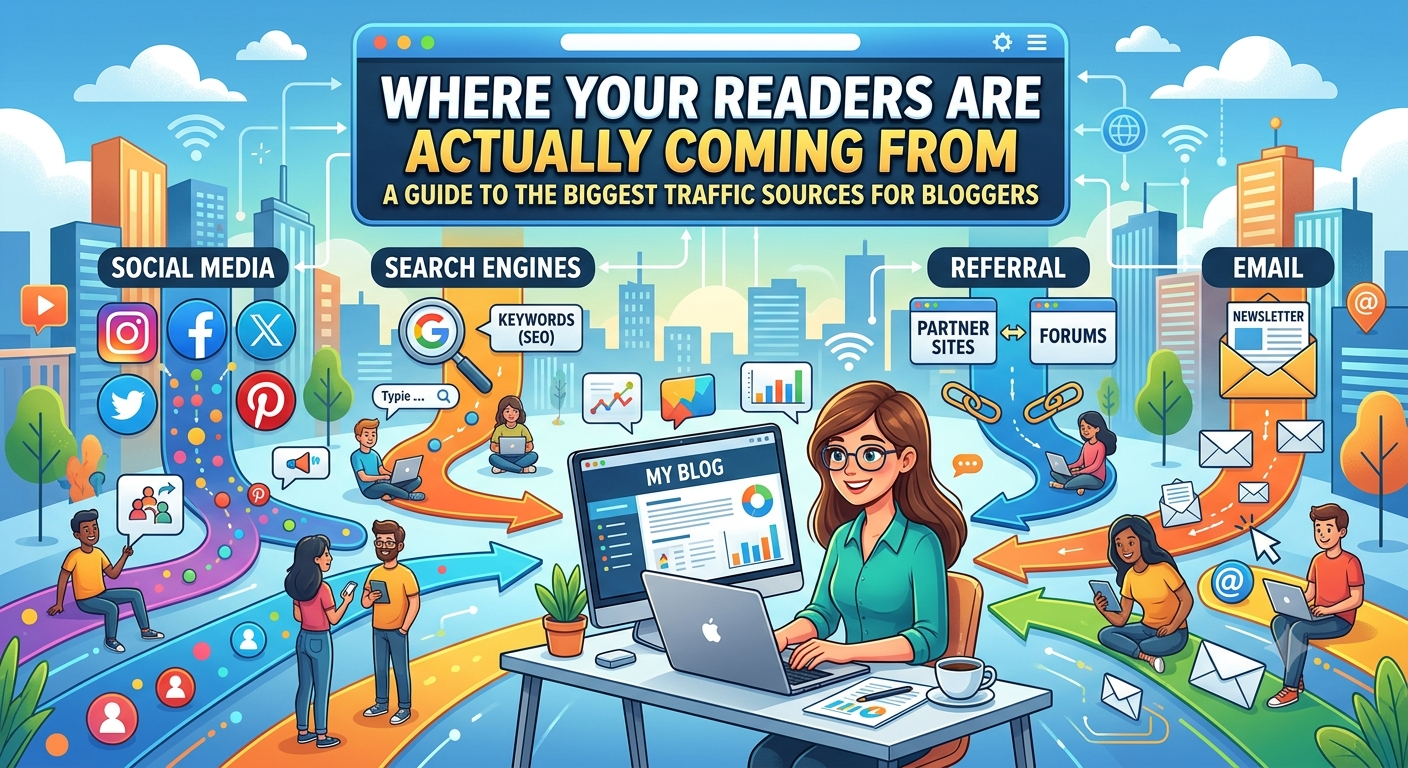
Starting a blog or website is the easy part. Getting people to show up? That’s where aspiring creators get stuck. The internet is vast, and the path from publishing your first post to building a consistent audience can feel overwhelming. But here’s the truth: the majority of meaningful web traffic flows from a small number of well-established channels. Understanding where those channels are and how they work is the most important strategic advantage a new blogger can have.
Search Engines: The Long Game That Pays Forever
Organic search traffic from Google, Bing, and other search engines is the holy grail for most website owners, and for good reason. When someone types a question into a search engine and your article appears in the results, that click costs you nothing. Unlike paid advertising, it doesn’t stop the moment you run out of budget. Unlike social media, it doesn’t disappear into a feed within hours. A well-optimized post can continue driving traffic for months or even years after it’s published.
The discipline behind earning this traffic is called Search Engine Optimization, or SEO, and it revolves around understanding what your target audience is searching for and creating content that genuinely answers those questions better than anyone else. This means researching the exact phrases and questions people type into search bars — known as keywords — and structuring your content around them. It also means earning credibility in the eyes of search engines by accumulating backlinks, which are links from other reputable websites pointing to yours.
The catch, and it’s an important one, is that organic search traffic takes time to build. A new website has no authority in the eyes of Google. It can take anywhere from three to twelve months before you begin seeing meaningful search traffic. This is why so many new bloggers get discouraged and quit before they ever see results. But for those who stay patient and keep publishing quality content, organic search becomes the most scalable and sustainable traffic source available.
Social Media: Fast Reach, Short Memory
Social media platforms represent a very different kind of traffic engine. Where search is slow and durable, social is fast and fleeting. A post on Instagram, X (formerly Twitter), Pinterest, Facebook, or LinkedIn can drive a spike of visitors to your site within hours — but that traffic often fades just as quickly as the post moves down the feed.
That said, social media is far from irrelevant for bloggers. Pinterest in particular functions more like a visual search engine than a traditional social platform, and content on Pinterest can continue circulating and driving clicks for years, making it unusually valuable for bloggers in lifestyle, food, home decor, and travel niches. Facebook Groups remain a powerful way to connect with highly specific communities and share your work with people who are genuinely interested in your topic. And Instagram and TikTok, while they don’t always drive direct clicks, build brand awareness and audience loyalty that can translate into long-term readership.
The key to making social media work for your blog is to choose three to five platforms where your audience actually spends time, rather than trying to maintain a presence everywhere at once.
Email: The Traffic Source You Own
Of all the traffic sources available to bloggers, email is the only one that truly belongs to you. Your social media following can be decimated overnight by an algorithm change. Your search rankings can drop after a Google update. But your email list is yours. It’s a direct line to readers who have explicitly said they want to hear from you.
When you send a newsletter, you’re not competing with an algorithm or hoping that a platform decides to show your content to your followers. You’re landing directly in someone’s inbox. The click-through rates from email newsletters consistently outperform social media by a significant margin, and email subscribers tend to be a blogger’s most engaged, most loyal readers.
Building an email list should be a priority from day one, not something you think about after you’ve already grown an audience. Offering a lead magnet is one of the most effective ways to accelerate list growth. Even a small, engaged email list of a few hundred subscribers can be more valuable than tens of thousands of social media followers who scroll past your posts without clicking.
Referral Traffic: The Power of Other People’s Audiences
Referral traffic comes from other websites linking to yours. This could be a blogger in your niche mentioning your article, a journalist citing your research, or a popular forum thread where someone shared your post. Each of these links sends readers your way and, as a bonus, also signals to search engines that your content is worth paying attention to — which helps your SEO at the same time.
Building referral traffic requires you to step outside the walls of your own website and become part of a broader conversation. Guest posting on established blogs in your niche is one of the most reliable strategies. By contributing a high-quality article to a site that already has an audience, you get your name and your work in front of new readers who might then follow you back to your own site. Podcast appearances, collaborations with other creators, and simply being mentioned in relevant roundup posts all contribute to this stream of incoming readers.
The relationships you build with other bloggers and content creators in your space are often what make the difference between a site that slowly gains momentum and one that stays invisible for years.
Direct Traffic: The Mark of a Real Brand
Direct traffic is the purest signal that you’ve built something people genuinely value. These are your true fans, the readers who don’t need a search engine or a social media algorithm to remind them you exist.
Direct traffic tends to grow slowly in the early days, but it compounds over time. Every reader who has a memorable experience on your site, who saves your URL, who tells a friend about your work becomes a small, self-renewing traffic source. Nurturing this kind of loyalty requires consistent quality, a distinctive voice, and a site that’s genuinely worth returning to.
The bloggers and website owners who build lasting audiences don’t bet everything on a single traffic source. They play the long game with SEO while using social media to create visibility. They build an email list from the start and nurture it carefully. They invest in relationships with other creators and look for opportunities to reach new audiences through referrals and collaborations.
No single channel will grow your site on its own. But together, these sources create a diversified traffic foundation that’s resilient and ultimately unstoppable.