Posted on

The Digital Entrepreneur’s Guide to Audience Communication Platforms

In the modern landscape of online business, the ability to maintain a direct line of communication with your audience is not merely an advantage but a fundamental necessity. Digital entrepreneurs rely on a diverse ecosystem of applications and platforms to build contact lists, nurture relationships, and deliver consistent marketing messages. Understanding the tools available and how they function within a broader strategy can mean the difference between a thriving business and one that struggles to be heard above the noise.

At the foundation of any serious email marketing strategy sits Mailchimp, a platform that has become almost synonymous with the category itself. It offers entrepreneurs the ability to collect subscriber information through customizable signup forms, segment audiences based on behavior and demographics, and automate entire sequences of communications. For those just beginning their journey, Mailchimp provides a generous free tier that allows entrepreneurs to build a list and send regular newsletters without immediate financial commitment. As the business grows, the platform scales alongside it, offering advanced analytics that reveal which subject lines resonate and which calls to action drive conversions.

For entrepreneurs who demand more sophisticated automation and deeper integration capabilities, ActiveCampaign presents a compelling alternative. This platform treats email marketing not as a broadcast medium but as a conversation, enabling users to build complex automation workflows that respond to subscriber actions in real time. When a potential customer visits a pricing page but does not complete a purchase, ActiveCampaign can trigger a targeted follow-up sequence designed to address objections and guide them back to the checkout process. The platform also incorporates a lightweight customer relationship management system, allowing entrepreneurs to track interactions across multiple touchpoints and maintain detailed records of every subscriber’s journey.

ConvertKit occupies a unique position in the market by catering specifically to creators, bloggers, and educators who prioritize simplicity without sacrificing power. Its visual automation builder enables entrepreneurs to design intricate email sequences through an intuitive interface that requires no technical expertise. The platform excels at content-based marketing, making it ideal for those who regularly publish articles, videos, or podcasts and wish to notify their audience automatically when new material becomes available. ConvertKit also offers features tailored to selling digital products, allowing entrepreneurs to deliver downloads and manage access without requiring a separate e-commerce platform.

For those operating within the Shopify ecosystem or running product-focused businesses, Klaviyo has emerged as the platform of choice. It integrates seamlessly with e-commerce stores, pulling in rich data about customer behavior, purchase history, and browsing patterns. This deep integration enables entrepreneurs to send highly targeted communications, such as abandoned cart reminders, post-purchase follow-ups requesting reviews, and personalized product recommendations based on previous orders. The platform’s predictive analytics can even forecast when a customer is likely to make their next purchase, allowing entrepreneurs to time their marketing messages with remarkable precision.

Beyond dedicated email marketing platforms, entrepreneurs increasingly turn to comprehensive customer relationship management systems that incorporate communication tools as part of a broader suite. HubSpot offers a free tier that includes contact management, email marketing, and basic automation, making it an attractive starting point for entrepreneurs who anticipate needing sales and service functionality as their business expands. The platform’s unified database ensures that every interaction, whether it occurs via email, social media, or direct sales contact, contributes to a complete understanding of each audience member.

Salesforce represents the enterprise end of this spectrum, providing a robust platform capable of managing millions of contacts across complex organizational structures. While its full capabilities may exceed the needs of a solo entrepreneur, many growing businesses eventually migrate to Salesforce or similar enterprise solutions as their operations become more sophisticated. The platform’s AppExchange marketplace offers thousands of integrations, allowing businesses to customize their communication stack to meet highly specific requirements.In the realm of messaging applications, WhatsApp Business has transformed from a simple chat tool into a legitimate marketing channel, particularly in regions where email open rates lag behind messaging engagement. Entrepreneurs can create business profiles, set up automated greeting messages, and use broadcast lists to send updates to multiple contacts simultaneously. The platform’s intimacy creates a sense of personal connection that email sometimes struggles to replicate, though entrepreneurs must navigate carefully to avoid feeling intrusive.

Telegram offers similar capabilities with the added benefit of channels, which function as one-to-many broadcast tools where subscribers receive updates without the ability to reply en masse. This creates a clean, uncluttered communication environment ideal for delivering news, announcements, and curated content. Many entrepreneurs use Telegram channels to build communities around their expertise, supplementing their primary email marketing efforts with a more casual, frequent touchpoint.

For entrepreneurs focused on mobile-first audiences, SMS marketing platforms such as Twilio, EZ Texting, and SimpleTexting provide direct access to subscribers’ most personal devices. Text messages boast open rates that dwarf those of email, often exceeding ninety percent within minutes of delivery. However, this power demands responsibility, entrepreneurs must secure explicit consent and deliver genuine value with every message to avoid alienating their audience. These platforms typically offer list management, scheduling, and compliance tools to help navigate the regulatory landscape surrounding text-based marketing.

Push notification services represent another channel for maintaining regular contact without relying on email inboxes. Platforms such as OneSignal and PushEngage enable entrepreneurs to send browser and mobile notifications to subscribers who have opted in through their websites or applications. These tools excel at driving immediate action, announcing limited-time offers, or recapturing the attention of visitors who have left a site. The challenge lies in balancing frequency and relevance, as excessive notifications lead quickly to opt-outs and damaged relationships.

Social media platforms themselves have evolved to include direct communication tools that entrepreneurs can leverage for marketing purposes. Facebook Pages include messaging capabilities that allow businesses to maintain ongoing conversations with followers, while Instagram’s direct messaging features enable personalized outreach to engaged community members. LinkedIn provides similar functionality for business-to-business entrepreneurs, allowing them to nurture professional relationships through targeted messaging and content sharing. However, entrepreneurs should recognize that they do not own these channels in the same way they own an email list, algorithm changes and platform policies can restrict reach or eliminate access entirely.

Community platforms such as Circle, Mighty Networks, and Discord offer entrepreneurs the opportunity to build dedicated spaces where audience members can interact not only with the business but with each other. These platforms combine contact list management with the dynamics of community building, creating environments where marketing messages feel less like advertisements and more like contributions to an ongoing conversation. Entrepreneurs who succeed in these spaces typically focus on delivering value and facilitating connections rather than pushing promotional content.

When selecting the appropriate tools, entrepreneurs must consider several factors that extend beyond feature lists and pricing tiers. The nature of their audience significantly influences platform choice, a demographic that rarely checks email but lives on messaging apps requires a different approach than one that prefers long-form newsletters. The type of business also matters, e-commerce operators need deep integration with their stores, while service providers may prioritize appointment scheduling and lead nurturing capabilities.

Compliance represents another critical consideration. Platforms operating in or serving customers in regions covered by the General Data Protection Regulation, the California Consumer Privacy Act, or similar legislation must provide mechanisms for consent management, data portability, and deletion requests. Reputable email marketing platforms typically handle much of this complexity, but entrepreneurs remain responsible for understanding their obligations and ensuring their practices align with legal requirements.The most successful digital entrepreneurs rarely rely on a single platform or channel. Instead, they construct multi-layered communication strategies that use email as a foundation while incorporating messaging apps, social media, push notifications, and community platforms as supplementary touchpoints. This diversification protects against the risk of any single channel becoming ineffective while allowing entrepreneurs to meet their audience members wherever those individuals prefer to engage.

Building and maintaining a contact list is ultimately an exercise in trust. Every platform mentioned here provides the technical capability to send messages to large audiences, but the technology itself does not create engagement. Entrepreneurs must consistently deliver value, respect subscriber preferences regarding frequency and content, and treat their contact lists as relationships to be nurtured rather than assets to be exploited. The platforms are merely vessels, what they carry, the quality of the communication, the relevance of the message, and the authenticity of the voice, determines whether an entrepreneur’s marketing efforts build a loyal following or simply contribute to the digital noise.

Posted on

What AI Can and Can’t Tell You About SEO

The rise of artificial intelligence tools has transformed how content creators approach search engine optimization, but this transformation comes with important limitations that deserve honest examination. Understanding where AI assistance ends and human judgment becomes essential can prevent costly strategic mistakes.

AI excels at pattern recognition across vast datasets, which makes it remarkably useful for identifying what already ranks well. When you ask an AI tool to analyze top-performing pages for a particular keyword, it can quickly surface common structural elements, typical word counts, recurring semantic themes, and prevalent heading hierarchies. This observational capacity helps content creators understand the competitive landscape without manually reviewing dozens of search results. AI can also generate coherent drafts that incorporate target keywords naturally, suggest related terms that strengthen topical authority, and identify gaps where existing content fails to address user questions comprehensively. For technical SEO, AI tools can audit site structures, flag common issues like missing meta descriptions or broken links, and recommend schema markup opportunities based on content type. These capabilities save considerable time and reduce the mechanical burden of optimization work.

However, AI operates fundamentally as a pattern-matching system trained on historical data, which creates significant blind spots in SEO strategy. Search engines evolve continuously, and ranking factors shift in response to algorithm updates, changing user behavior, and new content formats. AI trained primarily on past data may recommend strategies that worked six months ago but have since lost effectiveness, or worse, may now trigger penalties. The tool cannot experience the web as a user does, so it misses emerging trends in how people actually search, the new questions they begin asking, or the changing contexts that reshape query intent. AI also lacks genuine understanding of business constraints, competitive positioning, and brand voice, which means its recommendations may technically optimize for search while undermining broader marketing objectives.

One of the most dangerous misconceptions about AI SEO tools involves their treatment of search intent. While AI can categorize queries into broad buckets like informational, navigational, or transactional intent, this classification remains superficial. True search intent includes emotional context, the user’s stage in a decision journey, their prior knowledge level, and the specific pain points driving their query. A human content strategist can infer these subtleties from customer conversations, sales feedback, and industry experience. AI can only guess based on patterns in existing content, which means it often reproduces the average rather than identifying opportunities to serve unmet needs. The best SEO strategies frequently succeed by addressing intent angles that competitors have overlooked, a creative leap that pattern-matching systems struggle to make independently.

AI also cannot reliably predict future algorithm changes or anticipate how search engines will weight emerging signals. When Google emphasizes page experience metrics, introduces new structured data requirements, or shifts toward AI-generated overviews in search results, these changes require interpretive judgment about which adjustments deserve immediate investment versus which represent temporary experiments. AI tools may eventually incorporate new guidelines once they become widespread in training data, but they lack the strategic foresight to prepare for shifts before they happen. Human SEO professionals who follow industry communications, participate in professional communities, and study search engine patents can develop intuition about probable directions that no training dataset can replicate.

The relationship between AI and original research presents another critical limitation. Search engines increasingly reward content that demonstrates firsthand expertise, original data, and unique perspectives. AI generates content by synthesizing existing information, which means it cannot conduct original surveys, perform experiments, interview subject matter experts, or observe industry developments in real time. Content that relies entirely on AI generation tends to converge toward the median of existing coverage, creating what some observers call an echo chamber where multiple articles say substantially the same thing. This homogenization may satisfy basic relevance algorithms but rarely earns the backlinks, social shares, and sustained engagement that drive long-term organic growth. The SEO value of genuine originality remains something AI can describe but never produce.

Local SEO and geographically specific optimization highlight additional boundaries. AI tools typically work with generalized data and may not accurately reflect the competitive dynamics of specific regional markets, the influence of local business associations, or the cultural nuances that affect how communities search for services. A restaurant in Tokyo faces different ranking challenges than an identical establishment in Toronto, and these differences require local knowledge that global AI systems cannot fully capture. Hyperlocal content strategies, community engagement tactics, and region-specific citation building demand human presence and relationship building that no algorithm can substitute.

Perhaps the most important limitation involves the strategic integration of SEO with broader business goals. Effective organic search strategy aligns with product roadmaps, sales cycles, customer success initiatives, and brand positioning. AI can optimize a page for keywords, but it cannot determine whether those keywords attract prospects who convert profitably, support strategic market entry, or defend against competitive threats. It cannot negotiate between marketing teams and engineering teams about technical implementation priorities. It cannot recognize when a lower-traffic keyword serves a crucial educational purpose in the buyer journey even though it generates fewer monthly searches than alternatives. These strategic decisions require business context, stakeholder management, and risk assessment that remain fundamentally human activities.

The most productive approach to AI in SEO treats these tools as powerful research assistants and first-draft generators rather than strategic consultants. Use AI to accelerate competitive analysis, overcome writer’s block, identify technical issues, and scale content production for established topics. Then apply human judgment to validate whether the output serves genuine user needs, differentiates from competitors, aligns with brand standards, and supports business objectives. The content creators and SEO professionals who thrive in this evolving landscape will be those who understand exactly where AI capabilities end and where their own expertise becomes irreplaceable.

Posted on

Common Questions About BYOK Pricing

Bring Your Own Key pricing models have become increasingly popular in cloud services and enterprise software, yet they often generate confusion among buyers trying to compare costs across vendors. Understanding how BYOK pricing works requires looking beyond surface-level rates and examining the structural assumptions that shape these agreements.What exactly am I paying for with BYOK pricing?

When you encounter a BYOK model, you are typically paying for the infrastructure, platform management, and operational overhead while supplying your own encryption keys or licenses. The service provider maintains the environment, handles uptime, and manages the software stack, but the cryptographic control or licensed component remains your financial responsibility. This creates a split-cost architecture where your total expenditure combines the provider’s subscription fees with whatever you spend procuring and managing the keys or licenses yourself. Some organizations appreciate this transparency because it separates infrastructure costs from compliance-related expenditures, while others find it complicates budgeting since two distinct purchasing workflows must be coordinated.

Does BYOK always save money compared to fully managed alternatives?

The assumption that BYOK automatically reduces costs deserves scrutiny. While removing the provider’s key management or licensing markup appears to lower the headline rate, the total cost of ownership frequently tells a different story. You must account for procurement staff time, key lifecycle management tools, audit requirements, and the operational burden of rotating or revoking credentials. Organizations with mature security operations and existing key management infrastructure may indeed realize savings, particularly at scale. Smaller teams or those without dedicated cryptography staff often discover that the hidden labor costs erode any price advantage. The break-even point depends heavily on your existing tooling, staff expertise, and transaction volume rather than any universal rule about BYOK being inherently cheaper.

Why do BYOK rates vary so dramatically between vendors?

Price variation stems from how each provider accounts for the risk and complexity of supporting externally managed keys. Some vendors price aggressively because their platform assumes minimal integration touchpoints with your key infrastructure. Others charge premiums because their architecture must accommodate multiple key management service integrations, handle failover scenarios when your key provider experiences latency, or maintain compliance certifications that cover external key scenarios. Additionally, support obligations differ significantly. A vendor that merely allows BYOK configuration but provides no troubleshooting assistance for key-related outages will naturally charge less than one whose service level agreements cover key accessibility issues. Reading the fine print around incident response responsibilities reveals why seemingly comparable BYOK offerings carry different price tags.How should I forecast costs when my key usage fluctuates?

Forecasting challenges represent one of the most frustrating aspects of BYOK pricing for finance teams. Unlike all-inclusive subscriptions where costs remain stable regardless of encryption volume, BYOK models often tie pricing to API calls, active key instances, or data throughput. If your application experiences seasonal spikes or unpredictable growth, your key management infrastructure costs may swing independently of your platform subscription fees. Some providers offer committed use discounts or tiered pricing that smooth these fluctuations, but these require accurate volume predictions. Organizations with volatile workloads sometimes prefer higher fixed-rate BYOK plans specifically to avoid surprise key management bills during traffic surges, accepting a higher baseline rate in exchange for predictability.

Are there compliance costs hidden in BYOK agreements?

Compliance implications frequently escape initial price comparisons. When you bring your own keys, audit scope expands because assessors must examine both the provider’s environment and your key management practices. You may need additional logging, separate monitoring infrastructure, or specialized staff training to satisfy regulatory requirements. Certain frameworks mandate specific key generation standards or hardware security module requirements that limit which key providers you can use, potentially forcing you toward more expensive options than anticipated. The provider’s base BYOK rate rarely reflects these downstream compliance investments, so building a realistic budget requires consulting your security and legal teams about certification maintenance costs before signing.

What happens to pricing when I want to switch key providers?

Vendor lock-in concerns apply differently in BYOK arrangements than in traditional SaaS contracts. While you retain control of your keys, switching key management infrastructure often requires reconfiguring integrations, updating certificate chains, and potentially re-encrypting stored data. Some platform providers charge migration fees or require professional services engagement to validate new key provider integrations. Others impose technical restrictions on which key services they support, effectively limiting your options to a preferred partner ecosystem. Understanding exit costs and key provider portability before committing prevents expensive surprises when your security strategy evolves or when a key provider changes their own pricing.How do I evaluate whether the pricing model fits my organization’s culture?

Beyond pure arithmetic, BYOK pricing suitability depends on organizational structure and risk tolerance. Companies with centralized procurement functions and strict vendor management processes may find BYOK aligns well with their existing workflows. Decentralized organizations where individual teams make infrastructure decisions often struggle with BYOK because it requires coordination between platform users, security teams, and key procurement staff. Similarly, organizations that prioritize operational simplicity over granular cost optimization usually prefer bundled pricing even at a premium. The right choice reflects institutional values about control, transparency, and administrative overhead rather than any objective cost metric alone.

Making informed decisions about BYOK pricing requires looking past the listed rates to understand the full ecosystem of costs, obligations, and structural assumptions that surround these agreements. The organizations that benefit most from BYOK models enter negotiations with clear documentation of their existing key management capabilities, realistic projections of integration labor, and explicit questions about support boundaries during key-related incidents.

Posted on

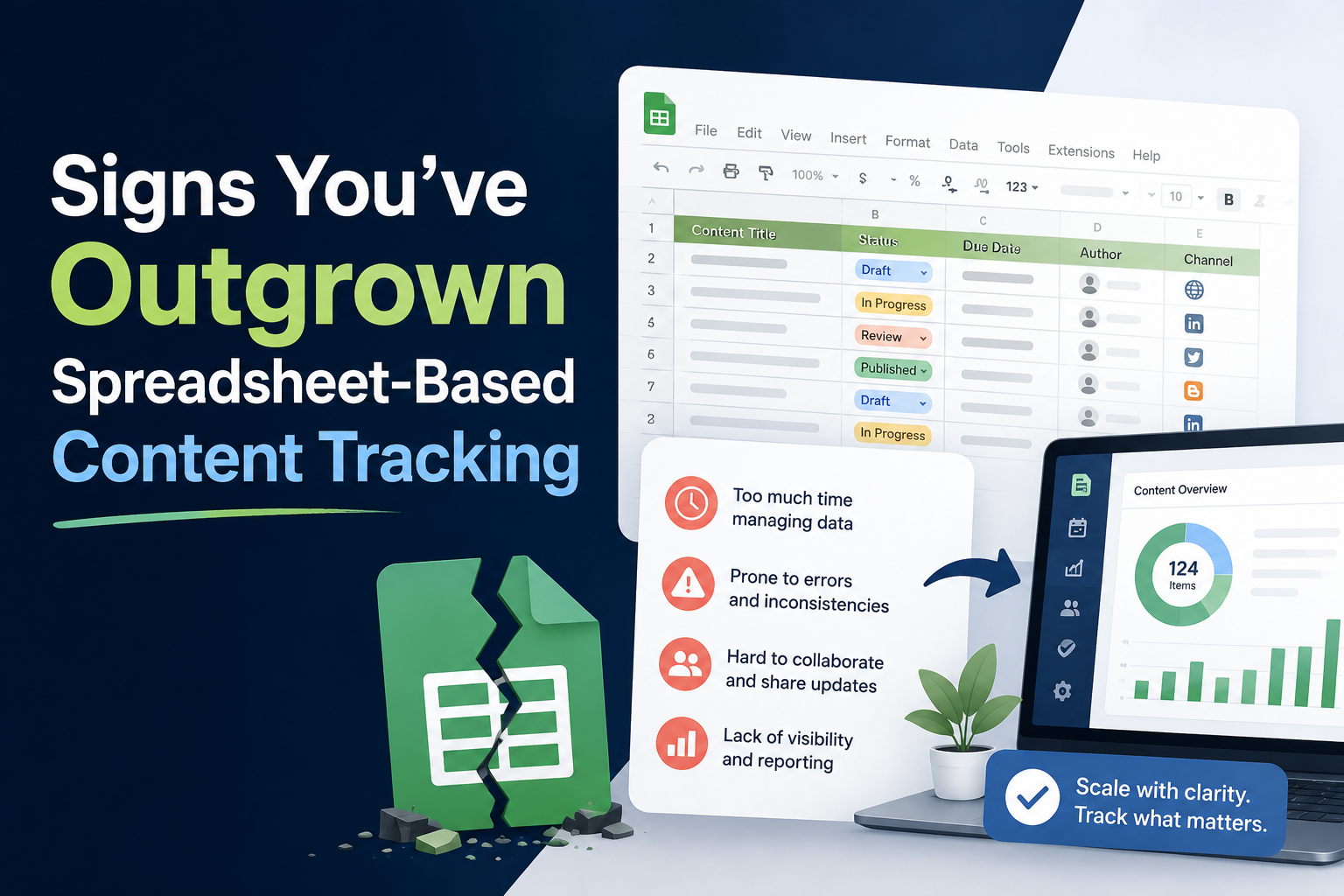
Signs You’ve Outgrown Spreadsheet-Based Content Tracking

Nearly every process described in this series, the content audit, the checklist, the cluster map, has been framed so far as something you could reasonably do in a spreadsheet. That’s deliberate: a spreadsheet is genuinely the right tool for a smaller blog, and recommending anything more complex earlier in this series would have been overkill. This post covers the other side of that same coin: how to recognize when a spreadsheet has stopped being the right tool, and manual tracking has started costing more time than it saves.

Why Spreadsheets Work Well at First

A spreadsheet is transparent, fully under your control, and requires no new tool or cost to start using. For a blog with a few dozen posts, listing every URL, topic, and internal link status in a single sheet is fast to set up and fast to scan, which is exactly why the original audit process covered earlier in this series recommended starting there rather than reaching for a dedicated tool immediately. There’s no reason to complicate a problem that a spreadsheet solves perfectly well.

The First Sign: The Audit Itself Takes Too Long

The clearest, most direct sign of outgrowing a spreadsheet is that the audit process itself, grouping posts by topic, checking for orphans, flagging overlaps, stops fitting into the afternoon it once did. This tends to happen gradually, not suddenly. A blog that took an hour to fully map at fifty posts might take most of a day at two hundred, since the manual pattern-matching involved in grouping posts by actual topical similarity, rather than by title keyword alone, gets slower and less reliable as the number of rows grows. Once a full audit stops being something you can reasonably complete in a single sitting, the spreadsheet isn’t broken, but the manual labor behind it has become the real bottleneck.

The Second Sign: The Spreadsheet Falls Out of Date Immediately

A spreadsheet is only useful if it reflects reality, and keeping it updated requires manually revisiting it every time you publish, merge, or restructure a post. For a small blog, this discipline is manageable. As publishing frequency and post count grow, the gap between what the spreadsheet says and what your site actually looks like tends to widen, since updating it competes for the same limited time as writing new content, and writing new content usually wins. Once you notice you’re making decisions based on a spreadsheet you suspect is several months stale, it’s no longer functioning as a reliable source of truth, which defeats its entire purpose.

The Third Sign: You Can’t Actually See Relationships Anymore

A spreadsheet represents your content as a flat list of rows, which works fine for recording facts about individual posts but doesn’t naturally show relationships between them, which cluster a post belongs to, which posts should link to it, which posts overlap with it. For a small number of posts, you can hold those relationships in your head while looking at the flat list. Past a certain size, the spreadsheet stops being able to represent the actual structure you’re trying to manage, even though every individual fact is technically recorded somewhere in it.

This is a subtler sign than the first two, since the spreadsheet doesn’t feel broken, it just stops being able to answer the questions that actually matter, like which of your twelve coffee-related posts genuinely belong in the same cluster versus which only look related by keyword, or which posts nobody has linked to in over a year, without a slow, manual pass through the whole sheet each time.

The Fourth Sign: You’re Avoiding the Audit Entirely

Perhaps the most honest signal, echoed from earlier in this series, is simply noticing that you’ve been putting off a full audit because the thought of it feels overwhelming rather than routine. A process that once felt like reasonable, occasional maintenance starting to feel like a dreaded, effortful project is a strong sign the underlying method, not just your motivation, has stopped scaling with your blog.

What Replacing a Spreadsheet Actually Solves

The core problem a dedicated tool solves isn’t recording information, a spreadsheet does that fine, it’s the manual reading and pattern-matching required to keep that information accurate and useful as a blog grows. Grouping posts by genuine topical similarity rather than guessed keywords, detecting orphans and overlaps automatically rather than by eye, and surfacing gaps against a full topic map are all tasks that scale poorly by hand but scale well with automation, since the underlying work is fundamentally about reading a large body of text and finding patterns in it, which is a task suited to being done by a model rather than a person once volume passes a certain point.

This doesn’t mean judgment disappears. Deciding which post should be the pillar candidate for a cluster, or which specific angle a content gap deserves, still benefits from your own knowledge of your audience and your own writing strengths, in the same way the AI-and-content-strategy post discussed earlier in this series. What changes is who does the tedious groundwork feeding into that judgment: you, manually, row by row, or a tool that does the grouping and flagging so your time goes toward the decisions a spreadsheet was never actually helping you make in the first place.

A Rough Threshold, Not a Hard Rule

There’s no exact post count where a spreadsheet universally stops working, since it depends on how much time you have available and how complex your site’s topic structure is. As a rough guide, many solo bloggers start feeling real friction somewhere between one and two hundred posts, particularly if those posts span several distinct topic areas rather than one narrow niche. Below that range, a spreadsheet, used consistently, is probably still the right tool. Above it, the time cost of keeping it useful tends to start exceeding what a dedicated process would cost instead.

Recognizing This Isn’t a Failure

It’s worth being clear that outgrowing a spreadsheet isn’t a sign you did anything wrong earlier. A spreadsheet was the right tool at the size your blog used to be, in the same way a one-time SEO tool purchase, discussed in the ROI evaluation post earlier in this series, is worth evaluating against what it genuinely saves you now, not against some abstract standard of what a “serious” blogger should be using from day one. The right tool for a task changes as the task’s scale changes, and recognizing that shift honestly is more useful than either sticking with a spreadsheet out of habit or adopting a complex tool before you actually need one.

The next post in this series looks at a related but distinct question: how the right tooling choice differs for a solo blogger versus an agency managing content across many different sites at once.

Posted on

A Beginner’s Guide to Topical Authority

Topical authority is one of those SEO terms that gets used constantly without being defined clearly very often. It’s also, in a real sense, the underlying idea this entire series has been building toward from a different angle each time: clusters, pillar pages, internal linking, and site architecture are all, in practice, mechanisms for building topical authority. This post steps back and defines the concept directly, so the rest of the series has a clearer frame to sit inside.

What Topical Authority Actually Means

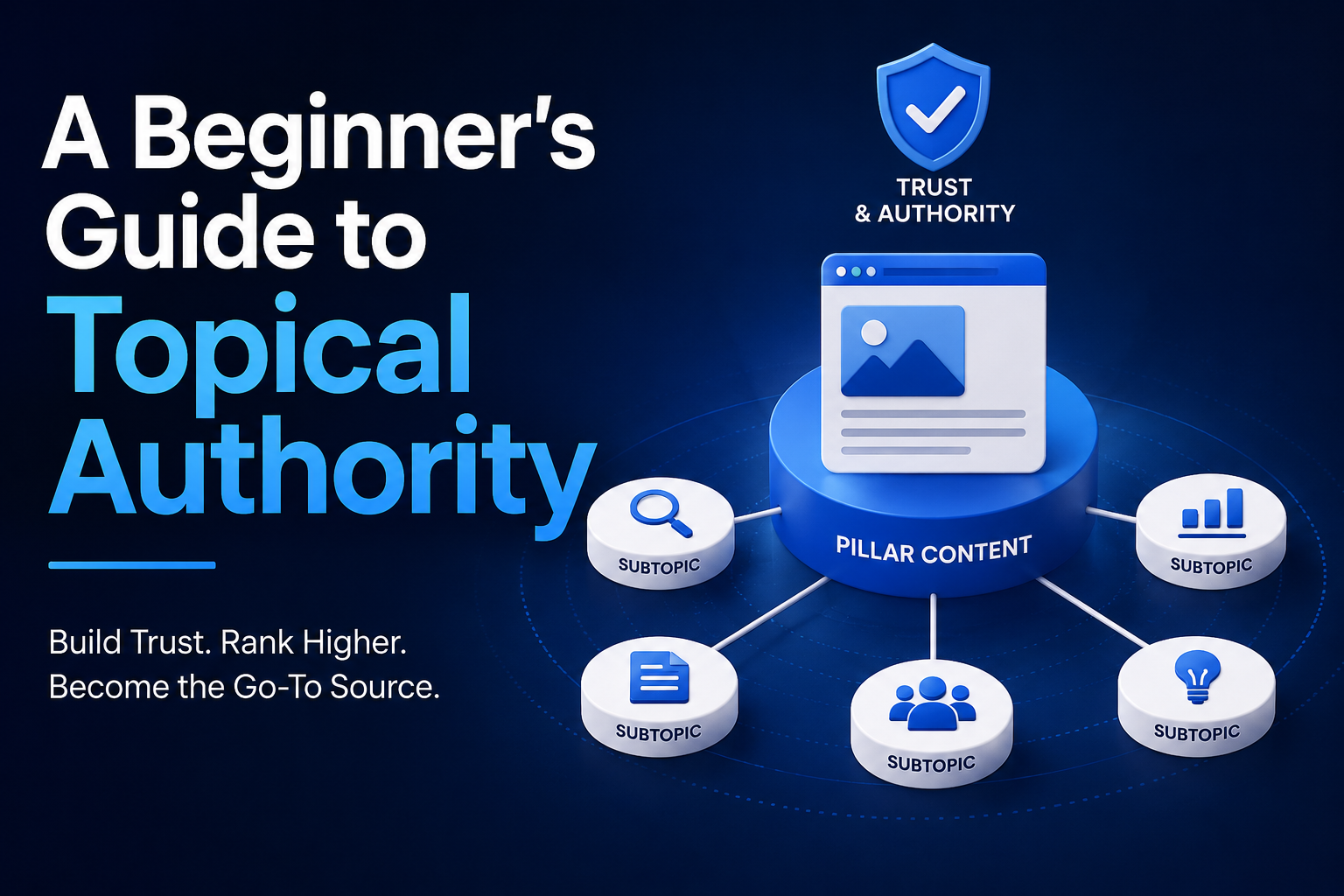
Topical authority describes how comprehensively and credibly a website covers a given subject, as judged by search engines based on the full body of content a site has published on that subject, not just the merits of any single page. A site that has published one excellent article about home coffee brewing has a good article. A site that has published thirty interconnected, well-organized articles covering brewing methods, equipment, technique, and troubleshooting has topical authority on coffee brewing, and search engines increasingly treat that difference as meaningful when deciding which site to rank for a given query.

The important distinction is that topical authority is a property of the site’s coverage as a whole, not of any individual post. This is why a single outstanding article sometimes struggles to outrank a merely decent article on a site that has demonstrated much broader depth on the same subject.

Why Search Engines Reward Depth Over Isolated Quality

The reasoning behind this is fairly intuitive once stated plainly. A searcher who finds a single good answer to their immediate question, but discovers the site has nothing else useful when they have a related follow-up question, has a worse overall experience than a searcher who lands on a site that can answer their immediate question and several reasonable follow-ups besides. Search engines have gotten progressively better at recognizing this pattern across a whole domain, rather than evaluating each page in isolation, which is part of why topical authority has become a more explicitly discussed concept in SEO in recent years, even though the underlying idea, comprehensive coverage builds trust and rankings, isn’t new.

How Topical Authority Relates to Everything Else in This Series

Every major concept covered earlier in this series is, in practice, a tool for building topical authority. Content clusters, covered in the opening post of this series, are the structural unit through which topical authority gets built, one coherent group of interconnected posts at a time. Pillar pages, covered later in this series, are the mechanism that makes a cluster’s depth legible to both readers and search engines in a single, comprehensive hub. Internal linking, covered in its own post, is what actually connects a cluster’s individual pieces into something search engines can recognize as a coherent, interrelated body of work rather than a pile of separately indexed pages. Site architecture, covered further along in this series, extends this same logic to the whole site, showing how multiple topical-authority clusters fit together.

Understood this way, topical authority isn’t a separate tactic on top of everything else in this series, it’s the outcome that all of it is aimed at producing. A blog that’s done the clustering, linking, and architecture work well has, more or less by definition, built meaningful topical authority on the subjects it covers.

What Topical Authority Is Not

It’s worth being precise about what this concept doesn’t mean, since it’s easy to over-apply. Topical authority isn’t simply a function of how many posts a site has published on a subject, regardless of quality or organization. A blog with two hundred loosely related, poorly linked, and partially duplicated posts on a topic doesn’t necessarily have more topical authority than a smaller, tightly organized set of forty posts covering the same ground clearly and without overlap. Volume without structure is closer to the disorganized-blog problem this series opened with than it is to genuine authority.

It’s also not the same thing as domain authority or overall site size in a broad sense. A large, well-established site can have strong topical authority on some subjects and essentially none on others, if its coverage of those other subjects is thin, scattered, or disconnected from any coherent structure. Topical authority is specific to a subject area, not a blanket property of a domain as a whole.

How to Tell Whether You’re Building It

There’s no single metric that directly reports “topical authority” the way Search Console reports clicks or impressions, but several patterns suggest it’s developing well for a given subject on your site. Rankings across a wide range of related queries within a topic, rather than just one or two exact-match terms, tend to improve together as a cluster matures, since comprehensive coverage naturally surfaces for many different phrasings of related questions. New posts within an already well-established cluster also tend to rank faster and more easily than posts on a completely new, unestablished topic, since they’re benefiting from the credibility the existing cluster has already built. And readers arriving through one post in a well-linked cluster tend to browse into other posts within that same cluster at a noticeably higher rate than on a topic where the site’s coverage is thin or disconnected.

Building Topical Authority as a Deliberate Practice

Given that topical authority is really the sum of good clustering, linking, and architecture rather than a separate tactic, the practical path to building it is exactly the process this series has walked through from the start: honestly audit what you currently have, organize it into coherent clusters with real pillar pages at the center, link deliberately rather than incidentally, and maintain the structure over time rather than letting it decay, as covered in the content decay post earlier in this series.

For a solo blogger, this also argues for concentrating effort on fewer topics covered thoroughly rather than spreading the same amount of writing time across many loosely related subjects. A blog with genuine topical authority on three subjects will generally outperform, and be easier to build, than a blog attempting shallow coverage of ten, echoing the guidance on reasonable pillar counts from the site architecture post earlier in this series.

The Long Game

Topical authority isn’t something that shows up after a single well-organized push. It builds gradually, as a cluster accumulates more comprehensive coverage, more internal links, and more sustained relevance over months and years, which is part of why the maintenance habits covered throughout this series, regular audits, prioritized fixes, periodic content refreshes, matter as much as the initial structural work. A cluster built well once and then abandoned will see its topical authority gradually erode as competitors keep building, in the same way any individual post experiences decay when left untouched indefinitely.

The next post in this series returns to a more tactical, page-level concern: header structure and why getting it right matters both for readers skimming a page and for how clearly a page’s structure communicates to search engines.

Posted on

Schema Markup for Bloggers: What’s Worth Doing

Schema markup has always been one of those SEO tasks that sounds more important than it usually turns out to be for a typical blog. It’s also a topic that’s shifted meaningfully in 2026, after Google quietly retired two of the schema types bloggers relied on most. This post covers what schema markup actually is, what’s genuinely worth implementing right now, and what to leave alone despite years of advice telling you otherwise.

What Schema Markup Actually Does

Schema markup is structured code, usually written as JSON-LD, added to a page to explicitly tell search engines what a piece of content represents: this is a recipe, this is a product with a price, this is an article by a specific author published on a specific date. Search engines can often infer a lot of this from the visible page content alone, but explicit markup removes ambiguity and, for certain types, unlocks specific visual treatments in search results known as rich results.

It’s worth separating these two functions clearly, because the events of the past few years have made that distinction matter a great deal. Schema markup as a machine-readable description of your content is one thing. Rich results, the visual dropdowns, star ratings, and expandable panels that markup can sometimes trigger, are a separate thing that Google controls entirely and can remove at will, independent of whether the underlying markup remains valid.

The Big Change: FAQ and HowTo Rich Results Are Gone

For years, FAQ schema was one of the most commonly recommended tactics for bloggers, since it could trigger an expandable question-and-answer dropdown directly under a search listing, giving a result significantly more visual space on the page. As of May 2026, that’s over. Google has fully retired FAQ rich results in search, following a multi-year narrowing that had already restricted the feature to a small set of government and health sites back in 2023. Google is also removing the related Search Console reporting and Rich Results Test support in stages through mid-2026.

This follows the same path rich results took years earlier, when that format was pulled from desktop search entirely back in 2023 and largely lost its remaining relevance since. If you’ve been adding FAQ or HowTo schema to win extra visual space in search results, that payoff no longer exists, regardless of how well-implemented the markup is.

Importantly, Google has been clear that this is a change to what displays in search, not a penalty against the markup itself. FAQPage remains a valid schema.org type, existing markup won’t cause errors or ranking harm, and other search engines and AI crawlers still parse it. There’s simply no visual reward left for adding it purely for that purpose.

What This Means Practically for a Blogger

If your blog has FAQ schema sitting on pages where the FAQ content is genuinely useful to readers, there’s no urgency to rip it out. Google has said explicitly that unused structured data doesn’t harm a site, so leaving accurate, still-relevant markup in place is a reasonable, low-effort choice. What’s worth reconsidering is adding new FAQ schema purely as an SEO tactic going forward, since the primary reason bloggers adopted it, the SERP dropdown, no longer exists.

The takeaway, echoed across most current coverage of this change, is that the value was always in having clear, well-organized question-and-answer content on the page itself, something a reader benefits from and something AI systems can still parse and cite regardless of whether formal schema markup wraps around it. Writing a genuinely useful FAQ section as part of a post’s content remains worthwhile. Adding the JSON-LD wrapper around it purely to chase a rich result that no longer exists is not.

What Still Works and Is Worth Doing

Several schema types continue to produce rich results and remain worth a blogger’s time. Article schema, describing a post’s headline, author, publish date, and last-updated date, remains supported and has taken on additional importance as a signal for AI-generated search summaries, which increasingly look for clear authorship and freshness signals when deciding what to cite.

Review and Aggregate

Rating schema, which can produce visible star ratings in search results, remains fully supported and is worth adding to any post that includes a genuine review or rating of a product, book, or service. BreadcrumbList schema, showing a page’s position within your site hierarchy directly in the search result, remains supported and reinforces the kind of site architecture discussed earlier in this series in a way that’s directly visible to searchers.For a blog that publishes recipes, Recipe schema also remains a strongly supported, high-value type, since it’s tied to a rich result format that continues to perform well and gives visible information, like cook time and ratings, that meaningfully influences click-through.

The Pattern Behind Google’s Recent Changes

It’s worth understanding why this happened, since it informs how much to trust any given schema type’s long-term value going forward. Google has been steadily narrowing the set of structured data types that produce visible rich results, retiring several underused or frequently-abused formats over the past few years alongside FAQ and HowTo. The consistent reasoning given is reducing visual clutter and removing formats that weren’t reliably adding value for searchers, rather than any broader retreat from structured data as a concept.

This suggests a reasonable working assumption for a blogger deciding where to invest schema effort: types tied to genuinely valuable, differentiated information, like a real product review with a real rating, or a real recipe with real cook times, are more durable bets than types that were mainly being used to win extra screen space regardless of whether the underlying content justified it. Rich results tied to a specific commercial or content value tend to survive these periodic prunings better than ones that became popular mainly as a visibility hack.

Schema and AI Search: A More Careful Claim Than It Sounds

A lot of current advice suggests schema markup, and complete Article schema in particular, helps content get cited in AI-generated search summaries like Google’s AI Overviews. This is worth treating carefully rather than as a settled fact. Google’s own guidance on AI features states there’s no special schema required for AI Overviews or AI Mode specifically, though structured data should still accurately match the page’s visible content. Independent research has also found no clear correlation between schema markup coverage and citation rates across AI platforms, suggesting that clear, well-organized visible content is doing more of the actual work than the markup layer itself.

The more defensible position is that structured data is a low-cost way to make already-good content more clearly machine-readable, not a shortcut that makes weak content perform better in AI-driven search. If a post’s actual content clearly answers a question in plain, well-organized prose, that clarity likely matters more to both traditional rankings and AI citation than whether a JSON-LD block sits alongside it.

A Practical Approach for a Solo Blogger

Given all this, a reasonable schema strategy for most blogs in 2026 is fairly narrow. Add Article schema consistently across posts, since it’s cheap to implement, remains supported, and plausibly helps with both traditional search presentation and AI-driven citation. Add Review schema on any post that includes a genuine product or service review, since the star-rating rich result remains a real, visible benefit. Add Recipe schema if your blog publishes recipes, for the same reason. Beyond that, don’t chase additional schema types purely because a guide recommends them, and don’t feel obligated to remove existing FAQ or HowTo markup that’s otherwise accurate and harmless, even though it no longer earns the visual placement it once did.

The Broader Lesson

This whole episode is a useful illustration of a theme that runs through this series more broadly: structural and technical fixes, schema markup included, support good content, they don’t substitute for it. The bloggers least affected by this change were the ones who built genuinely useful FAQ sections as real content in the first place, where the markup was simply a wrapper around something already worth having. The bloggers most affected were the ones who added FAQ schema purely as a tactic, wrapping thin or forced Q&A sections around content that didn’t need that structure, chasing a rich result that’s now gone.

Posted on

Header Structure (H1–H3) and Why It Matters for SEO

Search engines do not read content the way humans do. They crawl. They parse. They look for signals that tell them what a page is about and how its ideas connect to one another. Header tags are among the most important of those signals, yet they are often treated as an afterthought, used only to make text bigger or bolder. That is a mistake. When used with intention, headers form the backbone of your content architecture, guiding both search engine crawlers and human readers through your material with clarity and purpose.

The Hierarchy of Meaning

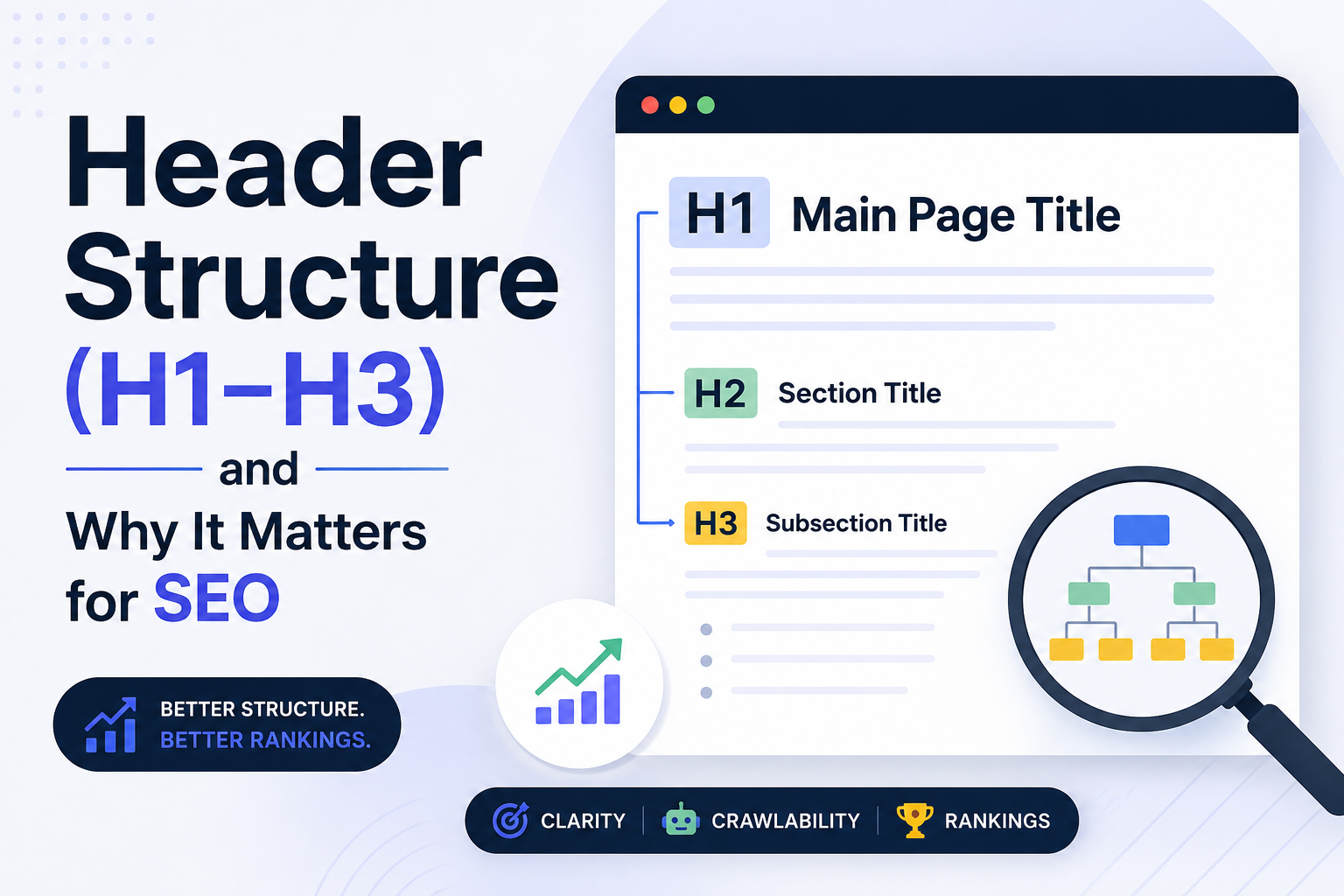
An H1 tag is not simply a title. It is the single most definitive statement of what a page contains. Every page should have exactly one H1, and that H1 should encapsulate the primary topic with precision. Think of it as the headline of a newspaper article. It tells the reader, at a glance, what they are about to learn. For search engines, the H1 carries significant weight in determining relevance. It sits at the top of the semantic hierarchy, and the keywords it contains help algorithms categorize the page correctly. A vague or missing H1 forces search engines to guess your intent, and guessing rarely leads to strong rankings.

Beneath the H1, H2 tags divide the content into its major thematic sections. If the H1 is the book title, the H2s are the chapter headings. Each H2 should introduce a distinct subtopic that supports the central theme established by the H1. This structure allows search engines to understand the relationship between ideas on the page. An H2 about keyword research, for example, signals to a crawler that this section contributes to the broader topic of SEO strategy outlined in the H1. Without H2s, a long piece of content becomes an undifferentiated block of text, and search engines struggle to identify which parts are most important.

H3 tags operate one level deeper. They break H2 sections into smaller, more specific components. If an H2 covers on-page optimization, an H3 might address meta descriptions, image alt text, or internal linking. These tags add granularity. They help readers scan for the precise information they need, and they give search engines additional context about the depth and specificity of your coverage. A page rich in well-structured H3s demonstrates thoroughness, and thoroughness is a quality signal that search engines increasingly value.

Why Structure Influences Rankings

Search engines have evolved far beyond simple keyword matching. Modern algorithms employ natural language processing to understand context, intent, and the relationships between concepts. A clear header hierarchy feeds directly into this capability. When headers cascade logically from broad to specific, algorithms can construct a semantic map of your content. This map helps them match your page to complex, long-tail queries that might not contain your exact keywords but relate closely to your topic. A page about healthy eating that uses H2s for meal planning, nutrient balance, and dietary restrictions, with corresponding H3s beneath each, is far more likely to rank for varied queries than a page that simply repeats the phrase healthy eating in paragraph after paragraph.

User behavior reinforces this structural importance. When visitors land on a page and encounter a wall of text, they tend to leave quickly. High bounce rates and short dwell times send negative signals to search engines, suggesting that the content did not satisfy the user’s need. Headers combat this by making content scannable. A reader can glance at your H2s and immediately know whether the page contains the answer they seek. If it does, they scroll to the relevant H3, find the detail they need, and stay longer. That engagement is measurable, and search engines measure it.

Accessibility adds another dimension to the argument. Screen readers rely heavily on header tags to navigate content for visually impaired users. A logical H1 through H3 structure allows assistive technologies to present information in a meaningful order. Search engines consider accessibility a component of user experience, and pages that serve all users well tend to perform better in search results. Neglecting header hierarchy does not just hurt your rankings, it excludes a portion of your audience.

Common Mistakes That Undermine Structure

One of the most frequent errors is using headers for styling rather than semantics. A writer might choose an H2 because the text looks better at that size, even though the content does not represent a new section. This practice confuses crawlers. If an H2 appears in the middle of a paragraph without introducing a new idea, the algorithm cannot determine where one topic ends and another begins. Always select header levels based on the role the text plays in your argument, not on how it appears on the screen. CSS should handle appearance, headers should handle meaning.

Another mistake is skipping levels. Jumping from an H1 directly to an H3, or using multiple H1s on a single page, breaks the logical flow. It is the equivalent of handing someone a book with two title pages and no chapter headings. The reader, human or algorithmic, loses the thread. Maintain a strict hierarchy. If you need more than three levels of depth, use H4s and beyond, but do so consistently and only when the content genuinely requires that level of subdivision.

Keyword stuffing within headers is equally damaging. Early SEO tactics encouraged loading H1s and H2s with as many keywords as possible, but modern algorithms penalize this behavior. A header that reads unnaturally, packed with variants of the same phrase, reads as manipulation rather than information. Write headers for people first. If your H1 accurately describes the page and your H2s naturally incorporate relevant terms, the SEO value will follow without forced optimization.

Building Content That Earns Authority

Header structure is not merely a technical checkbox. It is a reflection of how well you understand your subject. When you sit down to write, the process of outlining your H1, H2s, and H3s forces you to organize your thoughts. It reveals gaps in your knowledge and highlights where your argument might be weak. A page that flows logically from H1 to H3 is usually a page that has been thought through carefully, and that depth of thought translates into content that other sites want to reference.

Backlinks remain one of the strongest ranking factors, and authoritative sites link to content that demonstrates expertise. A well-structured article is easier to cite because other writers can point directly to a specific H2 or H3 section that supports their own argument. Your headers become anchor points for the broader conversation happening across the web. In this way, strong header architecture does not just help you rank, it helps you become a recognized voice in your field.

The Practical Path Forward

Start every piece of content with an outline. Define your H1 by asking what single question this page answers. Then list the major components of that answer as your H2s. Under each H2, note the specific points that require explanation and assign them as H3s. Only after this skeleton is complete should you begin writing the body text. This discipline ensures that your headers guide the content rather than being retrofitted after the fact.

Review existing pages with an eye toward header hierarchy. Look for pages where the H1 is missing or where multiple H2s could be consolidated or split. Check whether H3s genuinely introduce new ideas or merely restate what the H2 already covered. These audits often reveal quick wins, pages that can climb in rankings with nothing more than structural refinement.

Remember that headers are promises. An H2 promises that the following section will deliver on the idea it names. An H3 promises specificity. When you keep those promises with high-quality, relevant content, you build trust with both your readers and the algorithms that send them your way. That trust compounds over time, turning individual pages into a cohesive, authoritative presence that dominates search results for your niche.

The difference between content that ranks and content that disappears often comes down to the invisible architecture beneath the words. Master your H1 through H3 structure, and you master one of the most powerful, yet most overlooked, tools in modern SEO.

Posted on

What to Look for in a Content Organization Tool

The sheer volume of content we produce and consume daily has turned organization from a nice-to-have into a survival skill. Whether you are managing a personal blog, a marketing department, or a research archive, the tool you choose to structure your work will shape how you think, create, and collaborate. Picking the right one is less about chasing features and more about understanding how you actually work.

Start with the way you capture ideas. The best tools meet you where inspiration strikes, not where you happen to be sitting. A system that forces you to open a specific app, navigate three menus, and tag everything before you can jot down a thought will slowly train you to stop capturing ideas at all. Look for something with low-friction entry points: a quick-add widget, a browser extension, a voice memo that transcribes automatically, or even a simple email-to-inbox feature. The threshold between having an idea and recording it should feel invisible.

Once the ideas are in, they need room to breathe. Rigid folder structures tend to suffocate creativity because they demand that you know exactly what something is before you have fully understood it. A more forgiving approach uses flexible tagging, bidirectional linking, or associative networks that let you connect a piece of content to multiple contexts without duplicating it. This matters because the value of your archive grows not from how neatly it is filed but from the unexpected connections you can draw between seemingly unrelated pieces months or years later.

Searchability is the silent engine of any good system. You will rarely browse for something; you will search for it. If your tool relies on your memory of where you put a file or what you named it, it is already failing you. Full-text search, optical character recognition for images and PDFs, and semantic search that understands synonyms and related concepts are the features that separate a passive storage bin from an active thinking partner. The goal is to find what you need in seconds, not minutes, because every second spent hunting is a second not spent creating.

Collaboration introduces an entirely different set of demands. A tool that works beautifully for one person can become a bottleneck for a team. Shared workspaces, granular permissions, real-time editing, and clear version histories are not luxuries; they are the infrastructure that prevents miscommunication and duplicated effort. Pay attention to how the tool handles conflicting edits, whether it offers comment threads that stay attached to specific content rather than floating in a separate chat, and how gracefully it notifies people without drowning them in noise. The best collaborative tools feel like a shared mind rather than a shared hard drive.

Integration is where a content organization tool either becomes the center of your workflow or an island you constantly have to ferry data to and from. If you live in Google Docs, Slack, Notion, Figma, or a dozen other apps, your organization tool should speak their language. Webhooks, APIs, native integrations, and even simple embed options determine whether your content hub is a source of truth or just another tab competing for attention. The less you have to copy and paste between tools, the more integrity your content retains.

Longevity is an underrated consideration. The tool you choose today is a bet on the future. Startups shut down, acquisition strategies shift, and pricing models change. Open formats, robust export options, and a track record of reliability matter because your content archive is an asset that should outlast any single vendor. If the only way to get your data out is a messy JSON dump or a proprietary file format nobody else reads, you do not truly own your work.

Finally, consider the emotional texture of the tool. This sounds soft, but it is not. You will spend hours looking at this interface. If it feels cluttered, slow, or visually hostile, you will subconsciously avoid it. If it feels calm, responsive, and thoughtfully designed, you will gravitate toward it. The best content organization tools do not just store your work; they invite you back in. They make the act of organizing feel like part of the creative process rather than administrative drudgery.

Choosing a content organization tool is ultimately an act of self-knowledge. It requires honesty about your habits, your team’s dynamics, and the kind of thinking you want to enable. The right tool will not do the thinking for you, but it will clear the path so that your best ideas have space to grow, connect, and endure.

Posted on

How to Do a Competitor Content Analysis

The first thing to understand about competitor content analysis is that it is not about copying what others are doing. It is about understanding the landscape so you can find your own space within it. Every market has noise, and every audience has fatigue. Your job is to figure out where the gaps are, what your competitors are missing, and how you can serve your audience in a way that no one else currently does. This process requires patience, honesty, and a willingness to look at your own work with the same critical eye you turn toward everyone else.

Start by identifying who your competitors are. Most people get it wrong. Your competitors are not just the big names in your industry or the websites that rank above you for your favorite keywords. Your competitors are anyone creating content that satisfies the same audience need you are trying to satisfy. That might include a solo blogger with a small but loyal following, a YouTube channel, a newsletter, or even a community forum where your target audience hangs out and finds answers. Make a list that is broad at first. You can always narrow it later, but if you start too narrow, you will miss the peripheral players who are often the most innovative because they have nothing to lose.

Once you have your list, choose a manageable number to study deeply. Three to five is usually enough for a thorough analysis, though you might scan a larger pool to spot trends. For each competitor, spend real time with their content. Do not just skim headlines. Read full articles, watch videos, listen to podcasts, and subscribe to their emails. You are trying to understand their voice, their depth, their frequency, and their strategy. Take notes on what they cover and what they ignore. Notice the questions they answer and the ones they leave hanging. Pay attention to the comments sections and social shares, because these reveal what resonates and what falls flat.

As you immerse yourself in their work, begin to categorize their content by type, topic, and intent. Some content is designed to attract new audiences through search engines, while other pieces are meant to nurture existing relationships or convert readers into buyers. Notice the ratio between these types. A competitor who publishes mostly top-of-funnel educational content might be building authority but struggling to monetize. A competitor who publishes mostly product-focused content might have a loyal audience but limited reach. Neither approach is wrong, but understanding the balance helps you see where you might differentiate.

Next, evaluate the quality of what they are producing. Quality is subjective, but there are concrete markers you can assess. Look at the research depth. Are they citing sources, sharing original data, or relying on regurgitated opinions? Look at the production value. Is their writing clear and edited, or rushed and error-filled? Are their visuals professional, or do they look like afterthoughts? Look at the originality. Are they saying something new, or are they echoing the same talking points everyone else uses? Be brutally honest in this assessment, because your audience is making these same judgments about your work whether you realize it or not.

Now examine their distribution and promotion strategy. Great content that no one sees is not really great content, it is just a private journal entry. Notice where your competitors share their work. Are they active on specific social platforms? Do they have an email list, and if so, how often do they send to it? Do they guest post on other sites? Do they repurpose content across formats? Look at their backlink profile using any available tools to see who is linking to them and why. This tells you not just where their traffic comes from, but who considers them authoritative enough to reference. It also reveals partnership opportunities you might pursue.

Pay special attention to the engagement their content generates. A blog post with thousands of views but zero comments suggests the content is forgettable. A podcast with a small download number but an active community discussing every episode suggests resonance. Look at what people are saying in the comments, on social media, and in reviews. The language your competitor’s audience uses is valuable because it reveals how they think about their problems and what they wish someone would address. The most insightful part of competitor analysis is not the competitor’s content itself, but the conversation happening around it.

With the information gathered, look for patterns and gaps. Patterns show you what the market expects and what has been proven to work. Gaps show you where the opportunity lies. Maybe every competitor in your space writes long-form guides but no one produces quick reference tools. Maybe they all focus on beginners and ignore advanced practitioners. Maybe they cover tactics but never strategy, or they discuss theory without showing real implementation. These gaps are not just opportunities for content ideas, they are opportunities for positioning. When you consistently fill a gap that others leave open, you become known for something specific, and specificity is what builds a loyal audience.

Do not forget to analyze yourself with the same rigor. It is easy to see what competitors do poorly and assume you are doing better, but that assumption is dangerous. Audit your own content through the same lens. Where do you fall short on depth, originality, or consistency? Where are you repeating the same themes without advancing the conversation? The goal of competitor analysis is not to make you feel superior, it is to make you sharper. The best practitioners in any field know exactly where they stand relative to everyone else, and they use that knowledge to improve rather than to boast.

Turn your analysis into action. Create a document that summarizes your findings, but do not let it become a dusty report no one reads. Use it to inform your editorial calendar. Use it to guide your positioning. Use it to set benchmarks for your own quality and frequency. Revisit it every quarter because content landscapes shift quickly. A competitor who was dominant last year might have grown complacent. A new voice might have emerged with fresh energy. The analysis is never truly finished because the market is never truly still.

The ultimate measure of a good competitor content analysis is whether it changes what you create and how you create it. If you finish the process and your content strategy looks exactly the same as before, you have wasted your time. But if you finish with a clearer sense of where you fit, what you can offer that no one else does, and how to communicate that difference with excellence, then you have done the work properly. The internet does not need more content. It needs better content, created by people who understand their audience deeply enough to matter. Competitor analysis is one of the most reliable paths to that understanding.

Posted on

Why Your Bounce Rate Might Be an Organization Problem

Every digital marketer stares at the bounce rate metric with dread. It sits there in the analytics dashboard, a red number accusing you of failure. A visitor arrived, looked around, and left. No second click. No scroll. No conversion. The instinctive response is to blame the landing page. The headline was weak. The hero image was stock. The call-to-action button was the wrong shade of blue. Teams scramble to A/B test headlines, swap out images, and tweak button colors, chasing the elusive percentage point that will turn a bounce into a stay. But what if the problem is not on the page at all? What if your bounce rate is not a design flaw or a copy failure, but a symptom of something deeper and more structural, something that lives in the hallways and meeting rooms of your organization rather than in the pixels of your website?

Consider what a bounce actually represents. A person, somewhere in the world, had a need or a curiosity. They typed a query into a search engine or clicked a link from an email or a social post. They arrived with an expectation, however faint, that your site would satisfy that need. Within seconds, they decided it would not. The decision was made faster than most people can choose what to eat for lunch. This is not a failure of patience on the visitor’s part. It is a failure of alignment on yours. The gap between what the visitor expected and what they found is where bounces are born, and that gap is often created long before the visitor ever loads the page.In many organizations, the team that writes the ad copy does not talk to the team that designs the landing page. The social media manager crafts a compelling post that promises insight, entertainment, or a solution, and the traffic flows in. But the landing page was built by a different team, with different priorities, perhaps weeks or months ago. It was optimized for a different campaign, a different message, a different audience segment. The visitor clicks through expecting a seamless continuation of the story they were told, and instead they find a jarring shift in tone, design, and promise. The cognitive dissonance is instant and fatal. They bounce not because the page is bad, but because it is the wrong page for the promise that brought them there. This is an organizational failure masquerading as a user experience failure.

The same fracture can appear between search engine optimization and content strategy. An SEO team, driven by traffic targets and keyword rankings, optimizes pages to capture high-volume search queries. They succeed. The traffic arrives. But the content team, working on an editorial calendar set months in advance, has not produced the depth or specificity that someone searching for that query actually needs. The page ranks for the keyword, but it does not answer the question. The visitor lands, scans, realizes the mismatch, and leaves. The SEO team celebrates the ranking. The content team laments the engagement. The analytics team reports the bounce. No one connects the dots because no one owns the entire journey. The organization is siloed, and the bounce rate is the smoke rising from the walls between departments.

Even the technology itself can be an organizational symptom. Slow load times, broken layouts on mobile devices, intrusive pop-ups that obscure the content, these are not merely technical bugs. They are the result of prioritization decisions made in conference rooms. The engineering team is understaffed because the budget went to marketing. The mobile experience is neglected because the executive team still does most of their browsing on desktop computers. The pop-up exists because the lead generation team has a quarterly target that overrides the user experience team’s warnings. Every technical friction point that drives a bounce was once a decision made by people with competing incentives, reporting to different managers, measured by different key performance indicators. The bounce rate is the visitor’s verdict on those internal conflicts.

There is also the deeper issue of organizational self-awareness. A high bounce rate can indicate that the company does not actually know who it is talking to. The marketing department may have built elaborate personas, but if the product team has never met a real customer, and the customer service team does not share what they hear in support tickets, and the sales team keeps its insights in a private spreadsheet, then the personas are fiction. The website speaks to an imagined audience, and the real audience, arriving with real needs, finds no one addressing them. They bounce because the organization, for all its internal activity, has not managed to become a single coherent voice that recognizes the person on the other side of the screen.Fixing this requires a different kind of audit than the one most teams perform. Instead of testing button colors, test the handoffs. Map the journey of a visitor from the first touchpoint to the landing page, and identify every organizational boundary they cross. Does the promise made in the email match the headline? Does the social post’s energy survive the transition to the website’s more corporate tone? Does the search result’s description accurately reflect the content behind it? These are not creative questions. They are structural ones. They require people who do not normally sit in the same meetings to look at the same data and agree on what it means.

It also requires a rethinking of what the bounce rate is actually measuring. It is not a scorecard for the landing page alone. It is a measure of organizational coherence. A low bounce rate means that the left hand knows what the right hand is doing, that the promise and the fulfillment are in conversation, that the company has managed to present itself as a unified entity rather than a collection of competing fiefdoms. A high bounce rate, conversely, is often the first visible sign that the organization has become fragmented, that different teams are optimizing for different outcomes without regard for the whole, and that the customer is falling through the cracks between those optimizations.

The uncomfortable truth is that some bounce rates cannot be fixed by a better headline or a faster server. They can only be fixed by better alignment. By teams that talk to each other not just in quarterly reviews but in daily practice. By metrics that reward the entire journey rather than individual handoffs. By leadership that understands a visitor does not experience a company in departmental slices but as a single, continuous impression. When that impression is fractured, the visitor leaves. Not because they are impatient, not because they are fickle, but because they can sense, even in the first few seconds, that no one is really home. The lights are on, but the house is empty.

So the next time you gather around the analytics dashboard and stare at that red number, resist the urge to reach for the nearest design tool. Instead, ask a harder question. Ask whether your organization is arranged in a way that makes a coherent experience possible. Ask whether the person who wrote the promise and the person who built the destination have ever truly collaborated. Ask whether your teams are measured on the same definition of success. The bounce rate might not be telling you that your page is broken. It might be telling you that your organization is.