Posted on

The Devil Lives in the Details: Why SEO Success Hinges on What Others Overlook

There is a persistent myth in digital marketing that search engine optimization is about grand strategy. People imagine SEO as a chess game played at the highest level, where the winner is whoever makes the boldest move, secures the most authoritative backlink, or targets the highest-volume keyword. In reality, SEO is not chess. It is closer to watchmaking. The difference between a site that ranks and a site that languishes on page three often comes down to fractions of a second, a single character in a URL, or whether an image was compressed before it was uploaded. The details make all the difference, and the people who understand this are the ones who win.

Consider the humble title tag. It sits quietly in the browser tab, rarely seen by human eyes, yet it is one of the most powerful signals you can send to a search engine. A title tag that is one character too long gets truncated in search results, cutting off the very keyword you hoped would draw the click. A title tag missing a pipe or a dash looks unprofessional in the search engine results page, subtly signaling to the user that the page behind the link might be equally careless. Two pages could have identical content, identical backlink profiles, and identical domain authority, but the one with the meticulously crafted title tag, the one that fits within the pixel limit and includes the primary keyword without stuffing, will earn the higher click-through rate. Over time, that higher click-through rate tells Google that this result satisfies intent, and the rankings rise. All of that from sixty characters or fewer.

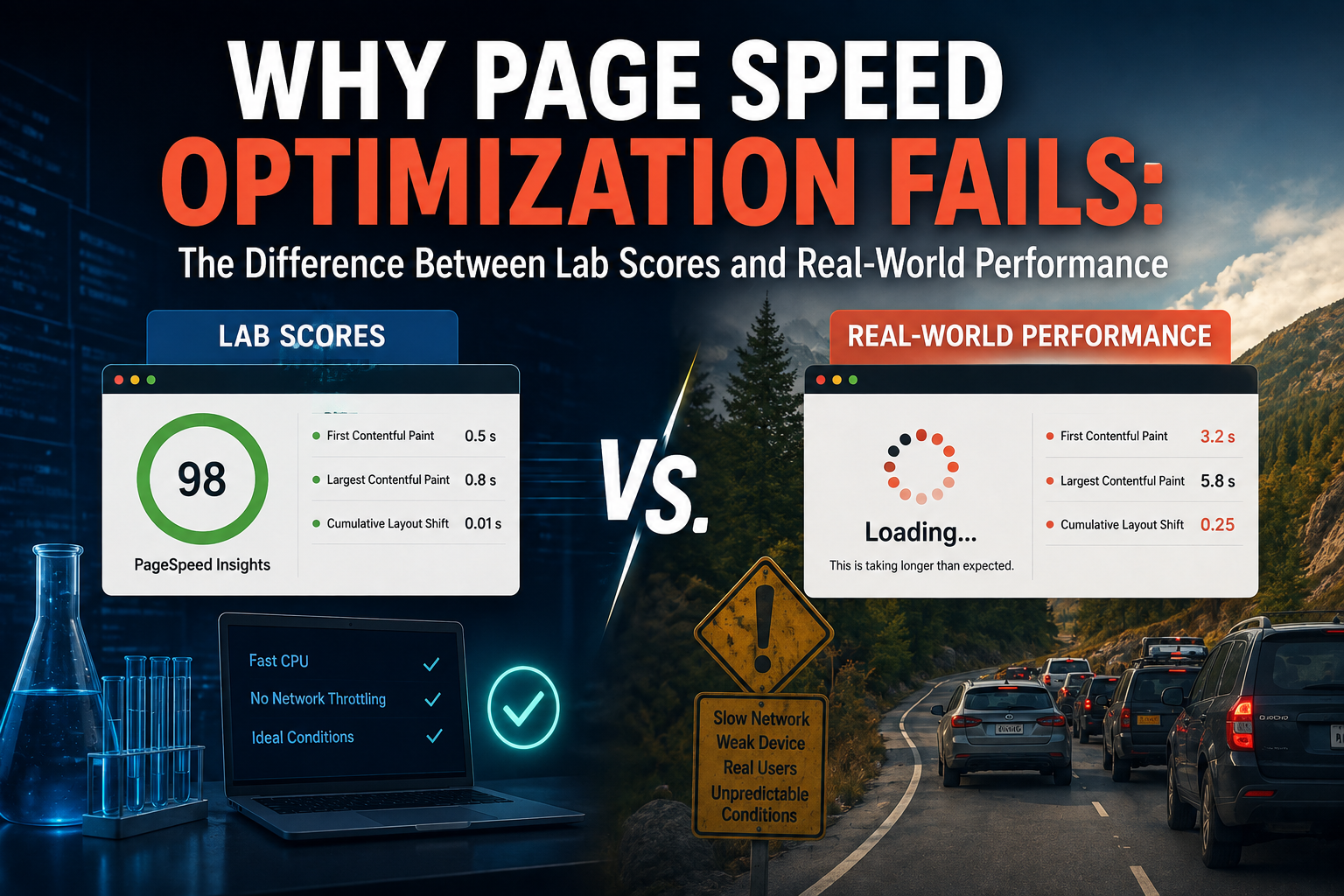
Page speed offers another lesson in the tyranny of small things. Google has been explicit that site speed is a ranking factor, yet many website owners treat it as an afterthought. They install a caching plugin, declare the job done, and move on to content creation. But speed is not a single lever to pull. It is the cumulative effect of a hundred tiny decisions. Did you specify image dimensions in your HTML so the browser can reserve space while the image loads? Did you remove unused CSS that still ships with every page request? Did you preload the font that renders your above-the-fold headline, or are you letting the browser discover it only after it has already started painting the page? Each of these decisions saves mere milliseconds, but milliseconds aggregate. A page that loads in 2.1 seconds versus one that loads in 2.9 seconds does not feel dramatically different to a user, but to a search engine crawling billions of pages, that gap is enormous. The faster page gets crawled more frequently, indexed more reliably, and ranked more favorably. The detail-oriented site wins again.Internal linking is another arena where precision separates the professionals from the amateurs. Anyone can add a link from one blog post to another. Few take the time to consider the anchor text, the context surrounding the link, and the placement within the page structure. A generic anchor like “click here” or “read more” squanders an opportunity to signal topical relevance. A link buried in the footer carries less weight than one embedded in the opening paragraph where it is most likely to be seen and clicked. The architecture matters too. A page that is three clicks from the homepage receives less link equity than one that is one click away, even if the content is identical. These are not dramatic revelations. They are small, almost invisible choices that compound over the entire site. The website that treats every internal link as a deliberate act of curation will build topical authority in a way that the haphazard site never will.

Even something as seemingly trivial as schema markup embodies this principle. Schema is invisible to the average visitor. It lives in the code, speaking directly to search engines in a structured language they prefer. A recipe page without schema is just text and images. A recipe page with properly implemented schema can display star ratings, cooking time, and calorie counts directly in the search results. That rich snippet does not just look better; it occupies more vertical space on the results page, pushing competitors further down and increasing the likelihood of a click. The implementation requires attention to detail: the correct property names, the proper nesting of JSON-LD, the validation against Google’s testing tool. One missing comma in the code renders the entire effort useless. The detail makes the difference between standing out and blending in.

URL structure is another detail that reveals the care behind a website. A URL filled with parameters, session IDs, and meaningless numbers tells search engines that the site is messy, that the content management system is generating duplicate paths to the same content, and that canonicalization issues are likely lurking in the shadows. A clean, descriptive URL with hyphens separating readable words signals the opposite. It suggests that the site owner understands information architecture, that the page has a permanent and logical home within the site, and that the content is stable enough to earn a link without fear that the URL will change next month. Search engines notice these signals. They may not admit to weighting them heavily in isolation, but in the aggregate, they contribute to the overall trust profile of a domain.

Then there is the matter of content freshness and accuracy. Many sites publish a piece of content, celebrate the launch, and never touch it again. But search engines favor results that remain current. A blog post from 2019 ranking for a query about tax law is less trustworthy in 2026 than one that has been updated to reflect new legislation. The detail here is not just the update itself, but how the update is communicated. Changing the content without updating the published date is a missed opportunity. Adding a note at the top explaining what changed and when demonstrates transparency to both users and search engines. Even the images within the content matter. A stock photo that has appeared on a thousand other sites adds nothing. A custom screenshot, a unique diagram, or an original photograph provides visual distinction that can earn image search traffic and keep visitors engaged longer. Dwell time, the amount of time a user spends on a page before returning to the search results, is a behavioral signal that search engines track. The details that keep a user reading, scrolling, and interacting are the details that improve rankings.

Mobile usability is perhaps the most glaring example of where details destroy otherwise good SEO efforts. A site can have brilliant content and a strong backlink profile, but if the mobile experience is broken, the rankings will suffer. This is not about whether the site technically loads on a phone. It is about whether the tap targets are large enough for a human thumb, whether the text is readable without pinching to zoom, whether the navigation collapses gracefully instead of overlapping the content. Google uses mobile-first indexing, meaning the mobile version of a site is what gets evaluated. A desktop-perfect site that is a mobile nightmare is a site that has failed to notice the detail that now matters most.

The psychology behind why details matter in SEO is worth understanding. Search engines do not read content the way humans do. They rely on proxies. They cannot judge whether an article is genuinely insightful, so they look at whether people stay on the page, whether other sites link to it, whether the technical foundation is sound. Every detail is a proxy for quality. A site with broken redirects, missing alt text, and inconsistent heading hierarchies is sending a signal, consciously or not, that the owner does not care enough to maintain the property. A site where every image has descriptive alt text, every redirect chain has been minimized to a single hop, and every heading follows a logical outline is sending the opposite signal. Search engines are pattern-matching machines, and they have been trained on enough data to recognize the patterns that correlate with user satisfaction. The details are the patterns.

There is also a competitive dimension to this. The high-volume, high-value keywords that every business wants to rank for are battlegrounds where the combatants are already doing the big things right. They have the content. They have the links. They have the domain authority. In these arenas, you cannot win by matching the competition on the broad strokes. You win by out-executing them on the details. Your competitor has a page speed score of eighty-five; you aim for ninety-five. They update their content annually; you update it quarterly. They use generic meta descriptions; you write compelling copy that earns the click. These margins are thin, but in SEO, thin margins separate page one from page two, and page one from oblivion.

The danger, of course, is that focusing on details can become an excuse to avoid the hard work of strategy. Details are not a substitute for understanding your audience, creating genuinely valuable content, or building a brand that people trust. But they are the multiplier. Great content with poor technical execution underperforms. Mediocre content with flawless technical execution rarely ranks at all. The magic happens when the two meet: when the strategic vision is executed with obsessive attention to the details that most people ignore.

This is why SEO is often misunderstood by outsiders. It looks like a dark art because the important work is invisible. The perfectly optimized title tag does not announce itself. The carefully structured internal link architecture does not come with a plaque. The image compression that shaved half a second off load time leaves no trace. But these invisible acts of craftsmanship are what separate the sites that dominate search results from the sites that wonder why they never get any traffic.

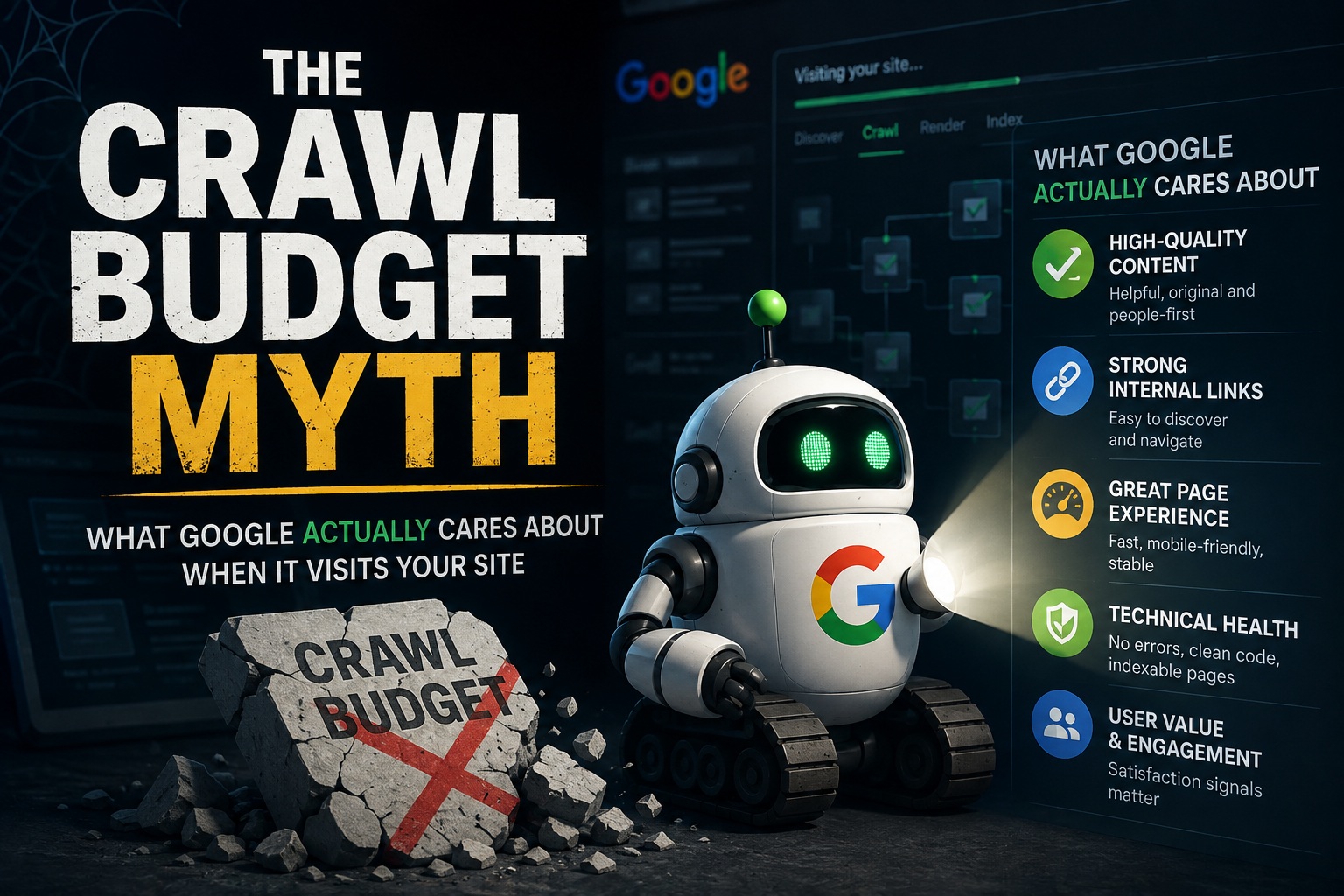
The next time you audit a website, resist the urge to look for the big problem. The big problems are usually obvious and already known. Look instead for the small ones. Check whether the canonical tags are self-referencing. Verify that the XML sitemap actually lists the URLs you care about and not a thousand pages of filtered search results. Test whether the breadcrumb navigation uses schema markup. See if the footer links are wasting crawl budget on pages that do not matter. These are not exciting tasks. They will not make for a dramatic presentation to your client or your team. But they are the tasks that move the needle.

In the end, SEO rewards the patient and the precise. It is a discipline where the accumulation of tiny advantages eventually becomes insurmountable. The details make all the difference because, in a landscape where everyone has access to the same tools and the same information, the details are the only things left that can set you apart. Master them, and you master the game.

Posted on

The Truth About Shadowbanning: Why Your Content Probably Just Needs Work

There is a persistent myth in online creator communities that shadowbanning is the invisible hand holding back careers. Spend five minutes in any forum for social media users and you will find people absolutely convinced that a platform has secretly suppressed their reach, that their posts are being hidden from followers who desperately want to see them, and that an algorithmic conspiracy is the only thing standing between them and viral success. The reality is far less dramatic. Shadowbanning is rare, and when reach does decline, the explanation usually sits squarely in the content itself.

To understand why this myth persists, you have to look at how social media platforms actually function. These companies make money through engagement. Their entire business model depends on keeping users scrolling, watching, and interacting for as long as possible. A platform that systematically hides good content from its own users is a platform that undermines its own revenue. It makes no economic sense for a company to secretly suppress creators who are driving the very engagement that pays their bills. The algorithms are designed to surface content that keeps people on the app, not to engage in petty vendettas against individual users.

The confusion often stems from a misunderstanding of how content distribution works. Algorithms do not show your posts to all of your followers. They never have. Platforms use relevance scoring, interest graphs, and engagement history to decide what appears in any given feed. If your recent posts have lower click-through rates, shorter watch times, or fewer meaningful interactions, the system responds by showing your next post to fewer people. This is not punishment. This is optimization. The algorithm is doing exactly what it was built to do: match content with users most likely to enjoy it.When creators experience a drop in views, the instinct is often to blame the platform rather than examine their own output. But content quality fluctuates. A video that felt inspired during production might fall flat with audiences. A writing style that worked last year might feel stale now. Trends shift, audience expectations evolve, and what captured attention six months ago might not work today. The algorithm did not change its mind about you. Your audience did.There are legitimate cases where accounts face restrictions, but these are typically transparent and direct. Platforms issue strikes, send warnings, and notify users when content violates community guidelines. These are not shadowbans. They are enforcement actions, and they come with documentation. True shadowbanning, defined as a secret suppression of content without notification or explanation, is an exceptional measure that platforms have little incentive to deploy at scale. The administrative overhead alone would be staggering, and the risk of discovery, lawsuit, and regulatory scrutiny far outweighs any hypothetical benefit.

The most common scenario mistaken for shadowbanning is simply audience fatigue. Followers who once engaged enthusiastically may grow tired of repetitive formats or themes. New users discovering your content for the first time might not find it compelling enough to follow. The algorithm picks up on these signals and adjusts distribution accordingly. Again, this is the system working as intended, not a covert attack on your account.Another factor is the sheer volume of content competing for attention. Every minute, hundreds of hours of video are uploaded, millions of posts are shared, and billions of pieces of content vie for limited screen real estate. Even maintaining your previous level of quality might result in declining reach if competitors are improving faster or if audience attention is fragmenting across new formats and platforms. You are not being suppressed. You are being outcompeted.

The path forward requires an honest assessment of what you are creating. Are you providing genuine value, or are you chasing metrics? Are you adapting to how consumption habits are changing, or are you clinging to what used to work? Are you building a real connection with a specific audience, or are you broadcasting into the void hoping the algorithm will do the work for you? These are difficult questions, but they are the ones that matter.Blaming shadowbanning is comforting because it externalizes failure. It preserves the ego by placing responsibility on a malicious third party rather than acknowledging that the content might not be as strong as it could be. But comfort is the enemy of growth. The creators who sustain long-term success are the ones who treat algorithmic changes and reach fluctuations as feedback, not persecution. They analyze what resonates, discard what does not, and continuously refine their craft.

If you are concerned about your reach, start by auditing your recent output with brutal honesty. Compare your best-performing content against your recent posts. Look at retention graphs if you have access to them. Read the comments, not just the numbers. Ask whether you would engage with your own content if you stumbled across it as a stranger. The answers to these questions will tell you far more than any conspiracy theory about shadowbanning ever could.The platforms want you to succeed because your success is their success. They have built multi-billion dollar businesses on the backs of creators who capture attention and keep users engaged. The idea that they would secretly sabotage the very people generating their value is not just unlikely; it is logically incoherent. Your reach is not being stolen by invisible bans. It is being earned or lost by the quality of what you create.

Posted on

9 Good Programmatic SEO Niches For Digital Marketers

The quiet revolution in search optimization is not happening in the content agencies charging premium rates for hand-crafted articles. It is happening in the spreadsheets, the API calls, and the automated publishing pipelines that scale to millions of pages with minimal ongoing human labor. Programmatic SEO is the practice of generating large volumes of search-optimized pages from structured data, and the winners in this space are not the ones with the best writers. They are the ones who found the right niche.

A strong programmatic SEO niche must satisfy three conditions. First, there must be a large number of search queries that follow a predictable pattern. Second, there must exist structured data that can populate answers for those queries at scale. Third, the intent behind those queries must be monetizable or strategically valuable. When all three align, a single developer with a database and a template can outpublish an entire editorial team.One of the most durable opportunities lies in the intersection of geography and commercial intent. People search for things in specific places. They want dentists in Tampa, co-working spaces in Lisbon, or wedding venues in Napa. The pattern is always the same: a service category plus a location. The data is widely available from government registries, business APIs, or scraped directories. The monetization is straightforward through lead generation, affiliate partnerships, or direct advertising. The challenge is not finding the data; it is finding the locations and categories that are searched frequently enough to matter but not so competitive that a new domain has no chance to rank.

Another powerful pattern is the combination of a product category with a modifier that implies comparison or filtering. Think of laptop batteries for specific models, or car insurance for drivers with particular profiles. The search volume for any single query might be low, perhaps only a few dozen searches per month, but multiplied across thousands of product SKUs or demographic combinations, the aggregate traffic becomes substantial. These pages work because they capture users at the moment of decision-making. The structured data comes from manufacturer databases, e-commerce APIs, or public regulatory filings. The monetization often comes from affiliate commissions or direct retail margins.

The world of regulations and compliance documents represents a less obvious but highly defensible niche. Every jurisdiction produces rules, forms, and filing requirements that citizens and businesses must navigate. Queries follow rigid patterns like Form 1040 instructions for tax year 2026 or OSHA reporting requirements for construction firms in California. Government sources provide the raw data. The value comes from organizing it more clearly than the official websites do, and from layering in practical guidance that bureaucratic sources omit. Monetization here is trickier but possible through legal service referrals, compliance software subscriptions, or advertising to professional service providers.

Educational content at the long tail offers another scalable path. Students and professionals search for practice problems, study guides, and explanations of specific concepts. A query like derivative of ln x squared follows a pattern that can be generated algorithmically for thousands of mathematical functions, chemical compounds, or historical events. The data is inherently structured. Wolfram Alpha and similar engines have proven the demand. The monetization comes from tutoring services, textbook affiliates, or premium practice platforms. The key is ensuring that the generated explanations are genuinely useful and not just keyword-stuffed placeholders that search algorithms have learned to ignore.

Event and scheduling data creates temporal opportunities that refresh themselves. Concerts, sports fixtures, conferences, and academic deadlines all follow calendars. A page for Manchester United fixtures in January 2027 or application deadlines for MBA programs in the fall semester has a natural lifespan and a built-in reason for users to return. The data flows from sports APIs, university registrars, and event platforms. The monetization comes from ticketing affiliates, travel bookings, or course enrollment leads. The freshness of the data itself becomes a ranking signal.

The travel industry has been heavily targeted by programmatic SEO, yet pockets of opportunity remain in the layers beneath the major booking platforms. Specific combinations of traveler needs and destinations remain underserved. Accessible hotels in Kyoto with roll-in showers or pet-friendly cabins in the Scottish Highlands with fenced yards represent queries that aggregate travel sites handle poorly because their filters are too broad. The data can be crowdsourced, scraped, or collected through direct partnerships with smaller property owners. The monetization is direct through booking commissions, and the loyalty of niche travelers can be remarkably high.

Healthcare queries that combine symptoms, treatments, and demographics follow predictable patterns, though this niche carries significant risk. Search engines apply higher quality standards to medical content, and regulatory scrutiny is intense. However, the underlying pattern remains valid: structured data about drug interactions, side effects, or procedure recovery times can be organized into useful pages. The data comes from FDA databases, clinical trial registries, and medical literature. The monetization must be handled carefully, often through partnerships with telehealth platforms or health publishers rather than direct affiliate marketing. The barrier to entry is high, but so is the defensibility for those who clear it.

Real estate and property data presents another geographically anchored opportunity with rich structured information. Beyond the obvious combination of city and apartment for rent, there are deeper layers. Zoning regulations for specific neighborhoods, historical price trends for individual streets, or utility costs for buildings of a certain age all represent queries with commercial intent. The data is public record in many jurisdictions. The monetization flows naturally to agents, mortgage brokers, and property management services. The challenge is keeping data current in a market where stale inventory destroys user trust.

The final pattern worth considering is the intersection of careers and credentials. Job seekers search for salary data, certification requirements, and career paths with predictable regularity. Average salary for a DevOps engineer in Austin or continuing education requirements for CPAs in Illinois are queries that follow a template. The data comes from Bureau of Labor Statistics releases, state licensing boards, and job posting aggregators. The monetization comes from online course providers, certification bodies, and recruiting platforms. The audience is motivated and often has budget authority for educational investments.

What separates successful programmatic SEO from spam is not the volume of pages but the usefulness of each one. The niches described above share a common thread: they all involve information that is inherently structured, genuinely needed by searchers, and poorly served by existing results. The technology to generate a million pages has existed for years. The harder problem is ensuring that page number 847,291 is as accurate and relevant as page number one. Search engines have become sophisticated at detecting thin content. The sustainable approach is to treat programmatic generation as a distribution mechanism for genuinely valuable data, not as a hack to game ranking algorithms.

The best niche for any individual or team will depend on their access to data, their technical capabilities, and their tolerance for regulatory complexity. A solo developer might excel in the geography-plus-service model because the data is free and the technical requirements are modest. A team with machine learning expertise might tackle the educational content space because they can generate genuinely novel explanations rather than templated text. A well-funded operation might navigate healthcare or real estate because the compliance costs and data acquisition expenses create barriers that protect market position.

Programmatic SEO is not a replacement for editorial judgment. It is a force multiplier for situations where editorial judgment can be encoded into rules and data structures. The opportunities are vast, but they reward patience in data collection and discipline in execution. The winners will be those who resist the temptation to publish a million mediocre pages and instead focus on building systems that can sustain a million useful ones.

Posted on

The Quiet Power of Patience in SEO

There is a peculiar tension in the world of digital marketing. Every other channel promises speed. Paid advertising delivers visitors within hours. Social media campaigns can go viral overnight. Email blasts land in inboxes in seconds. Yet search engine optimization sits in the corner, unhurried, almost stubborn in its refusal to rush. It asks something that modern business culture finds deeply uncomfortable: it asks you to wait.This waiting is not passive. It is not the waiting of someone staring at a clock, hoping something happens. It is the waiting of a farmer who has planted seeds in soil he has carefully prepared, knowing that germination happens beneath the surface long before anything green breaks through. The work is invisible for months. The doubt creeps in. Competitors seem to surge ahead with their instant traffic. Colleagues question the investment. The analytics dashboard shows a flat line where you hoped to see a curve. This is the valley every serious SEO practitioner must walk through, and it is precisely this valley that separates those who understand the game from those who abandon it too early.

What makes the waiting so difficult is that the mechanics of search engines are fundamentally opaque. You optimize a page, build a few links, improve your site speed, and then you wait for the algorithm to notice. You wait for the crawler to return. You wait for the index to update. You wait for the ranking signals to compound. There is no button to press for immediate feedback, no lever to pull that instantly moves your position from page five to page one. The algorithm operates on its own timeline, and that timeline is measured not in days but in seasons.

But beneath this apparent stillness, something profound is happening. Every technical fix you implement, every piece of content you publish that genuinely answers a question, every backlink you earn from a credible source, every improvement in user experience, these are deposits in a compound interest account. They do not evaporate when the campaign ends. They stack. They accumulate authority. They build topical relevance that becomes harder for competitors to replicate the longer it exists. A paid search ad stops working the moment you stop paying. A social media post disappears into the feed within hours. A well-optimized piece of content, however, can sit on the first page of search results for years, delivering qualified visitors while you sleep, while you vacation, while you work on other things.

The businesses that understand this dynamic approach SEO with a different psychology. They do not measure success in weekly reports. They think in terms of annual cycles. They know that the content they publish today may not reach its full ranking potential for six to twelve months, but when it does, it often becomes their most cost-effective customer acquisition channel. The lifetime value of organic search traffic, when calculated properly, dwarfs nearly every alternative because the marginal cost of that traffic approaches zero over time.There is also a defensive quality to patient SEO investment that is rarely discussed. When you have spent eighteen months building authority in your niche, you develop what amounts to a competitive moat. New entrants cannot simply outspend you to take your position. They must replicate the entire history of your earned credibility, and they must do it while you continue to strengthen your position. The algorithm favors established trust, and trust is not something that can be purchased in a hurry.

The mastery of SEO, then, is not primarily a technical achievement, though technical competence matters. It is a mastery of delayed gratification. It is the ability to continue doing the right things when there is no immediate evidence that they are working. It is the discipline to prioritize user intent over keyword density, to invest in comprehensive content when thin pages would be faster to produce, to pursue genuine relationships for backlinks when purchased links would be easier to obtain. These choices do not pay off next week. They pay off next year, and they pay off in ways that are difficult to reverse-engineer once your competitors realize what you have built.

The rewards of this patience are not incremental. They are transformative. A business that achieves dominant organic visibility in its market secures a predictable, scalable, and defensible flow of customers. The cost per acquisition trends downward over time while the volume trends upward. The brand becomes synonymous with the search query itself. The website becomes an asset that increases in value rather than an expense line that fluctuates with media costs.

So if you are in the early months of an SEO effort and the results feel meager, remember that you are not failing. You are simply in the gestation period. The seeds are underground. The roots are spreading invisibly. The algorithm is watching, learning, and waiting to reward consistency. Keep building. Keep improving. Keep publishing work that deserves to rank. The traffic will come, and when it does, it will come in volumes that make the waiting seem not just worthwhile, but strategically brilliant.

Posted on

How AI Is Increasing Demand for Certain Types of Knowledge Work

There is a common fear that artificial intelligence will simply replace human workers, rendering entire categories of knowledge work obsolete. While this concern is understandable, the reality unfolding in offices, studios, and research labs tells a more nuanced story. AI is not merely eliminating jobs; it is actively increasing demand for specific kinds of knowledge work, reshaping what organizations value and how professionals spend their time.

The most immediate effect of AI adoption is the amplification of output. Tasks that once took hours now take minutes. A marketing professional who previously wrote three campaign briefs per week can now draft fifteen. A legal researcher who once summarized a handful of case files daily can now process dozens. This acceleration does not reduce the need for human involvement. Instead, it raises the ceiling on what teams are expected to produce, which in turn increases the total volume of work that requires human judgment, refinement, and strategic oversight.

What AI generates is rarely finished product. It is raw material, a first draft, a starting point that requires human expertise to shape into something genuinely useful. This creates a surge in demand for the kind of knowledge work that involves discernment. Professionals who can evaluate AI output for accuracy, tone, legal compliance, ethical implications, and strategic alignment find themselves more essential than ever. The ability to spot a subtle error in a generated financial report, to recognize when a proposed marketing message would alienate a key demographic, or to identify a logical flaw in a drafted contract, these critical faculties cannot be outsourced to algorithms.

Organizations are also discovering that deploying AI effectively requires a new layer of knowledge work around implementation and governance. Someone must decide which AI tools to adopt, how to integrate them with existing systems, how to train staff in their use, and how to establish guardrails that prevent misuse or reputational harm. This has created robust demand for professionals who understand both the technical capabilities of AI and the operational realities of their industry. The hybrid worker, someone who speaks the language of technology and business simultaneously, has become one of the most sought-after profiles in the job market.

Creative and strategic thinking have seen renewed emphasis precisely because AI handles the mechanical aspects of production so well. When the execution of routine tasks becomes trivial, the competitive advantage shifts toward those who can ask better questions, frame problems more precisely, and imagine solutions that do not yet exist. A consultant who can help a client redefine their market position in light of AI disruption provides value that no tool can replicate. A product manager who can envision an entirely new category of AI-enhanced service creates opportunities that automated systems cannot foresee. The demand for this kind of conceptual, big-picture knowledge work has grown substantially.

Quality assurance and fact-checking have emerged as unexpectedly critical growth areas. As organizations produce more content, more code, and more analysis with AI assistance, the risk of subtle errors, hallucinated facts, and biased outputs increases. This has expanded the need for editors, reviewers, and subject matter experts who can verify claims and maintain standards. A newsroom that uses AI to draft initial articles now needs experienced journalists to ensure accuracy and fairness. A pharmaceutical company that uses AI to analyze research data needs scientists who can validate findings before they inform drug development decisions. The demand for this verification layer has grown in direct proportion to the speed of AI-generated output.

Client-facing knowledge work has also experienced a renaissance. As AI handles more of the behind-the-scenes processing, the human interactions that build trust, negotiate complex deals, and manage sensitive relationships become more distinctive. Sales professionals who can interpret a client’s unspoken concerns, account managers who can navigate organizational politics, and advisors who can deliver difficult news with empathy, these roles have not diminished. If anything, the efficiency gains elsewhere have freed up resources to invest more heavily in the human connections that drive long-term business success.

Specialized expertise has become more valuable, not less. AI can summarize general knowledge with impressive fluency, but it struggles with highly specific, rapidly evolving, or deeply contextual domains. A tax attorney who understands the nuances of a particular regulatory regime, a biologist who can interpret novel experimental results, a software architect who can evaluate trade-offs in a complex legacy system, these professionals command higher demand because their knowledge sits at the intersection of deep specialization and irreplaceable judgment. AI might help them work faster, but it cannot substitute for the years of focused learning that produced their expertise.

The nature of problem-solving itself has shifted in ways that favor certain knowledge workers. AI excels at pattern recognition within existing frameworks, but it is less capable when a situation is unprecedented, when multiple conflicting values must be balanced, or when the stakes involve human wellbeing in ways that resist quantification. Ethicists, policy analysts, and strategic planners who can navigate ambiguity and make decisions under uncertainty find their skills increasingly requested. Organizations need people who can think through the second and third order consequences of AI adoption, who can anticipate how automating one process might create new vulnerabilities elsewhere.

Education and training represent another domain where demand has surged. As AI tools proliferate, the need to upskill existing workers has become urgent. This has created substantial opportunities for instructional designers, corporate trainers, curriculum developers, and educational technologists who can translate complex AI concepts into practical learning experiences. The knowledge worker who can teach others to work alongside AI effectively has become indispensable to organizational adaptation.

Perhaps most significantly, AI has increased demand for the kind of knowledge work that involves synthesis across disciplines. The most interesting challenges organizations face today do not fit neatly into single categories. They require understanding how technology intersects with law, how data science informs marketing strategy, how user experience design influences healthcare outcomes. Professionals who can bridge these domains, who can synthesize insights from multiple fields into coherent action, have seen their value rise precisely because AI tends to operate within the boundaries of its training rather than across them.

The transformation is not without disruption. Some types of knowledge work have indeed declined as AI capabilities advance. But the broader trend points toward a redistribution of demand rather than a simple reduction. The work that remains and grows tends to be that which requires human judgment, ethical reasoning, creative leaps, emotional intelligence, deep specialization, and cross-disciplinary synthesis. These are not fringe activities. They represent the core of what makes knowledge work meaningful and what makes human professionals irreplaceable partners to increasingly capable machines.

For individuals navigating this shift, the implication is clear. The path forward lies not in competing with AI on speed or volume, but in cultivating the distinctly human capabilities that AI enhances but cannot replicate. The professionals who invest in these areas are finding that AI has not diminished their opportunities. It has expanded them.

Posted on

How AI Has Transformed the Creation of Digital Products

The process of building and selling digital products has undergone a quiet revolution. What once required specialized skills, significant time, and often a team of collaborators can now be accomplished by individuals with far fewer resources. Artificial intelligence has become the great equalizer in this space, removing friction at nearly every stage of product development and enabling creators to bring their ideas to market faster than ever before.

Consider the traditional path of creating a digital product. Whether it was an ebook, an online course, a piece of software, or a set of design templates, the creator needed to handle research, content creation, design, coding, marketing copy, and customer support. Each of these areas demanded its own expertise. A writer might struggle with design software. A developer might find marketing copy agonizing to produce. Hiring specialists for each task was expensive, and doing everything alone meant spending months or even years before seeing any return.

AI has changed this equation dramatically. A solo creator can now generate professional-quality written content in minutes rather than days. Language models can draft entire ebooks, structure online courses, and produce marketing materials that would have previously required a copywriter. The output is not perfect, and it still benefits from human editing and voice, but the starting point is far more advanced than a blank page ever was.Design has become similarly accessible. AI-powered tools can generate logos, social media graphics, website layouts, and even full brand identities based on simple text descriptions. Someone with no background in graphic design can produce visuals that look polished and intentional. For software products, AI coding assistants can write functional code, debug errors, and explain complex programming concepts to non-developers who are trying to build their first application. The barrier to entry for technical creation has lowered significantly.

Perhaps the most profound shift has been in the area of research and ideation. AI can analyze market trends, summarize competitor offerings, and identify gaps in the digital product landscape that a creator might exploit. Instead of guessing what customers want, a creator can ask targeted questions and receive structured insights that inform product decisions. This reduces the risk of building something that nobody wants to buy.

Marketing and sales, traditionally the hardest part of the independent creator journey, have also been transformed. AI can help craft email sequences, generate ad copy, optimize landing pages, and even personalize outreach at scale. Customer support can be partially automated with intelligent chatbots that handle routine inquiries, freeing the creator to focus on product improvement and strategic growth.

The speed of iteration has accelerated as well. In the past, updating a digital product after launch might require coordinating with multiple contractors. Now a creator can modify content, adjust design elements, and redeploy updates in a single afternoon. This agility means products can evolve in response to customer feedback rather than remaining static for months.It is worth acknowledging that this ease of creation comes with its own challenges. Because the barriers are lower, more people are entering the digital product space, which increases competition. Customers are also becoming more discerning, able to spot content that feels generic or hastily produced. The creators who thrive are those who use AI as a tool to amplify their unique perspective, not as a replacement for genuine expertise and care.

What AI has truly enabled is a shift in the role of the creator. Instead of being a specialist in one domain and dependent on others for the rest, the modern creator can operate as a generalist conductor, orchestrating various AI capabilities toward a coherent vision. The creator’s job is increasingly about curation, judgment, and human connection rather than the mechanical execution of every task.

The result is that more voices can participate in the digital economy. Subject matter experts who previously lacked technical skills can now package their knowledge into sellable products. Hobbyists can turn their passions into side incomes. Small teams can punch above their weight class against larger competitors. The tools are no longer the bottleneck; imagination and strategic thinking are.

This transformation is still unfolding. As AI capabilities continue to improve, the gap between idea and finished product will likely narrow even further. For anyone who has ever considered creating a digital product but felt held back by the complexity of the process, the message is clear: the obstacles that once made it difficult have largely dissolved. What remains is the work of having something worth saying and the willingness to share it with the world.

Posted on

What Are Backlinks and What Is Link Building?

If you have ever tried to grow a website or improve its visibility on Google, you have probably heard people talk about backlinks and link building. These two ideas are closely related, and they sit at the heart of how search engines decide which pages deserve to rank at the top of the results. But for anyone new to the world of search engine optimization, the terminology can feel opaque. This post will break down what a backlink actually is, why it matters, and what link building means in practice.

What Is a Backlink?

A backlink is simply a link from one website to another. When a site includes a hyperlink that points to your site, that hyperlink counts as a backlink for you. Search engines like Google treat these links as votes of confidence. The logic is straightforward: if a reputable website is willing to send its visitors to your page, your page probably offers something valuable, trustworthy, or authoritative.

Not all backlinks carry the same weight. A link from a well-known news publication or an established university domain tends to carry far more influence than a link from a brand new blog with no readership. Search engines evaluate the quality and relevance of the linking site, the context surrounding the link, and the text used to create the link. That text, known as anchor text, gives search engines a hint about what the destination page is about. If a cooking blog links to your page using the phrase “authentic sourdough recipe,” search engines gain a clearer signal that your page is indeed about sourdough bread.

Backlinks also help search engines discover new content. When Google’s crawlers visit a popular page and find a link to your newly published article, they are more likely to find and index your article quickly. Without any backlinks, a page can exist in isolation, making it harder for search engines to notice it and harder for users to stumble upon it through organic search.

What Is Link Building?

Link building is the deliberate effort to acquire backlinks from other websites to your own. It is not a passive activity. It requires research, outreach, relationship building, and often the creation of content that other people genuinely want to reference.

At its core, link building is about earning trust and visibility. The process usually begins with understanding your own site’s strengths. What expertise do you offer? What resources have you created that would be genuinely useful to someone else’s audience? Once you have a clear answer, you identify websites in your niche or related fields that might benefit from linking to your content.Outreach plays a major role in link building. This means contacting webmasters, editors, or content creators and explaining why your resource adds value to their readers. Good outreach is personalized and respectful. It is not about begging for links or sending mass emails to strangers. It is about starting a conversation and offering something of genuine worth.

There are many legitimate strategies within link building. Creating original research, publishing insightful data, or developing free tools can attract links naturally because other writers want to cite authoritative sources. Guest posting on reputable blogs allows you to share expertise while earning a link back to your site. Broken link building involves finding dead links on other websites and suggesting your own relevant content as a replacement. Each of these tactics requires effort, but they share a common goal: earning links that are editorially given because your content deserves them.

Why It All Matters

Backlinks remain one of the strongest signals search engines use to determine rankings. A page with high-quality backlinks tends to outrank similar pages that lack them. Beyond search engine algorithms, backlinks also drive direct referral traffic. A reader who clicks a link on a trusted blog and lands on your site is already predisposed to trust what you have to say.

Link building is not a quick fix. It is a long-term investment in your site’s reputation and authority. The best practitioners focus on quality over quantity, earning links from relevant, respected sources rather than chasing large numbers of low-value links. Search engines have grown sophisticated at detecting manipulative tactics, and attempts to game the system with spammy or purchased links often result in penalties rather than rewards.In the end, backlinks are the currency of the web’s trust economy. Link building is the work of earning that currency through merit, persistence, and genuine value.

Posted on

10 Web Hosting Providers To Make Money Online

Choosing the right web hosting provider is one of the most consequential decisions you will make when establishing your online presence. The quality of your host affects everything from how quickly your pages load to how secure your customer data remains and how smoothly your site performs during traffic spikes. With thousands of options available, finding the ideal fit can feel overwhelming, so here is a detailed look at ten standout providers that consistently earn the trust of website owners across the globe.

Bluehost has long served as the entry point for millions of new website owners, and its reputation is built on a foundation of accessibility and tight integration with WordPress. The company powers over two million websites worldwide and offers a streamlined onboarding process that guides beginners through domain registration, site setup, and email configuration without requiring technical expertise. Their shared hosting plans include a free domain for the first year, automated WordPress installations, and twenty-four-hour support. While their renewal rates climb after the initial promotional period, the combination of reliability and official WordPress endorsement makes them a perennial favorite for bloggers and small business operators who want to get online quickly without wrestling with complex server settings.

SiteGround distinguishes itself through exceptional customer service and a genuine commitment to performance optimization. Their support team is staffed by knowledgeable technicians rather than script readers, and response times rarely exceed a few minutes even during peak hours. SiteGround has built its infrastructure on Google Cloud, which provides robust stability and allows them to offer features like free content delivery network integration, advanced caching mechanisms, and daily backups on even their most affordable plans. They also maintain a strong security posture with proprietary intrusion detection systems and automatic WordPress updates. The trade-off comes in storage limits, which are more restrictive than some competitors, but for those who prioritize speed and support over raw disk space, SiteGround delivers remarkable value.

HostGator remains one of the most recognizable names in web hosting, largely because of their flexible range of plans that scale from basic shared hosting up to dedicated servers capable of handling enterprise-level traffic. Their shared hosting packages feature unmetered bandwidth, a free SSL certificate, and a generous forty-five-day money-back guarantee that gives new users ample time to evaluate the service. HostGator’s control panel is clean and intuitive, making it easy to manage domains, databases, and email accounts from a single dashboard. They have also improved their uptime reliability significantly in recent years, now guaranteeing 99.9 percent availability backed by service credits if they fall short. For growing businesses that anticipate needing to upgrade their hosting environment without switching providers, HostGator offers a natural progression path.DreamHost operates with a refreshingly independent spirit, having remained employee-owned since its founding in 1996. This autonomy shows in their customer-friendly policies, including an industry-leading ninety-seven-day money-back guarantee on shared plans and a firm commitment to privacy that rejects aggressive upselling tactics. DreamHost offers a custom control panel that some users find more elegant than the standard cPanel interface, and their unlimited policy on shared hosting genuinely means no arbitrary caps on traffic or storage. They are also deeply committed to open-source principles and contribute significantly to the WordPress project. Their managed WordPress product, DreamPress, delivers impressive performance with built-in caching and isolated server resources, though it comes at a premium compared to their standard offerings.

InMotion Hosting targets business users with a feature set that emphasizes professionalism and reliability. Every plan includes free website migration handled by their technical team, which minimizes downtime when transferring an existing site. They also provide a free domain, unlimited email addresses, and advanced security features like hack protection and DDoS mitigation without additional charges. InMotion operates multiple data centers on both coasts of the United States, allowing customers to choose the server location closest to their audience for reduced latency. Their Max Speed Zones technology further optimizes delivery for visitors within specific geographic regions. While their pricing requires a longer initial commitment to access the best rates, the overall package represents solid value for established businesses that cannot afford hosting-related disruptions.

A2 Hosting has built its entire brand around velocity, and their Turbo Servers promise page load times up to twenty times faster than standard hosting through a combination of NVMe storage, optimized caching, and reduced server density. Speed matters enormously for user experience and search engine rankings, so this focus resonates with performance-conscious site owners. A2 also maintains a strong environmental commitment, partnering with Carbonfund.org to offset their emissions and operating as a carbon-neutral company. Their anytime money-back guarantee is unusual in the industry, allowing customers to receive a prorated refund if they cancel after the standard risk-free period expires. The Turbo plans cost more than their entry-level options, but for e-commerce sites where every millisecond of load time can impact conversion rates, the investment often pays for itself.WP Engine occupies the premium tier of WordPress hosting, serving as the infrastructure backbone for major publishers, agencies, and Fortune 500 companies that demand flawless performance. Their platform is built exclusively for WordPress, which allows them to optimize every layer of the technology stack for that specific content management system. Features like automated daily backups, one-click staging environments, and global content delivery come standard, while their EverCache technology eliminates the need for additional caching plugins. WP Engine’s support team includes WordPress experts who can assist with theme conflicts and plugin troubleshooting rather than merely addressing server issues. The cost is significantly higher than budget hosts, and they enforce restrictions on certain plugins that might compromise performance or security, but for serious WordPress operations where reliability is non-negotiable, WP Engine sets the standard.

Cloudways offers a unique proposition by functioning as a managed layer atop major cloud providers including Amazon Web Services, Google Cloud, DigitalOcean, Linode, and Vultr. This arrangement gives users the raw power and scalability of enterprise cloud infrastructure without requiring them to become server administrators. Cloudways handles server setup, security patching, automated backups, and performance optimization through an elegant dashboard that abstracts away the complexity of underlying cloud platforms. Users can scale resources vertically with a few clicks during traffic surges and only pay for the computing power they actually consume. The platform supports multiple content management systems and frameworks beyond WordPress, making it ideal for developers and agencies managing diverse client portfolios. The learning curve is steeper than traditional shared hosting, but the flexibility and performance potential are unmatched in the managed hosting space.

Kinsta leverages the Google Cloud Platform to deliver managed WordPress hosting that combines premium speed with an exceptionally refined user experience. Their custom-built dashboard provides detailed analytics on site performance, resource usage, and visitor behavior without requiring third-party tools. Kinsta implements automatic scaling, meaning your site can handle sudden viral traffic without manual intervention or performance degradation. Security measures include hardware firewalls, DDoS detection, and uptime monitoring every two minutes across their global network of data centers. They also offer free premium migrations handled by experts who ensure no data loss during transfer. Like WP Engine, Kinsta commands a higher price point and focuses exclusively on WordPress, but their attention to detail and performance consistency justify the investment for high-traffic publications and online businesses.

IONOS by 1&1 rounds out this selection as a versatile European giant that has expanded globally while maintaining competitive pricing that often undercuts American competitors. Their introductory shared hosting plans frequently cost less than a cup of coffee per month while still including a free domain for one year, an SSL certificate, and professional email. IONOS operates green data centers powered by renewable energy and offers a wide spectrum of services including cloud hosting, dedicated servers, and specialized solutions for e-commerce platforms. Their customer support is available around the clock, and they provide a personal consultant feature that assigns a dedicated contact to help navigate technical decisions. While their interface can feel busier than minimalist competitors, the sheer breadth of options and aggressive pricing make IONOS particularly attractive for cost-conscious entrepreneurs testing new online ventures.

Selecting among these providers ultimately depends on your specific circumstances. A hobby blogger with modest traffic needs different capabilities than a WooCommerce store processing thousands of transactions daily. Consider your technical comfort level, anticipated growth trajectory, budget constraints, and the specific software platforms you intend to use. Many of these hosts offer trial periods or money-back guarantees that allow you to test performance and support quality before making a long-term commitment. The best web host is not necessarily the one with the most features or the lowest price, but rather the one that aligns with your goals and gives you confidence that your site will remain accessible, secure, and fast for every visitor who arrives at your digital doorstep.

Posted on

The Largest B2B Niches In Business

The business-to-business landscape is vast, but a handful of sectors consistently generate the highest revenues and attract the most sustained attention from vendors, investors, and entrepreneurs alike. Understanding where the money flows in B2B requires looking past surface-level trends and examining the structural needs that virtually every company on earth must address.

At the foundation of the commercial world sits enterprise software and information technology services. This is not merely a niche but an ecosystem unto itself, encompassing everything from customer relationship management platforms that help sales teams track leads to complex enterprise resource planning systems that coordinate supply chains across continents. The reason this space commands such enormous spending is simple: as businesses grow, their operational complexity increases exponentially, and manual processes become untenable. A mid-sized company might survive with spreadsheets for a time, but scaling to hundreds of employees across multiple locations demands automated workflows, data integration, and cybersecurity infrastructure. The transition to cloud computing over the past two decades has only accelerated this trend, transforming what were once massive capital expenditures into recurring subscription models that create predictable revenue streams for vendors and ongoing relationships with clients.

Closely intertwined with technology is the financial services sector that caters exclusively to businesses. Commercial banking, corporate lending, payment processing, and treasury management form the circulatory system of the global economy. Every transaction, every payroll run, every international shipment requires financial infrastructure. The B2B fintech revolution has intensified competition in this space, with specialized players offering faster cross-border payments, automated invoice factoring, and sophisticated expense management tools that traditional banks struggled to provide. What makes this niche particularly resilient is that economic downturns often increase demand for certain financial products; when cash flow tightens, businesses need credit lines, when fraud rises, they need better risk management tools.

The marketing and advertising technology sector represents another massive B2B domain, though its contours have shifted dramatically with the digital transformation. Where once a handful of media buyers controlled television and print advertising, today’s landscape includes programmatic advertising platforms, search engine optimization tools, content management systems, and customer data platforms that promise to unify fragmented consumer information. The underlying driver here is the eternal business need to acquire customers efficiently. As consumer attention fragments across devices and platforms, companies desperately need sophisticated tools to target, measure, and optimize their marketing spend. The data generated by these interactions has become a form of currency in itself, creating secondary markets for analytics and business intelligence services that help organizations make sense of their own operations and customer behaviors.

Human capital management and professional services constitute another pillar of the B2B economy. This includes not only the obvious payroll and benefits administration platforms but also executive recruiting firms, specialized legal counsel, management consultancies, and corporate training providers. The logic here is straightforward: businesses are made of people, and managing people at scale requires external expertise and systems. The war for talent in competitive industries has driven companies to invest heavily in applicant tracking systems, employee engagement platforms, and compensation benchmarking tools. Meanwhile, regulatory complexity across different jurisdictions means that even large corporations with substantial internal legal and HR departments frequently turn to specialized outside counsel for employment law, immigration issues, and compliance matters.

Manufacturing and industrial supply chains represent a less glamorous but equally massive B2B niche. The procurement of raw materials, components, and industrial equipment involves transactions that dwarf consumer retail in dollar volume. Specialized marketplaces for chemicals, steel, electronic components, and agricultural products facilitate trade between producers and industrial buyers. Beyond the physical goods themselves, the logistics and transportation management sector enables the movement of these materials across global networks. The just-in-time manufacturing philosophies that dominated recent decades created dependencies on precise delivery coordination, spawning entire industries around freight forwarding, customs brokerage, and warehouse management systems. The recent supply chain disruptions have only heightened awareness of how critical and vulnerable these B2B networks truly are.

Healthcare services and medical devices sold to hospitals, clinics, and pharmaceutical companies form another substantial B2B market. Unlike consumer healthcare, which involves individual patients making personal decisions, the B2B healthcare sector involves institutional purchasing of everything from surgical instruments and diagnostic imaging equipment to enterprise software managing electronic health records. The regulatory environment here creates high barriers to entry, which protects incumbent players but also means that successful entrants can capture significant value. The aging populations in developed economies suggest sustained demand growth for medical infrastructure and the B2B services that support it.

Cybersecurity has emerged from a subcategory of IT into a standalone massive B2B niche as the frequency and sophistication of digital threats have increased. The potential cost of a data breach or ransomware attack now runs into the millions of dollars for large organizations, creating a risk management imperative that boards of directors and C-suite executives cannot ignore. This has shifted cybersecurity from a technical concern managed by IT departments to a strategic priority with dedicated budgets and vendor relationships. The sector spans endpoint protection, network security, identity management, and increasingly, cyber insurance products that transfer some of this risk to third parties.

Real estate and facility management for commercial purposes represents another significant B2B domain. This includes not only the leasing and sale of office buildings, warehouses, and retail spaces but also the property technology that manages these assets. Smart building systems, energy management platforms, and space utilization analytics have become particularly relevant as hybrid work models force companies to reconsider their physical footprints. The industrial real estate segment, driven by e-commerce fulfillment needs, has seen particularly intense B2B activity as retailers and logistics providers compete for strategically located warehouse space.

Finally, the energy and sustainability sector has evolved from a traditional utilities model into a complex B2B marketplace. Beyond simply purchasing electricity and natural gas, large corporations now engage in power purchase agreements for renewable energy, invest in carbon offsetting services, and procure consulting to navigate increasingly stringent environmental regulations. The pressure from investors, consumers, and regulators to demonstrate environmental responsibility has created entirely new B2B categories around emissions tracking, sustainable supply chain auditing, and circular economy consulting.

What unites these massive B2B niches is that they all address problems that compound as organizations scale. A solo entrepreneur has little need for enterprise resource planning software or a corporate law firm, but a multinational corporation cannot function without them. This creates natural expansion revenue for B2B providers and high switching costs for customers once integrated. The most successful B2B businesses typically embed themselves so deeply into their clients’ operations that they become difficult to displace, creating the stable, long-term relationships that characterize the most profitable corners of the business-to-business world.

Posted on

Is Blogging Dead?

There is a persistent rumor circulating through marketing departments and social media feeds that blogging has died. You have probably encountered it yourself, perhaps phrased as a eulogy for the early internet, a nostalgic sigh for the days when a personal website and a few hundred words could capture an audience. The truth is more complicated and far less dramatic. Blogging is not dead. It has simply been displaced by faster methods of content generation, and recognizing this distinction matters if you want to understand how information travels now.

Consider the labor involved in a traditional blog post. A writer conceives an idea, researches it, drafts an argument, edits for clarity, selects or creates images, formats the text for readability, optimizes for search engines, and finally publishes. The entire cycle might consume several hours or even days. Then the post sits, waiting to be discovered through search algorithms or sporadic social sharing. For years, this was the standard path to building an audience online. It was slow, deliberate, and methodical. It demanded patience from both the creator and the consumer.

Now compare that to the alternatives available today. A single thought can become a thirty-second video recorded on a phone and uploaded to a platform where algorithms push it to millions within hours. A screenshot of a text conversation can circulate as commentary on human nature, shared and reshared without any original analysis required. An artificial intelligence tool can generate a thousand words on virtually any topic in seconds, optimized for keywords and structured for scanning. These methods are not merely alternatives to blogging. They are accelerants. They compress the distance between impulse and publication to nearly nothing.

This speed creates a different kind of content ecosystem. Where blogging once demanded that a writer sit with an idea long enough to develop it fully, faster formats reward immediacy. The half-formed observation, the reactive take, the visual gag that requires no explanation, these thrive in environments measured in seconds of attention rather than minutes of reading. The economics of attention have shifted. Platforms designed for infinite scrolling make no distinction between a carefully researched essay and a fleeting meme except in how long each manages to hold a viewer’s gaze. The meme usually wins.

Yet declaring blogging dead because faster methods exist is like declaring books dead because television arrived. The formats serve different purposes and different appetites. A blog post still offers something that a rapid-fire social media update cannot easily replicate: sustained attention to a single subject. It allows for complexity, for the development of an argument across multiple paragraphs, for the kind of nuance that gets flattened in a character limit or lost in a fast-paced video edit. The reader who seeks this depth has not disappeared. They have simply become harder to reach amid the noise of faster content.

The real shift is not in the death of a format but in the dominance of velocity. Speed has become the primary currency of online content. Platforms are built to favor it. Audiences are trained to expect it. Creators who can produce quickly gain visibility, and visibility increasingly matters more than the intrinsic quality of the work. This is not a judgment on whether this evolution is good or bad. It is simply an observation about the mechanics of attention in the current landscape. Faster content generation is not an aberration. It is the logical outcome of systems that reward frequency and immediacy.

What this means for blogging is not extinction but specialization. The blog post has become a deliberate choice rather than a default. It is the medium you select when the subject demands more than a quick reaction, when you want your words to persist and be found through search years later, when you are writing for a reader who is willing to slow down. The barrier is no longer technical, anyone can start a blog in minutes. The barrier is attentional. You are asking readers to invest time in a world that constantly offers them faster ways to spend it.

So the next time you hear someone announce that blogging is dead, consider what they are actually observing. They are noticing that the internet has become faster, more fragmented, more oriented toward the instantaneous. They are recognizing that the slow, careful construction of written argument no longer dominates the landscape of online content. But a format does not die simply because it is no longer the fastest option. It persists in the spaces where speed is not the only virtue, where some readers still want to sit with an idea long enough to understand it, and where some writers still believe that certain thoughts are worth the time it takes to develop them fully.